What Equipment Do Scrap Car Collectors Bring?
7th May, 2026
When a scrap car collector arrives at your property, they are not just showing up with a tow truck and a smile. Behind every successful vehicle collection sits a carefully planned operation, complete with specialised equipment designed to handle everything from pristine runners to completely immobile wrecks. Understanding what these professionals bring helps vehicle owners prepare for collection and explains why choosing legitimate scrap car collectors makes such a difference.
The equipment list varies depending on the vehicle’s condition, location, and specific challenges. A car parked on a paved driveway in Manchester presents different requirements than one abandoned in a field in the Lake District or stuck in a tight garage in London. Professional collectors assess these factors beforehand and arrive prepared. This preparation separates reputable operators from the cowboys who turn up unprepared and waste everyone’s time.
Essential Transport Equipment
The backbone of any collection operation is the transport vehicle itself. Most scrap car collectors in the UK use one of three main types, each suited to different scenarios.
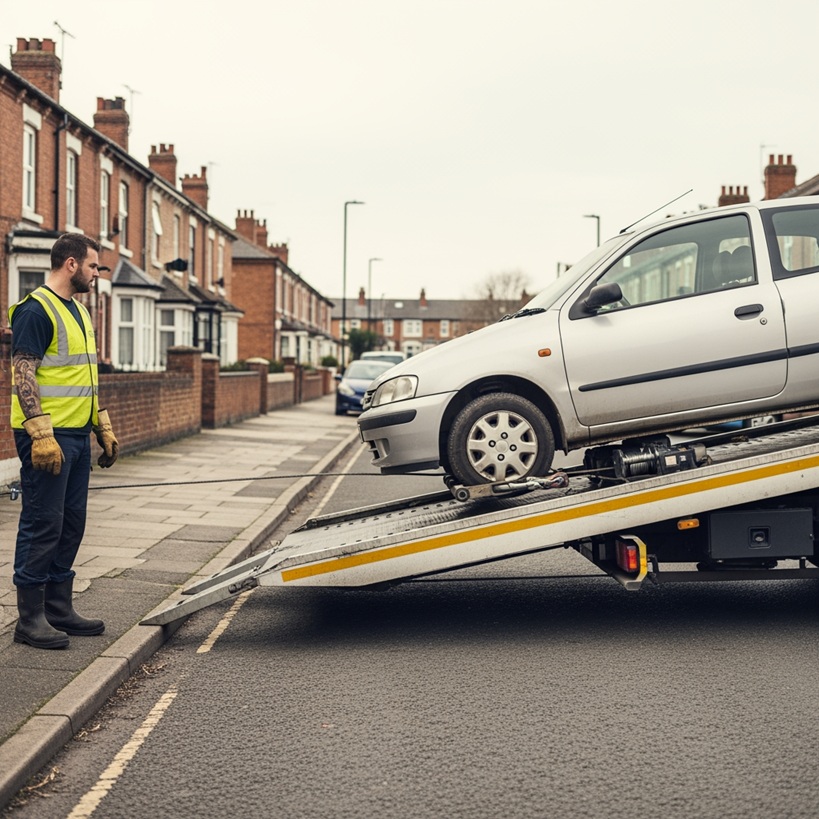
Recovery trucks represent the gold standard for moving non-running vehicles. These purpose-built machines feature hydraulic tilting beds that lower to ground level. This allows cars to be winched aboard without lifting, which is crucial for vehicles with suspension damage. The controlled loading process prevents damage to driveways and surrounding property while securing the vehicle safely for transport. Modern recovery trucks can handle vehicles up to 3.5 tonnes or more, covering everything from small city cars to larger 4x4s.
Flatbed trailers offer flexibility for collectors managing multiple pickups in one day. Towed behind a standard vehicle, these trailers work brilliantly for cars that still roll freely, even if they won’t start. The lower deck height makes loading straightforward. The open design accommodates vehicles with non-standard dimensions or modifications.
Tow dollies serve as the lightweight option, lifting just the front or rear wheels while the other pair remains on the ground. Collectors typically reserve these for shorter distances or vehicles in reasonable mechanical condition. They are compact, manoeuvrable in tight spaces, and require less powerful towing vehicles. However, for a vehicle designated for scrap, a full lift onto a recovery truck is usually preferred to ensure no debris is left on the road.
Winching and Loading Systems
Getting a dead car onto a truck requires serious pulling power. Professional collectors carry electric vehicle winch systems rated between 8,000 and 12,000 pounds. These are mounted either on the recovery truck or as portable units.
Think of the winch like a heavy-duty fishing reel designed for pulling cars instead of cod. It uses steel cables or synthetic ropes that wrap around the vehicle’s chassis or tow points, dragging it steadily onto the loading platform. The synthetic ropes are becoming more common because they don’t rust and are safer if they snap, though steel is still the industry workhorse.
The winch controller allows operators to work from a safe distance. They can maintain clear sightlines while monitoring the load. Modern systems include automatic braking mechanisms that prevent cable slack and sudden jerks. This protects both the vehicle and your garden fence from accidental damage.
Loading ramps complement winch systems, particularly for vehicles with extremely low ground clearance or flat tyres. These heavy-duty aluminium or steel ramps distribute weight across a wider surface area. They prevent the undercarriage from scraping or catching during loading. Collectors carry ramps in various lengths, selecting appropriate sizes based on the truck’s bed height and the vehicle’s approach angle.
Wheel dollies prove invaluable when dealing with seized brakes or locked wheels. These low-profile platforms slide under individual wheels, allowing the entire vehicle to roll freely regardless of mechanical condition. A car with four locked wheels becomes manageable with a set of dollies, transforming what would be an impossible drag into a controlled movement.
Safety and Securing Equipment
Once loaded, vehicles need proper restraint for transport safety on British roads. Ratchet straps form the primary securing method. Professional collectors use four to six heavy-duty straps rated for several thousand pounds each. These straps anchor to dedicated tie-down points on the truck bed. They wrap around the vehicle’s chassis or suspension mounting points rather than bodywork that might tear or deform.
Wheel chocks provide additional security. These wedge against tyres to prevent any rolling movement during transport. Collectors place these both in front of and behind wheels, creating a physical barrier that supplements strap tension. On longer journeys or when transporting multiple vehicles, chocks become essential safety equipment.
Load binders and chains offer an alternative securing method for particularly heavy or awkwardly shaped vehicles. These mechanical devices create tremendous tension. They are suitable for vehicles that might shift or settle during transport. Collectors arranging to recycle your commercial vehicle often prefer chains over straps for larger vans due to their superior strength and durability.
Fluid Management Tools
Scrap vehicles often contain residual fuel, oil, and other fluids that require careful handling. Professional collectors arrive equipped with fluid drainage equipment including hand pumps, siphons, and collection containers. Removing petrol or diesel before transport reduces fire risk. It also prevents spillage, which is particularly important when loading vehicles with damaged fuel tanks.
Absorbent materials form part of every collector’s kit. Industrial-grade absorbent pads, granules, or mats soak up any leaked fluids. This protects driveways and roads from contamination. These materials aren’t just good practice; they are legally required under UK environmental regulations governing waste transport.
Sealed containers store drained fluids for proper disposal at authorised facilities. Collectors separate different fluid types, keeping petrol away from coolant and oil separate from brake fluid. This segregation simplifies processing at the Authorised Treatment Facility and ensures compliance with environmental standards. By choosing a service that prioritises this, you help choose green recycling for hazardous waste.
Access and Manoeuvring Equipment
Not every vehicle sits conveniently on a flat, accessible surface. Collectors tackle challenging locations with specialised gear designed to reach awkward spots.
Wheel skates transform immobile vehicles into manageable loads. These low-profile platforms attach to each wheel, allowing one person to push or pull a car across flat surfaces. Particularly useful for vehicles stuck in garages or tight parking spaces, skates eliminate the need for heavy machinery in confined areas.
I recall a job in a tight terraced street in Leeds where the car had been parked so long the brakes had fused solid. The recovery truck couldn’t get within fifty feet of it due to the double parking. We popped a set of skates under the rear wheels, and it rolled out like a shopping trolley. Without that simple bit of kit, we would have been there all day dragging it sideways and ruining the owner’s driveway.
Hydraulic jacks and axle stands prove essential when dealing with vehicles that have collapsed suspension or missing wheels. Collectors use these to lift the vehicle enough to slide wheel dollies underneath or attach towing equipment. Professional-grade jacks handle heavier loads than typical garage equipment, with safety features that prevent sudden drops.
The Scrap Car Network partners are equipped to handle these tricky situations, ensuring that even vehicles in difficult spots can be recovered safely.
Documentation and Administrative Kit
The physical equipment tells only part of the story. Legitimate scrap car collectors carry comprehensive paperwork that protects both themselves and vehicle owners.
Certificate of Destruction paperwork starts the legal disposal process. Collectors provide vehicle owners with receipts and collection documentation on-site, creating an immediate paper trail. This documentation proves the vehicle left the owner’s possession and entered the authorised recycling chain.
Digital devices, such as tablets or smartphones, allow collectors to photograph the vehicle before loading. They document its condition and process instant verifications. These devices often connect to central systems that update collection schedules and track vehicle movements through the recycling network.
Identification and licensing documents demonstrate the collector’s legitimacy. Reputable operators carry waste carrier licences, business insurance certificates, and company identification. Vehicle owners should always request these documents. Legitimate scrap car dealers expect and welcome such verification. You should always find a local ATF to ensure your paperwork is handled correctly.
Personal Protective Equipment (PPE)
Vehicle collection involves genuine hazards. Professional collectors wear appropriate PPE, including:
- High-visibility clothing: Ensuring they remain visible to other road users and property occupants, especially on busy UK roads.
- Steel-toe boots: Protecting feet from dropped equipment or rolling vehicles.
- Heavy-duty gloves: Guarding against sharp metal edges, glass fragments, and chemical exposure.
- Safety glasses: Shielding eyes from debris during loading operations.
This equipment isn’t just regulatory compliance; it is basic professionalism. Collectors who arrive without proper PPE signal a casual approach to safety that often extends to other aspects of their operation.
Specialist Tools for Problem Vehicles
Some situations demand equipment beyond the standard kit. Collectors dealing with fire-damaged, flood-affected, or severely corroded vehicles carry additional specialist tools.
Battery disconnect tools safely isolate electrical systems. This prevents shorts or fires during transport. Modern vehicles contain complex electronics that can malfunction unpredictably when damaged, making electrical isolation a crucial safety step.
Glass removal equipment becomes necessary when dealing with vehicles that have shattered windscreens or windows. Collectors need to remove loose glass safely before loading. This prevents it from spreading across driveways or falling onto roads during transport.
Cutting tools, though used sparingly, allow collectors to remove parts that prevent loading or create transport hazards. A dangling bumper might need removal, or a protruding exhaust system might require cutting to prevent ground contact during loading.
Regional Considerations
Collection equipment needs vary across different areas of the United Kingdom.
Collectors working in cities like London often prioritise compact, manoeuvrable equipment. They need trucks compliant with the Ultra Low Emission Zone (ULEZ) that can navigate tight streets and restricted parking.
Rural operators covering areas like Scotland or the Highlands carry equipment for off-road recovery and longer-distance transport. They might use 4×4 recovery vehicles to reach cars situated down farm tracks or unpaved lanes.
Weather conditions influence equipment choices too. Collectors operating in regions with frequent rain carry additional traction aids and protective covers. Those working in areas with narrow historic streets need specialised compact recovery vehicles that fit through restricted access points.
The Professional Difference
The equipment list reveals why choosing legitimate collectors matters. Proper gear protects property, ensures safety, and demonstrates professional standards. When collectors arrive with comprehensive equipment, they are showing respect for the vehicle owner, the vehicle itself, and the broader car recycling process.
This preparation extends beyond the collection itself. Well-equipped collectors work faster, cause less disruption, and leave properties exactly as they found them. They don’t need to improvise solutions or make multiple trips because they forgot essential equipment. Everything proceeds smoothly because they have done this thousands of times before. Beware of any operator who turns up with just a rope and a rusty van; you should always rely on a licensed operator to avoid the risks associated with “cowboy” collectors.
Conclusion
The equipment scrap car collectors bring tells you everything about their professionalism and capability. From heavy-duty recovery trucks and powerful winching systems to proper documentation and safety gear, legitimate operators arrive prepared for any scenario. This preparation protects vehicle owners from property damage, ensures legal compliance, and demonstrates the professional standards that separate reputable collectors from opportunistic cowboys.
Understanding this equipment helps owners recognise quality service when they see it. When a collector arrives with proper transport, comprehensive securing equipment, fluid management tools, and complete documentation, they are demonstrating commitment to professional standards.
If you are looking for a reliable service equipped to handle your vehicle safely, you can see what your car is worth online today.
Alternatively, if you prefer to speak to the team directly about your specific collection needs, call us on 01772 665 909. You can also contact us via our website to arrange your free collection.