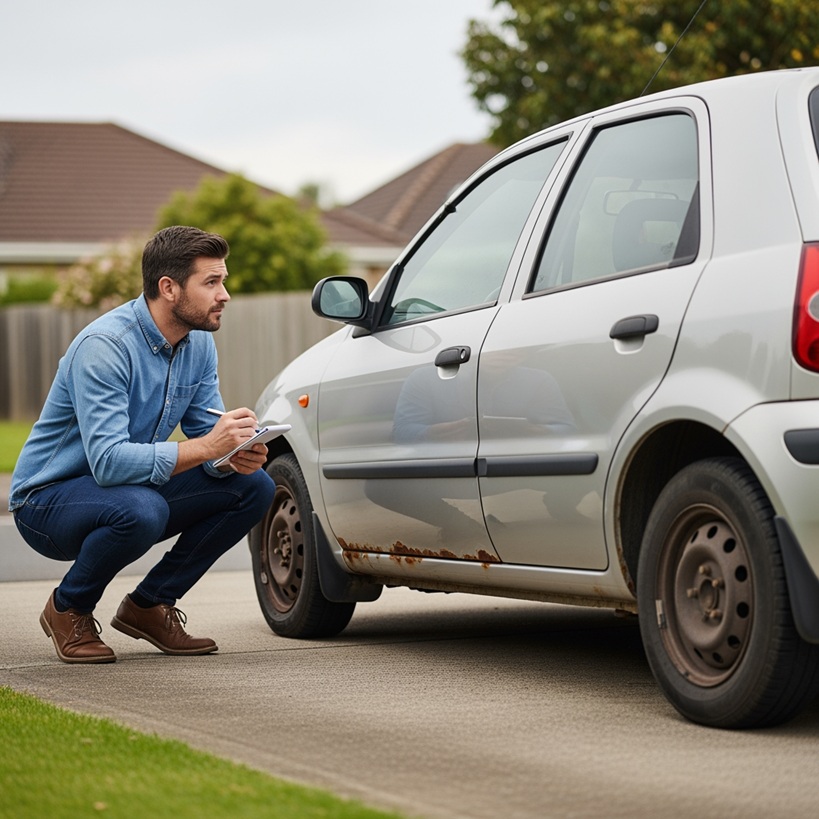
How to Accurately Assess Your Car’s Scrap Value: Expert Guide
14th May, 2026
That old motor sitting on the drive isn’t just taking up space; it is holding actual cash value, even if it hasn’t turned over in months. The trick is knowing what that value really is before the first dealer gives you a number.
Most car owners accept whatever figure gets thrown at them when scrapping their vehicle. That is a mistake. Understanding how scrap car value gets calculated puts you in control of the conversation and typically adds a significant amount to what you will actually receive.
The scrap car market in the UK processes over 1.5 million vehicles annually, creating a competitive industry where prices fluctuate daily. Your car’s worth depends on factors you can check yourself in about 20 minutes.
What Actually Determines Scrap Car Value
Metal weight forms the foundation of every scrap valuation. A Ford Focus weighs roughly 1,200kg, whilst a Land Rover Discovery tips the scales at 2,200kg. That difference matters when scrap metal trades by the tonne.
The calculation seems straightforward, but it is not. Scrapyards do not pay the full market rate for metal because they have costs: collection, depollution, dismantling, and transport to metal processors. Expect 40-60% of the current scrap metal price as your baseline figure.
Working parts add significant value beyond basic metal weight. A functioning catalytic converter alone fetches a premium depending on the precious metals inside, such as platinum, palladium, and rhodium. Alloy wheels, batteries, alternators, and starter motors all command separate prices.
How to Calculate Your Car’s Base Metal Value
Start with your vehicle’s kerb weight, found in the owner’s manual or on a plate inside the driver’s door frame. If you cannot find it, the DVLA vehicle enquiry service provides this information using your registration number.
Current scrap metal prices fluctuate with global commodity markets. Steel typically trades at one rate, whilst aluminium commands a significantly higher price per tonne.
Here is the realistic calculation:
- Vehicle weight (kg) divided by 1,000 equals tonnage.
- Tonnage multiplied by current steel price equals the theoretical maximum.
- Multiply by 0.4-0.6 to get the realistic scrap value range.
A 1,200kg hatchback at current steel prices works out to a specific baseline figure. Apply the factor for processing costs, and you are looking at the base value. That is before considering parts or other factors.
Identifying Valuable Components Worth Separate Money
Certain parts command premium prices that savvy sellers leverage. Catalytic converters top this list because they contain precious metals that fluctuate independently of steel prices.
Petrol catalytic converters generally contain more palladium, whilst diesel versions favour platinum. Hybrid vehicle converters are particularly valuable due to the higher concentration of precious metals. It is worth checking current precious metal trends before accepting a valuation.
Alloy wheels in good condition sell separately. Scrapyards either resell them or extract the aluminium, which is worth significantly more than steel. Other components worth noting include batteries, alternators, starter motors, and air conditioning compressors.
Getting Multiple Quotes: The Smart Approach
Never accept the first offer. The scrap car industry is competitive enough that quotes for identical vehicles can vary by hundreds of pounds between operators.
Request quotes from at least three different sources. Using the Scrap Car Network connects you with multiple licensed dealers simultaneously, eliminating the need to contact individual yards separately. You can easily access our nationwide dealer network through aggregation networks to save time.
When requesting quotes, provide accurate information:
- Complete registration number.
- Exact location (postcode).
- Current condition (running, non-running, damaged).
- MOT status.
- Complete V5C logbook availability.
Red Flags That Indicate a Low-Ball Offer
Some tactics signal a dealer trying to undervalue your vehicle. Vague pricing ranks highest on this list. Legitimate operators provide specific figures, not ranges like “£50-£200 depending on what we find.”
Pressure to accept immediately suggests the quote won’t stand up to comparison. Professional scrapyards understand you will shop around and do not mind waiting a reasonable time for your decision.
Watch for these warning signs:
- Refusal to provide written quotes.
- Requests for payment to collect the vehicle.
- No mention of providing a Certificate of Destruction.
- Unlicensed or unregistered operation.
Certificate of Destruction (CoD) provision is legally required. Any operator who doesn’t mention this or seems unclear about the process should be avoided. The CoD proves your vehicle was legally scrapped and protects you from future liability. You can verify legal destruction requirements in our detailed guide.
How Vehicle Condition Affects Final Price
Running vehicles command premium prices because scrapyards can drive them around the yard and potentially resell more parts. Even if you are scrapping it, a car that starts and moves adds value to the base metal figure.
Accident damage does not necessarily reduce scrap worth if the car is already destined for crushing. The metal weighs the same whether the panels are straight or crumpled. However, severe damage might indicate missing parts or fluids that affect processing costs.
Missing parts definitely reduce offers. A car without wheels, battery, or catalytic converter is worth less because the scrapyard loses those revenue streams.
I once quoted a chap for a “complete” Jaguar X-Type. When the driver arrived, the engine, gearbox, and all the leather seats were sitting on a pallet in the garage, not in the car. He had stripped it to sell the shell. We had to explain that a shell is worth about £80, not the £350 we quoted for a whole car. He wasn’t happy, but you can’t pay for metal that isn’t there.
Understanding Current Scrap Metal Market Rates
Steel prices drive the baseline scrap car value because it is the predominant material. Global steel markets respond to construction demand, manufacturing output, and international trade policies.
The UK imports and exports scrap metal, making exchange rates relevant. A weaker pound makes British scrap more attractive to foreign buyers, potentially increasing domestic prices. A stronger pound has the opposite effect. Check our guide to view current market trends and see daily rates.
The Role of Make and Model in Scrap Valuation
Premium manufacturers do not guarantee higher scrap value. A Mercedes-Benz and a Ford of similar weight and age might fetch identical prices if both are being fully scrapped for metal.
The difference emerges in parts value. German vehicles typically contain more aluminium and copper, slightly increasing material value. More significantly, their parts command higher resale prices, which some scrapyards factor into their offers.
Certain models are worth more as parts cars. Popular models have high demand for spares, while recently discontinued models see parts become scarcer, increasing value.
When to Scrap Versus Selling for Parts Privately
Scrapping makes sense when the vehicle has failed its MOT with expensive repairs needed, suffered significant accident damage, or reached the point where running costs exceed its value.
The calculation is straightforward. If repair costs exceed the car’s post-repair value by a significant margin, scrapping typically makes financial sense. Factor in your time, hassle, and the risk of further failures.
Private parts sales might yield more money but require significant effort. You need time to photograph and list items, space to store parts, and knowledge to remove components safely. For most people, the convenience of arranging a collection outweighs the potential extra cash from breaking the car themselves.
Legal Requirements That Affect Your Scrap Value
Authorised Treatment Facilities (ATFs) are the only legal option for scrapping vehicles. These licensed sites follow environmental regulations for depolluting and processing end-of-life vehicles.
Using an ATF ensures you receive a Certificate of Destruction, which is your legal proof the vehicle was properly scrapped. Without this, you remain responsible for the vehicle indefinitely. You can choose a compliant recycling partner to ensure full accountability.
The V5C logbook (registration certificate) is essential. You will need to complete the relevant section and notify the DVLA that you have scrapped the vehicle. Properly notifying the DVLA prevents future issues with taxation or parking fines.
Maximising Your Scrap Car Value: Final Checklist
Before contacting scrapyards, complete these steps to ensure you receive the best possible price:
- Locate your V5C logbook.
- Find service history, as this adds credibility.
- Note your vehicle’s exact weight from the handbook.
- List all working components.
- Check for missing items.
Present your vehicle honestly but comprehensively. Mentioning working components or recent new parts helps dealers see value beyond basic metal weight. A new battery or recent tyre replacement might seem irrelevant to you but represents resale value to the scrapyard.
Getting Your Free Quote Today
Understanding your car’s scrap value puts you in control of the process. Armed with realistic expectations based on weight, condition, and current market rates, you will recognise fair offers and spot attempts to undervalue your vehicle.
The UK’s scrap car market is competitive enough that informed sellers consistently achieve better prices than those who accept the first quote. That extra research translates directly into additional money in your account.
Getting an instant quote takes minutes and connects you with licensed ATFs in your area. The process is straightforward: provide your registration and postcode, receive competing quotes, choose your preferred offer, and arrange collection.
If you are ready to find out what your car is worth, you can calculate your car’s worth today. Alternatively, call our team on 01772 665 909 or contact us online to discuss your vehicle.