What “Non-Runner” Means to Scrap Yards: Definition and Value Impact
14th May, 2026
A car that won’t start is not always worthless. In fact, scrap yards across the UK collect thousands of non runner scrap car vehicles every week, and many still fetch reasonable prices despite their inability to move under their own power.
The term “non-runner” carries specific meaning in the scrap car industry. It determines how your vehicle gets collected, affects the quote you will receive, and influences the recycling process once it arrives at an Authorised Treatment Facility (ATF). Understanding this classification helps car owners set realistic expectations and avoid unpleasant surprises during collection.
What Qualifies as a Non-Runner?
A non-runner is any vehicle that cannot be driven onto a recovery truck or moved safely under its own engine power. This definition seems straightforward, but it covers a surprisingly wide range of mechanical failures.
Common reasons a car becomes classified as a non-runner include:
- A completely dead battery that won’t hold a charge.
- A seized engine that refuses to turn over.
- A failed gearbox that won’t engage any gear.
- Missing wheels that make the vehicle immobile.
- Significant accident damage affecting the drivetrain.
- A snapped timing belt causing internal engine damage.
Some situations fall into a grey area. A car might start but not move safely due to brake failure, or it might run but produce excessive smoke that makes driving illegal. In these cases, most scrap yards treat the vehicle as a non-runner for collection purposes. An MOT failure due to dangerous defects often lands a car in this category automatically.
How Non-Runners Differ from Runners in Scrap Value
The price difference between a runner and non-runner is not as dramatic as many people assume. Scrap yards primarily value vehicles based on metal weight, current scrap metal prices, and the demand for specific parts. Whether the engine runs matters, but it is not the only factor.
A typical family car weighing around 1,000 kilograms might fetch a certain amount as a runner, whilst the same vehicle as a non-runner typically brings slightly less. The difference reflects the additional collection costs and reduced scrap value of non running car parts, not a fundamental change in the vehicle’s worth.
The gap narrows further when scrap metal prices rise. During periods of high demand for steel, aluminium, and copper, the metal content becomes the dominant pricing factor, and mechanical condition matters less.
Why Collection Costs Affect Non-Runner Prices
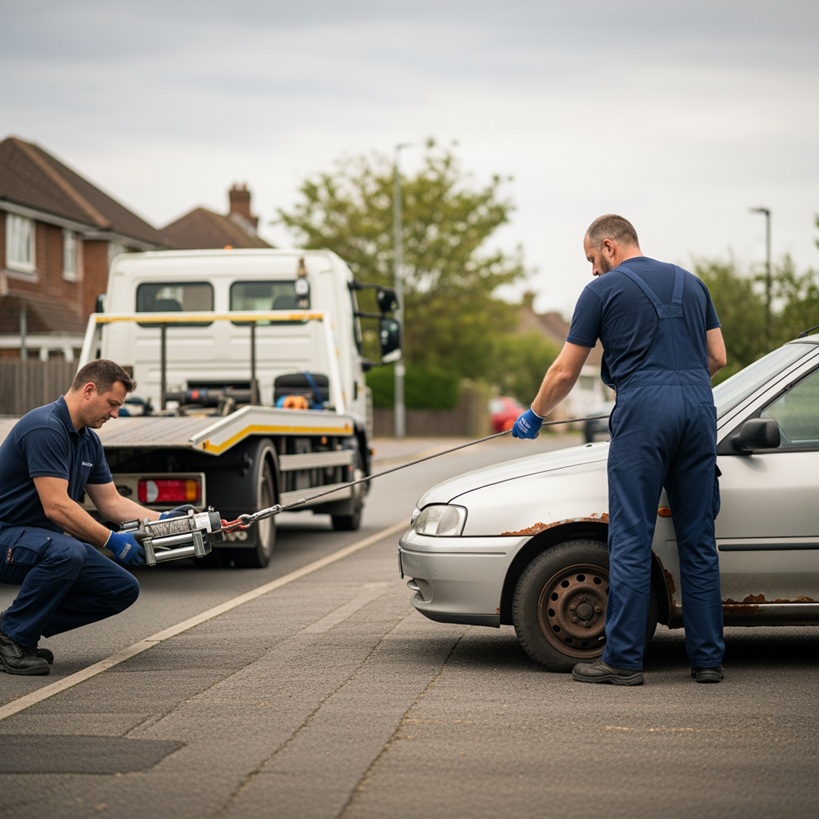
Moving a non-runner requires specialist equipment. Recovery trucks need winches, ramps, or flatbeds to load vehicles that cannot drive themselves aboard. This equipment costs more to operate and maintain than standard car transporters.
The collection process takes longer too. A runner can be driven straight onto a truck in minutes. A non-runner might need positioning, careful winching, and securing to prevent damage during transport. This extra time translates to higher operational costs for scrap yards. Our nationwide removal service via our network of collectors absorbs many of these logistics to keep things simple for you.
The Part Value Factor
A non-runner’s parts often retain significant value, though not always as much as a running vehicle’s components. The reason comes down to buyer confidence and testing opportunities.
Mechanical parts from a runner can be tested before removal. A gearbox from a driving car has proven functionality. An engine that runs demonstrates basic operational integrity. Buyers pay premium prices for parts with verified working condition.
Non-runners create uncertainty. The gearbox might be perfect, or it might be the reason the car stopped running. However, many parts remain unaffected by the mechanical failure. Body panels, glass, interior trim, lights, and electronic modules often work perfectly regardless of engine or transmission problems.
How Scrap Yards Assess Non-Runners
Professional scrap yards use systematic assessment methods to value non-runners accurately. The process typically starts with basic information: make, model, year, and the reason it is not running.
Weight estimates come next. Different models have known weight ranges, and scrap yards maintain databases of typical values. Current scrap metal prices provide the baseline value. Steel prices fluctuate based on global commodity markets, whilst catalytic converter values depend on precious metal content.
The assessor then considers part value potential. Popular models with strong demand for spares justify higher quotes because the yard can recoup more through part sales. Rare or unpopular models with limited part demand receive quotes closer to pure scrap metal value.
Specific Non-Runner Scenarios and Their Impact
Different types of mechanical failure affect value differently. A car with a blown head gasket might be worth more than one with a seized engine, despite both being non-runners, because the head gasket failure suggests the rest of the engine remains intact.
Accident-damaged non-runners present a special case. Structural damage reduces part value significantly because many components become unsalvageable. However, the metal weight remains unchanged, so the baseline scrap value holds steady.
Fire-damaged non-runners represent the lowest value category. Heat damage compromises metal integrity, destroys all plastic and rubber components, and eliminates part recovery potential.
The Legal Side of Scrapping Non-Runners
The legal requirements for scrapping a non-runner match those for any other vehicle. The process begins with the V5C registration certificate, which proves ownership and enables proper DVLA notification.
Owners must inform the DVLA when scrapping any vehicle, runner or not. The scrap yard should provide a Certificate of Destruction (CoD) as proof the vehicle has been processed at an approved facility (ATF). This certificate protects owners from future liability if the vehicle somehow reappears on the road.
Non-runners parked on public roads face additional complications. Local councils can issue removal notices for abandoned vehicles, and owners might face fines if they don’t act promptly. The Scrap Car Network can help you remove these vehicles quickly before penalties apply.
How to Maximise Value from a Non-Runner
Several strategies help owners extract maximum value from non-runner vehicles. Timing matters more than many people realise. Selling during price peaks can add to the final payment.
Providing accurate information upfront prevents quote adjustments during collection. If the car has no wheels, mention it. If it has been in a fire, say so. Honest disclosure leads to accurate quotes that don’t change when the recovery truck arrives.
I remember turning up to collect a “non-runner” Ford Mondeo from a farm. The farmer said it just “wouldn’t start.” It turned out the car had been used as a chicken coop for three years. The interior was destroyed, and the wiring loom had been eaten by rats. We still took it for the metal weight, but the quote had to be adjusted significantly because no parts were salvageable.
Regional Variations in Non-Runner Pricing
Scrap car prices vary across the UK based on local market conditions. Urban areas with multiple competing scrap yards often offer better prices than rural regions with limited options. Transport costs play a role too; remote locations incur higher collection expenses.
London presents unique challenges for non-runner collection. Traffic congestion, parking restrictions, and limited access in some areas increase collection costs. However, higher competition among scrap yards often compensates, maintaining reasonable price levels.
Commercial Vehicles and Non-Runner Status
Vans and light commercial vehicles follow similar non-runner principles but with some important differences. Commercial vehicles typically weigh more than equivalent passenger cars, which increases their base scrap value.
However, commercial vehicles often accumulate higher mileage and suffer harder working lives. This wear and tear can reduce part value, offsetting some of the weight advantage. If you need to dispose of a commercial vehicle, the assessment process accounts for these commercial vehicle factors.
Environmental Considerations for Non-Runners
Non-runner vehicles pose environmental risks if left to deteriorate. Fluids leak into soil, batteries corrode and release toxic materials, and refrigerants escape into the atmosphere. Proper disposal through licensed ATFs prevents these environmental harms.
The vehicle depollution standards require that technicians drain all fluids for proper disposal or recycling. They remove batteries, airbags, and any components containing hazardous materials.
Making the Decision to Scrap
Several factors should influence the decision to scrap a non-runner. Repair cost estimates provide the starting point. If fixing the vehicle costs more than its post-repair value, scrapping makes economic sense.
Age and mileage matter too. Older vehicles with high mileage face diminishing returns on repairs. Even after fixing the immediate problem, other components will likely fail soon, creating an endless cycle of maintenance expenses.
MOT status plays a role in the timing decision. A car that has failed its MOT and requires expensive repairs to pass becomes an obvious scrapping candidate.
Working with Reputable Scrap Yards
Choosing the right scrap yard makes a significant difference in the experience. Licensed ATFs provide legal compliance, environmental responsibility, and proper documentation. Unlicensed operators might offer slightly higher prices but create legal and environmental risks.
Red flags to watch for include requests for payment to collect a vehicle (legitimate yards pay you, not the reverse), reluctance to provide a CoD, and vague answers about licensing status. Our guide on managing DVLA scrap notifications ensures you stay compliant throughout the process.
Conclusion
Understanding what “non-runner” means in the scrap car context helps owners navigate the disposal process with realistic expectations. Whilst non-runners typically fetch slightly less than drivable vehicles, the difference is often smaller than expected, particularly when scrap metal prices are strong.
The key factors affecting non-runner value include metal weight, current commodity prices, part recovery potential, and vehicle recovery logistics. Mechanical condition matters, but it is just one element in a complex valuation equation.
Working with professional, licensed scrap yards ensures legal compliance, environmental responsibility, and fair pricing. The process should be straightforward: accurate quote, convenient collection, proper documentation, and prompt payment.
Whether your car won’t start due to a dead battery, seized engine, or accident damage, it retains value through its metal content.
If you are ready to find out what it is worth, you can value your non-runner today and we will handle the rest.
Alternatively, if you have specific questions about non-runner conditions, please call our team on 01772 665 909. You can also contact us directly via our website.