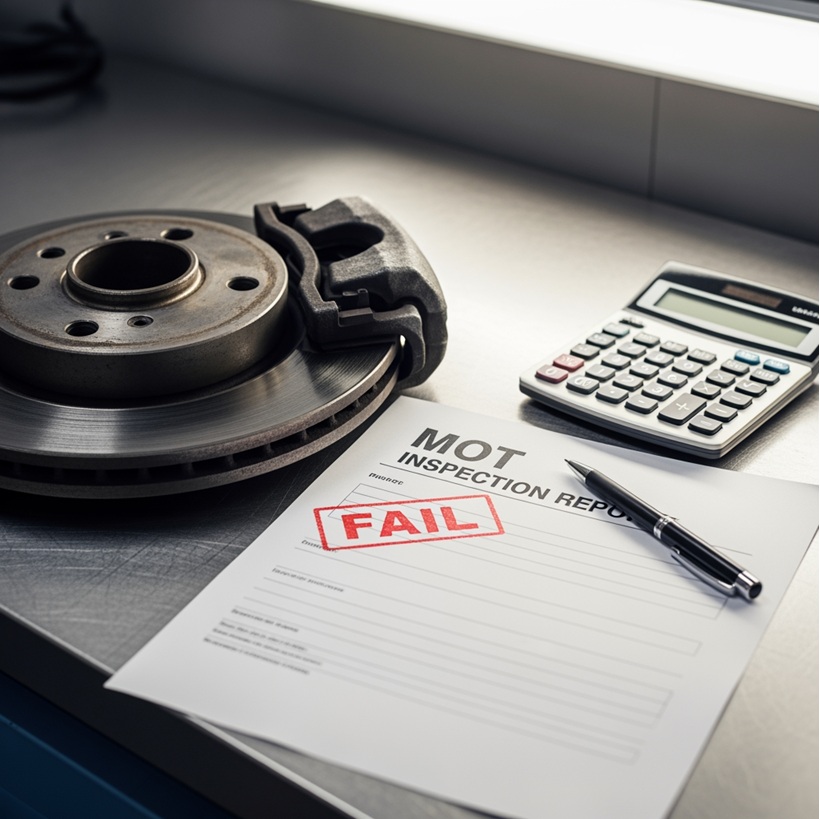
Failed MOT: Repair Costs vs Scrap Value Calculator Guide
4th May, 2026
That sinking feeling when the mechanic brings bad news about an annual test is universally dreaded. It is never just about the temporary inconvenience of losing transport; it is entirely about money. The burning question that immediately follows is always the same. Do owners throw good money after bad, or is it finally time to call it quits?
Understanding the mot failure repair vs scrap decision properly means looking at real numbers, not sentiment. A failed test triggers a harsh financial decision point every car owner faces eventually. Getting this calculation wrong costs honest people hundreds or even thousands of pounds every single year. The maths tells exactly what makes sense, whereas emotion just clouds the picture entirely.
This guide provides a clear, mathematical framework to calculate whether repairing a failed vehicle makes financial sense. The analysis looks closely at real repair estimates, genuine scrap values, and the hidden costs garages rarely mention. By the end of this guide, drivers will have the knowledge to make the smartest choice for their wallet.
Understanding MOT Failure Implications
When a car fails its annual inspection, mandatory repairs are required before it is legal to drive again. No repairs mean no pass certificate, and no certificate means that car sits gathering moss until the situation is resolved. The question is not whether to fix it, but whether fixing it makes any financial sense whatsoever.
The law is incredibly strict here. A driver can legally drive a failed vehicle directly to a pre-booked repair appointment, but that is the absolute limit. Driving it anywhere else risks massive fines of up to £1,000 and potential prosecution. Furthermore, driving without a valid test certificate usually invalidates car insurance instantly.
This creates immense urgency around the decision. The vehicle cannot sit indefinitely on the public road while options are pondered. The car is officially off the road, taking up valuable space, and costing money in road tax. Paying to insure a vehicle that cannot be legally used is wasted funds, so a fast, logical plan is essential.
Common MOT Failure Categories
Not all failures are created equal in the eyes of a mechanic. Some are cheap, simple fixes that any sensible person handles immediately without a second thought. Minor failures typically cost under £100 to resolve at a local garage. These include blown headlight bulbs, faulty indicators, or worn wiper blades that do not require complex financial calculation.
Major failures, however, frequently run between £300 and £1,200. Structural corrosion repairs requiring extensive welding sit at the very top of this expensive list. Suspension component failures, brake system problems, and complete exhaust system replacements also drain bank accounts rapidly. Roughly 30% of failed tests involve complex repairs costing £500 or more.
Why This Decision Matters Financially
Repair costs quoted today are just the starting point of the financial journey. If a car has failed this time on serious rust or deeply worn suspension, something else will likely break down within twelve months. Paying for this year’s repairs is effectively buying an expensive lottery ticket for next year’s mechanical problems.
When a driver needs to scrap my vehicle, a common scenario unfolds: a 2004 Ford Focus fails on severe sill corrosion with an £850 repair estimate. The owner pays for the work, passing the test for now, but a shattered dual-mass flywheel three months later leaves the vehicle financially finished. Disposing of the vehicle initially would have saved that entire £850 investment.
Think of it realistically. Fixing a fifteen-year-old car with 120,000 miles for £800 does not make the vehicle £800 better. It just makes it an aging car that will not immediately break down today. There is a massive financial difference between adding value and merely treading water.
True Cost of MOT Repairs
Repair costs vary wildly depending on what is actually failing underneath the vehicle. Labour rates dictate everything, with independent mechanics charging around £60 per hour, while main dealers often demand £130 or more. Suspension repairs typically run between £300 and £800 depending on the exact components worn out by potholed roads.
Brake system overhauls cost £200 to £600 for comprehensive work involving discs, pads, and rusty brake lines. Exhaust system replacement ranges from £150 to £500, especially if the catalytic converter is compromised. Meanwhile, structural welding for heavy corrosion is the absolute killer for older cars. Proper, safe repairs to sills, subframes, or suspension mounting points cost £400 to £1,200 minimum.
Backstreet bodge jobs might seem cheaper initially, but poor welding will fail the test again within a year. Worse, interconnected systems often fail together. Fixing a rusty suspension mount suddenly makes a worn steering rack glaringly obvious, causing costs to spiral.
Calculating Your Car’s Scrap Value
Even a completely knackered, non-running car holds intrinsic financial value. Scrap vehicle prices depend heavily on weight and current global metal values. Owners should expect roughly £150 to £400 for most standard passenger vehicles when dealing directly with an Authorised Treatment Facility.
Vehicle weight is the absolute primary determinant of the final quote. Heavier cars contain more raw metal, fetching noticeably higher prices. A lightweight hatchback might weigh around 1,000kg, whereas a large family SUV easily tips the scales at 1,800kg. That distinct weight difference translates directly into a larger payment, whether dealing with a small car or a business owner deciding to scrap my van.
Current scrap metal prices fluctuate continuously with global commodity markets. The underlying values of steel, aluminium, and copper vary from month to month. While dramatic overnight changes are rare, salvageable parts like pristine alloy wheels or working catalytic converters might boost the final offer slightly.
Repair vs Scrap Calculator Formula
A reliable formula is needed to cut right through the emotion and deliver clear, actionable answers. First, obtain a complete, itemised repair quote covering every single failure. Next, find the car’s realistic current market value assuming it had a valid certificate. Subtract the repair costs from that market value, and compare the final result to the scrap quote.
If the necessary repairs cost more than 50% of the car’s total market value, scrapping usually makes much more sense financially. This 50% threshold accounts for the grim reality that even after spending the cash, the vehicle is still aging and likely needing more work very soon.
Think of an aging car like a comfortable pair of old leather work boots. New laces can be added, worn insoles replaced, and loose rubber soles glued back together for a while. Eventually, the core leather rots away, and buying expensive repair materials costs far more than simply purchasing a brand new pair of boots.
Clear Indicators for Scrapping
Some specific situations make the repair versus scrap decision incredibly obvious. Certain age, mileage, and condition combinations strongly suggest a vehicle has reached its natural end of life. A car is almost certainly ready for the crusher if it is over fifteen years old with more than 120,000 miles on the clock.
Hitting 150,000 miles means fighting severe depreciation and accumulated mechanical wear. Structural corrosion is often a terminal diagnosis for vehicle value, as rust aggressively attacks load-bearing areas like sills and subframes. Once the notorious UK weather establishes rust in structural areas, it rarely ever stops without phenomenally expensive restoration work.
If a local garage warns about pervasive rust underneath, each year’s repair bill is just postponing the inevitable trip to the scrapyard. These combinations indicate the car has reached its economical limit regardless of today’s specific repair costs.
Hidden Costs of Repairing
The initial repair quote handed over the garage counter is merely the start. Immediate additional costs always sting, as MOT retest fees run between £30 and £50 per attempt at most testing stations. If the initial repairs reveal more complex issues requiring additional parts, this fee is paid multiple times.
Mechanics routinely get under the vehicle to fix an exhaust and spot dangerous brake pipes the tester merely flagged as advisories. Budgeting at least 20% extra beyond any initial quote for unexpected discoveries is essential. Then come the ongoing ownership costs.
Higher insurance premiums heavily affect older vehicles, as mechanical reliability decreases and the statistical risk of an accident rises. Worse fuel economy from aging, carbon-choked engines is also a factor. Worn internal components reduce efficiency dramatically, resulting in extra expenses at the petrol pumps every single month compared to a newer model.
Getting Accurate Repair Quotes
Never just accept the very first number thrown out by a stressed mechanic. Comprehensive, written estimates must be secured before making a final financial choice. Demand a fully itemised list of all required repairs needed to secure a pass, as lumping everything into one massive figure makes comparison shopping impossible.
Parts costs should be distinctly separated from the hourly labour charges. This allows parts prices to be verified independently and shows exactly where the money is going, ensuring VAT is clearly shown on all line items. Highly specific questions should be asked at the garage to gauge future reliability.
Asking “What else underneath here is likely to fail within the next twelve months?” is crucial for gathering intelligence. An honest, experienced technician will advise if the car is running on borrowed time. Getting multiple quotes is essential if repair costs are substantial, as a £600 quote at one garage might easily be £450 at another.
The Scrapping Process Explained
Once the maths proves that fixing the car is foolish, the actual disposal process is remarkably straightforward. The process begins with an instant online quote taking roughly thirty seconds. After entering the registration plate and confirming the vehicle’s general condition, an immediate financial offer is generated.
Once accepted, owners can book a scrap car collection at absolute convenience. Most of these professional collections happen within 24 to 48 hours, right from the driveway or the local garage forecourt. Specific documentation must be ready for the driver upon arrival.
Handing over the V5C logbook is required for the legal transfer of ownership. Presenting the MOT failure certificate is highly recommended, as it transparently shows the collection agent exactly what is wrong with the vehicle. The driver verifies identity using a driving licence, loads the broken car, and initiates payment via immediate bank transfer before driving away.
Legal Requirements When Scrapping
Failed vehicles cannot simply be abandoned in a supermarket car park. Legal steps are strictly mandatory, and skipping them results in severe fines and ongoing civil liability. Completing the yellow V5C/3 tear-off section of the logbook and submitting it to the DVLA immediately is absolutely essential.
This dual notification process protects owners entirely from future liability. If a criminal somehow illegally re-registers a scrapped car, the original owner is fully covered because the authorities were properly notified of its destruction. Receiving a legitimate Certificate of Destruction is the ultimate goal.
This crucial document is the absolute legal proof of proper disposal. Only registered vehicle disposal services and Authorised Treatment Facilities can issue these certificates. This certificate permanently closes the DVLA record and completely protects against rogue parking fines.
Environmental Considerations
This decision is not purely about protecting finances. Old, failing cars pollute significantly more than newer vehicles, and disposing of them properly matters deeply for the environment. Modern car scrapping is a highly regulated, eco-friendly industry that safely mitigates these risks.
Failed emissions tests mean a car is actively pumping out higher levels of toxic pollution than is legally acceptable. Engine oil, degraded coolant, and old brake fluid easily contaminate local soil and water tables if not properly contained. Removing these heavy polluters from UK roads actively improves the air quality in busy towns and cities, particularly in heavily congested areas like London.
Proper recycling yields massive environmental benefits. Up to 95% of a standard vehicle’s materials are successfully recycled when processed by an Authorised Treatment Facility. The heavy metals are recovered, melted down, and reused in modern manufacturing, which drastically reduces the destructive global demand for mining new raw materials.
Making Your Final Decision
Strip away the nostalgia and look exclusively at the hard facts. When a car fails its test, there are two exceptionally clear options with measurable financial outcomes. The calculator formula does not lie. Authorising repairs makes sense only when the quoted costs sit comfortably under 30% of the car’s true market value.
It also makes sense if the car is relatively young, has very low mileage, and suffers absolutely no structural rust. Conversely, scrapping makes perfect sense when quoted repairs exceed 50% of the market value. If multiple expensive issues exist simultaneously, or structural rust is eating the subframe, money is wasted on repairs.
When the maths proves fixing the vehicle is foolish, making the definitive choice to scrap my car provides a clean financial break. Scrapping the car is not admitting defeat; it is making a highly intelligent, protective financial decision.
Conclusion
The painful choice between paying massive repair bills and scrapping a vehicle comes down entirely to cold numbers. When garage estimates approach or exceed the car’s realistic market value, disposing of the vehicle becomes the only financially sensible option. Do not finance temporary repairs on credit for a car that is economically finished.
Compare the massive repair quote alongside the likely future breakdowns versus the guaranteed payment from a scrap quote. Throwing £800 at a rusty chassis only postpones the inevitable trip to the scrapyard by twelve months. Taking a bank transfer payment today, avoiding the repair bill, and walking away clean is almost always the smarter move for older vehicles.
When ready to make the logical choice, Scrap Car Network provides a fast, professional route forward. Scrap Car Network offers competitive pricing based on weight, provides completely free nationwide collections, and handles all the complex DVLA paperwork. If facing a massive failure sheet right now, simply contact us today to arrange a hassle-free collection and turn that driveway headache into money in the bank.