Brake System MOT Failure Repair Costs and Disposal Guide
5th May, 2026
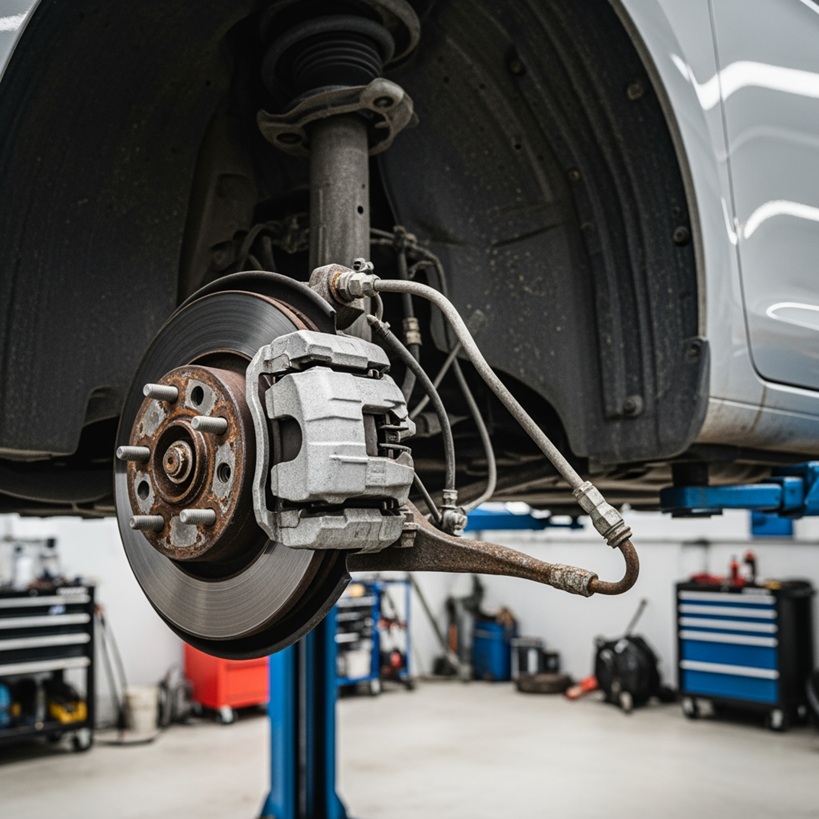
A vehicle failing its annual test on brakes brings immediate safety concerns. The mechanic mentions corroded pipes, seized callipers, and heavily worn components. As the estimate creeps upward, owners wonder whether to spend the funds or cut their losses.
Understanding when a brake system failure signals the end is vital for any driver. The following framework provides guidance on comparing repair costs against the true market value of the car. Making an informed choice prevents wasting money on an asset that is rapidly declining.
The right path depends on the extent of the failure and the age of the vehicle. Sometimes a brake problem hides a deeper mechanical issue. By looking at the numbers, owners can decide if a repair is a sound investment.
Understanding Brake System MOT Failures
Brake failures range from simple pad changes to complete system overhauls. Testers use two main categories to describe these faults. A dangerous defect means the car is a risk to life and can’t be driven legally.
Major defects are also serious but don’t carry an immediate driving ban. Both categories prevent the car from passing the test until the repairs are finished. These failures often indicate that the car has been neglected or is reaching its natural end.
Routine maintenance is like fixing a dripping tap in a house. It’s simple and keeps the structure sound for years. However, a major brake failure can be like a collapsing foundation that’s too expensive to save.
Individual Brake Component Failures
Single-component failures are usually worth fixing on vehicles worth more than £1,500. Worn brake pads are a routine maintenance item rather than a sign of terminal decay. Replacing front pads often costs between £60 and £120 depending on the model.
A single seized calliper or one corroded disc is also a manageable fix. These isolated issues rarely suggest that the whole car is falling apart. Repairing them preserves the value of a car that’s otherwise in good condition.
Simple fixes like flushing contaminated brake fluid also make sense. This prevents expensive parts from failing later and keeps the system responsive. Most drivers choose to fix these minor issues to keep their cars on the road.
Multiple Corner Brake Failures
Economics change dramatically when failures occur across multiple wheels. This cascading deterioration is common on older commuter cars. Seized callipers on three or four corners will multiply the garage bill significantly.
A complete brake overhaul can easily cost between £900 and £1,500 in total. This includes new discs, pads, and multiple callipers for every wheel. On a vehicle worth only £2,000, this level of spending is rarely a smart move.
When a failure list shows six or eight brake-related issues, the car is likely finished. These costs often exceed the value of an older model. In these cases, disposal is often the most sensible financial exit.
Corroded Brake Pipe Problems
Brake line corrosion is a very serious issue for many older UK vehicles. The cost of the repair depends on how many sections of the pipe need to be replaced. Replacing a single small section is a simple task for most local garages.
However, extensive corrosion throughout the entire system is much more expensive. Complete brake line renewal can cost up to £800 because it’s very labour-intensive. This often involves removing other parts of the car to reach the pipes.
Partial replacement can sometimes be a false economy. Replacing one rusty section while leaving others means more leaks will likely appear within months. For many, this constant cycle of repairs is a sign to move on.
Structural Mounting Issues
Corrosion in the areas where brakes attach to the car changes everything. If a calliper bracket or a subframe becomes rotten, simple parts replacement isn’t enough. These issues often require complex and expensive structural welding to make the car safe.
A brake system mot failure involving brake mounts is a major red flag. It indicates that the decay has spread to the load-bearing parts of the vehicle. Fixing these problems requires specialist certification and very high hourly labour rates.
Owners facing high brake repair costs to pass a structural test should look at the long-term reality. Rust is a progressive problem that rarely stays fixed for more than a year. Once the main structure is compromised, the car’s market value drops significantly.
Age and Vehicle Value Considerations
The age of the car is a primary factor in the repair versus scrap decision. Vehicles worth less than £1,500 rarely justify a brake bill exceeding £400. These cars are already close to their raw material value.
Cars in the £1,500 to £3,000 range sit in a difficult grey zone. A single repair for £200 is fine, but a £1,000 overhaul is highly questionable. To see if it is worth it, owners can seek a scrap my car online quote to compare costs.
Newer, more valuable cars usually warrant large brake investments. Spending £1,500 on a car worth £10,000 makes total sense to preserve the asset. Drivers should always compare the repair quote to the cost of a replacement car.
Brake System Complexity Factors
Modern vehicles use complex electronic systems that drive up repair costs. Electronic parking brakes use motor-driven units called actuators that can cost £500 each for parts alone. If these fail alongside the discs and pads, the bill becomes enormous.
ABS system faults also add a layer of difficulty and expense. A failed ABS pump can cost between £400 and £800 to replace. These electronic parts often fail because of age or moisture, making them common on older models.
Premium brands like Audi or Mercedes have much higher parts prices. A brake job that costs £600 on a Ford might cost double that on a luxury saloon. Owners often check the scrap my car in manchester market when luxury repair costs exceed the car’s trade-in value.
Getting Accurate Repair Estimates
Owners should never authorize work based on a vague verbal estimate. A detailed, itemised quote is the only way to understand where the money is going. This should separate the cost of the parts from the hourly labour charges.
Independent specialists are often much cheaper than main dealers for brake work. A dealer quote of £1,200 might drop to £700 at a high-quality local garage. When repair costs are high, many choose to scrap my vehicle to avoid future garage visits.
Seeking a second opinion is always a wise move for large estimates. A different mechanic might find a simpler way to solve the problem. If all garages provide high quotes, it confirms that the car is ready for the crusher.
Making the Repair or Scrap Decision
A systematic assessment helps drivers remove emotion from the choice. Add up the cost of all the brake work and any other likely repairs for the year. Drivers who decide to recycle my car often find it is the most efficient way to exit a failing model.
If the repairs exceed 60% of the car’s value, scrapping is often the best choice. This prevents the owner from throwing funds at an aging asset with no guarantee of reliability. Physics and economics should lead the way, not memories of the car.
Choosing a professional disposal route provides a guaranteed payment and a clean break. It also allows the driver to invest that money into a newer, safer vehicle. This provides immediate resolution without any future financial risk.
Legal and Environmental Considerations
A car with a dangerous brake failure can’t stay on the street indefinitely. Owners must resolve the situation quickly to avoid fines or towing. Registered auto recycling services provide the legal paperwork required to close the vehicle record.
Disposing of the car through a registered yard protects the owner from legal liability. The facility issues a Certificate of Destruction (CoD), which proves the car was scrapped legally. This ensures the DVLA record is closed and protects against future parking tickets.
Proper recycling also has a massive benefit for the local environment. Brake fluid is highly toxic and can pollute soil and water if it leaks from a rotting car. Professional facilities drain all fluids safely and recover metals for reuse in new products.
Drivers seeking scrap cars newcastle collections can ensure their unroadworthy vehicle is handled safely. Recovered steel and aluminium save energy during the manufacturing process. It ensures that even a broken car has a positive final impact.
Conclusion
The severity of a brake failure dictates whether a repair makes sense. Isolated issues like worn pads are routine, while multiple seized callipers signal terminal decline. When owners decide to we scrap any car, they get a fast resolution for their unroadworthy vehicle.
Repair costs for major overhauls rarely justify the investment on older cars. When the garage bill approaches the market value of the vehicle, it’s time to move on. Professional yards handle the heavy lifting while giving a fair price for the metal.
The process remains straightforward for those needing to salvage my van or family car. Proper disposal through an Authorised Treatment Facility protects owners legally and helps the environment. This ensures that hazardous materials are neutralized safely.
If drivers are facing a massive failure sheet right now, Scrap Car Network can help. The network provides competitive quotes based on weight and handles all the complex paperwork. Simply contact us today to arrange a fast collection and turn that headache into funds for the next car.