Cars That Last: Which Models Avoid Scrap Longest?
29th Apr, 2026
Some cars seem entirely immortal on British roads. You see them everywhere on your daily commute. Twenty-year-old examples still soldier on happily, while newer vehicles from other manufacturers already sit rusting in scrapyards. What exactly separates the longest lasting cars UK drivers can buy from vehicles that barely reach 100,000 miles before suffering catastrophic failures?
Scrap Car Network processes thousands of end-of-life vehicles annually. We see clear patterns emerge on the scrap heap every single day. Certain manufacturers and specific models dramatically outlast their competitors.
Understanding which cars routinely reach huge mileages helps you make much smarter purchasing decisions. The difference is rarely just down to good luck. It all comes down to basic engineering philosophy, component quality, and design approaches that prioritise long-term durability over short-term manufacturing savings.
What Makes Some Cars Last Decades
Engineering quality forms the absolute foundation of vehicle longevity. Reliable car brands do not achieve their stellar reputations accidentally. They earn them through fundamental design choices and strict manufacturing tolerances.
Component quality matters enormously when aiming for high mileage. Using heavy-duty bearings, stronger engine block castings, and higher-grade materials costs manufacturers more money upfront. However, this investment extends the vehicle’s life dramatically for the consumer. Some brands famously over-engineer their components, ensuring they easily survive well beyond the standard warranty periods.
Simplicity versus complexity also affects reliability in a massive way. Naturally aspirated engines generally outlast their turbocharged equivalents because they operate under far less heat and pressure. Traditional manual gearboxes often prove much more durable than highly complex dual-clutch automatic systems. Ultimately, fewer electronic systems mean fewer expensive failure points.
Think of it like comparing a traditional mechanical watch to a modern smartwatch. The mechanical watch features fewer delicate components and a simpler overall design. With basic maintenance, it lasts for generations. The smartwatch relies on countless complex electronic systems and battery chemistry, making it totally obsolete within just a few years. Automotive engineering follows these exact same principles.
The Japanese Reliability Phenomenon
Japanese manufacturers absolutely dominate the longevity charts for very consistent reasons. They have maintained a strict focus on build quality spanning several decades of automotive production.
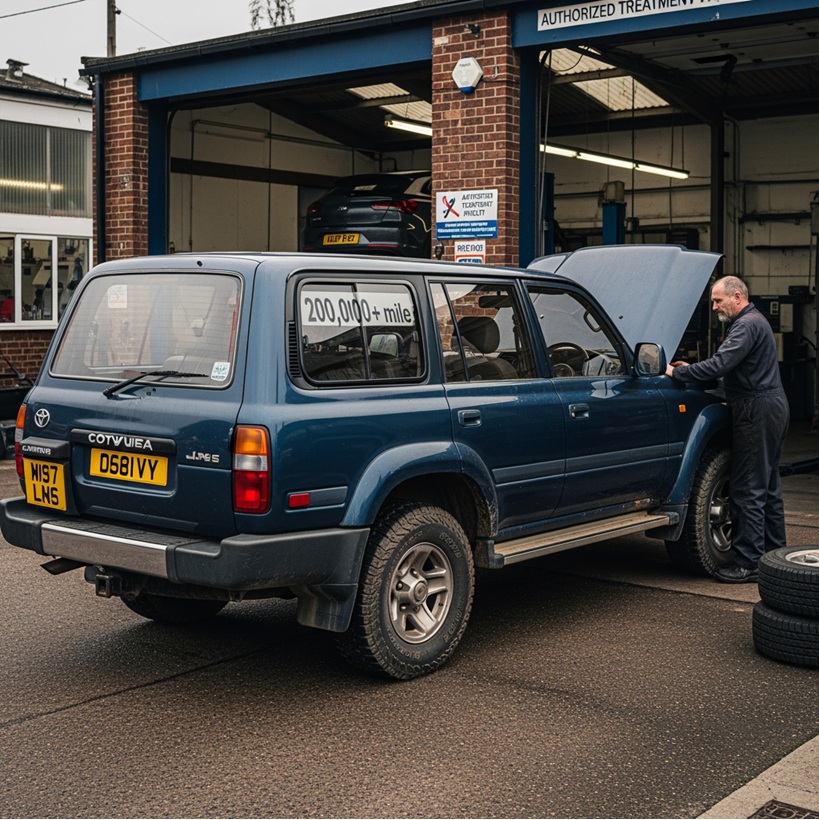
Toyota models represent the ultimate gold standard for durability. Models like the Corolla, Avensis, and Camry routinely exceed 200,000 miles with nothing more than basic maintenance. The legendary Land Cruiser frequently surpasses 300,000 miles in incredibly harsh environments. These are not exceptional examples, but rather typical lifespans for these vehicles.
Toyota engineering always prioritises reliability above outright performance or cabin refinement. They introduce new engine technology very slowly. They only roll out new features after extensive, punishing testing proves their long-term durability. This highly conservative approach means they rarely lead in cutting-edge innovation, but they consistently lead in longevity.
Honda reliability closely mirrors this successful approach. The Civic, Accord, and CR-V consistently rank among the most durable car models available. Honda petrol engines particularly excel at high-mileage running. Their famous K-series petrol engines easily exceed 200,000 miles without requiring internal repairs.
Mazda longevity has also improved remarkably with each recent generation. Modern Mazda 3 and Mazda 6 models show excellent long-term durability. They stuck with naturally aspirated petrol engines and conservative engineering when rivals downsized and added turbos. This created highly reliable, long-lasting vehicles for everyday drivers.
European Diesel Longevity Champions
Japanese petrol engines might dominate general reliability discussions, but European diesels tell a completely different longevity story. German manufacturers spent decades perfecting heavy-duty diesel powerplants for massive mileages.
Mercedes diesel engines built their global reputation on exceptional durability. The older OM606 straight-six diesel from the 1990s E-Class regularly exceeds 400,000 miles. Even the more recent OM651 four-cylinder diesels show excellent longevity when properly maintained with the correct specification oils.
The Mercedes E-Class diesel from almost any era represents a fantastic option. Variants like the E220 CDI and E320 CDI routinely reach massive figures on the odometer. Taxi drivers worldwide rely on Mercedes diesels specifically because their livelihoods depend on this legendary engine longevity.
Early Volkswagen Group diesels from Audi, VW, and Skoda also show excellent lifespan potential. The famous 1.9 TDI engines became truly legendary in the motor trade for their bulletproof durability. You will routinely find VW Passat, Audi A4, and Skoda Octavia diesels still running perfectly after 250,000 miles.
Specific Model Hall of Fame
Certain specific models deserve special recognition based on overwhelming evidence gathered across decades. If you want a car that simply refuses to die, these are the prime candidates.
When discussing Toyota Corolla reliability, it represents the ultimate longevity champion across the globe. Corollas routinely reach well over a quarter of a million miles. Almost every single generation from the late 1990s onwards demonstrates exceptional durability.
The Honda CR-V represents peak SUV reliability for families. The first through fourth-generation models demonstrate exceptional toughness. Reaching 150,000 miles represents a typical midpoint rather than an exceptional lifespan for well-maintained examples.
The Mazda MX-5 demonstrates that fun sports cars can achieve brilliant longevity too. These lightweight roadsters regularly reach massive mileages without major engine work. Their simple, naturally aspirated engines and straightforward mechanical layouts heavily favour long-term durability.
Lexus IS and RX models combine unbeatable Toyota reliability with premium interior quality. These cars sail past huge mileages while remaining impressively refined and quiet. They prove that luxury vehicles do not automatically have to be fragile or expensive to maintain as they age.
Models to Approach Cautiously
Not all vehicles achieve these impressive lifespans. Certain types of vehicles and specific engine designs consistently underperform regarding long-term durability.
Highly complex technology generally reduces overall longevity. Early dual-clutch gearboxes, elaborate air suspension systems, and massive electronic feature sets create inevitable failure points. Vehicles loaded with experimental technology rarely achieve the lifespan of simpler alternatives without requiring massive financial investment.
Turbocharged engines without meticulous maintenance histories fail much earlier than naturally aspirated equivalents. The additional stress, extreme heat, and high pressures accelerate component wear. This does not make turbo engines inherently bad, but it does make them far more dependent on proper care.
Modern engines utilising “wet belt” designs require extreme caution. These engines run the rubber timing belt directly inside the hot engine oil. If the oil is not changed strictly on schedule, the belt degrades, blocks the oil pickup, and destroys the engine entirely. These designs rarely make it onto any longest lasting cars lists, often leaving owners searching for ways to scrap my car much earlier than expected.
Maintenance Impact on Longevity
Even the most durable car models fail quickly without proper maintenance. Conversely, surprisingly mediocre vehicles sometimes achieve impressive longevity through absolutely exceptional owner care.
I remember a customer years back who brought a 1998 Mercedes E300 TD into my workshop for its annual MOT. The odometer showed 387,000 miles, and he had bought it brand new as a travelling sales representative. It still had the original engine, original automatic gearbox, and the original turbocharger bolted to the side. He religiously changed the oil every 6,000 miles and fixed every minor rattle immediately, proving that incredible longevity is totally achievable with meticulous care.
Service intervals matter critically for any engine. Following the manufacturer schedules ensures the internal components stay protected. Extending your oil changes just to save a few pounds destroys engines that are far more expensive to replace than the service costs.
Timing belt versus timing chain designs create very different maintenance requirements. Belts need replacement at strict set intervals but rarely fail between those changes. Chains theoretically last forever but sometimes stretch and fail catastrophically if the engine suffers from poor lubrication.
Preventative maintenance extends life dramatically. Addressing small problems before they cascade prevents major mechanical failures later. Fixing that slight coolant weep promptly prevents catastrophic overheating damage that could cost thousands of pounds.
Driving Conditions and Longevity
Where and how you drive your car heavily affects whether it joins the high-mileage statistics or fails prematurely. Usage patterns matter just as much as the badge on the bonnet.
Motorway driving extends a vehicle’s lifespan dramatically. Steady speeds, consistent engine temperatures, and minimal braking favour long-term component survival. Cars accumulating primarily motorway miles often double the lifespan of identical city-driven equivalents.
City driving accelerates wear heavily through constant stopping, cold starts, and prolonged idling. Short journeys prevent the engine oil from reaching its proper operating temperature. This promotes harmful moisture accumulation inside the block and causes incomplete fuel combustion.
British climate effects influence longevity significantly too. Coastal areas accelerate rust through heavy salt exposure. Areas using heavy winter road salt see much faster structural deterioration on the chassis. Keeping the underside of your vehicle clean during winter prevents the dreaded MOT corrosion failures.
The Million-Mile Club
Exceptional examples prove exactly what is possible with long-lasting car models and totally dedicated ownership. The “Million-Mile Club” is an exclusive group, but it provides great lessons for everyday drivers.
The most famous documented example is Irv Gordon’s classic Volvo P1800. He drove it for over three million miles before he passed away. His secret was incredibly simple but effective. He followed the owner’s manual perfectly, changed the oil constantly, and never ignored a strange noise.
Common factors in ultra-high-mileage survivors usually include single-owner histories. When one person owns a vehicle for decades, they know its mechanical quirks perfectly. They also tend to drive predominantly on motorways and use very high-quality replacement parts.
These extreme examples teach us exactly how to achieve maximum longevity. Start with quality engineering, maintain the car meticulously, drive considerately, and address problems promptly. This simple formula works wonderfully regardless of your specific model.
Buying for Longevity
Selecting durable car models on the used market requires thorough research and highly informed decision-making. You cannot judge a car’s potential lifespan purely by its paintwork.
When inspecting used cars, a complete service history absolutely trumps low mileage. A car with 100,000 miles and a fully stamped service book is a much safer bet than a car with 40,000 miles and zero maintenance records. Comprehensive documentation shows the previous owner actually cared.
Model year research prevents you from buying problematic generations. Some model years suffer from very specific design flaws, while earlier or later years prove completely reliable. Spending an evening browsing owner forums reveals these important patterns clearly.
Avoid heavily modified vehicles if your priority is pure longevity. Performance modifications add severe stress to standard engine internals and transmission components. Conversely, buying a neglected or highly modified vehicle often leads to catastrophic mechanical failures, leaving car scrapping as your only sensible financial option.
The Longevity and Value Connection
Long-lasting car models create very interesting value retention patterns affecting your overall ownership costs. Reliability directly impacts how much money you lose to depreciation.
Depreciation differences between reliable and unreliable brands prove highly substantial. Toyota and Honda vehicles hold their value far better than most competitors on the market. This reflects the used market’s strong recognition of their long-term longevity potential.
Total cost of ownership calculations heavily favour reliable vehicles. Lower repair costs, fewer breakdown recoveries, and superior value retention mean these cars cost less over a decade. This remains true even if their initial purchase price was slightly higher than a less reliable rival.
Resale considerations directly reward longevity reputations. High-mileage Japanese cars sell much faster than lower-mileage vehicles from notoriously unreliable manufacturers. Buyers clearly understand that 120,000 miles on a well-maintained Honda represents far less financial risk. Eventually, all cars reach a point where trusted vehicle disposal services become necessary, but reliable brands delay this milestone significantly.
Environmental Considerations
Keeping reliable vehicles running longer offers major environmental benefits. Extending a car’s service life is often the greenest choice a motorist can make.
The manufacturing process represents a massive environmental cost. Building a new car requires mining metals, creating plastics, and shipping heavy components globally. Keeping a reliable older vehicle running actively delays the heavy environmental impact of manufacturing its replacement.
However, emissions standards evolution does create some complexity. Older reliable vehicles might emit more harmful tailpipe pollutants than newer, cleaner replacements. This creates a genuine tension between the benefits of mechanical longevity and the need for better local air quality in busy city centres.
When the time finally comes, responsible disposal is crucial for the environment. Choosing proper scrap car recycling ensures that all the heavy metals, toxic fluids, and reusable plastics are processed safely and legally.
When Even Reliable Cars Reach Their End
Even the most incredibly durable car models eventually need scrapping. Understanding realistic expectations prevents disappointment when your trusty old motor finally fails its MOT.
Economic considerations eventually favour disposal over repair, completely regardless of a model’s stellar reputation. A twenty-year-old reliable estate car worth £800 that suddenly needs £1,200 in welding work faces the exact same economic reality as any other vehicle. It simply becomes an economic write-off.
Structural deterioration eventually affects all vehicles. Rust certainly does not respect manufacturer reputations or reliability awards. The harsh British weather attacks steel mercilessly, creating inevitable structural failures that eventually require the car to be removed from the road.
When that day arrives and you decide it’s time to recycle my car, you can do so through authorised facilities. They handle the legal DVLA paperwork and provide the correct Authorised Treatment Facility documentation to ensure the vehicle is dismantled in an environmentally sound manner.
Final Thoughts on Vehicle Longevity
The longest lasting cars share very common characteristics. They feature quality engineering, highly conservative design philosophies, proven powertrains, and reputations built slowly over decades. Japanese manufacturers, particularly Toyota and Honda, absolutely dominate these longevity discussions for excellent reasons.
Maintenance quality matters just as much as your initial model selection. Even the most incredibly durable car models will fail rapidly without proper care. Keep on top of your oil changes, listen out for strange noises, and fix small issues before they become terminal.
Whether you are hunting for a used car capable of extreme mileage, or you finally need to dispose of a faithful vehicle that has served you for twenty years, making informed choices matters. The Scrap Car Network specialises in helping drivers handle that final stage of ownership responsibly.
Choose your next model wisely, maintain it diligently, and enjoy the financial benefits of vehicles engineered to last. When the time comes to say goodbye to your current vehicle, please do contact us today, and we will help you arrange a smooth, legally compliant collection while ensuring you get a fair price.