The 20-Year Threshold: When Old Becomes Classic
29th Apr, 2026
Your car is celebrating its twentieth birthday. It has survived two decades of British weather, thousands of cold starts, and countless MOT tests. Many drivers looking at a 2004 registration plate start wondering if they are accidentally storing a highly valuable future classic. The ultimate question arises: is this vehicle actually becoming a classic, or is it simply getting old?
The reality is vastly more complicated than the motoring myths suggest. Age alone absolutely does not create classic car status. Most 20-year-old cars are simply aging transport with rapidly declining values, not future collectibles appreciating inside a heated garage.
Understanding the massive difference between an appreciating asset and a dying machine prevents you from throwing good money after bad. To make the right choice, it is essential to look past the sentimental value and evaluate the mechanical reality of a two-decade-old car. Let’s explore exactly when a vehicle is worth preserving and when it is time to move on.
Understanding the 20-Year Mark
Twenty years is plenty of time for a car to transition firmly from “used” into “old.” By this point, most major mechanical components have been replaced at least once, and rust has almost certainly established a foothold in vulnerable areas. Technology that felt incredibly cutting-edge in 2004 now feels distinctly primitive.
However, hitting two decades on the road does not automatically grant a vehicle collector status. The traditional motoring world generally considers twenty-five years as the absolute minimum age where something might start qualifying as vintage.
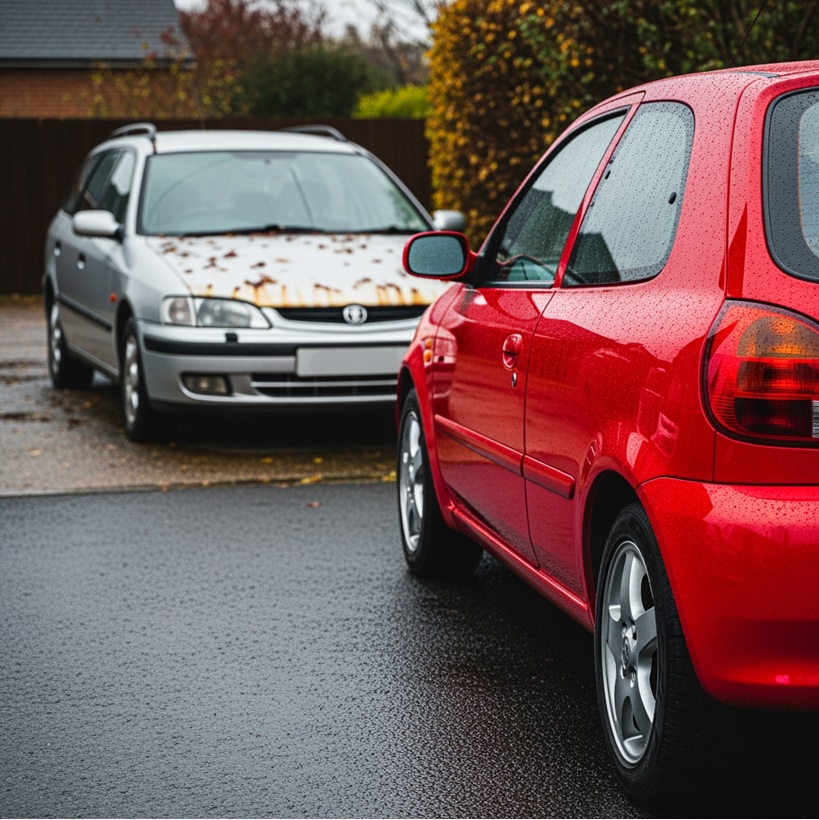
Think of an ordinary 20-year-old hatchback like an aging household washing machine. Just because it has stubbornly survived for two decades does not miraculously transform it into a highly desirable antique. Often, it is just an old, tired appliance that has finally reached the natural end of its useful working life.
The 40-Year Historic Vehicle Threshold
The truly magical number for serious legal benefits is actually forty years, not twenty. Once a vehicle reaches this massive milestone, it qualifies for a permanent historic vehicle tax exemption alongside highly specific MOT exemption criteria.
This means a car built in 2004 will not legally qualify for these massive government benefits until 2044. During that massive wait, the vehicle needs to survive mechanically, completely avoid terminal structural rust, and remain roadworthy enough to justify the massive ongoing storage costs.
The historic vehicle classification operates on a rolling threshold. You simply inform the DVLA when renewing your tax, provide solid proof of the vehicle’s age, and officially declare that no substantial modifications have occurred. If you swap the original engine for a modern equivalent or drastically alter the chassis, you instantly lose all historic benefits.
Classic Car Status: What Qualifies
Rarity and Desirability Factors
Beyond pure age, what actually transforms a rusty old car into a highly desirable classic? It almost always boils down to a strict combination of extreme rarity, enthusiast desirability, and absolute originality.
Limited production numbers help enormously. If a manufacturer only built two thousand examples of a specific performance model, genuine scarcity automatically creates long-term value. Surviving examples of limited-run vehicles from the early 2000s are currently appreciating rapidly simply because finding a clean one is becoming incredibly difficult.
Original specification is utterly crucial. An unmodified 20-year-old car boasting a fully stamped service history is worth multiples of a heavily modified equivalent. That loud aftermarket exhaust and lowered suspension might have seemed brilliant in 2010, but they absolutely decimate the car’s appeal to serious, wealthy collectors today.
The Enthusiast Community
Active enthusiast communities signal genuine classic potential. If there are dedicated forums, heavily populated owners’ clubs, and specialists specifically manufacturing or hoarding parts for your model, that is incredibly promising.
Without this dedicated community support, finding essential replacement components becomes nearly impossible as the vehicle ages. If nobody is restoring your model and parts are unavailable, it is not a classic; it is just an old car with a limited future.
When 20-Year-Old Cars Are Worth Keeping
There is currently a massive, booming market for 1990s and early 2000s Japanese performance cars. Legendary vehicles like the Nissan Skyline, Toyota Supra, and Mazda RX-7 command serious enthusiast money, provided they remain completely unmodified.
Hot hatches from this specific era also show massive appreciation potential. A standard 2004 Volkswagen Golf GTI holds serious value, whereas a base-model 1.4-litre Golf from the exact same year is essentially worthless. Performance variants actively achieve classic status because driving enthusiasts specifically hunt them down to relive their youth.
I remember a customer back in 2018 who brought in a 2005 Ford Focus ST with 67,000 miles on the clock. It was completely unmodified, boasted a full main-dealer service history, and sat in absolute mint condition. The owner wanted to scrap it simply because it needed a new clutch. It was clear the car was worth saving, and it eventually sold within forty-eight hours for £4,200 to a collector building a museum of hot hatches. The standard base-model Focus from that exact same year would have been worth absolute scrap value.
When 20-Year-Old Cars Should Be Scrapped
It is vital to be brutally honest about mundane, mass-produced vehicles. That 2004 Vauxhall Astra or basic Ford Mondeo was manufactured by the absolute hundreds of thousands. They served their core purpose as reliable daily transport brilliantly, but that primary purpose is now complete.
Structural rust is the ultimate killer of 20-year-old cars. Two decades of punishing British rain and heavy winter road salt create horrific corrosion inside the sills and subframes. If a basic family car requires thousands of pounds in complex welding just to pass an MOT, repairing it is absolute financial madness.
If you realise your standard family hatchback holds zero collector appeal, relying on professional vehicle disposal services becomes the most logical and financially sound step you can take.
Assessing Your Vehicle’s Future
Accurately evaluating whether your aging car is worth keeping requires setting aside all heavy emotional attachment. You must look purely at the cold, hard mathematics of the situation.
Always check completed auction results and enthusiast forums for your specific model. See exactly what similar cars actually sold for in the real world, ignoring highly inflated asking prices from optimistic private sellers. If perfectly clean examples are struggling to achieve £800, you are definitely not sitting on a hidden goldmine.
Be brutally realistic about your car’s actual mechanical condition. “Good for its age” is absolutely not the same thing as being genuinely good. If the vehicle is severely dilapidated, understanding its realistic car scrap value prevents you from throwing good money after bad.
The Disposal Process
When you finally accept that the repair bills are simply too high, understanding the modern disposal process ensures you get the absolute fairest possible price for the remaining metal.
The most important thing to grasp is that base scrap value depends almost entirely on the physical weight of the vehicle. A heavy 20-year-old diesel estate car and a petrol version of the exact same vehicle will receive practically identical quotes. Large, heavy SUVs naturally command higher prices than small city hatchbacks because they contain significantly more recoverable steel.
If you find yourself thinking about your options, choosing a licensed facility that offers professional scrap my vehicle services is a straightforward way to handle the situation. These facilities manage the heavy lifting, ensure the highly toxic fluids are drained safely, and properly notify the DVLA to officially remove your legal responsibility.
Preservation Options Beyond Scrapping
If your aging car holds absolutely no financial value but you still cannot bear the thought of it being crushed, there are alternative routes. Non-running or heavily MOT-failed vehicles are sometimes highly valuable to other enthusiasts purely as dedicated parts donors.
Someone actively restoring a clean example of your specific model might gladly pay slightly above base scrap value to secure a complete donor vehicle. Advertising the car honestly as “spares or repairs” on dedicated owner forums often yields highly motivated buyers looking for specific gearboxes, interior trims, or hard-to-find electronic modules.
However, if the vehicle is entirely beyond saving and holds no enthusiast interest, opting for car scrapping guarantees the shell is processed responsibly without causing environmental damage.
Maximising Your Financial Return
If you decide that disposing of the vehicle is the only financially logical choice, you should still aim to squeeze the maximum possible value out of the remaining asset.
Always ensure you provide completely accurate details about the vehicle’s current condition, including whether it starts, drives, or possesses its original catalytic converter. Total transparency prevents frustrating haggling when the recovery truck finally arrives to collect the shell.
By leveraging a vetted nationwide network that connects you directly with local buyers, you can effortlessly get an instant quote to scrap any car to discover exactly what the metal is currently worth on the global market.
Deciding the Future of Your 20-Year-Old Car
The 20-year threshold is exactly where harsh reality diverges sharply from motoring myth. The vast majority of two-decade-old cars are simply aging vehicles with rapidly declining values, not glorious classics appreciating quietly in a lockup. Genuine classic car status requires extreme desirability, rarity, and pristine condition. Age alone is simply never enough.
For the vast majority of 20-year-old commuter cars, crushing the vehicle when massive major repairs finally arise makes infinitely more financial sense than continued heavy investment. The money you would inevitably spend on welding and replacement sensors is vastly better invested in securing newer, significantly more reliable transport.
Ready for a brutally honest assessment of your car’s true financial value? The Scrap Car Network specialises in handling everything from mundane old cars to genuinely rare classics safely and legally.
Please do contact us today. We will gladly connect you with trusted local treatment facilities that handle everything from mundane old hatchbacks to genuinely rare classics safely, legally, and highly efficiently.