Which Car Parts Are Worth Most When Scrapping?
22nd Jun, 2026
Not all car parts are created equal when it comes to scrap value. Whilst the bulk of a vehicle’s worth typically comes from its total metal weight, certain components can fetch surprisingly good money if they are still in working order and you know where to look. Understanding which components hold the most value helps car owners make informed decisions about whether to scrap a vehicle whole or attempt to sell components separately.
This knowledge becomes particularly useful when a car fails its MOT or suffers a terminal mechanical failure but still has plenty of valuable car parts attached to the chassis. I spent decades in the workshop seeing folks toss away bits of kit that were worth a week’s wages just because they didn’t know the score. Let’s lift the bonnet on the industry and figure out exactly what your old motor is worth beyond the simple price of steel.
The Financial Reality of Vehicle Scrap Value
Before we get into the nitty-gritty of individual components, we need to understand how the market actually works. When you look at a car, you see a mode of transport; a scrap dealer sees a specific weight of ferrous and non-ferrous metals. The base price of any scrap car is dictated by the current global commodity markets for steel, iron, and aluminium. However, the presence of specific scrap car components that can be refurbished and resold adds a significant premium to that baseline.
In my experience, the difference between a bare shell and a complete car can be hundreds of pounds. If a dealer knows they can pull a working alternator or a pristine set of leather seats, they will happily improve their offer. But you have to be careful. If you start pulling the best bits off yourself, you might find that the scrap value of the remaining shell drops faster than the cash you make from the parts. It is a delicate balancing act that requires a bit of mechanical common sense and a keen eye for the current market.
The Catalytic Converter: The Precious Metal Powerhouse
If there is a crown jewel in the world of car scrapping, it is undoubtedly the catalytic converter. These exhaust system components are consistently the most valuable part of almost any scrap vehicle. They don’t look like much, usually just a rusty box in the middle of your exhaust pipe, but what is inside is where the real money lives. Catalytic converters contain a ceramic honeycomb structure coated with precious metals including platinum, palladium, and rhodium.
These materials are incredibly rare and command massive prices on the global market, often trading for more than gold per ounce. A single converter can be worth anywhere from £50 to £800, depending on the specific vehicle make, model, and year. Hybrid vehicles are particularly sought after because their converters often contain much higher concentrations of these metals to handle the frequent engine start-stop cycles.
I remember a customer back in the day who brought in an old Prius that had been rear-ended. He was about to let a local lad take it for fifty quid. I had to pull him aside and explain that the converter alone was worth nearly five hundred at the time. It is a bit like having a small bag of jewellery hidden under your floorboards; you wouldn’t just give the house away without checking, would you?
Why Precious Metals Matter in Your Exhaust
The reason these metals are so valuable is that they act as a catalyst to turn toxic gases like carbon monoxide into less harmful substances. They are essential for meeting modern emissions standards. Because the mining of these metals is so environmentally taxing and expensive, the recycling industry pays a premium to recover them from old exhausts.
The catalytic converter value fluctuates along with the precious metal markets. When rhodium prices spike, the value of your scrap exhaust goes through the roof. However, be warned: legitimate dealers will only pay top price if the converter is original. If you have had a cheap aftermarket replacement fitted recently, it won’t have nearly the same metal content, and the scrap value will reflect that.
Engines and Drivetrains: Where the Heavy Money Lives
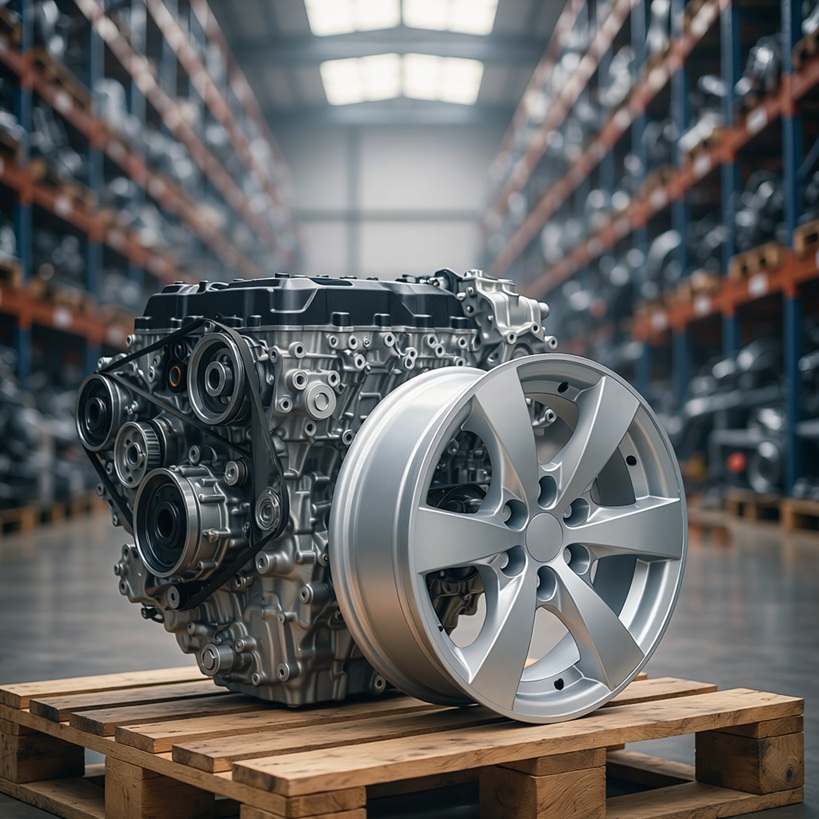
A working engine represents one of the most substantial values in any vehicle. Even if the motor has given up the ghost, it still holds a decent engine scrap value because of the aluminium content in the block and head. A non-functional engine might be worth £100 to £200 just for the metal, but a working unit from a popular or desirable model can fetch anywhere from £500 to £2,000 or even more on the second-hand market.
Engine value depends on several critical factors. Lower mileage units in good working order obviously command the highest premium. Desirable models from reliable manufacturers or performance vehicles are always in high demand. If you have an engine from a rare or discontinued model, you might be sitting on a goldmine for enthusiasts looking to keep their own cars on the road.
If you aren’t a mechanic, trying to pull a motor out of a chassis is a recipe for a trapped finger or a ruined back. It is often much easier to get an instant quote to scrap any car to see what the professionals are willing to pay for the complete package. Often, the hassle of removing an engine isn’t worth the extra few quid you might make compared to a professional collection.
Transmissions and Gearboxes
Just like the engine, the transmission system holds significant weight in the parts market. Modern gearboxes are incredibly complex and expensive to manufacture. This creates a strong demand for used units as cost-effective replacements for cars that have suffered a terminal transmission failure.
Automatic gearboxes, particularly the sophisticated dual-clutch or CVT systems found in newer vehicles, can often exceed £1,000 in resale value. Even a standard manual gearbox from a common hatchback can pull in £150 to £400. However, just like engines, they are heavy, awkward to transport, and require specialist tools to remove without causing damage to the casing or the delicate sensors inside.
Modern Electronics: The Invisible Value in Your Dashboard
We don’t often think about it, but modern cars are basically computers on wheels. Your vehicle contains dozens of electronic control units (ECUs) that manage everything from how much fuel the engine uses to the temperature of your air conditioning. These little black boxes are some of the most overlooked car parts worth money in the entire scrapping process.
A main engine control module can be worth £50 to £300 on its own. Other valuable bits include ABS modules, airbag control units, and the instrument clusters. The real money in electronics, however, often lives in the infotainment and navigation systems. A factory-fitted GPS unit from a premium brand can easily fetch £200 to £500 if it is removed carefully.
The challenge with electronics is that they need to be tested and verified. A buyer won’t touch a module if they aren’t sure it works. Plus, many modern systems are security coded to the specific car, meaning they need to be professionally reset or re-coded before they can work in another vehicle. There are certainly the advantages of choosing our service when it comes to these complex bits, as we work with partners who can properly evaluate every component.
Safety Systems: Airbags and Beyond
Unused airbags are high-value components because the cost of buying them new from a main dealer is astronomical. A complete set of undeployed airbags in a modern car might represent £300 to £600 in potential resale value. However, I have to give you a stern warning here: airbags are explosive devices.
In my years in the trade, I have seen some nasty accidents where folks tried to remove airbags without properly discharging the system or disconnecting the battery correctly. They are dangerous to handle and even more dangerous to ship through the post. Legitimate buyers will usually want proof that the airbags are intact and haven’t been triggered by a minor bump. If you’re managing this yourself, you’re essentially handling live pyrotechnics, so proceed with extreme caution.
Alloy Wheels and Exterior Components
Alloy wheels are a classic example of where style meets material substance. Most modern cars come with aluminium alloy rims rather than the old steel wheels with plastic trims. Aluminium is a non-ferrous metal, meaning it doesn’t contain iron and is much more valuable to a recycler. A set of four decent alloys can fetch £100 to £400 just as scrap, but if the design is desirable and the condition is free from kerbing and corrosion, you can get much more from a private buyer.
Don’t forget about the tyres, either. If you have recently put four brand-new tyres on a car that has just suffered a terminal engine failure, you are looking at a lot of lost money if you scrap them. Good tyres with 6mm or more of tread are always in demand. If you want to get the best deal, ensure you find out how to scrap your car easily through a service that accounts for these extras in their valuation.
Other exterior bits like headlamps and tail lights can also be surprisingly pricey. If you have got xenon or LED units, they can be worth £100 to £300 each. Body panels like the bonnet, doors, and boot lids are also worth a look, provided they are the original factory colour and free from dents. People are always looking for a cheap door to replace one that’s been dinged in a car park.
The Practicality Check: Stripping vs Scrapping Whole
It is easy to look at a list of prices and think you’ll make a fortune by stripping your car down to the bare metal. But before you grab the spanners, you need to do a reality check. Stripping a car takes a massive amount of time. You’ll need a full set of tools, a way to deal with toxic fluids like oil and brake fluid, and a lot of dry storage space.
I once had a neighbour who decided to strip his old Mondeo to make some extra cash. Three months later, his wife was fuming because the garage was full of greasy parts, the garden had a rusting shell attracting rats, and he’d only managed to sell the radio and one headlight. By the time he called in a recovery truck, the car scrap value had dropped because the car was no longer complete and was a nightmare to winch onto the lorry.
Think of it like a steak dinner. If you buy the whole cow, the meat is cheaper per pound, but you’ve got to do all the butchering yourself and find somewhere to put the bits you don’t want. Most people are better off going to the shop and buying the cut they need. In the same way, arranging a scrap car collection is usually the much smarter move for the average car owner. You get a guaranteed price, the car is gone in twenty-four hours, and you don’t have to spend your weekends covered in old gearbox oil.
Legal Obligations and Environmental Duty
Whether you decide to sell the bits or the whole lot, you have legal responsibilities that you cannot ignore. The DVLA needs to know exactly what has happened to that vehicle. If you scrap a car, you must use an Authorised Treatment Facility (ATF) to ensure you get an official Certificate of Destruction. This is the only way to formally end your liability for the vehicle.
If you strip the car yourself and then try to get rid of the shell, you might find that many reputable yards won’t take it. They need the logbook and a complete vehicle to process it legally. Plus, you’ll be responsible for disposing of all the hazardous materials. You can’t just pour old engine oil down the drain or toss a lead-acid battery in the bin.
When you are scrapping your car through a licensed network, you’re making sure that 95 percent of the vehicle is recovered and reused. Professional recyclers have the equipment to drain every drop of toxic fluid safely and shred the metal into tiny pieces for manufacturing new products. It is the only way to be a responsible owner while staying on the right side of the law. If you are unsure of the paperwork, just check out our guide on how to tell the DVLA when you sell or scrap your car.
Making the Right Decision
At the end of the day, the question isn’t just about which parts are worth most, but whether the total value justifies the effort you have to put in. For most of us, the convenience and speed of a professional service win every time. You get a fair price based on current market rates, and the whole mess is handled for you.
However, if you’ve got a rare classic or a car with very expensive recent upgrades, it might be worth pulling a few specific bits before the recovery truck arrives. Just make sure you tell the dealer what is missing when you get your quote, as a missing converter or engine will definitely change the final number. Honest communication is the key to a smooth transaction.
The Scrap Car Network works with trusted vehicle disposal services across the UK to ensure you get the best possible return for your old motor. We take the guesswork out of the process, connecting you with local facilities that know exactly how to extract the maximum value from your specific model.
Conclusion
Catalytic converters, engines, transmissions, and expensive electronics like infotainment systems are the real heavy-hitters in the scrap world. They can individually be worth hundreds of pounds, but extracting that value isn’t always as simple as it looks on paper. Between the dangerous safety systems, the technical complexity of modern modules, and the sheer physical labour of engine removal, it is a big job for any DIY-er.
For the vast majority of vehicle owners, the best approach is to recycle my car through a professional service. It ensures that every part is processed legally and every hazardous fluid is disposed of without harming the environment. You get to walk away with a clean conscience and cash in your pocket, while the recycler makes sure that your old car lives on in a different form.
If you’re sitting on an old car and wondering what those valuable car parts are worth, don’t let it sit and rust away. The longer a car sits, the more those parts seize up and lose their value. If you need a bit of straight-talking advice or a no-obligation quote, feel free to contact us or call 01772 665 909. We’ll help you navigate the process and make sure you get exactly what your old pride and joy is worth.