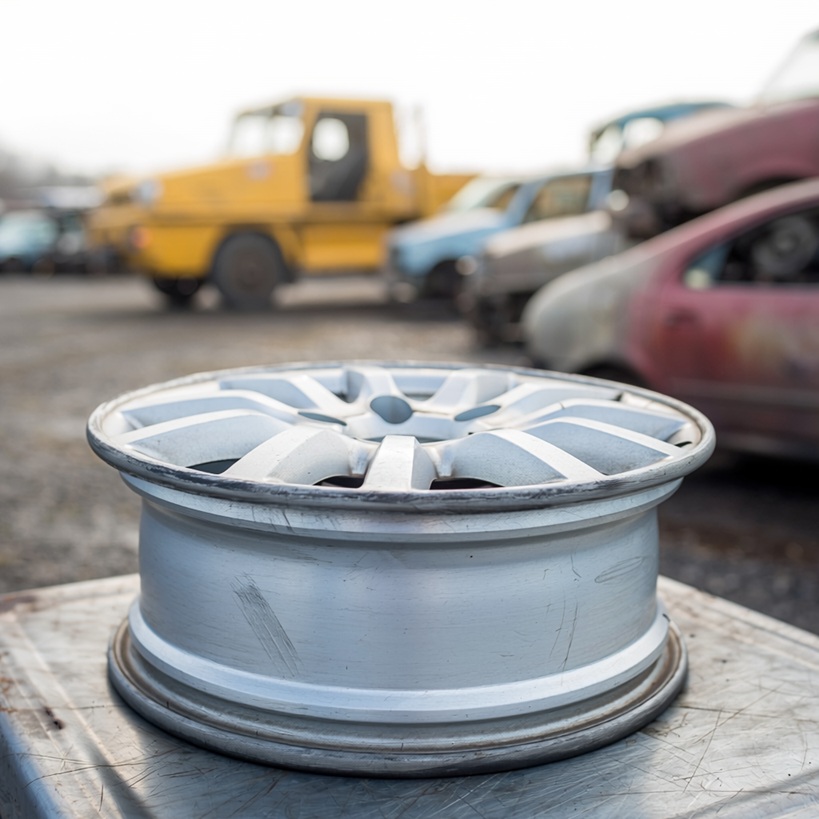
How Alloy Wheels Increase Your Scrap Car Value
22nd Jun, 2026
When a car reaches the end of its roadworthy life, most owners assume they will receive a standard rate based purely on the total metal weight. In my years spent under the ramp, I have seen plenty of folks lose out on a tidy sum because they didn’t realise that the bits bolted to the hubs are worth more than the rest of the shell combined. The reality is that the alloy wheels value can significantly boost what you receive for your vehicle, sometimes adding between £100 and £300 to your final quote depending on the condition and type of rims fitted.
The massive difference between a decent payout and a disappointing one usually comes down to material value and reusability. While standard steel wheels get melted down with the rest of the car’s ferrous metal, alloy wheels contain aluminium and magnesium. These materials are worth considerably more per kilogram on the open market, and they are also frequently refurbished and resold to other drivers, creating a secondary market that drives up their worth far beyond the basic price of scrap metal. If you want a fair deal, you have to understand exactly what you are sitting on before you commit to any offer.
Why Your Choice Of Wheels Dictates The Payout
Most people treat their wheels as just another part of the car, but to a recycler, they are a specific commodity. When a car is built with alloys, the manufacturer is looking for better heat dissipation and lighter weight to improve fuel economy. For you, the owner, that translates to a hidden profit when the car is finally ready for the crusher. The premium value exists because the materials inside those wheels are much harder to come by than the iron used for the chassis.
I remember a regular customer of mine who had an old Audi A4 that had finally given up the ghost. He was about to let a local scrap collector take it for the price of a round of drinks until I had to point out that he had a set of pristine 18-inch S-Line alloys on that motor. A set like that is highly sought after by folks looking to upgrade their lower-spec models. By identifying those wheels correctly, he was able to secure a much higher price than if he had just called it a scrap car without any features.
The Metallurgy Of Money: Aluminium Versus Steel
To understand the price difference, you have to look at what the wheels are actually made of. Steel wheels are basically pressed or stamped steel, containing iron and carbon. They are heavy, durable, and dirt cheap to manufacture. Alloy wheels, on the other hand, are a blend of aluminium with magnesium, silicon, or other elements to create something lighter and stronger. Because aluminium is a non-ferrous metal, it does not rust like steel, which makes it much more valuable to the recycling industry.
The current scrap metal prices reflect this massive gap in value. In the current market, scrap aluminium can fetch roughly three times the price of steel per tonne. A typical alloy wheel weighs between 7 and 12 kilograms, meaning a full set of four represents nearly 50 kilograms of high-value material. When you factor in the added value of magnesium, which is even more expensive, you can see why a scrap yard is happy to pay a premium for a car that isn’t just a hunk of iron. It is a smart move to get an instant quote to scrap any car early on so you have a baseline for these material costs.
Ferrous Versus Non-Ferrous Metals
The world of recycling is divided into these two categories. Ferrous metals contain iron and are magnetic, while non-ferrous metals like aluminium, copper, and brass do not. Non-ferrous materials are far more desirable because they can be recycled indefinitely without losing their chemical properties. This makes aluminium recycling one of the most efficient processes in the world, and that efficiency is what puts more cash in your back pocket when you decide to wave goodbye to your old motor.
The Resale Market For Used Alloy Wheels
While the metal weight provides a solid floor for the price, the real cream comes from the resale potential. There is a massive global sector dedicated to refurbished alloy wheels. Specialist companies buy these wheels from scrap yards, fix up any minor kerb damage, and powder coat them to look brand new. They then sell them to drivers who have smashed a single wheel on a pothole and don’t want to pay the eye-watering prices at a main dealership.
This resale demand creates a genuine incentive for Authorised Treatment Facilities to pay you more. If your wheels are straight and free from major cracks, they won’t be headed for the furnace immediately. Instead, they will likely be sold to a refurbishment specialist for a few hundred pounds. This is why a set of premium manufacturer wheels from a brand like BMW or Mercedes will always command the highest price. People are always looking for genuine replacements that don’t cost the earth, which is why you should always scrap my vehicle through a network that understands these nuances.
Refurbishment Processes And Added Value
Think of wheel refurbishment like a posh makeover for your car’s shoes. A specialist can take a dull, scuffed rim and turn it into something that looks like it just came off the assembly line. They use chemical baths to strip the old paint, CNC lathes to cut a fresh face onto the metal, and high-temperature ovens to bake on a tough new finish. Because the cost of doing this is relatively low compared to the price of a new wheel, there is a lot of room in the middle for everyone to make a bit of money, including you.
Factors That Influence The Final Alloy Wheels Value
Not all alloys are created equal, and several factors will dictate exactly how much they add to your quote. The most obvious one is the physical condition. If a wheel is bent like a banana or has a massive crack from a high-speed impact, it is only worth its weight in scrap aluminium. However, if the rim is straight and only has a few parking battle scars on the outer edge, it still has massive alloy wheel resale potential.
The manufacturer and the design also play a massive role. Original Equipment Manufacturer (OEM) wheels are almost always more valuable than generic aftermarket brands. This is because car buyers want their vehicles to look factory, and they trust the strength of a genuine part over a cheap imitation. Large wheel sizes are also a factor. A 20-inch wheel contains significantly more metal than a 15-inch one, and it is generally more desirable to the prestige market.
I once saw a lad try to scrap a car with a set of replica wheels he’d bought off a shady site. He thought he was in for a payday, but the scrapper spotted they were low-quality castings in seconds. They didn’t have the manufacturer’s stamp on the back and were actually heavier and more brittle than the originals. It just goes to show that while they might look the part, the true alloy wheels value depends on the quality of the metal and the reputation of the brand.
How Local Buyers Assess Your Vehicle
When you are looking to get the most for your motor, the Scrap Car Network is a brilliant place to start. Our partners use a systematic approach to ensure you get a fair price that reflects the specific kit on your car. Experienced collection drivers can spot a set of genuine alloys from twenty paces. They will check the condition of the rims and see if there is any structural damage that would prevent them from being refurbished.
Transparency is the name of the game here. If you are getting a quote over the phone or online, make sure you mention that you have four matching alloy wheels. Don’t just assume the valuer knows. If you have got a premium set, it is even worth taking a quick snap of the part number on the back of one of the spokes. This gives the buyer the confidence to offer you the absolute top rate because they know exactly what they can resell those parts for once the car is in their yard. You can find more about the car scrap value on our information pages.
Comparing The Practicality Of Stripping Versus Scrapping Whole
I often get asked by folks if they should just pull the wheels off and sell them privately on a marketplace site. It sounds like a great idea on paper, but you have to consider the practicalities. First off, a car without wheels is a nightmare to move. Most scrap collection lorries use a winch to pull the car onto the bed, and if the car is sitting on its brake discs, it is going to cause a lot of damage to your driveway and the recovery driver’s equipment.
You also have to think about the catch-22 of replacing them. To get the car collected, you’ll need to source a set of cheap steel wheels to put back on. By the time you’ve spent fifty quid on a set of steels, paid a garage to swap the tyres over, and spent three weekends dealing with “is this still available?” messages from strangers, you might find your profit has vanished. For most of us, the convenience of including the wheels in the whole scrap car value calculation is simply the better way to go.
If you choose a professional service, the car is gone in a flash, and the extra value is included in your payout without you having to lift a finger or get your hands greasy. You can easily find out how to scrap your car easily and quickly today. It is always about working smarter, not harder when it comes to vehicle disposal.
Environmental Stewardship And Circular Economics
Choosing to recycle your alloy wheels isn’t just about the money; it is one of the best things you can do for the planet. The environmental impact of mining new bauxite ore to create aluminium is massive. It requires a huge amount of energy and can devastate local ecosystems. However, aluminium recycling uses 95 percent less energy than producing new metal from scratch. For every tonne of aluminium we reuse, we save around 9 tonnes of CO2 emissions from entering the atmosphere.
When you scrap your car through legitimate channels, you are playing a vital role in the circular economy. The aluminium in your old wheels will likely be melted down and turned into new car parts, drink cans, or even structural beams for buildings within just a few months. It is a fantastic example of how modern industry can be both profitable and sustainable at the same time. By using auto recycling facilities through our network, you ensure that your car is handled by professionals who take these environmental duties seriously.
Regional Price Variations Across The UK
It is a bit of a quirk of the trade, but where you live can actually change the price you get for your scrap. This is mostly down to logistics and where the nearest end-users for the metal are located. If you are scrapping a car in an area with a lot of aluminium smelting or a big refurbishment hub, the scrap metal prices might be a few quid higher because the transport costs are lower for the yard.
Urban areas like London or Manchester often have more competitive markets because there are so many buyers fighting for the same cars. However, if you are out in the sticks, the cost of sending a big recovery truck out to your farm can eat into the profit. This is where using a nationwide service pays off. We balance out these collection routes so that even if you are in a remote village, you still get a fair crack of the whip compared to someone in the middle of a city. Whether you are scrapping your car in Preston or find a buyer in Newcastle, a broad network ensures the regional differences don’t leave you short-changed.
Maximising Your Return: Practical Tips For Owners
If you want to make sure you get every penny you are owed, there are a few simple things you can do. First, give the wheels a quick wash with a hose and a brush. You don’t need to be a professional detailer, but removing the thick layer of brake dust and road grime allows the buyer to see the true condition of the metal. If they can see the rims are straight and the finish is decent, they are much more likely to stand by their top-end quote.
Always keep the wheels as a matching set. A set of four identical wheels is worth significantly more to a reseller than four odd ones. If you have the spare wheel in the boot and it is also an alloy, make sure you mention that too! Every bit of high-grade aluminium adds up. Finally, check that you have the locking wheel nut key ready. If the recovery driver has to struggle to get the wheels off later or if the buyer can’t remove them easily, they might penalise you for the extra labour involved.
Legal Obligations and Paperwork
I have to put my serious hat on for a second here because this part is non-negotiable. No matter how much your wheels are worth, you must follow the law when it comes to vehicle disposal. You need to ensure that you receive an official Certificate of Destruction from the yard that takes your car. This is your legal proof that the vehicle has been destroyed and that you are no longer responsible for it.
Without that piece of paper, you could find yourself getting parking fines or tax demands for a car that was crushed months ago. You also have a duty to notify the DVLA that you have sold or scrapped the motor. It only takes a few minutes on the government website, but it saves a world of heartache. Using a reputable scrap car collection service means you don’t have to worry about the dodgy operators who might offer you a few quid more but then dump the shell in a country lane.
Conclusion
At the end of the day, those alloy wheels are a fantastic little bonus that many people simply overlook. They add between £100 and £300 to your final payout because of their high aluminium content and their potential for alloy wheel resale in the second-hand market. By understanding the difference between steel and alloy, and by being honest about their condition, you can make sure you walk away with the best possible deal for your old pride and joy.
Remember that while you could try to sell them yourself, the convenience of a professional service usually wins out. You get a guaranteed price, the paperwork is handled for you, and you are doing your bit for the environment through high-quality aluminium recycling. It is a clean break that puts cash in your pocket and lets you move on to your next vehicle without any stress.
If you are curious about what your old motor might be worth today, why not get a scrap my car instant quote from our team? We will take a look at your vehicle’s details and give you a fair, transparent price that factors in every bit of value, from the heavy chassis to those shiny rims. If you need a bit of friendly advice or want to chat through your options, feel free to contact us or call 01772 665 909 for some honest, straightforward guidance. We are always happy to help a fellow driver get the most out of their car’s final journey.