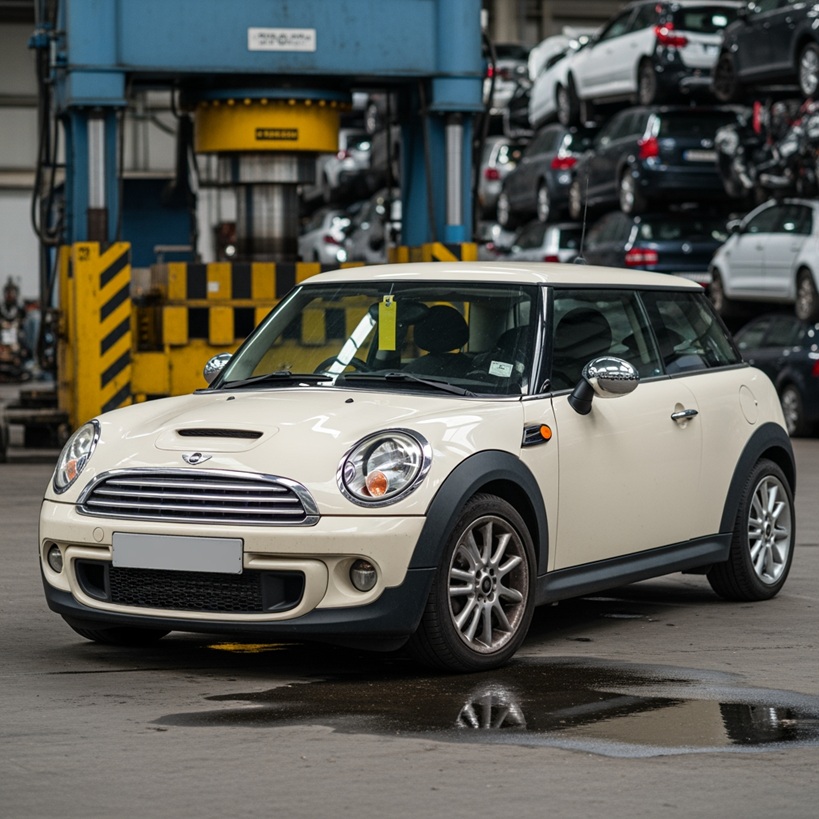
Scrapping a Mini Cooper: Are They Worth More?
20th Apr, 2026
The Mini Cooper carries a premium badge, distinctive styling, and enthusiast following. When these characterful cars reach the end of their road, owners often wonder if that premium brand translates to better scrap Mini Cooper values. The short answer? Not really.
Scrap Car Network provides transparent pricing for Mini Cooper scrap value across all generations. When you scrap Mini Cooper models, expect £180-£400 depending on generation, size, engine type, and condition.
That premium you paid for the Mini badge when buying? It vanishes when scrapping. Scrap yards care about metal content, not marketing departments. Understanding this prevents disappointment and sets realistic expectations.
Classic Mini vs. BMW Mini: Understanding the Difference
Before diving into values, let’s clarify which Minis we’re discussing. The classic Mini (1959-2000) and BMW Mini (2001-present) are fundamentally different vehicles with different scrapping considerations.
Classic Minis from the original British Leyland era through Rover ownership often hold collectible value exceeding scrap prices. Even rough examples might fetch £500-1,500 to enthusiasts for restoration projects. Understanding classic Mini worth before scrapping prevents leaving money on the table.
BMW Minis from 2001 onwards are what most people scrap Mini Cooper today. These German-engineered, British-built cars share nothing mechanically with classics beyond the name and styling cues. This article focuses on BMW Minis as they represent the vast majority of Mini scrapping scenarios.
Think of it like comparing original Volkswagen Beetles to modern VW Beetles – same name, completely different vehicles, totally different end-of-life considerations. Classic Minis are collectibles. BMW Minis are modern cars reaching natural scrap age.
Generation identification helps determine values. BMW produced three main generations: R50/R53 (2001-2006), R56 (2006-2013), and F56 (2014-present). Each generation has specific characteristics affecting scrap values.
Do Premium Brands Get Better Scrap Prices?
Here’s the harsh reality: your Mini’s premium badge means absolutely nothing to scrap yards. The metal doesn’t know it came from a trendy premium brand rather than a budget manufacturer.
Metal composition is virtually identical across brands. Steel is steel whether it came from a Mini, a Vauxhall, or a Dacia. Aluminium components add value regardless of the logo stamped on them. Copper wiring worth recovering exists in all vehicles.
Brand irrelevance for scrap reflects fundamental economics. Scrap dealers sell recovered materials to metal processors who melt everything down. The smelter doesn’t pay premiums for Mini-branded steel versus Nissan-branded steel because the chemical composition is identical.
Catalytic converter values vary by engine size and type, not brand prestige. A Mini Cooper S with a performance-tuned cat might contain more precious metals than a base Cooper, but that reflects engineering choices, not brand positioning.
I remember a customer years back who brought in his 2008 R56 Mini Cooper S expecting £400-500 because “it’s a premium car.” He’d paid £15,000 for it used and couldn’t understand why scrap value was only £240. Had to explain that the BMW badge added zero to scrap value – we paid for 1,150kg of metal and parts, not brand heritage. He genuinely thought premium brands commanded premium scrap prices. They don’t. Same week, we paid £245 for a base-model Volkswagen Golf weighing about the same. Both got processed identically regardless of their showroom prices years earlier.
Parts market differences exist between brands but barely affect scrap offers. Mini parts might sell better than some budget brand parts, but this modest advantage rarely translates to more than £10-20 extra in scrap quotes for excellent-condition vehicles.
Current BMW Mini Scrap Value Ranges
BMW Mini scrap prices vary by generation, size, and condition, but established ranges exist for these premium small cars.
Typical valuations break down roughly by generation and body style:
- R50/R53 (2001-2006): £180-£280
- R56 (2006-2013): £200-£320
- F56 (2014-2019): £250-£400
- Clubman adds £20-40 due to size
- Countryman adds £40-80 due to SUV weight
These ranges assume reasonably complete vehicles with typical wear. The values primarily reflect size and metal content, not the premium brand positioning.
Weight considerations affect base valuations significantly. A standard Mini Cooper hatchback weighs 1,100-1,200kg. Compare this to a Clubman at 1,250-1,350kg or Countryman at 1,400-1,550kg. That extra weight translates directly to higher scrap values.
Catalytic converter worth varies by specification. Cooper models with naturally aspirated engines have cats worth £50-80. Cooper S turbocharged variants might reach £80-120. John Cooper Works performance models occasionally exceed £120 due to high-performance catalyst specifications.
Generation-by-Generation Value Breakdown
First Generation R50/R53 (2001-2006) models now typically fetch £180-280 as scrap. These older BMW Minis suffer from timing chain issues and aging components. Parts demand has dropped as surviving examples dwindle. Expect offers toward the lower end of ranges.
Second Generation R56 (2006-2013) represents the most common generation currently reaching scrap yards. Expect £200-320 depending on specification and condition. Cooper S variants with good cats command premiums. Clean examples without major mechanical issues reach upper ranges.
Third Generation F56 (2014-2019) commands best prices due to relative youth. These newer Minis rarely reach scrap yards unless accident-damaged. Complete F56s typically bring £250-400, though genuine scrap scenarios remain uncommon as most are still in active use.
Body style variations create significant value differences:
- Standard hatchback: Base weight, standard values
- Clubman extended: £20-40 more due to increased size
- Countryman SUV: £40-80 more due to substantial extra weight
- Convertible: Similar to hatchback, minimal difference
- Coupe/Roadster: Rare models, standard hatchback values
Engine Type Impact on Scrap Value
Engine specification affects scrapping Mini Cooper valuations less dramatically than owners often expect, given the premium positioning differences.
Cooper versus Cooper S creates modest scrap value gaps. Cooper S models with turbocharged engines and upgraded components might fetch £20-40 more than base Coopers, primarily due to better catalytic converters and slightly higher weights from additional equipment.
John Cooper Works performance models command small premiums (£30-50) due to performance catalytic converters and upgraded components. However, the substantial price premium when buying new completely evaporates when scrapping.
Diesel variants are extremely rare in Mini range. The few diesel Coopers and Cooper Ds that exist command modest premiums (£30-50) due to diesel catalytic converter values, but these models are uncommon enough that many scrap operators won’t differentiate significantly.
Petrol engine dominance means most Mini scrapping involves petrol models. The 1.6-litre engines in various tunes represent the standard consideration for valuation purposes.
What Affects Your Mini’s Scrap Value
Beyond generation and body style, several factors influence how much you’ll receive when you scrap Mini Cooper models.
Completeness matters significantly. A Mini with engine, turbocharger (if Cooper S), catalytic converter, wheels, and interior intact commands full value. Missing components reduce offers proportionally. Given Mini’s modest scrap Mini Cooper values despite premium brand, losing an £80 catalytic converter represents substantial percentage reduction.
Condition factors include accident damage, mechanical failures, and general wear. Minor cosmetic issues barely affect scrap value. Major structural damage or fire damage might reduce offers by 10-20%.
Trim level differences create minimal valuation variations. A Cooper S with leather, navigation, and premium sound system might fetch £10-20 more than a base Cooper One, but these differences are trivial compared to showroom price gaps.
Mileage relevance for scrap is essentially nil. A 120,000-mile Mini and a 40,000-mile equivalent fetch similar scrap prices because metal content doesn’t change with mileage. Parts resale value differs, but this rarely affects offers more than £5-15.
Common Mini Issues Affecting Value
Certain Mini-specific problems occasionally impact scrap values when severe.
Timing chain failures plague certain Mini engines, particularly N14 units in 2006-2010 R56 models. These catastrophic failures often trigger scrapping decisions but don’t significantly reduce scrap value because the failed engine still contains recoverable materials.
Electrical problems occur frequently in Minis, including failing window regulators, faulty sensors, and dashboard warnings. These electrical gremlins don’t affect scrap value unless they’ve caused fire damage.
Power steering pump failures are common and expensive to repair. Owners often scrap rather than repair, but the failed pump doesn’t reduce scrap value as the materials remain recoverable.
Coolant system issues including thermostat housing failures occur frequently. Again, these trigger scrapping decisions but barely impact scrap pricing.
Body Style and Model Variations
Different Mini body styles create notable valuation variations based primarily on size and weight differences.
Standard hatchback (both three-door and five-door F55) represents the core Mini model. These weigh 1,100-1,200kg and fetch standard scrap values for their respective generations.
Clubman extended models offer increased cargo space and length. Clubmans weigh roughly 1,250-1,350kg, translating to £20-40 more scrap value than equivalent hatchbacks purely due to additional metal content.
Countryman SUV variants are substantially larger and heavier. These weigh 1,400-1,550kg depending on specification, creating £40-80 premiums over standard hatchbacks. The Countryman barely resembles a traditional Mini but carries the badge and higher scrap value.
Convertible models (including roadster variants) add soft-top mechanisms but minimal weight. Convertibles fetch similar prices to equivalent hatchbacks, occasionally £5-10 more due to reinforced structures.
Coupe and Roadster models from R58/R59 generation are rare enough that standard hatchback values typically apply. Their specialty status doesn’t create scrap premiums.
Parts Worth Salvaging Before Scrapping
Most Mini Cooper scrap value is best realised by selling complete to Authorised Treatment Facilities, despite enthusiast parts markets.
Enthusiast demand for Mini performance parts creates modest opportunities for selective removal. John Cooper Works components, aftermarket modifications, or desirable factory options might warrant removal before scrapping.
Practical reality suggests most factory parts aren’t worth the effort. Standard Mini components flood the used parts market. Selling individual parts might net £80-120 total, but your complete car loses £100-150 in scrap value.
Aftermarket modifications represent components potentially justifying removal. Expensive aftermarket wheels, upgraded suspension components, or performance modifications might warrant recovery before scrapping.
Legal considerations require attention. Complete vehicles simplify DVLA notification and scrapping paperwork. Stripped cars create complications potentially outweighing any parts sale benefits.
Get an instant quote to scrap any car including Mini Coopers for straightforward valuations reflecting actual metal content rather than brand perception.
The Premium Brand Myth in Scrapping
Understanding why premium brands don’t command premium scrap Mini Cooper prices helps manage expectations.
Used car market dynamics create brand premiums. Buyers pay more for Mini badges due to perceived quality, style, and driving experience. These intangibles matter when vehicles are functional but vanish when you scrap Mini Cooper models for materials.
Scrap market realities focus purely on recoverable materials. Your Mini contains steel, aluminium, copper, plastic, and glass. So does every other vehicle. The chemical composition doesn’t change based on marketing positioning.
Material composition equality across brands means a Mini, Volkswagen Golf, Ford Focus, and Toyota Corolla of similar size contain comparable material quantities. Minor variations exist in aluminium usage or component quality, but these create £10-20 differences maximum, not the £5,000-10,000 gaps seen when buying.
Processing equality at Authorised Treatment Facilities treats all vehicles identically. Depollution, crushing, and material separation work the same regardless of badge. Premium brands don’t require premium processing.
Preparing Your Mini for Collection
Proper preparation ensures smooth collection and prevents quote adjustments on arrival.
Personal belongings removal needs thoroughness despite Mini’s compact interior. Check the glovebox, door pockets, boot, under seats, and various storage compartments. Minis pack surprising amounts of storage into small spaces.
Paperwork requirements include your V5C logbook for DVLA notification. Understanding how to tell the DVLA when you sell or scrap your car ensures proper legal process completion.
Access considerations matter less for compact cars. Minis fit in tight spaces and are easily transported. Collectors appreciate advance warning about access challenges, but Mini size rarely creates collection difficulties.
Fuel considerations don’t typically require attention. Minis hold 40-50 litres depending on model. Even half-full tanks represent modest fuel value that most owners don’t bother recovering.
Battery condition creates minimal value difference (£3-5). Removing a good battery to use elsewhere is fine if needed. Just inform the collector it’s missing so quotes reflect this.
Getting Fair Quotes for Your Mini
Comparison shopping reveals market rates and prevents inflated expectations based on brand prestige.
Information needed for accurate BMW Mini scrap prices includes:
- Registration number (enables automatic specification lookup)
- Exact model and generation (R56 Cooper S, F56 Cooper, etc.)
- Body style (hatchback, Clubman, Countryman)
- Engine specification (Cooper, Cooper S, JCW)
- Completeness (all parts present or missing items)
- Condition (damage, mechanical issues, rust)
Realistic expectations help prevent disappointment. Minis won’t fetch £500+ despite premium brand positioning. If quotes cluster around £220-260 for your R56 Cooper S, that’s market reality reflecting actual metal content.
Fair offer recognition comes through comparison. If three operators quote £210-245 for your Mini and one offers £160, the outlier is likely a lowball. If someone quotes £400 for a standard R56 hatchback, they’re possibly baiting for later reductions.
Verified operator advantages include accountability and established processes. Working with our network of Authorised Treatment Facilities ensures proper handling and fair pricing based on actual content rather than brand mythology.
Regional Price Variations
Where you scrap Mini Cooper vehicles affects prices slightly, though premium brand doesn’t create advantages.
Urban areas benefit from competition. A Mini in London or Manchester might fetch £5-10 more than one in remote locations due to collection efficiency, but this applies equally to all vehicles regardless of brand.
Rural locations face modest penalties for small car collection. A facility might reduce offers by £5-10 for remote Mini collection, similar to any other compact vehicle.
Scotland, Wales, and Northern Ireland follow patterns similar to England. Regional differences stem from local competition and logistics rather than national boundaries or brand appreciation.
Premium brand irrelevance regionally means Minis see identical geographic variations as any other small car. The premium badge creates zero regional advantages for scrap pricing.
Environmental Considerations
Proper Mini disposal protects the environment through regulated recycling processes regardless of brand prestige.
Hazardous materials in Minis include engine oil, coolant, brake fluid, air conditioning refrigerant, and battery acid. ATFs handle these materials safely according to environmental regulations.
Recycling rates for modern Minis exceed 95% by weight. Premium brands achieve similar recycling percentages as budget manufacturers because material composition is comparable.
Aluminium usage in Minis might slightly exceed some budget cars, but this creates modest scrap value advantages (£10-20) rather than dramatic premiums.
End-of-life vehicle regulations require proper depollution and processing. Licensed ATFs follow these regulations equally for all brands.
Working with our environmentally responsible car recycling process ensures proper Mini disposal regardless of its premium positioning when new.
The Enthusiast Market Alternative
Before scrapping Mini Cooper models, consider whether your Mini has enthusiast value exceeding scrap prices.
Well-maintained examples might fetch £800-2,000+ to enthusiasts even with high mileage or minor issues. This applies particularly to desirable specifications like early Cooper S models or John Cooper Works variants.
Parts car potential exists for Minis with good bodies but failed expensive components. Enthusiasts might pay £500-1,000 for vehicles with good shells, knowing they can swap engines or address mechanical issues.
Classic Mini confusion occasionally occurs with early R50/R53 models approaching classic status. While not true classics, well-preserved early BMW Minis might command premiums to collectors. Understanding classic Mini worth versus BMW Mini values helps determine best disposal route.
Project potential for mechanically failed but structurally sound Minis sometimes exceeds scrap value. Check enthusiast forums before scrapping Mini Cooper vehicles in desirable specifications.
Timing Your Mini Scrap Sale
When you scrap Mini Cooper vehicles affects what you’ll receive, though variations are modest.
Seasonal patterns see slightly stronger prices in spring/summer. For Mini Cooper scrap value, this variation might amount to £5-15 between peak and low periods.
Metal market trends affect all scrap vehicles equally regardless of original brand positioning. Strong markets improve BMW Mini scrap prices; weak markets reduce them.
Immediate needs usually outweigh market timing. If your Mini’s costing money through failed MOT, expensive repairs, or insurance on a non-runner, accepting current market rates makes sense.
Premium brand patience doesn’t pay dividends. Waiting for “premium brand appreciation” in scrap markets won’t happen because brand premiums don’t exist at end-of-life.
Legal Requirements and Documentation
Proper disposal involves specific legal steps ensuring you’re not held liable for future issues.
DVLA notification using V5C Section 9 removes you as registered keeper. This prevents future tax demands or legal responsibility if someone illegally uses your old registration plates.
Certificate of Destruction provides legal proof of proper disposal. Without this document, you remain vulnerable if your scrapped Mini somehow reappears or its identity gets misused.
Insurance cancellation should occur after collection and DVLA notification, not before. Maintaining insurance during the scrapping process prevents coverage gaps.
Outstanding finance must be cleared before scrapping. Newer F56 Minis might still carry outstanding loans requiring clearance before legal disposal.
Special Editions and Variants
Certain Mini models deserve specific mention for value considerations.
John Cooper Works performance models command small premiums (£30-50) due to performance components and catalytic converters. Their substantial purchase price premium completely evaporates when scrapping.
Special editions (Baker Street, Park Lane, etc.) don’t significantly impact scrap values despite distinctive trim and features. These appeal to used car buyers but mean nothing when recycling for materials.
Electric Minis are too new to commonly reach scrap yards. When they do, battery recovery creates different considerations beyond standard scrap valuation.
Paceman and other limited-run variants fetch scrap values based on size and weight, not rarity or specialty status.
Conclusion
Mini Cooper scrap value ranges from £180-£400 depending on generation, body style, and condition. That premium brand badge you paid extra for when buying means absolutely nothing when you scrap Mini Cooper models.
Scrap yards pay for metal content, not marketing heritage or premium positioning. A Mini hatchback and similarly-sized budget car of comparable weight fetch nearly identical scrap Mini Cooper prices because they contain comparable materials.
This harsh reality disappoints owners who paid premium prices and expect premium scrap returns. Understanding that brand irrelevance in scrap markets is universal helps set appropriate expectations. Your Mini served you well with style and character. Proper disposal provides fair value for actual content whilst ensuring legal compliance.
Choose operators transparent about why premium brands don’t command premium BMW Mini scrap prices. Honest dealers explain metal content determines value, not badges or brand heritage.
Whether you’re scrapping Mini Cooper R50 models, troublesome R56s, or damaged F56s, understanding realistic values prevents disappointment. Your Mini was a premium purchase. Its scrap value is ordinary. That’s not unfair – it’s just how material recovery works.
Contact us for specific guidance on your Mini Cooper’s scrap value based on exact generation, body style, and condition.