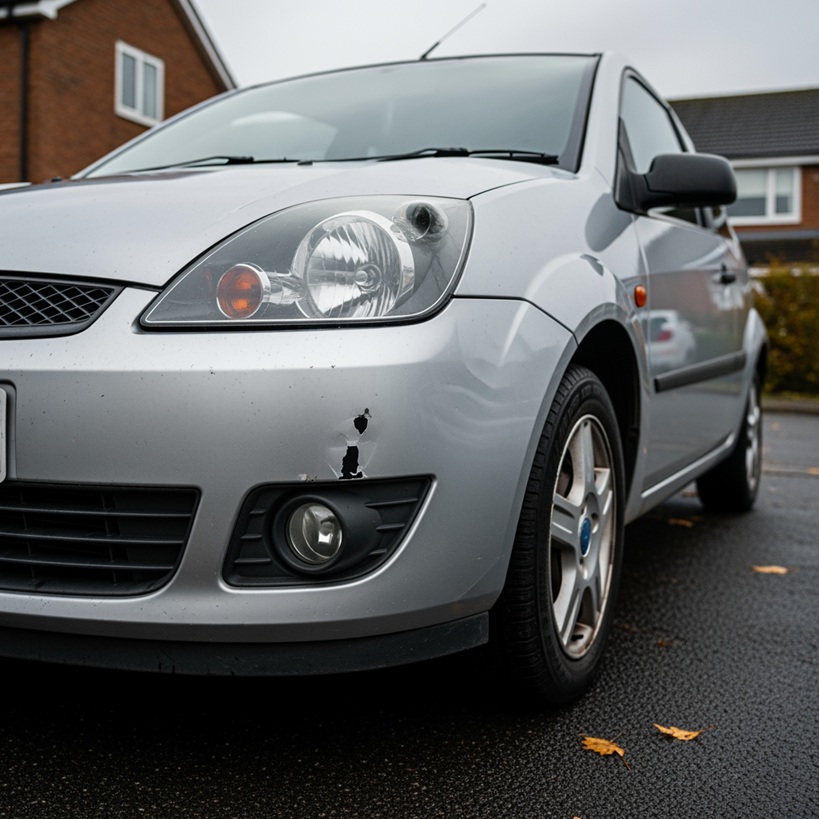
How to Scrap a Ford Fiesta and Find Its Value
16th Apr, 2026
Got an old Ford Fiesta that’s reached the end of its life? You’re not alone. The Fiesta’s been Britain’s best-selling car for years, which means thousands reach scrapping age annually. Understanding what yours is worth and how to scrap it properly saves you money and hassle.
Scrap Car Network connects you with licensed Authorised Treatment Facilities that handle Fiestas daily. Whether you’ve got a tired Mk6 with 150,000 miles or a Mk7 that’s suffered catastrophic engine failure, knowing what to expect helps you get fair value.
Let’s walk through exactly what your Ford Fiesta’s worth as scrap and how to handle the process properly.
Why Ford Fiestas Get Scrapped
Fiestas are brilliant little cars when they’re running well, but common problems eventually make scrapping the sensible choice for many owners.
Common Fiesta Problems Leading to Scrapping
The Powershift dual-clutch automatic gearbox in 2011-2016 Fiestas is notorious. When it fails (and many do), replacement costs £2,000-3,000. If your Fiesta’s only worth £1,500, that repair doesn’t make economic sense.
Clutches on manual Fiestas typically last 60,000-80,000 miles with normal use. Replacement costs £400-600 including labour. On a ten-year-old Fiesta worth £800, this becomes a scrapping decision.
I remember a customer from Leeds with a 2010 Fiesta 1.4. Lovely car, but the head gasket went at 95,000 miles. Garage quoted £800 for the repair. She checked online valuations and found similar Fiestas selling for £600-900 in working condition. Spending more to fix it than it was worth made no sense. She scrapped it and got £280, which went toward something more reliable.
Corrosion around sills and rear wheel arches plagues older Fiestas, particularly those in coastal areas or where winter salt’s heavy. MOT failures on structural rust often signal the end for cars not worth the welding costs.
Age and Mileage Considerations
Fiestas handle high mileage reasonably well. The 1.25 and 1.4 petrol engines commonly reach 150,000 miles with proper maintenance. But once they’re past 120,000 miles and over twelve years old, repair costs start making scrapping more attractive than keeping them going.
The economics shift. A £300 repair on a car worth £2,000 makes sense. The same £300 repair on a car worth £500 doesn’t.
Understanding Ford Fiesta Scrap Values
Fiesta scrap values depend on several specific factors. Understanding these helps you know whether quotes you receive are fair.
Ford Fiesta Weight and Metal Content
Fiestas are light cars. A Mk6 typically weighs 950-1,050kg. A Mk7 weighs slightly more at 1,000-1,100kg due to additional safety equipment.
Think of scrap value like weighing fruit at a market. More weight equals more money, all else being equal. A Fiesta weighs less than a Mondeo, so base scrap value is lower.
With steel trading around £200-300 per tonne, a 1,000kg Fiesta contains roughly £200-250 worth of basic scrap metal. That’s your baseline – everything else adds to or subtracts from this figure.
Parts That Add Value Beyond Scrap Weight
Working components increase value considerably. A sound 1.0 EcoBoost engine might add £100-200 to your quote. A working five-speed gearbox adds £50-100.
Catalytic converters contain precious metals. Fiesta cats typically add £100-200 to scrap value, sometimes more for diesel models or newer vehicles with higher precious metal content.
ST Fiestas have performance parts with strong enthusiast demand. Recaro seats, upgraded suspension, and the 1.6 EcoBoost engine all hold value. An ST might fetch £50-150 more than a standard Fiesta in similar condition.
Generation-Specific Value Differences
Mk6 Fiestas (2008-2017) are the most commonly scrapped generation currently. Typical values range £200-350 depending on condition, completeness, and engine type.
Mk7 Fiestas (2017-2023) are newer, so relatively few get scrapped yet. When they do, values run £250-400 due to better emissions equipment and more advanced recyclable materials.
Pre-2008 Fiestas (Mk5 and earlier) typically fetch £150-250. They’re lighter, older, and contain less valuable components than newer generations.
Typical Ford Fiesta Scrap Prices
Let’s be specific about what different Fiestas actually fetch as scrap.
What to Expect for Mk6 Fiestas
A 2010 Fiesta 1.25 Zetec with 120,000 miles, complete but not running, typically quotes £220-280. Add another £30-50 if it’s still mobile and all components are present.
The 1.0 EcoBoost models might fetch slightly more (£250-320) because the turbocharged engine has reclaim value even when not working.
Diesel Fiestas often quote £20-40 higher than petrol equivalents due to more valuable catalytic converters.
What to Expect for Mk7 Fiestas
Newer Fiestas scrapped due to accident damage or catastrophic failure typically quote £280-380. The emissions equipment is more advanced, containing more precious metals worth recovering.
Mild hybrid Fiestas require specialist handling for battery systems. This might slightly reduce quotes from operators without appropriate licensing, though it shouldn’t affect value dramatically.
When Fiestas Are Worth More Than Scrap
Roadworthy Fiestas with valid MOT are almost always worth more sold privately than scrapped. Even a tatty 2009 model with high mileage might fetch £600-1,000 privately if it drives and has MOT.
Check classified ads for similar Fiestas before committing to scrapping. If yours runs and has MOT, selling privately could double or triple what you’d get scrapping.
ST models with enthusiast following might be worth breaking for parts rather than scrapping whole. Recaro seats alone can fetch £300-500, performance exhausts £200-400, and wheels £400-600 as sets.
Getting Accurate Ford Fiesta Quotes
Accurate information produces accurate quotes. Here’s what to provide when requesting valuations.
Information to Provide for Fiesta Quotes
Your registration number reveals most specifications automatically: engine size, fuel type, year, and generation. Beyond this, mention:
Trim level: Zetec, Titanium, ST – higher trims sometimes have more valuable components.
Transmission type: Manual or Powershift automatic. Powershift failures should be disclosed.
Condition specifics: Running or not? Complete or missing parts? Major damage?
Recent issues: Stolen catalytic converter? Failed head gasket? Rusty sills? Honest disclosure prevents quote revisions on collection day.
Common Fiesta Issues Affecting Quotes
Powershift transmission problems significantly affect quotes if the gearbox is completely failed. Mention this upfront – it might reduce your quote by £50-100, but discovering it on collection day causes bigger problems.
Rusty sills and arch corrosion are common Fiesta issues. If structural rust is severe, mention it. Operators assess how easily they can handle and transport the vehicle.
Stolen catalytic converters reduce quotes by £100-200 immediately. Don’t hope operators won’t notice – they check, and omitting this information damages trust.
Comparing Quotes for Best Value
Fiestas are common, so multiple operators will quote confidently. Get quotes from several ATFs to ensure competitive pricing.
Price variations of £50-100 are normal for identical Fiestas. This reflects different operator circumstances: current inventory levels, parts buyer relationships, and collection logistics.
Don’t just chase the highest number. Verify the operator’s licensed, check reviews, and ensure they provide proper documentation. A reliable £280 quote beats a dodgy £320 offer that might reduce on collection day.
Ford Fiesta Generation Guide
Identifying your Fiesta generation helps you understand typical values and common issues.
Mk6 Fiestas (2008-2017)
The Mk6 is instantly recognizable by its swooping roofline and bold front grille. It’s the generation that made Fiesta Britain’s best-seller.
Common scrapping reasons include high mileage wear, Powershift transmission failures, clutch replacement costs, and rust around sills and arches on older examples.
Parts with strong resale demand include 1.0 EcoBoost engines (even non-running), five-speed manual gearboxes, and Titanium or ST trim components.
Mk7 Fiestas (2017-2023)
The current generation features sharper styling with Aston Martin-influenced grille design. Most are still on roads rather than scrapyards.
When Mk7s get scrapped, it’s typically due to accident damage or catastrophic mechanical failure rather than age-related decline. Values are higher due to advanced emissions equipment and more recyclable materials.
Older Generations (Pre-2008)
Mk5 Fiestas (2002-2008) are becoming rare. Those remaining are often either well-maintained examples or completely worn out. Scrap values run £150-250 typically.
Mk4 and earlier Fiestas (pre-2002) occasionally appear for scrapping. Classic car interest exists for very old Fiestas in good condition, but most scrapped examples are too far gone. Values rarely exceed £200.
The Ford Fiesta Scrapping Process
Scrapping a Fiesta follows the standard process, with some model-specific considerations.
Preparing Your Fiesta for Collection
Check everywhere for personal belongings. Fiestas have surprising storage: glovebox, door pockets, centre console, seat back pockets, boot storage compartments, and under seats.
If you’ve fitted an aftermarket stereo or sat nav with value, consider removing it before collection. Same with custom floor mats or accessories you might use elsewhere.
Leave the keys, V5C logbook (if you have it), and any other documentation ready for the collection driver.
Collection Day Logistics
Fiestas are easy to collect. They’re small, relatively light, and fit easily onto standard recovery vehicles. Urban collection is particularly straightforward – Fiestas excel in cities where they spent their working lives.
The driver loads your car, completes paperwork with you, and confirms payment details. The whole process takes 15-20 minutes.
Documentation Requirements
You’ll need your V5C logbook if available. The driver uses section 9 (the green slip) to notify the DVLA of scrapping.
Proof of identity (driving licence) confirms you’re the registered keeper. If the car’s registered at a different address, bring something showing your current address.
If you’ve lost the V5C, don’t panic. Most operators handle this regularly. You’ll need alternative proof of ownership: insurance documents, MOT certificates, or purchase receipts.
Certificate of Destruction Receipt
Within seven days, you’ll receive your Certificate of Destruction. This proves the car was legally scrapped at a licensed facility.
Keep this certificate. It protects you if anyone tries to use your old registration or if the vehicle somehow ends up abandoned somewhere. The DVLA receives notification, removing you as the registered keeper.
You can also tell the DVLA your car’s been scrapped online yourself for additional peace of mind.
Fiesta-Specific Considerations
Certain factors specific to Fiestas affect the scrapping experience.
Powershift Transmission Issues
If your Fiesta has the Powershift dual-clutch automatic (fitted to many 2011-2016 models), mention any transmission problems when getting quotes.
Failed Powershift boxes reduce value because they’re expensive to replace and have limited second-hand market. Operators factor in the additional handling complexity.
Honesty here prevents collection day disappointments. “The automatic gearbox has failed” is information operators need upfront.
EcoBoost Engine Considerations
The 1.0-litre turbocharged three-cylinder EcoBoost engine is generally reliable but can develop issues: coolant loss into cylinders, timing belt premature wear, or turbocharger failures.
Even non-running EcoBoost engines have value for rebuilders and parts suppliers. Mention you’ve got an EcoBoost when getting quotes – it might add £50-100.
ST Model Special Factors
Fiesta STs command premium prices in enthusiast markets. Before scrapping an ST, seriously consider whether private sale or breaking for parts would be more profitable.
ST Recaro seats, upgraded brakes, performance exhausts, and wheels all have strong second-hand demand. You might get £1,500-2,500 breaking a complete ST versus £400-500 scrapping it whole.
Common Mistakes When Scrapping Fiestas
Avoid these frequent errors to maximize value and minimize hassle.
Not Checking Private Sale Value First
Roadworthy Fiestas with MOT are usually worth more sold privately. Spend five minutes checking classified ads for similar cars before committing to scrapping.
If comparable Fiestas sell for £800-1,200 and you’re being offered £280 scrap value, selling privately makes more financial sense.
Forgetting to Remove Valuable Additions
Aftermarket stereos, sat navs, premium floor mats, and accessories have no scrap value but might be worth £50-200 to you or sold separately.
Remove these before collection if they’re worth keeping. Scrap operators don’t pay extra for aftermarket additions.
Accepting First Quote Without Comparison
Fiestas are common vehicles. Multiple operators will quote confidently. Comparing 3-5 quotes takes ten minutes and might gain you £50-150.
Don’t settle for the first offer. Competitive quotes ensure fair market value.
Not Disclosing Known Issues
Omitting Powershift failures, stolen catalytic converters, or severe rust leads to quote adjustments on collection day. This wastes everyone’s time and creates awkward situations.
Be honest upfront. Fair quotes based on accurate information prevent disappointment.
Alternatives to Scrapping Your Fiesta
Consider these options before committing to scrapping.
Private Sale Considerations
If your Fiesta runs and has valid MOT, selling privately almost certainly gets you more money. Even tatty high-mileage examples fetch £600-1,000 if roadworthy.
Selling takes more time and effort than scrapping, but the financial return often justifies it. List on Auto Trader, Facebook Marketplace, or Gumtree with honest descriptions and realistic pricing.
Part Exchange or Trade-In
Some dealers accept non-running cars in part exchange, even if only for scrap value. The convenience might be worth accepting slightly less than you’d get selling privately.
Negotiate honestly: “I know it’s only worth scrap, but it’s convenient for me to leave it here.” Dealers understand this transaction.
Breaking for Parts
ST Fiestas and rare variants might be worth more dismantled and sold piecemeal. This requires time, space, knowledge, and effort most people don’t have.
If you’ve got a garage, mechanical knowledge, and patience, breaking an ST could yield £1,500-3,000 versus £400-500 scrapping whole.
Donation to Charity
Several charities accept vehicle donations, handling scrapping themselves and using proceeds for their work. You get no financial return but contribute to causes you support.
This works well if you’re not bothered about maximizing value and want to support charitable work.
Environmental Benefits of Scrapping Fiestas Properly
Proper scrapping protects the environment while recovering valuable materials.
Material Recovery Rates
Licensed ATFs must recover 95% of vehicle weight for recycling or reuse. Only 5% can go to landfill, and that’s materials genuinely impossible to recover.
Fiesta steel goes to steel mills for remelting. Aluminium components get recycled separately. Plastics get sorted and processed. The efficiency is impressive.
Hazardous Material Handling
Depollution removes all hazardous fluids before dismantling: engine oil, brake fluid, coolant, and air conditioning refrigerant. These get disposed of according to environmental regulations.
Fiesta airbags require specialist handling for safe deployment before recycling. Batteries contain lead and acid needing proper processing. Tyres don’t biodegrade and get specialist recycling.
Our environmentally responsible car recycling process ensures Fiestas get handled according to strict environmental standards.
Maximizing Your Fiesta Scrap Value
Get the best possible price with these practical tips.
Timing Considerations
Scrap metal prices fluctuate. Checking current steel prices gives you context for quotes received. If prices are particularly low, waiting a few weeks might gain £20-40.
Realistically, most people scrap when circumstances demand it rather than timing markets. Don’t obsess over this unless you’ve got flexibility.
Emphasizing Valuable Components
Mention recent repairs or replacements. “I fitted a new battery six months ago” or “the catalytic converter was replaced last year” adds context that might improve quotes.
Highlight premium features: “It’s the Titanium trim with half-leather seats” or “It’s an ST-Line with the 1.0 EcoBoost” helps operators assess component value accurately.
Multiple Quote Comparison
Obtain quotes from at least three operators. This ensures you’re getting competitive market value rather than accepting an undervalued offer.
Use the highest quotes to negotiate with preferred operators if there’s significant variation. “I’ve been offered £310 elsewhere; can you match that?” sometimes works.
Ford Fiesta Scrapping FAQs
Let’s address common questions Fiesta owners ask.
What’s a Ford Fiesta Worth as Scrap?
Typical ranges: Mk6 models £200-350, Mk7 models £250-400. Condition, completeness, and engine type affect this significantly.
A complete, undamaged Fiesta with working components quotes higher. Stripped shells or fire-damaged wrecks quote lower.
Can I Scrap a Fiesta Without V5C Logbook?
Yes. Most operators accept alternative proof of ownership: recent MOT certificates, insurance documents, or purchase receipts.
You can apply for a V5C replacement (form V62, costs £25, takes about five working days) if you prefer having the logbook.
How Long Does Collection Take?
From accepting a quote to collection typically takes 24-72 hours. Fiestas are common vehicles in urban areas where ATF collection is efficient.
The actual collection process takes 15-20 minutes. The driver loads the car, completes paperwork, and confirms payment.
Do ST Fiestas Get More Money?
Performance variants typically fetch £50-150 more than equivalent standard Fiestas due to valuable components with strong second-hand demand.
However, roadworthy STs are usually worth far more sold privately than scrapped. Check private sale values before scrapping any ST.
Choosing Reputable Fiesta Scrap Services
Select legitimate operators for fair pricing and proper documentation.
Verification Importance
Check operators hold valid Authorised Treatment Facility licensing. Verify this through Environment Agency or SEPA public registers before accepting quotes.
Unlicensed operators can’t provide Certificates of Destruction, leaving you legally responsible for the vehicle even after disposal.
Fiesta-Specific Experience
Operators handling Fiestas regularly understand common issues, fair valuations, and efficient processing. Their experience translates to smooth transactions and competitive pricing.
Popular models like Fiestas command fair market rates from experienced operators who know their true scrap value.
Conclusion
Ford Fiestas are brilliant cars that eventually reach the end of their economically viable lives. Understanding typical scrap values – £200-350 for Mk6 models, £250-400 for Mk7 – helps you evaluate quotes fairly.
Weight, generation, condition, and component completeness all affect valuations. Powershift transmission issues, stolen catalytic converters, and severe corrosion reduce quotes when not disclosed upfront.
Compare multiple quotes from verified operators, provide honest information about your Fiesta’s condition, and ensure proper documentation throughout. These steps maximize value while protecting your legal interests.
Before scrapping, consider whether private sale, part exchange, or (for STs) breaking for parts might be more profitable. Roadworthy Fiestas with MOT almost always fetch more sold privately than scrapped.
If scrapping’s the right choice, choose licensed ATFs providing proper Certificates of Destruction and handle DVLA notification correctly. Your Fiesta deserves proper recycling that recovers materials responsibly.
If you’re ready to scrap your Ford Fiesta and want competitive quotes from verified operators, contact us to get started. We’ll help you get fair value while ensuring everything’s handled legally and environmentally responsibly.