Honda Civic Scrap Values: Why They Vary So Much
20th Apr, 2026
Honda Civic scrap values range from £150 for tired 1990s models to £500+ for recent Type R variants. That’s massive variation for one model name, and it confuses people. Why does your mate’s 2008 Civic fetch £280 whilst yours from 2012 only gets £240?
Scrap Car Network connects you with licensed Authorised Treatment Facilities that understand Honda Civic reliability scrap impact and how generation, variant, and condition create this wide value spectrum. Whether you’ve got a basic sixth-generation 1.4 or a legendary EP3 Type R, knowing what affects value helps set realistic expectations.
Let’s walk through exactly why Honda Civic scrap values vary so dramatically and what yours is actually worth.
Why Honda Civic Values Vary More Than Other Cars
Most car models show £50-100 variation in scrap values. Honda Civics show £200-350+ variation. This isn’t random – it’s driven by specific factors unique to Civic’s history and market position.
The Generation Factor
Honda’s been building Civics since 1972. In the UK market alone, you’ll find sixth-generation models from 1995 through tenth-generation cars from 2023. That’s nearly three decades of evolution.
Think of it like comparing mobile phones. A Nokia 3310 from 2000 isn’t worth the same as an iPhone 12, even though both are “mobile phones.” Same applies to Civics – a 1998 model and a 2020 model share a name but not much else.
Older Civics contain less valuable materials, simpler electronics, and limited salvageable parts. Newer ones pack advanced safety systems, better emissions equipment, and technology worth recovering.
The Variant Spectrum
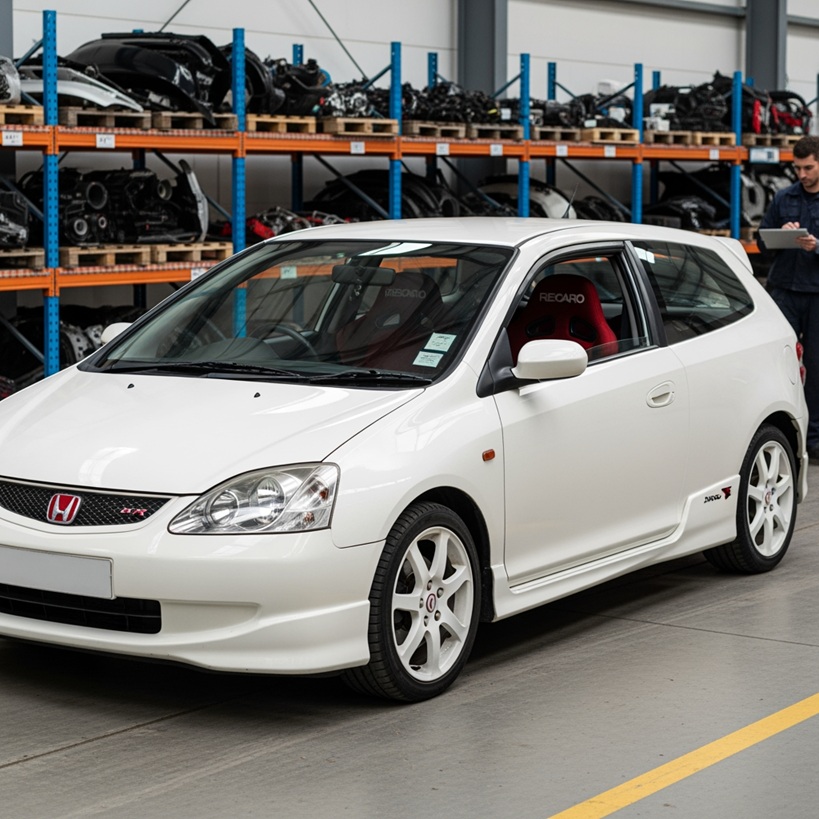
Here’s where it gets interesting. “Civic” covers everything from basic 1.4 petrol runabouts to legendary Type R performance cars. A standard 2008 Civic 1.4 might fetch £240. An EP3 Type R from the same era could get £400-450.
That’s an £160-210 difference for cars from identical years. The Type R badge means working K20 engines worth £800-1,500 to enthusiasts, Recaro seats fetching £400-700, and Brembo brakes commanding £200-400.
Standard Civics have solid parts demand. Performance variants have rabid enthusiast followings willing to pay premiums.
Japanese Reliability Impact
Honda’s reputation for reliability creates strong Japanese car recycling demand. Owners keep Civics longer than equivalent European models. This longevity means parts remain in demand – breakers know they’ll sell salvaged components.
Compare this to brands with reliability issues. Parts for unreliable cars have weaker markets because fewer people want to repair them. Honda’s reputation supports better scrap values across all variants.
I remember a customer from Manchester with a 2007 Civic 1.8 Type S. Engine had seized from oil starvation – owner’s mistake, missed services. Car was finished. But she got £310 because everything else was perfect. Breakers could salvage doors, boot, glass, interior, wheels, suspension. Honda reliability meant those parts were desirable. A comparable Megane with similar issues might’ve fetched £240-260.
Typical Honda Civic Scrap Values by Generation
Understanding Civic generation value range helps set realistic expectations for your specific car.
Sixth Generation (1995-2000)
These 25-30 year old Civics are entering final years. Simple mechanicals, minimal electronics, and extensive corrosion on survivors.
Typical values: £150-220
Limited parts demand for such old vehicles. Breakers struggle selling components for cars this aged. Most value comes from basic metal weight.
The VTi models with VTEC engines might fetch upper ranges if engines are sound. Standard 1.4 and 1.6 models hit lower figures.
Seventh Generation (2001-2005)
The early 2000s generation introduced more modern styling and improved materials. Still aging now, but slightly better preservation than sixth generation.
Typical values: £180-260
The 1.6 i-DTEC diesel variants command slight premiums (£220-260) due to engine parts demand. Petrol models fetch lower ranges (£180-240).
Type R EP3 models (2001-2005) are special cases: £350-450 depending on condition. Legendary performance variant with strong enthusiast following.
Eighth Generation (2006-2011)
Popular generation with strong parts market. Various engine options, good reliability, and reasonable preservation.
Typical values: £200-320
Standard models: £200-280 depending on condition and completeness.
Type S variants: £240-300 due to modest performance parts premium.
Type R FN2 (2007-2011): £380-450 for enthusiast parts demand.
This generation represents the sweet spot for scrapping currently – old enough that problems emerge, young enough that parts retain value.
Ninth Generation (2012-2015)
Modern technology, advanced safety systems, and improved efficiency. Scrapping becoming more common as these age.
Typical values: £250-380
Standard petrols: £250-320 Diesels: £280-350 Hybrids: £220-300 (complexity reducing some operators’ offers)
Fewer Type Rs in this generation (FN2 ended 2011, FK2 started 2015), leaving a Type R gap.
Tenth Generation (2016-Present)
Current generation featuring sharp styling, turbocharged engines, and modern technology. Limited scrapping due to age.
Typical values: £300-500+
When scrapped, usually accident damage rather than age-related decline. Complete cars command premium prices.
Type R FK8 (2017-2021) and FL5 (2022+) are too new and valuable for scrapping to make sense except catastrophic damage. Even damaged ones might be worth more than scrap to rebuilders.
Understanding Type R and Performance Variants
Type R performance variant premium deserves special attention. These aren’t normal Civics.
Type R Scrap Value Premium
Type R variants command £100-200+ premiums over equivalent standard Civics. This comes purely from parts demand in enthusiast markets.
Working K20 engines (EP3 Type R): £800-1,500 depending on mileage and condition.
Recaro seats: £400-700 for pairs in good condition.
Brembo brakes: £200-400 for complete sets.
Performance exhausts: £150-400 depending on aftermarket or OEM.
LSD differentials: £200-400 to performance enthusiasts.
When Type R Shouldn’t Be Scrapped
Before scrapping any Type R, seriously consider alternatives. Even non-running Type Rs with damage might be worth £3,000-8,000 to enthusiasts as rebuilding projects.
The Type R community is substantial. Specialist breakers pay premiums. Private buyers want projects. Scrapping should be last resort.
Only truly destroyed Type Rs (fire damage, structural collapse, complete parts theft) warrant scrapping. Even then, check with Type R specialists first.
Performance Parts Worth Preserving
If you must scrap a Type R, removing and selling key components individually might net £2,000-4,000 versus £400-500 scrapping whole.
This requires mechanical knowledge, time, space, and patience. Most people lack these. But if you’ve got them, breaking a Type R is worth considering.
Hybrid and Alternative Fuel Civics
Eighth and ninth generation Civics included IMA (Integrated Motor Assist) hybrid variants. These require special consideration.
IMA Hybrid System Impact
The IMA system pairs petrol engines with electric motors and battery packs. When battery packs fail, replacement costs £1,500-3,000 – often more than car values.
Not all scrapyards accept hybrids. Battery disposal requires specialist licensing. Operators without appropriate capabilities decline hybrid Civics entirely.
Hybrid Scrap Value Considerations
Hybrid Civics typically quote £20-50 less than equivalent petrol models due to complexity and limited operator capabilities.
Finding operators licensed for hybrid vehicles is essential. Our network of Authorised Treatment Facilities includes operators equipped for hybrid processing.
Battery packs contain valuable materials, but disposal requirements offset some value. The net result is modest quotes compared to straight petrol models.
Body Style Variations
Civics come in hatchback, saloon, and estate body styles. This affects scrap values.
Hatchback Variants
Most common body style in UK market. Strong parts demand, reasonable values.
Typical quotes align with generation averages listed earlier. Hatchbacks represent the standard market baseline.
Saloon and Estate Models
Less common in UK, affecting parts demand. Breakers have harder times selling saloon/estate-specific components.
Expect £20-40 reductions versus equivalent hatchbacks. The market’s smaller, reducing component resale potential.
Engine Options and Their Impact
Engine type significantly affects Honda Civic scrap values.
Petrol Engine Range
Civics housed various petrol engines: 1.4, 1.6, 1.8, 2.0, and performance 2.0 VTEC units.
Standard engines (1.4, 1.6): Base scrap values.
Larger engines (1.8, 2.0): Slight premiums if working (£20-40).
Performance VTEC engines (K20, K24): Substantial premiums (£80-150) due to tuning community demand.
Diesel Variants
The 1.6 i-DTEC and 2.2 i-DTEC diesels maintain reasonable parts markets despite diesel image problems.
Diesel Civic premiums: £20-50 over equivalent petrol models.
Working injectors, turbos, and DPF filters add value. Failed components reduce it.
Performance Engines
The K20 Type R engine is legendary. Working examples command £800-1,500 in parts markets.
Even non-running K20s with rebuildable damage fetch £300-600. The aftermarket and tuning scenes support strong demand.
Japanese Build Quality Impact on Scrap Value
Honda’s reputation extends beyond reliability into material quality and construction standards.
Honda Reputation Effect
Japanese manufacturers generally build cars to higher standards than some European competitors. Honda particularly emphasizes durability and quality.
This reputation creates strong parts markets. Mechanics trust Honda components. Owners prefer genuine Honda parts. This demand supports better scrap values.
Material Quality Advantages
Civics resist corrosion better than some rivals. Quality paint, better rust protection, and superior materials preserve component value.
Better-preserved parts mean more salvageable components, increasing overall scrap value beyond pure metal weight.
Common Civic Issues Leading to Scrapping
Certain problems make scrapping Honda Civics economically sensible.
Rust and Corrosion Problems
Older Civics (sixth and seventh generation particularly) suffer sill and rear arch corrosion. Once structural integrity’s compromised, MOT failures follow.
Welding costs £600-1,500 depending on severity. On cars worth £800-1,500, this becomes scrapping consideration.
Timing Chain and Engine Issues
Eighth-generation 2.2 diesels suffered timing chain stretch. When chains jump timing, catastrophic engine damage results.
Repair costs £2,500-4,000. On cars worth £2,000-3,000, scrapping makes more sense.
Hybrid Battery Failures
IMA battery degradation is inevitable with age. Replacement costs £1,500-3,000 fitted.
On hybrid Civics worth £1,500-2,500, battery failure signals scrapping time.
Accident Damage Considerations
Insurance write-offs (Category A and B) must be scrapped. Even Category S and N might be uneconomical to repair despite Honda quality.
Getting Accurate Honda Civic Quotes
Obtaining reliable valuations requires complete information.
Essential Information to Provide
Registration reveals basics, but mention:
Generation: Sixth through tenth – dramatically affects value.
Variant: Standard, Type S, Type R – performance models command premiums.
Engine: Size, fuel type, VTEC or standard – affects parts value.
Condition: Running or not? Complete or missing parts? Rust severity?
Body style: Hatchback, saloon, or estate – affects demand.
Highlighting Value-Adding Features
Mention Honda ownership: “It’s a Honda Civic Type S with VTEC” provides context.
Note service history: “Full Honda main dealer history” indicates component condition.
Recent maintenance matters: “Timing chain done at 90,000 miles” proves engine integrity.
Multiple Quote Comparison Strategy
Get quotes from several operators. Honda specialists versus general yards might value cars differently.
Variations of £60-120 are common for Civics. Type R variants show even wider ranges (£100-200+).
Regional Variations in Civic Scrap Prices
Location affects Honda Civic values notably.
Urban Areas and Japanese Car Popularity
Cities with strong Honda communities (Birmingham, Bristol, Leeds, London) support better prices through specialist concentration and enthusiast proximity.
Competition drives prices up. Multiple operators wanting your car benefits you.
Rural Collection Challenges
Remote areas face collection cost deductions (£30-60 typically). However, Honda’s premium partially offsets this.
Where mainstream cars might see larger reductions, Civics maintain value better due to parts demand.
Maximizing Your Honda Civic Scrap Value
Specific strategies maximize returns.
Keep It Complete
Don’t strip parts unless you’ve got buyers lined up. Complete Civics command significantly better overall prices.
Missing wheels, stereo, exhaust, or trim reduces value by more than individual parts typically fetch.
Documentation Importance
Service books indicating regular maintenance suggest better-condition components worth more to breakers.
Honda main dealer stamps add confidence. Recent major services prove care.
Timing Chain Replacement Records
Proof of timing chain service at recommended intervals demonstrates engine integrity, potentially improving quotes for eighth-generation diesels particularly.
Consider Specialist Honda Breakers
Dedicated Honda parts businesses understand model values better than general scrapyards.
Search “Honda breakers” plus your region. Contact several for competitive quotes.
Legal Requirements and Documentation
Standard legal requirements apply to all vehicles.
Standard Legal Requirements
Use only licensed Authorised Treatment Facilities. These provide Certificates of Destruction protecting you legally.
Complete Section 9 of your V5C for scrapping. You can tell the DVLA your car’s been scrapped online for additional confirmation.
Hybrid Vehicle Additional Requirements
Hybrid Civics require operators with battery disposal capabilities and specialist licensing.
Confirm operator accepts hybrids before arranging collection. Not all facilities handle hybrid vehicles.
Alternatives to Scrapping Your Civic
Consider these before committing to scrap.
Private Sale Opportunities
Honda used markets are strong even for faulty cars. Enthusiasts buy project vehicles.
Running Civics with problems might fetch £800-2,500 versus £250-400 scrap value. That’s significant difference.
Honda Specialist Breakers
Dedicated Honda businesses typically pay more than general scrapyards. They understand parts markets intimately and extract maximum value.
Breaking for Parts (Type R)
Type R variants might be worth more dismantled. Recaro seats, performance engines, Brembo brakes, and other components individually sold could net £2,000-4,000 versus £400-500 scrapping whole.
This requires mechanical knowledge, space, time, and patience most lack.
Export Markets
Some Type R variants command premiums in international markets. Right-hand drive countries like Japan value certain UK-spec Type Rs.
This is niche but worth investigating for rare variants or special editions.
Repair Consideration
Independent Honda specialists charge considerably less than main dealers. Get quotes from specialists before assuming scrapping’s inevitable.
That £2,500 main dealer timing chain quote might be £1,400 at specialists. Changes calculations on £2,500-3,500 cars.
Why Civic Type R Gets Special Mention
Type R variants deserve separate consideration. These aren’t regular Civics reaching end of life – they’re performance icons with strong communities.
Type R Enthusiast Community
Every Type R generation (EP3, FN2, FK2, FK8) has dedicated followings. Modification cultures, track day communities, and preservation enthusiasts create robust markets.
Parts demand is exceptional. Even damaged Type Rs have value to rebuilders.
Specific Type R Generations
EP3 (2001-2005): Increasingly collectible, strong parts demand, scrapping rarely appropriate.
FN2 (2007-2011): Popular track day car, solid community support, good parts markets.
FK2 (2015-2017): Turbo Type R, becoming collectible, limited scrapping currently.
FK8 (2017-2021): Too new for scrapping except catastrophic damage.
Before scrapping any Type R, exhaust alternatives thoroughly. Community forums, specialist breakers, and enthusiast buyers offer better options.
Environmental Benefits of Scrapping Hondas
Quality-built Japanese cars recycle efficiently.
Quality Materials Recycling
Honda specifies good-grade materials throughout construction. These premium materials have slightly higher recycling values.
Material consistency and quality improve recycling efficiency. Better grades process more easily and command better prices.
Hybrid Vehicle Special Handling
Hybrid Civics require proper battery disposal and electrical system safe handling.
Our environmentally responsible car recycling process ensures hybrids get processed according to strict environmental standards.
Honda Civic Scrapping FAQs
Common questions Civic owners ask.
Why Do Honda Civic Values Vary So Much?
Generation span (1990s-present), variant range (basic to Type R), body styles, engine options, and Japanese reliability reputation create exceptional variation.
The spectrum from £150 (1990s basic models) to £500+ (recent Type Rs) reflects genuine market differences, not arbitrary pricing.
Are Type R Civics Worth More as Scrap?
Significantly more – typically £100-200+ premiums over equivalent standard Civics.
Performance parts command enthusiast prices. Working K20 engines alone fetch £800-1,500.
Should I Scrap a Civic Hybrid?
Only if battery failure makes repair uneconomical and you’ve found operator accepting hybrids.
Confirm operator capabilities before proceeding. Not all yards handle hybrid vehicles.
How Much Is My Civic Worth?
Check generation-specific ranges earlier in article. Condition, variant, and completeness affect final values significantly.
Get multiple quotes for accurate market assessment.
Choosing Reputable Services
Select operators understanding Honda markets.
Honda Specialist Experience
Operators familiar with Japanese cars and Honda specifically understand parts markets and component values properly.
General scrapyards might not distinguish between Honda quality and mainstream equivalents. Specialists recognize and pay for differences.
Type R Handling Expertise
Performance variant handling requires enthusiast market understanding. Operators knowing Type R values extract maximum worth and offer better prices.
Conclusion
Honda Civic scrap values range from £150 for aged basic models to £500+ for recent performance variants. This exceptional variation stems from generation span (nearly three decades), variant spectrum (basic to Type R), body style differences, engine options, and Japanese reliability creating strong parts demand.
You’ll realistically get £150-500+ depending on specific generation, variant, condition, and completeness. Type R models command substantial premiums (£100-200+) due to enthusiast parts markets.
Before scrapping, consider alternatives: private sales to enthusiast buyers, Honda specialist breakers paying premiums, or breaking Type Rs for parts. Standard Civics reaching genuine end of life scrap appropriately. Performance variants deserve more consideration.
When scrapping makes sense, choose licensed ATFs understanding Honda markets. Proper documentation protects you legally, and environmentally responsible recycling ensures materials get recovered efficiently.
The wide value variation isn’t random – it reflects genuine market factors. Understanding your specific Civic’s position in this spectrum ensures realistic expectations and maximum value.
If you’re ready to scrap your Honda Civic and want competitive quotes from verified operators understanding Honda values, contact us to get started. We’ll help you get fair value whilst ensuring everything’s handled legally and environmentally responsibly.