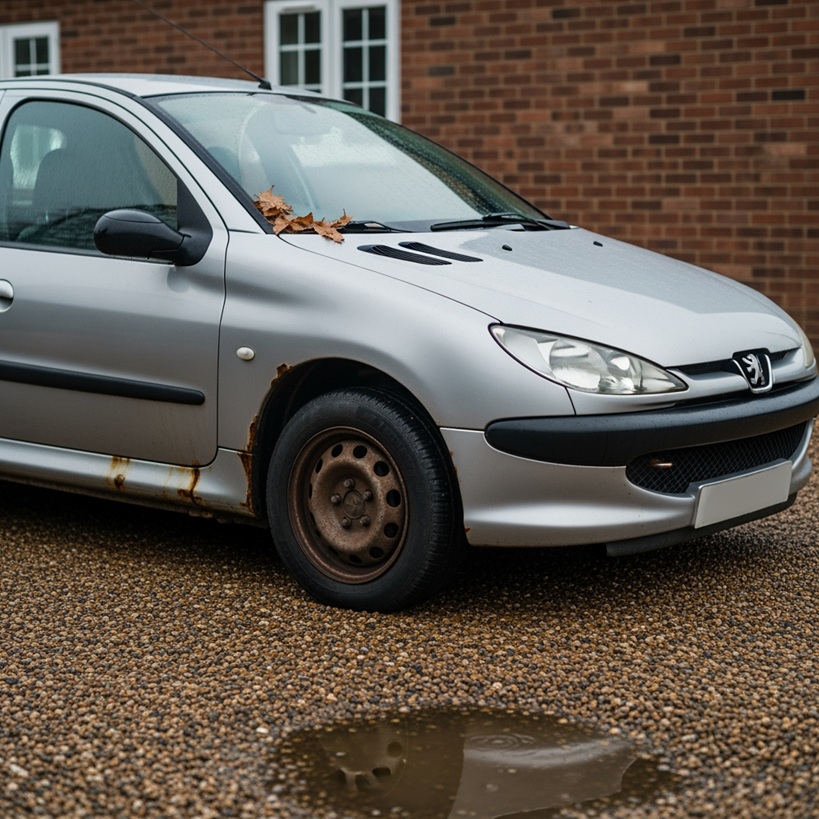
How Much for a Scrap Peugeot 206?
20th Apr, 2026
The Peugeot 206 was everywhere in Britain for years – car parks, streets, and learner driver lessons. These French superminis sold in massive numbers, and now many are reaching the end of their road. If you’ve got one sitting on your drive wondering what it’s worth as scrap, let’s talk realistic figures.
Scrap Car Network provides transparent pricing for Peugeot 206 scrap value across all phases and specifications. 206s typically fetch £120-£250 as scrap depending on age, condition, engine type, and completeness.
These values reflect reality: small cars with notorious rust problems and saturated parts markets don’t command premium scrap prices. Understanding this helps prevent disappointment and sets proper expectations for what your 206’s actually worth.
Why Peugeot 206s Are Common Scrap Vehicles
Peugeot sold millions of 206s in the UK between 1998 and 2009. This enormous sales success means substantial numbers now need scrapping as age and problems catch up with them.
Sales dominance during the early 2000s created huge ownership numbers. The 206 competed directly with Ford Fiesta, Vauxhall Corsa, and Renault Clio for Britain’s supermini crown. It frequently topped sales charts, meaning these cars are absolutely everywhere.
Typical failure scenarios for 206s include catastrophic rust (particularly rear subframes and sills), electrical problems that plague French cars, failed diesel engines, or simply economic write-offs where repair costs exceed vehicle values. A £500 repair bill on a car worth £800 triggers scrapping decisions.
Think of 206s like those Nokia mobile phones from the early 2000s – absolutely brilliant when new, millions sold, but eventually superseded and disposed of in huge volumes. The scrapping wave for 206s is happening now.
Rust reputation significantly affects 206 lifespans. These cars suffer notorious corrosion issues that often prove terminal before mechanical failures occur. Rear wheelarches, sills, and rear subframes corrode extensively, creating MOT failures and unsafe vehicles.
Current Peugeot 206 Scrap Value Ranges
206 scrap prices vary by age, condition, and specification, but established ranges exist for these common superminis.
Typical valuations break down roughly by era and condition:
- Phase 1 (1998-2003): £120-180
- Phase 2 (2003-2006): £140-200
- Phase 3 (2006-2009): £160-250
- Clean condition adds £10-20 to ranges
- Severe rust reduces by £15-30
These ranges assume reasonably complete vehicles with typical wear. Heavily corroded examples fetch lower amounts due to reduced metal yield and handling difficulties.
Weight considerations affect base valuations. A 206 hatchback weighs roughly 900-1,050kg depending on specification. SW estate variants reach 1,100-1,150kg. This modest size means scrap values cluster at the lower end of typical ranges.
Catalytic converter worth varies considerably. Petrol 206 cats contain £40-70 worth of precious metals. Diesel equivalents, particularly 1.4 HDi and 2.0 HDi models, can reach £80-120. This diesel premium adds significant value to complete vehicles.
Phase-by-Phase Value Breakdown
Phase 1 models (1998-2003) now rarely fetch more than £140-180 as scrap. These older 206s suffer extensive rust, and parts demand has dropped as surviving examples dwindle. Well-preserved examples might reach the upper range, but most sit at £120-150.
Phase 2 generation (2003-2006) with facelifted styling represents the most common generation currently reaching scrap yards. Expect £140-200 depending on condition and specification. Diesel models command premium prices due to catalytic converter values.
I remember a customer years back who brought in two 2005 206s within a month of each other. First was a 1.4 petrol five-door that had failed MOT on severe sill rust. Interior was immaculate, engine ran perfectly, but the structural corrosion was terminal. We offered £145 for it. Second was a 2.0 HDi diesel three-door that wouldn’t start but looked solid underneath. That diesel cat alone was worth £100, so we paid £195 for the complete car. Same year, similar overall condition, but that engine difference and catalytic converter meant fifty quid extra. The petrol owner was disappointed until I showed him the massive rust holes his car had versus the relatively solid diesel.
Phase 3 models (2006-2009) offer slightly better scrap values due to relative youth and parts still in demand. Complete Phase 3 206s typically bring £160-250 depending on specification and condition.
Late examples from 2008-2009 occasionally reach the upper ranges, particularly diesel estates in good condition. These represent the newest 206s and command best prices among the generation.
Engine Type Impact on Scrap Value
Engine choice significantly affects Peugeot 206 worth as scrap beyond just catalytic converter considerations.
Diesel advantages stem from multiple factors. Diesel catalytic converters contain substantially more precious metals than petrol equivalents. The 1.4 HDi and 2.0 HDi engines have cats worth £80-120 compared to £40-70 for petrol variants.
Specific diesel engines command varying premiums:
- 1.4 HDi: Excellent cat, solid premium (£30-50 extra)
- 2.0 HDi: Premium cat, best premium (£40-60 extra)
- Rare 1.9 diesel: Good cat, decent premium (£25-40 extra)
Petrol engine variants cluster closer together in value:
- 1.1 petrol: Basic engine, modest cat value
- 1.4 petrol: Most common, standard cat
- 1.6 petrol: Slightly larger, modest premium (£5-10)
- 2.0 GTi: Performance cat, small premium (£15-25)
The petrol engine differences matter far less than diesel versus petrol distinctions. A 1.1 petrol and 1.6 petrol 206 might differ by only £10-15 in scrap value.
Performance variants including GTi 180 models command small premiums (£15-30) due to performance-specification catalytic converters and slightly higher weights from additional equipment.
What Affects Your 206’s Scrap Value
Beyond phase and engine type, several factors influence scrapping 206 valuations.
Completeness matters significantly. A 206 with engine, gearbox, catalytic converter, wheels, and interior intact commands full value. Missing any major components reduces offers proportionally. Given 206’s modest values, losing an £80 diesel catalytic converter represents substantial percentage reduction.
Condition factors include rust severity, accident damage, and mechanical state. Minor surface rust barely affects scrap value. Extensive structural corrosion creating handling difficulties or reducing metal yield might drop offers by 15-25%.
Trim level differences create minimal valuation variations. A Phase 2 Sport with air conditioning and upgraded interior might fetch £10-15 more than a base S model, but these differences are small relative to total value.
Mileage relevance for scrap is essentially nil. A 180,000-mile 206 and a 60,000-mile equivalent fetch similar scrap prices because metal content doesn’t change with mileage. Parts resale value might differ slightly, but this rarely affects offers more than £5-10.
Notorious 206 Rust Issues
Certain rust problems significantly impact 206 values when severe enough to affect processing.
Rear wheelarch corrosion plagues virtually all 206s. The distinctive rust bubbles and holes around rear wheels become MOT failures and warning signs of deeper structural issues. Extensive wheelarch rust indicates likely sill and subframe problems too.
Sill corrosion creates structural concerns. 206 sills rust from inside out, meaning visible surface rust often hides extensive internal corrosion. Severely compromised sills make vehicles unsafe and harder to handle during processing.
Rear subframe rust represents the terminal issue for many 206s. This crucial structural component corrodes extensively, creating MOT failures and dangerous vehicles. Subframe rust often proves uneconomical to repair, triggering scrapping decisions.
Front subframe problems occur less frequently but still affect older examples. When front subframes corrode significantly, repair costs exceed vehicle values even for otherwise good 206s.
When rust is severe enough to significantly reduce metal yield or create dangerous handling during transport, scrap offers drop by £15-30. This isn’t penalty – it’s recognition of reduced recoverable material.
Body Style Variations and Values
Different 206 body styles create modest valuation variations based primarily on weight differences.
Hatchback models (three-door and five-door) represent the vast majority of 206s. These weigh 900-1,050kg depending on specification and fetch standard scrap values for their respective phases and engines.
SW estate variants offer increased weight and slightly better values. Estate 206s weigh roughly 1,100-1,150kg, translating to £15-25 more scrap value than equivalent hatchbacks purely due to additional metal content.
CC convertible models present interesting cases. Convertible mechanisms add weight, but soft-top materials don’t contribute scrap value. CC models typically fetch similar prices to equivalent hatchbacks, sometimes £5-10 more due to reinforced structures.
Three-door versus five-door differences are negligible for scrap purposes. Five-door models weigh marginally more (20-30kg) but this translates to only £2-3 difference in scrap value.
Parts Worth Salvaging Before Scrapping
Most Peugeot 206 scrap value is best realised by selling complete to Authorised Treatment Facilities rather than stripping parts yourself.
Saturated parts market for 206 components makes selective removal rarely worthwhile. Used 206 parts flood eBay, breakers’ yards, and online marketplaces, keeping prices low. Selling individual parts might net £50-80 total, but your complete car loses £60-100 in scrap value.
Aftermarket modifications represent the only components potentially justifying removal. Expensive aftermarket alloy wheels, premium stereo systems, or performance modifications might warrant removal before scrapping.
Legal considerations require attention. Complete vehicles simplify DVLA notification and scrapping paperwork. Stripped cars create complications potentially outweighing any parts sale benefits.
Time investment calculations matter too. Spending several hours removing 206 parts to sell individually rarely compensates financially once you factor in reduced scrap value plus your time.
Get an instant quote to scrap any car including Peugeot 206s for straightforward valuations without component removal requirements.
Preparing Your 206 for Collection
Proper preparation ensures smooth collection and prevents quote adjustments on arrival.
Personal belongings removal needs thoroughness. Check the glovebox, door pockets, boot, under seats, and centre console. 206s have numerous storage compartments where items accumulate over years of ownership.
Paperwork requirements include your V5C logbook for DVLA notification. Understanding how to tell the DVLA when you sell or scrap your car ensures proper legal process completion.
Access considerations matter for collection. Can recovery trucks reach your 206? If it’s parked in tight residential areas or behind other vehicles, arrange clear access beforehand. Small cars are easier to collect than large ones, but access still requires consideration.
Fuel considerations don’t typically require attention. 206s hold 50 litres, meaning even a half-full tank represents only £30-35 worth of petrol. Most owners run tanks nearly empty before scrapping anyway.
Battery condition creates minimal value difference (£3-5). Removing a good battery to use elsewhere is fine if needed. Just inform the collector it’s missing so quotes reflect this.
The Scrapping Process for 206s
Understanding what happens after collection helps explain the scrapping 206 timeline and process.
Collection and transport to Authorised Treatment Facilities typically occurs within 24-48 hours of booking. Small cars like 206s are easy to collect and transport efficiently using standard recovery equipment.
Depollution requirements mandate removal of all hazardous fluids before processing. 206s contain engine oil, coolant, brake fluid, air conditioning refrigerant (if equipped), and fuel. ATFs drain and properly dispose of these materials according to environmental regulations.
Parts extraction varies by facility. The 206 parts market is heavily saturated, so extensive stripping often doesn’t occur. Some facilities might remove working alternators, lights, or desirable interior components from clean examples.
Metal recycling forms the core value. 206s get crushed and shredded, with ferrous metals (steel/iron) separated from non-ferrous materials (aluminium, copper). The precious metals in catalytic converters get extracted separately through specialist processing.
Certificate of Destruction arrives within seven days of facility receiving your 206. This legal document proves proper disposal and removes DVLA liability. Keep it permanently.
Getting Fair Quotes for Your 206
Comparison shopping reveals market rates and identifies reasonable versus exploitative offers.
Information needed for accurate 206 quotes includes:
- Registration number (enables automatic specification lookup)
- Exact phase and trim (Phase 2 Sport, Phase 3 S, etc.)
- Engine size and fuel type (1.4 HDi, 1.6 petrol, etc.)
- Completeness (all parts present or missing items)
- Condition (rust severity, damage, operational status)
Realistic expectations help prevent disappointment. 206s won’t fetch £300-400 like larger diesel family cars or premium brand vehicles. If quotes cluster around £140-170 for your Phase 2 petrol 206, that’s market reality.
Fair offer recognition comes through comparison. If three operators quote £150-175 for your 206 and one offers £100, the outlier is likely a lowball. If someone quotes £280 for a rusty Phase 1 petrol model, they’re possibly baiting for later reductions.
Verified operator advantages include accountability and established processes. Working with our network of Authorised Treatment Facilities ensures proper handling, fair pricing, and guaranteed documentation.
Common Problems Affecting Value
Beyond rust, several 206-specific problems occasionally impact scrap values.
Electrical gremlins plague French cars generally and 206s particularly. Window regulators fail, central locking malfunctions, and dashboard lights illuminate mysteriously. These electrical issues don’t significantly affect scrap value unless they’ve caused fire damage.
Engine problems vary by type. The 1.4 HDi diesel suffers turbo failures and injector problems. Petrol engines generally prove more reliable but can develop timing issues. Failed engines reduce parts resale value but barely affect scrap metal worth.
Gearbox issues occur occasionally but don’t significantly impact scrap pricing. The failed gearbox still contains valuable metals and materials worth recovering.
Air conditioning failures are common in older 206s. This doesn’t affect scrap value but sometimes influences when owners decide scrapping makes more sense than repair.
Regional Price Variations
Where you scrap your 206 affects 206 scrap prices slightly, though variations are modest for small common vehicles.
Urban areas benefit from competition and collection efficiency. A 206 in London or Manchester might fetch £5-10 more than one in remote rural areas purely due to easier collection logistics.
Rural locations face minimal penalties for small car scrapping. Collection costs for lightweight vehicles are lower than for heavy saloons. A facility might reduce offers by £5-10 for remote 206 collection compared to urban pickups.
Scotland, Wales, and Northern Ireland follow similar patterns to England. Regional differences stem from local competition and logistics rather than national boundaries.
Industrial areas near major recycling facilities sometimes offer marginal premiums (£5-10) due to reduced transport costs to processors. These differences matter less for small-value vehicles like 206s than for premium or large vehicles.
Timing Your 206 Scrap Sale
When you scrap affects what you’ll receive, though variations are modest for older small cars.
Seasonal patterns see slightly stronger prices in spring/summer and softer prices in winter. For 206s, this variation might amount to £5-10 between peak and low periods.
Metal market trends affect all scrap vehicles. Strong steel markets improve 206 values across the board. Weak markets reduce them. The absolute differences on small base values are modest even when percentage changes match larger vehicles.
MOT timing often triggers 206 scrapping decisions. Facing £500 repairs for rust-related MOT failures on a car worth £700 makes scrapping economically sensible. This timing is driven by necessity rather than market speculation.
Immediate needs usually outweigh market timing considerations. If your 206’s costing money through failed MOT, parking issues, or insurance on a non-runner, accepting current market rates makes more sense than gambling on future improvements.
Legal Requirements and Documentation
Proper disposal involves specific legal steps ensuring you’re not held liable for future issues with your former 206.
DVLA notification using V5C Section 9 removes you as registered keeper. This prevents future tax demands or legal responsibility if someone illegally uses your old registration plates.
Certificate of Destruction provides legal proof of proper disposal. Without this document, you remain vulnerable if your scrapped 206 somehow reappears or its identity gets misused.
Insurance cancellation should occur after collection and DVLA notification, not before. Maintaining insurance during the scrapping process prevents coverage gaps.
Outstanding finance must be cleared before scrapping. Older 206s rarely carry outstanding finance, but newer examples might still have loans requiring clearance before legal disposal.
Working with our environmentally responsible car recycling process ensures all legal requirements are met properly for your Peugeot 206.
Special Variants and Editions
Certain 206 models deserve specific mention for value considerations.
GTi and GTi 180 models command small premiums (£15-30) due to performance catalytic converters and slightly higher weights from additional equipment. Their scrap value still primarily reflects metal content rather than enthusiast appeal.
Roland Garros editions don’t significantly impact scrap values despite premium trim and features. These special editions appeal to used car buyers but mean little when recycling for materials.
Quiksilver and other special editions similarly fetch standard scrap values. Distinctive paint colours and trim packages don’t affect metal content or recycling value.
LX, XS, and Sport trim levels create minimal scrap value differences (£5-10 maximum) based primarily on equipment weight variations.
Environmental Considerations
Proper 206 disposal protects the environment through regulated recycling processes.
Hazardous materials in 206s include engine oil, coolant, brake fluid, air conditioning refrigerant, and battery acid. ATFs handle these materials safely according to environmental regulations.
Recycling rates for 206s exceed 95% by weight. Metals get reclaimed for new manufacturing. Plastics undergo appropriate processing where viable. Glass enters recycling streams.
Tyre disposal through approved routes prevents illegal dumping. 206 tyres typically become rubber crumb for various applications.
End-of-life vehicle regulations require proper depollution and processing. Licensed ATFs follow these regulations, protecting the environment and ensuring legal compliance.
Making the Most of Your 206’s Value
Maximising Peugeot 206 scrap value involves straightforward steps without requiring mechanical expertise.
Honest condition disclosure prevents collection-day surprises and quote adjustments. Describing rust accurately, mentioning missing parts, and acknowledging damage upfront creates reliable quotes.
Multiple quote comparison reveals market rates. Three to five quotes from different operators quickly establish fair value ranges for your specific 206.
Timing flexibility where possible allows accepting reasonable offers rather than rushing. But don’t hold vehicles indefinitely gambling on market improvements that might never materialise.
Complete vehicle sales through reputable operators simplify the process and typically deliver best overall value compared to stripping parts and selling a shell.
Conclusion
Peugeot 206 scrap value ranges from £120-£250 depending on phase, engine type, completeness, and condition. These modest figures reflect small car size, notorious rust problems, and saturated parts markets.
Diesel 206s command premiums over petrol equivalents due to more valuable catalytic converters. Later phases fetch more than earlier models. Complete vehicles with all parts present receive full value. Honest disclosure about rust severity prevents collection-day quote adjustments.
The scrapping process for 206s is straightforward due to their common nature in UK scrap yards. Established procedures and known specifications benefit owners through efficient processing and fair pricing.
Choose operators transparent about pricing factors and legally compliant with environmental regulations. Proper disposal ensures you receive fair value whilst protecting yourself legally and contributing to responsible recycling.
Whether you’re scrapping a rusty Phase 1, a failed Phase 2 diesel, or a damaged Phase 3, understanding realistic values prevents disappointment. Your 206 served you well over the years. Proper disposal provides appropriate final value whilst ensuring legal compliance.
Contact us for specific guidance on your Peugeot 206’s scrap value based on exact phase, engine, and condition.