Scrapping a Car With Flat Tyres: Challenges & Solutions
7th May, 2026
Flat tyres might seem like a minor inconvenience when you are planning to scrap a car, but they can complicate the collection process more than most people expect. Whether it is a slow puncture that has finally given up the ghost or a rim sitting directly on your driveway, the good news is that it is absolutely possible to scrap car flat tyres and all. Reputable services handle these situations routinely.
Understanding what happens during collection, why flat tyres create specific challenges, and how professional services work around them can save considerable hassle. This guide explains the practical realities of scrapping vehicles with tyre problems and what both car owners and collection services need to consider to get the job done smoothly.
Why Flat Tyres Complicate Vehicle Collection
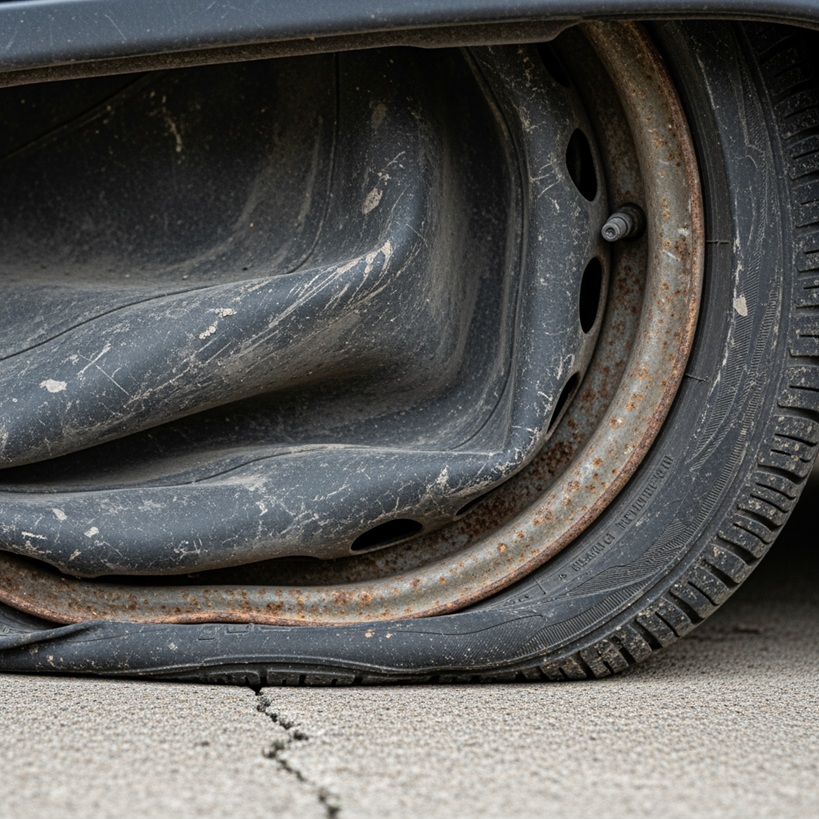
Flat tyres transform a straightforward recovery job into something requiring specialist equipment and additional time. A car sitting on its wheel rims rather than inflated rubber creates friction and resistance that standard recovery trucks aren’t always equipped to handle easily.
The primary issue centres on movement. Vehicles with properly inflated tyres roll smoothly onto recovery trucks or trailers. Flat tyres don’t roll; they drag, scrape, and resist. This increases the physical effort required and potentially damages the vehicle further during loading.
Recovery operators also face safety concerns. A car with one or more flat tyres sits unevenly, making it unstable during lifting or winching operations. The uneven weight distribution can shift unexpectedly, creating risks for both the operator and surrounding property. If you have ever tried to push a shopping trolley with a jammed wheel, you have a rough idea of the problem. Now multiply that weight by a thousand, and you can see why we need a specialist kit.
How Collection Services Handle Flat Tyres
Professional scrap car collection services come prepared for non-rolling vehicle recovery, including those with tyre problems. Most operators in the UK carry equipment specifically designed to manage these situations without causing additional damage or safety issues.
Specialist recovery trucks equipped with hydraulic flatbeds or tilting platforms make the process considerably easier. These trucks lower their bed to ground level, creating a shallow ramp that minimises the dragging distance. Winches then pull the vehicle onto the flatbed with controlled force.
Some operators use wheel dollies or skates. These are small wheeled platforms that slide under flat tyres. These devices effectively give the vehicle temporary wheels, allowing it to roll despite the deflated tyres. This method works particularly well for cars with multiple flat tyres or those stuck in awkward positions.
I once had a customer in Derbyshire with an old Morris Minor sitting in a field on four flat tyres. It had sunk into the mud up to the axles. We couldn’t just drag it, or we would have ripped the suspension off. We had to jack it up in the mud, slide boards under the chassis, and winch it inch by inch using a snatch block. It took three hours, but we got it out in one piece.
For severely damaged vehicles or those in confined spaces, recovery specialists might employ a crane or lift system (often called a HIAB). This approach lifts the entire vehicle without requiring it to roll at all, though it is typically reserved for particularly challenging collections.
What to Tell Collection Services
Honesty about tyre condition prevents delays and ensures the right equipment arrives. When booking collection, specify exactly how many tyres are flat and whether they are completely deflated or just low on pressure. This seemingly minor detail significantly affects the scrap car recovery approach.
Describe the vehicle’s position as well. A car with flat tyres on a flat driveway presents different challenges than one on a slope or soft ground. Collection services need to know whether they will be working on tarmac, gravel, grass, or mud, as surface conditions affect traction and equipment choice.
Most reputable services won’t charge extra for flat tyres if you have informed them beforehand. However, unexpected complications discovered on arrival might incur additional fees, particularly if the operator needs to return with different equipment. Transparency saves time and money for everyone involved.
The Impact on Scrap Value
Flat tyres themselves don’t significantly reduce a vehicle’s scrap value. The value of scrap cars primarily depends on metal weight and current market prices for steel, aluminium, and other recyclable materials. Tyres contribute minimal value in the scrapping process.
However, flat tyres sometimes indicate broader neglect or damage. A car that has been sitting immobile long enough for all tyres to deflate might have additional problems: seized engines, corroded components, or fluid leaks. These issues can affect overall condition and potentially reduce value.
You can calculate your vehicle’s worth online instantly, but remember that the base metal value remains the same regardless of whether the tyres have air in them. The metal weight is king in this industry.
Legal Requirements and Documentation
The legal process for scrapping a car doesn’t change based on tyre condition. You still need to provide proof of ownership, typically the V5C logbook, and ensure the vehicle goes to an Authorised Treatment Facility (ATF). These requirements remain constant regardless of whether the car is roadworthy.
The DVLA notification process also remains standard. You must inform the DVLA when you scrap your car, ensuring you are no longer liable for the vehicle. The collection service should provide a Certificate of Destruction (CoD) within seven days, confirming the car has been properly processed at an ATF.
Flat tyres don’t exempt you from these responsibilities. Some people mistakenly believe that because a car is not roadworthy, they can abandon it or skip proper disposal procedures. This isn’t true; you remain legally responsible for ensuring proper disposal through authorised dealers regardless of condition.
Common Collection Scenarios and Solutions
Different situations require different approaches. A car with one flat tyre in a suburban driveway is straightforward; most standard recovery trucks handle this without specialist equipment. The vehicle still has three functional wheels, making loading relatively simple.
Multiple flat tyres present more complexity. Two flat tyres on the same axle create significant imbalance, requiring careful winching to prevent the vehicle sliding sideways during loading. Four flat tyres mean the car is essentially sitting on its chassis. This requires either wheel dollies or a flatbed that lowers completely to ground level.
Vehicles stuck in garages or tight spaces with flat tyres pose additional challenges. Recovery operators might need to manually push or pull the car into an accessible position before loading. This physical work takes time and sometimes requires multiple operators. This is why providing accurate location details when booking matters.
The Scrap Car Network specialises in connecting owners with local collectors who have the right kit for these exact scenarios.
Preparing Your Vehicle for Collection
You can make the collection process smoother with minimal preparation. Clear the area around the vehicle, ensuring the recovery truck has adequate access. Most trucks need several metres of clearance to position properly, particularly if they are lowering a flatbed or extending a winch cable.
Remove personal belongings from the vehicle before collection. Recovery operators aren’t responsible for items left inside, and retrieving something after the car has been loaded onto a truck is awkward at best. Check the boot, glove compartment, and under seats thoroughly.
If possible, ensure the vehicle is in neutral with the handbrake off. This isn’t always feasible with cars that have been stationary for months, but if you can manage it safely, it significantly eases the loading process. Don’t put yourself at risk trying to move a vehicle on a slope, though.
When Flat Tyres Indicate Bigger Problems
Flat tyres rarely occur in isolation on vehicles heading for scrap. They are often symptomatic of broader neglect or mechanical failure that has led to the scrapping decision. Understanding these connections helps set realistic expectations about the collection process.
Vehicles abandoned after mechanical failure often develop flat tyres through prolonged stationary periods. Tyres naturally lose pressure over time. A car that has been immobile for six months will almost certainly have deflated tyres regardless of their initial condition.
Accident-damaged vehicles frequently have flat tyres at the impact points. A car that has been in a significant collision might have structural damage affecting the wheel arches or suspension, making tyre deflation inevitable. If your car has been in a smash, you can still scrap your commercial van or car with us, regardless of the damage level.
Environmental Considerations in Tyre Disposal
Tyres require specific disposal processes separate from general vehicle recycling. Authorised Treatment Facilities must handle tyres according to UK environmental regulations, preventing them from entering landfills where they create long-term pollution problems.
The tyre recycling process treats rubber as a distinct waste stream. They are removed from vehicles early in the dismantling process and sent to specialist recycling facilities. These facilities either shred tyres for use in products like playground surfaces and road surfacing, or process them through pyrolysis to extract oils and carbon black.
Flat tyres are actually easier to remove and process than inflated ones. Deflated tyres don’t require puncturing before removal, eliminating one step in the recycling process. This minor efficiency gain doesn’t affect your scrap value, but it is worth knowing that flat tyres don’t create additional environmental complications. You can ensure responsible tyre disposal by choosing a licensed operator.
Choosing the Right Collection Service
Not all scrap car services handle challenging collections equally well. Selecting a service experienced with non-roadworthy vehicles ensures smooth collection even when flat tyres complicate matters. Look for operators who specifically mention handling vehicles in any condition.
Verify that the service uses ATFs for all vehicle processing. This ensures both legal compliance and proper environmental handling. The Scrap Car Network connects vehicle owners with authorised facilities across the UK, ensuring proper disposal regardless of vehicle condition. You should always connect with a registered dealer to avoid any legal blowback from improper disposal.
Think of it like dragging a sledge over concrete versus dragging it over snow. A flat tyre on a car is like that sledge on concrete. It fights you every inch of the way. That is why you need a professional with the right winch, not just a mate with a tow rope.
Conclusion
Scrapping a car with flat tyres is entirely manageable with the right collection service. While deflated tyres create additional logistical challenges compared to roadworthy vehicles, experienced operators handle these situations routinely with appropriate equipment and techniques.
The key to smooth collection lies in clear communication about your vehicle’s condition, including the number of flat tyres, location accessibility, and any additional complications. This transparency allows collection services to arrive prepared with the right equipment, preventing delays and unexpected issues.
If you are looking to scrap your car, don’t let a few flat tyres stop you. You can trust a verified network to handle the heavy lifting for you.
Alternatively, if you have specific questions about access or the condition of your tyres, call our team on 01772 665 909. You can also contact us via our website to arrange your collection.