Scrap My Car Today: Same-Day Collection and Cash Payment 2026
21st May, 2026
That old banger sitting on the drive isn’t getting any younger, and neither are you while staring at it every morning wondering when you will finally sort it out. The good news is that getting shot of a car that is past its best does not need to drag on for weeks. Same-day collection services have transformed how quickly drivers can turn unwanted metal into actual money.
Professional networks connect vehicle owners with Authorised Treatment Facilities (ATFs) across the UK, making it possible to arrange collection and payment within hours rather than days. The process has become remarkably straightforward, with digital systems handling most of the paperwork and legitimate operators competing to offer faster turnaround times.
Why Same-Day Collection Matters
Time matters when a car is taking up space that could be better used. Maybe the MOT has expired, and the repair costs would dwarf the vehicle’s value. Perhaps it has failed catastrophically, leaving an immobile lump of metal where a functioning car once stood.
Same day collection solves several problems simultaneously. It frees up parking space immediately, removes the eyesore factor, and prevents further deterioration from weather exposure. It also eliminates ongoing insurance and tax concerns.
How Same-Day Services Actually Work
The mechanics behind rapid collection are not complicated, but they do require proper coordination. Licensed scrap car dealers maintain fleets of recovery vehicles and employ drivers across different regions, allowing them to respond quickly when requests come through.
Here is what happens behind the scenes. When a quote gets accepted in the morning, the system checks which recovery trucks are operating in that postcode area. If one is available and the route makes sense, collection can happen that afternoon.
The typical timeline involves requesting and accepting a quote, which takes about 10-15 minutes. The collection slot is confirmed within two hours. The vehicle is collected, and paperwork is completed on-site in about 30 minutes. Payment is processed immediately or within 24 hours.
Cash Payment Options in 2026
The word “cash” means different things now than it did a decade ago. While some operators still hand over actual notes, most payments happen through instant bank transfer systems that clear within hours. Both count as immediate payment in practical terms.
Payment methods currently offered include bank transfers, which are the most common and usually clear the same day. Physical cash is increasingly rare due to the Scrap Metal Dealers Act 2013, which made cash payments for scrap cars illegal to combat metal theft.
Legal Requirements You Cannot Skip
Speed shouldn’t mean cutting corners with legal obligations. The DVLA does not care how quickly you scrapped your car; they care that you notified them properly and the vehicle went to a licensed facility.
Every legitimate scrap transaction requires a Certificate of Destruction (CoD). This document proves the vehicle was destroyed at an ATF and releases you from legal responsibility. Without it, you remain the registered keeper even after the car has been crushed.
What Affects Your Scrap Value
Not all cars fetch the same price when scrapped, even on the same day. Metal prices fluctuate daily, but other factors play equally important roles in determining what you will actually receive.
Weight matters most. A large estate or 4×4 contains more recyclable metal than a small city car. Since rates change daily, it helps to check current market rates so you know exactly what to expect from the current market.
Vehicle condition affects value too. A complete car with all parts intact is worth more than one that has been stripped. Missing catalytic converters, wheels, or batteries reduce the offer because the scrapyard is getting less usable material.
Choosing a Legitimate Operator
The scrap car industry attracts its share of cowboys alongside the legitimate businesses. Unlicensed operators promise higher prices but leave you legally responsible when they dump your car illegally.
Check these markers of legitimacy before accepting any offer:
- Environment Agency authorisation.
- Proper business address.
- Certificate of Destruction guarantee.
- Transparent pricing.
Our network of Authorised Treatment Facilities undergoes regular compliance checks to ensure they meet environmental and legal standards.
Preparing Your Car for Collection
You do not need to clean or repair anything, but a few minutes of preparation prevents problems during collection. Remove all personal belongings first; recovery drivers are not responsible for items left in vehicles.
Check the glove compartment, door pockets, under seats, and the boot. Cancel your insurance only after collection is confirmed. If the recovery truck breaks down and collection gets delayed, you will need that cover.
Regional Availability Across the UK
Same-day collection is not universally available everywhere, every day. Urban areas with higher population density naturally get better service because operators can complete multiple collections in one trip.
Coverage has improved significantly, with most major cities and surrounding areas now serviced by multiple operators offering rapid collection. London, Newcastle upon Tyne, and Scotland’s central belt all see regular same-day service.
Rural locations face longer waits simply because fewer recovery vehicles operate in those areas. A request from the Scottish Highlands might take 2-3 days rather than same-day.
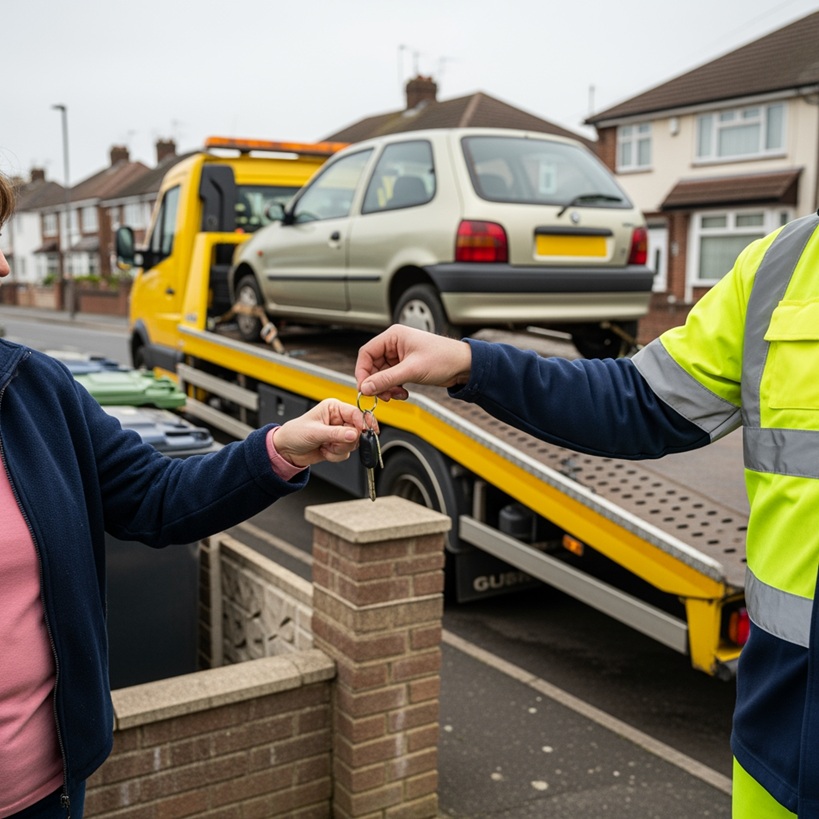
I once had a customer in a remote Welsh valley who needed same-day collection because he was flying to Australia the next morning. The nearest driver was 60 miles away. We managed to reroute him, but he arrived at 9pm. The customer handed over the keys by torchlight, relieved he wouldn’t miss his flight. It was tight, but we got it done.
Common Pitfalls to Avoid
Speed can lead to mistakes when you are rushing to get rid of a car. The most common error is accepting the first offer without comparison. Prices vary between operators.
Getting multiple quotes takes minutes. You are not obligated to accept any offer. Watch out for hidden deductions. Some operators quote attractive prices then deduct “collection fees” when they arrive. The price quoted should be the price paid.
Environmental Considerations
Scrapping a car properly is not just about legal compliance; it is about responsible disposal of hazardous materials. Modern vehicles contain oils, coolants, and battery acid that cause serious environmental damage if handled incorrectly.
Authorised Treatment Facilities must follow strict protocols for draining fluids and removing batteries. It is all part of the vehicle recycling services process that ensures hazardous waste is kept out of the ground.
What Happens After Collection
Once the recovery truck drives away, your involvement mostly ends, but the car’s journey continues. At the ATF, it goes through systematic depollution before any crushing begins.
Reusable parts in good condition get removed and sold on the secondhand market. The remaining shell gets crushed and the metals separated. Ferrous metals go to steel mills, while non-ferrous metals fetch higher prices.
When Same-Day Isn’t Possible
Sometimes circumstances prevent immediate collection despite everyone’s best intentions. Access issues top the list. If a car is blocked in by other vehicles or stuck in a garage, collection cannot proceed until those problems get resolved.
Paperwork problems cause delays too. If the DVLA records show someone else as the registered keeper, legitimate operators won’t collect until those issues clear. If you are worried about the forms, our guide on completing DVLA paperwork covers everything you need to know to stay compliant.
Making the Most of Your Quote
Getting the best price requires understanding what increases value. Completeness matters. If you have already removed the battery or catalytic converter, mention this when getting quotes.
Timing affects prices too. Scrap metal values fluctuate based on global demand. Being flexible about collection timing can sometimes improve offers. You can use our platform to get an instant valuation and see what your specific make and model is worth right now.
The Future of Vehicle Scrapping
The industry continues evolving as technology advances. Electric vehicle recycling presents new challenges, with battery disposal requiring specialist handling. Digital systems now handle most paperwork automatically, replacing posted forms with instant electronic notifications. That is why Scrap Car Network invests heavily in tech to make the whole process smoother for you.
Conclusion
Scrap my car today queries in 2026 do not require patience or complicated arrangements. Same-day collection services put money in your bank and remove unwanted vehicles within hours when you work with legitimate operators.
The key elements remain straightforward: get multiple quotes, verify the operator is licensed, prepare your paperwork, and ensure you receive your Certificate of Destruction. Rush the process by all means, but do not skip the legal requirements that protect you from future liability.
Speed and legitimacy are not mutually exclusive. The best operators offer both, combining rapid response times with full compliance. If you need to scrap your car urgently, reliable services are ready to help.
The space it is occupying could be empty by teatime. Your bank account could be healthier by tomorrow. And you will sleep better knowing everything was handled properly. That is not a bad outcome for a morning’s work.
If you are ready to get started, you can arrange same-day collection right now.
For immediate assistance, call our team on 01772 665 909.
You can also contact us online.