Same-Day Scrap Car Collection Near Me: UK-Wide Availability
12th May, 2026
When a car reaches the end of its life, it doesn’t just become a problem; it becomes an urgent one. That vehicle sitting on the driveway or blocking a parking space isn’t waiting patiently. It is costing money, taking up space, and potentially attracting unwanted attention from the local council.
The good news is that same-day scrap car collection services exist across the UK. They are designed precisely for situations where waiting simply isn’t an option. Whether dealing with a failed MOT, a breakdown that isn’t worth repairing, or a vehicle that has been declared a write-off, getting that car removed quickly can happen faster than most people realise.
What Makes Same-Day Collection Possible
The logistics behind collecting a scrap vehicle on the same day aren’t as complicated as they might seem. Authorised Treatment Facilities (ATFs) and licensed scrap car dealers operate extensive networks of recovery vehicles across the UK. Often, they have multiple collection crews working different regions simultaneously.
Most reputable services maintain relationships with registered scrap car dealers in every major area. When someone requests same-day collection, the system matches the job to the nearest available recovery vehicle. It works similarly to how taxi apps operate, except instead of picking up passengers, these services collect end-of-life vehicles.
The key factors that determine availability include:
- Geographic location: Urban areas typically have more frequent collection slots.
- Time of request: Morning enquiries stand the best chance of same-day service.
- Vehicle accessibility: Cars that can be easily loaded save crucial time.
- Current demand: Weekdays generally offer more flexibility than weekends.
The Real Timeline: From Quote to Collection
Here is what actually happens when someone contacts a professional service for same-day collection. The process isn’t drawn out over days; it is designed for speed.
Step one takes roughly five minutes. Vehicle details get entered into the system, including registration number, make, model, and condition. The system checks current scrap metal prices, vehicle weight estimates, and available collection slots in that postcode area.
Step two happens almost instantly. A quote appears, based on real-time metal values and the vehicle’s recyclable components. There is no waiting for callbacks or email responses. The price is the price.
Step three is where timing matters. Accept the quote, and the system immediately checks for available collection slots. If same-day service is available in that area, you can arrange free collection within specific time windows, usually something like “between 2pm and 4pm” or “after 3pm.”
Step four involves paperwork preparation. While waiting for collection, the V5C logbook needs locating. The yellow ‘sell, transfer or part-exchange your vehicle to the motor trade’ section gets filled in, ready to hand over.
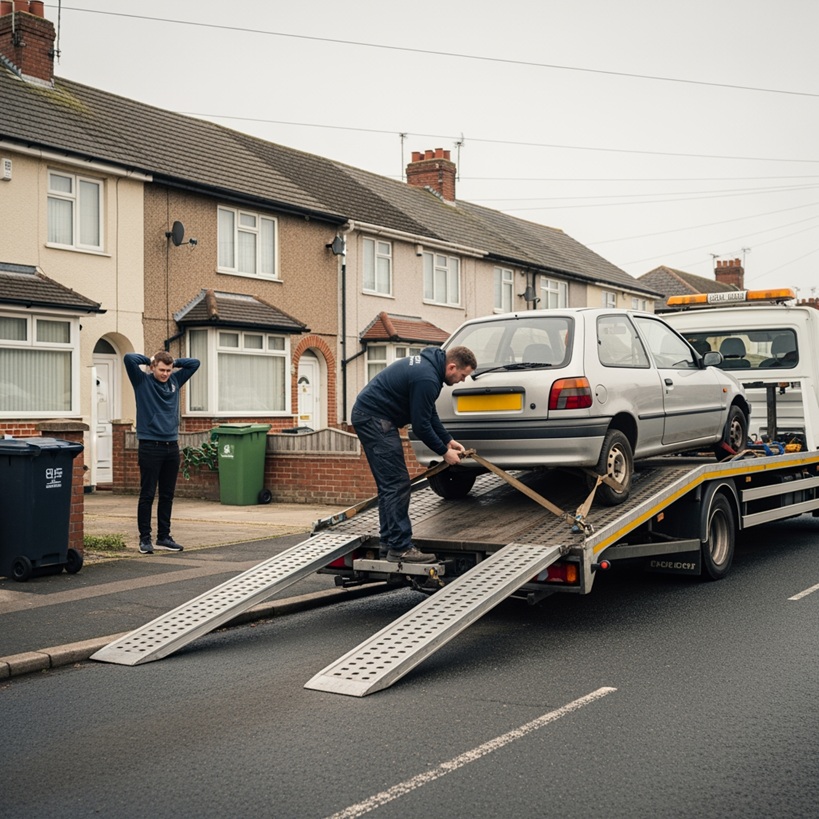
Step five is the actual collection. A recovery vehicle arrives during the agreed window. The driver inspects the vehicle briefly, collects the V5C section, confirms payment details, and loads the car. The whole interaction typically takes 15-20 minutes.
Coverage Areas: Where Service Is Fastest
Claiming “UK-wide” coverage sounds impressive, but knowing what that actually means is vital. Not every village in Scotland gets the same service speed as central London, and that is just reality.
Major cities and surrounding areas like London, Manchester, Birmingham, Glasgow, Leeds, and Liverpool almost always have same-day availability. The concentration of ATFs and recovery vehicles means multiple collections happen daily. Someone in North London or South West London requesting collection at 10am will likely see a recovery truck by mid-afternoon.
Regional towns and cities like Preston or Newcastle upon Tyne maintain strong collection networks. Same-day service is frequently available, particularly on weekdays when collection routes run more regularly.
Rural and remote areas require adjusted expectations. A farmhouse in the Scottish Highlands or a cottage in rural Wales might not get same-day service simply because collection routes do not run there daily. However, Scotland as a whole maintains good coverage, with most populated areas accessible within 24-48 hours maximum.
Why Speed Matters: Urgent Scenarios
What actually happens to create these urgent situations? Why does anyone need urgent vehicle removal instead of scheduling for next week?
Failed MOTs with expensive repairs represent the most common scenario. The car fails its test, the garage quotes £800 for repairs, and the vehicle is only worth £400. Suddenly, that car needs removing from the garage forecourt because they need the space. Waiting a week isn’t an option when storage fees start accumulating.
I remember a young lad who broke down on a red route in London during rush hour. The police gave him two hours to move it before they towed it to the pound at his expense. He called us in a panic. Because we had a driver finishing a job two streets away, we managed to scoop it up within 45 minutes. It saved him about £300 in police recovery fees.
What Affects Same-Day Availability
Several practical factors determine whether same-day collection actually happens. Understanding these helps set realistic expectations.
Vehicle location and accessibility matter enormously. A car parked on a main road with easy access allows for simple collection. A car stuck in a narrow alleyway, blocked by other vehicles, or sitting in a field requires special equipment and more time. This might push collection to the next day.
Condition and mobility play a role. Cars that roll freely, even if they don’t run, load quickly. Vehicles with seized brakes, missing wheels, or significant accident damage require winching equipment and more skilled operators. That doesn’t necessarily prevent same-day collection, but it does affect availability.
The Legal Side of Rapid Collection
Speed shouldn’t mean cutting corners on legal requirements. When a vehicle gets collected for scrap, specific legal obligations apply, and they are not optional.
The Certificate of Destruction (CoD) represents the most important document in the entire process. This certificate proves the vehicle has been properly destroyed at an Authorised Treatment Facility. Without it, the previous owner remains legally responsible for that vehicle, even after it has been collected.
Legitimate services issue the CoD within seven days of collection. The DVLA receives notification automatically, and the vehicle gets removed from their records. This matters because telling the DVLA when you scrap your car is a legal requirement.
Payment Timing and Methods
When does the payment actually hit the bank account? “Same-day collection” doesn’t automatically mean same-day payment, and understanding the timeline prevents disappointment.
Most legitimate services use bank transfer (BACS) payments. The typical timeline sees money arriving within 24-48 hours of collection. Some services offer faster payment options, occasionally even same-day transfers, but this varies by operator and bank processing times.
The payment amount itself depends on current scrap metal prices, which fluctuate based on global commodity markets. A car worth £250 this month might fetch £280 next month. Understanding scrap car prices helps set realistic expectations about value.
The Collection Process
When that recovery vehicle arrives, the process follows a fairly standard pattern. The driver arrives during the agreed time window and locates the vehicle. They will do a quick visual inspection, checking it matches the description provided and noting any obvious damage.
Documentation gets checked and exchanged. The driver needs to see proof of ownership, usually the V5C logbook. They will take the relevant section (the yellow ‘sell to motor trade’ portion) and provide a receipt. Some services also request photo ID to verify the seller’s identity.
Environmental Impact
Speed and convenience matter, but so does what happens after that recovery truck drives away. Understanding the environmentally friendly car recycling process reveals why using legitimate services matters.
Depollution happens first at the ATF. All hazardous fluids get safely removed and disposed of: engine oil, coolant, brake fluid, power steering fluid, and air conditioning refrigerant. These substances cannot just leak into the ground; they require proper handling and disposal.
Making Same-Day Collection Work
Want to maximise the chances of actually getting same-day service? These practical approaches help.
Contact services early in the day. Aim for before 10am if possible. Collection routes get planned based on existing bookings, and early enquiries have the best chance of fitting into same-day schedules.
Have all information ready. Registration number, accurate description of the vehicle’s condition, precise location details, and the V5C logbook to hand. This speeds up the quote process and prevents delays.
Be flexible on timing. Offering a wider collection window gives operators more flexibility to fit the collection into existing routes. You can easily check your car’s value online to get the process started immediately.
Conclusion
Same-day scrap car collection is a genuine service that works across most of the UK when approached realistically. The combination of extensive ATF networks, efficient logistics systems, and competitive demand for scrap metal makes rapid collection both possible and economically viable.
The key lies in understanding what actually makes same-day service work: early contact, accurate information, accessible vehicles, and realistic expectations about coverage areas. Urban and suburban locations generally have excellent access to rapid collection, while rural areas might need an extra day but still receive prompt service.
For anyone facing an urgent vehicle removal situation, same-day collection services provide a practical solution. The process works, the logistics exist, and getting that problem car removed quickly is genuinely achievable across most of the UK.
If you need that car gone today, call our team on 01772 665 909. You can also contact us immediately to see what slots are available in your area.