Scrap Two Cars in One Collection: Multi-Vehicle Pickup Service
12th May, 2026
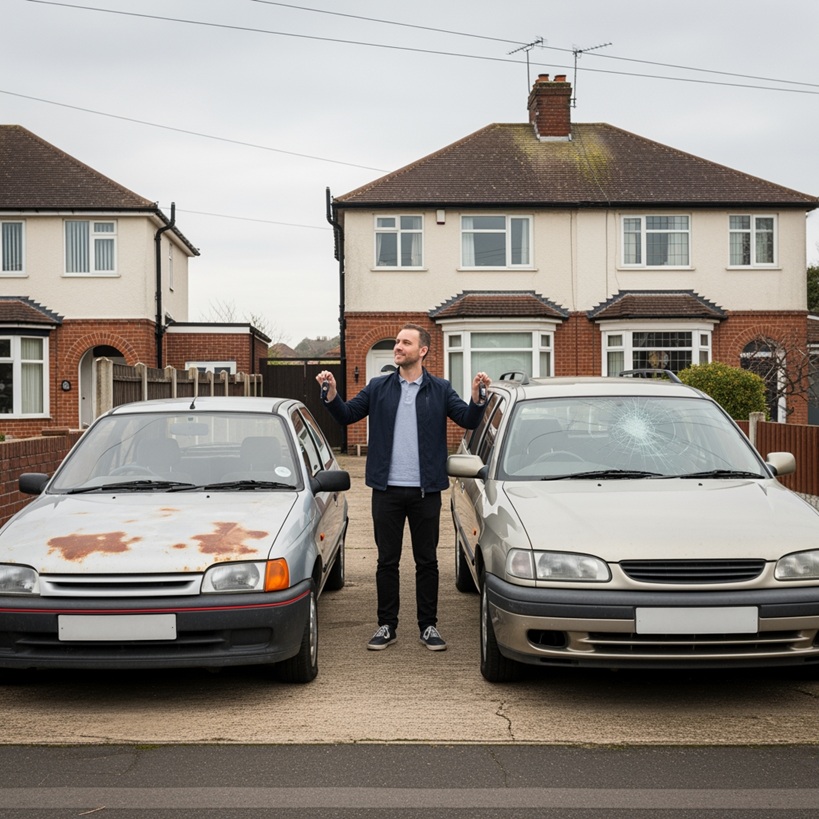
Two cars. Two driveways worth of space gone. Two sets of tax, insurance worries, and the nagging feeling you really should have dealt with this months ago.
It’s a situation more UK households land in than you’d think. One car reaches the end of its life just as another inherited vehicle turns up, or a house move suddenly makes two old runarounds everyone’s problem at once. Wanting to scrap two cars at the same time is completely normal. And sorting both together is far less complicated than doing it in two separate rounds.
Everything you need to know is covered here: how valuations work for each vehicle, what paperwork is required, your DVLA obligations, and how to get both cars ready so the multi-vehicle collection goes without a hitch.
Why People Need to Scrap Two Cars at Once
It usually starts with life getting in the way. Two cars end up on the driveway, neither of them roadworthy, and suddenly clearing them both becomes a priority.
Common Reasons Two Cars Accumulate
There are more reasons than you’d expect for a household ending up with a pair of end-of-life vehicles. An inherited car that arrived after a bereavement is one of the most common. The family already has a working vehicle, and the inherited one has sat untouched for months. Eventually, the decision to scrap it coincides with another car in the household reaching the end of its useful life.
Other scenarios include:
- Insurance write-offs: two cars written off in separate incidents within a short space of time
- Fleet or small business clearances: a sole trader or small company retiring two older vehicles simultaneously
- Driveway clearance: a property sale or house move that prompts clearing out multiple vehicles at once
- Upgrading both household cars at the same time, leaving two old ones to deal with
Whatever the reason, the instinct to deal with both at once is sensible. Two separate collections on different days means two separate waits, two lots of paperwork prep, and twice the disruption. Arranging a multi-vehicle collection in a coordinated way makes the whole process considerably less stressful.
It’s also worth noting that this situation isn’t unique to private households. Small businesses and sole traders sometimes find themselves clearing out two older work vehicles at the same time, whether after upgrading a fleet or winding down operations. The same principles apply regardless of whether the vehicles are personal or commercial.
The Practical Challenge of Two Cars
Scrapping one car is fairly straightforward. Scrapping two requires a bit more planning, particularly around documentation. Each vehicle has its own registration, its own V5C logbook (hopefully), and its own history with the DVLA. That means the process runs on two parallel tracks simultaneously.
Think of it like doing a school run with two kids who go to different schools. The destination’s the same, but the logistics need a bit of extra thought.
The key is getting everything lined up before collection day: quotes confirmed, documents located, and both vehicles accessible. Do that, and the whole thing tends to run smoothly.
Understanding How Scrapping Two Cars Works
The mechanics of scrapping two cars are essentially the same as scrapping one, just doubled. But there are a few specifics worth understanding.
Quotes and Valuations for Each Vehicle
Each car is valued independently. There’s no combined rate or bundle price when scrapping two vehicles, as each one is assessed on its own merits. The factors that affect the scrap value of each car include:
- The make and model of the vehicle
- Its weight (heavier vehicles generally yield more scrap metal)
- Its age and condition
- Whether any major parts have been removed (removing components reduces the value significantly)
- Location, which affects collection logistics and what local dealers can offer
It’s worth getting a quote for each vehicle separately. That way, you know what each car is worth before committing to anything, and there are no surprises when payment comes through. If you want a fuller breakdown of how scrap values are calculated, our scrap car prices guide explains the key factors in plain terms.
I remember an old customer of mine who came into the workshop years ago, convinced his two banged-up Vauxhalls were worth roughly the same because they were similar age. Turned out one was significantly heavier, in better structural condition, and fetched nearly twice the other. Getting each one assessed on its own terms was the only way he’d have known that.
Separate Certificates of Destruction
This is important, and worth understanding clearly. When a car is scrapped at an Authorised Treatment Facility (ATF), it receives a Certificate of Destruction. This is a legal document that proves the vehicle has been responsibly disposed of.
If you’re scrapping two cars, you’ll receive two separate Certificates of Destruction, one per vehicle. Hold onto both. They’re your legal proof that each car has been properly taken off the road. If either registration plate somehow ended up being misused in future, the Certificate protects you from liability.
The Certificate also formally ends your connection to the vehicle in the eyes of the DVLA. Once it’s been issued, the registered keeper is no longer responsible for anything that happens in connection with that registration. For two cars, that’s two clean breaks. It’s the paperwork equivalent of handing back two sets of keys and walking away with your hands completely clean.
Preparing Two Cars for Collection
Preparation is where most of the work happens before collection day. Getting it right for two vehicles means going through the checklist twice.
Documentation You’ll Need for Both Vehicles
The documentation requirements are the same for each car, but it’s easy to get them muddled when dealing with two at once. For each vehicle, try to have:
- The V5C logbook (Vehicle Registration Document): this is the most useful document for the collection team
- Valid proof of identity: if both cars are registered to the same keeper, one form of photo ID covering both is sufficient under the Scrap Metal Dealers Act 2013
- Car keys, if you have them (not essential, but helpful)
- SORN documentation, if either vehicle has been declared off the road
What if one or both V5C logbooks are missing? Don’t let that hold things up. It’s possible to scrap a car without a V5C, as the registered keeper’s details can be verified against the DVLA database. That said, it’s worth flagging the missing logbook in advance so the collection team knows what to expect. If you want a replacement V5C for either vehicle, you can apply for one using a V62 form from the DVLA at a cost of £25, though it isn’t strictly required for scrapping.
Making Both Cars Accessible
Collection teams work efficiently when vehicles are easy to reach. For both cars, make sure they’re:
- Out on a driveway or accessible area, not locked in a garage or blocked behind another vehicle
- Not obstructed by garden equipment, bins, or other items
- Positioned so the collection vehicle can get alongside without manoeuvring through a tight space
If one of the cars is a non-runner, with no engine, flat tyres, or otherwise immovable, flag this when booking the collection. Car scrapping services are designed to handle all sorts of vehicle conditions, but the team will always appreciate a heads-up so they can arrive prepared. A car that’s completely seized solid may need different handling, so it’s always best to mention it upfront.
It’s also worth thinking practically about the order in which the cars sit on your property. If one is blocking the other, the collection team will need access to both. Moving them into the most accessible positions the evening before collection day saves time and avoids any awkward shuffling on the morning itself. Small bit of preparation, big difference in how smoothly it goes.
Removing Personal Belongings
This one sounds obvious, but it’s easy to overlook when you’re coordinating two cars at once. Before collection day, go through both vehicles thoroughly:
- Check the glove box of each car for documents, glasses, cables, or anything else
- Look in the boot: it’s surprising what accumulates in there over years of use
- Check under seats and in door pockets
- Remove any personal items from dashboards or sun visors
- If either car has a parking permit, permit holder, or tax disc holder you want to keep, take it off
Once the car leaves, it’s gone. Anything left inside it goes with it.
DVLA Obligations When Scrapping Two Cars
Scrapping two cars means two sets of DVLA obligations. Neither one can be overlooked.
Notifying the DVLA for Each Vehicle
When a vehicle is scrapped at an Authorised Treatment Facility, the ATF is responsible for notifying the DVLA that the car has been taken off the road permanently. However, it’s also good practice for you as the registered keeper to notify the DVLA independently for each vehicle, particularly if either car lacks a V5C.
For each vehicle, the DVLA will want to know:
- The car’s registration number
- The make and model
- The date of sale or transfer to the scrapyard
- The name and address of the Authorised Treatment Facility
You can notify the DVLA online via GOV.UK. Doing this separately for each vehicle ensures your name is removed from both records promptly, and protects you from any future liability. Our guide on how to tell the DVLA your car has been scrapped covers the steps in full.
Do both notifications as close to the collection date as possible. The longer you leave it, the longer your name remains associated with vehicles that are no longer on the road. It’s a simple online process and takes only a few minutes per car, so there’s no reason to put it off.
Road Tax Refunds on Both Vehicles
If either vehicle still has valid road tax at the time of scrapping, you may be entitled to a refund on the unused months. This applies separately to each car.
The refund is processed automatically by the DVLA once the vehicle is confirmed as scrapped. You don’t need to claim it manually, as it’s issued to the address on file for the registered keeper. Bear in mind that refunds are calculated by whole calendar months, so the month in which the car is scrapped won’t be refunded.
If both cars have road tax remaining, that’s two separate refunds to look forward to. Worth keeping in mind when planning the timing of your collection.
What Happens to Your Two Cars After Collection
The Recycling Process
Once collected, both vehicles head to an Authorised Treatment Facility. ATFs operate under strict environmental regulations, and the recycling process for each car follows the same structured approach:
- Fluids are drained first, including oil, coolant, brake fluid, and fuel, all of which are safely removed and either recycled or disposed of responsibly
- Usable parts are assessed: components in good condition may be salvaged and resold
- Hazardous materials such as airbags and catalytic converters are handled separately
- The shell of the car is then crushed and sent for metal recycling
UK law requires that at least 95% of every end-of-life vehicle is effectively recycled. That applies to each car individually. Both vehicles you’re scrapping will go through this same process, and neither will simply end up in landfill. There’s more detail on how scrap car recycling works from a practical and environmental standpoint if you’d like to understand the full picture.
For two cars, this means two complete recycling processes, each handled separately and each generating its own documentation trail. The materials recovered from both vehicles go back into the supply chain, from recovered steel to salvaged components. It’s a surprisingly thorough process, and considerably more organised than most people expect when they picture a scrap yard.
Payment for Both Cars
Payment for each vehicle is handled separately and is made by bank transfer. It’s been illegal to pay cash for scrap cars since the Scrap Metal Dealers Act 2013 came into force, so any dealer offering cash is not operating within the law, and it’s worth steering well clear of them.
The amount you receive for each car will reflect its individual valuation at the time of the quote. Keep in mind that scrap metal prices fluctuate with market conditions, so the price agreed at the time of quoting is the relevant figure. Once both collections are confirmed and completed, payments are processed into your bank account.
If the two cars are registered to different people, for example one in your name and one in a partner’s or family member’s name, the payments will need to go to the respective registered keepers separately. It’s worth clarifying this when booking, so the right bank details are taken for each vehicle and there’s no confusion over who receives what.
Practical Tips for a Smooth Two-Car Scrap
Getting two cars scrapped at the same time is entirely manageable with a bit of preparation. Here’s a quick summary of what helps most:
- Get a separate quote for each vehicle before committing, and don’t assume they’ll be valued the same. You can get an instant quote to scrap any car in seconds using just your reg and postcode
- Locate both V5C logbooks early; if either is missing, flag it when you make contact
- Have valid photo ID ready: if both cars are in your name, one form of ID covers both
- Prepare both vehicles the day before collection: clear out personal belongings, make sure both are accessible, and let the collection team know if either is a non-runner
- Notify the DVLA separately for each vehicle once scrapping is confirmed
- Keep both Certificates of Destruction once they arrive, and don’t file them away and forget about them
The process for scrapping two cars is the same as for one, just running on two tracks at the same time. The more organised you are going in, the smoother the whole thing goes.
One final thing worth remembering: don’t leave either car in a state where it could become a nuisance or a liability before collection day. If either vehicle is sitting on a public road rather than private property, make sure it has a SORN declaration in place. An untaxed, uninsured vehicle on a public road can attract fines regardless of whether you’re in the process of scrapping it. Sorting the SORN beforehand removes that risk entirely.
With both vehicles prepared, your documentation in order, and the collection arranged, scrapping two cars really isn’t the headache it might seem at first glance. A bit of groundwork upfront, and it tends to take care of itself from there.
If you’ve got questions about arranging collection for two vehicles or want to understand your options, feel free to contact us and the team will be happy to help.
For those looking to get started, Scrap Car Network connects you with Authorised Treatment Facilities across the UK, making it straightforward to get quotes and arrange collection for one vehicle or two.