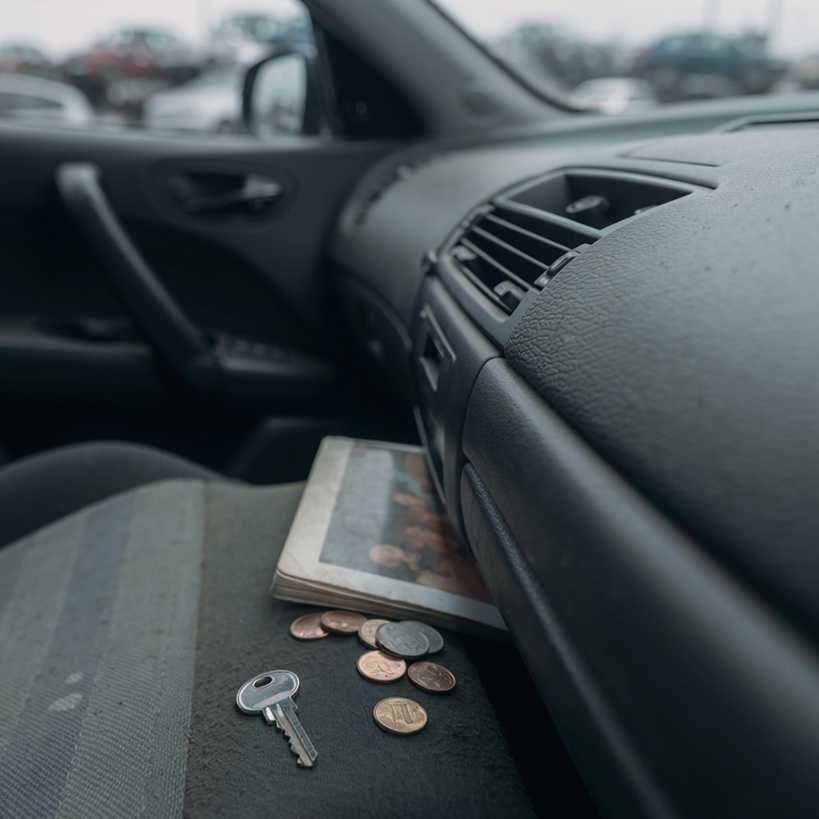
Not removing belongings: what gets lost forever
30th Jun, 2026
The average car in Britain contains approximately one hundred and fifty pounds worth of forgotten items at the moment it is scrapped. This figure does not just represent loose change found under the seats. It includes actual currency, expensive tools, vital documents, and personal keepsakes that are crushed along with the chassis. This happens simply because an owner forgot to check the glovebox or the boot one last time. When a motor reaches the end of its life, the focus is naturally on receiving a fair price. However, not removing belongings can turn a successful sale into a source of long-term regret.
Workshop history shows that the contents of a vehicle often become an afterthought. Once a car is signed over to an Authorised Treatment Facility, the processing happens at an industrial speed. What disappears forever can range from the purely sentimental to the financially significant. It is vital to treat the car as a container of a past life rather than just a hunk of metal. Every compartment must be emptied before the recovery truck pulls away. Understanding what is truly at stake might save more than just memories.
The Reality of What Disappears
Once a car enters the gates of a professional recycling site, it follows a very strict and efficient path. Fluids are drained, hazardous materials are removed, and high-value components like the catalytic converter are salvaged. The remaining shell then faces the industrial crusher. Nothing inside survives this process. It is important to know that yard staff are not required to search vehicles for personal belongings. Their primary job centres on safe and compliant processing rather than treasure hunting through a forgotten life.
Most facilities will remove obvious items if they are spotted during the depollution phase. However, they are under no legal obligation to do so. In a busy yard, a worker might process dozens of cars a day. They do not have the time to look inside every door pocket or under every mat. Consequently, any lost items usually end up as part of the shredded residue that is sent for further sorting or landfill. The finality of the crusher is absolute. If an item is still in the car when it is compacted, it is gone for good.
Documents that Vanish
Vehicle documents top the list of things people forget to take out. The V5C logbook, old MOT certificates, and insurance papers often live permanently in the glovebox. Many owners assume they have grabbed everything important, only to remember days later that the entire service history was tucked behind a sun visor. While losing service records will not stop the scrap car recycling process, it can cause problems elsewhere. For example, if an owner plans to transfer a cherished number plate, the V5C is essential. Without it, the process with the authorities becomes much more complicated.
There is also a significant risk regarding identity theft. Cars often act as mobile filing cabinets for sensitive information. Passports, driving licences, and bank cards disappear into the shredder with alarming regularity. One facility in Newcastle reported finding three passports in a single month. If these items are not found by a reputable worker, they could fall into the wrong hands before the car is crushed. Keeping your personal data safe is just as important as getting the best scrap car prices for the vehicle. A car should be as clean of paperwork as a house would be before a move.
The Financial Cost
Cash represents the most obvious financial loss for many owners. People stash emergency money in centre consoles, door pockets, and under floor mats for years. A twenty-pound note here and a tenner there adds up quickly. It is quite common for a car to arrive at a yard with fifty pounds or more scattered throughout the cabin. Before seeking out vehicle scrap quotes, one should always do a “coin hunt” in every crevice.
Tools present an even greater financial blow. A decent socket set or a professional trolley jack can cost hundreds of pounds. Tradespeople who use their vans as mobile workshops often lose thousands of pounds in equipment they had forgotten was stored in a custom floor compartment. Mobile phones also get left in seat-back pockets or under the front seats with surprising frequency. Even an older smartphone has a resale value. More importantly, it contains personal photos and messages that should be wiped before disposal. The same rule applies to dash cams and sat nav devices. To find out how to scrap your car easily without these losses, a full sweep of the boot and cabin is the first step.
Sentimental Items: The Losses Money Cannot Replace
Some losses cut deeper than the contents of a wallet. Family photographs stored in sun visors or door pockets disappear forever. In an age where most photos are digital, those old printed pictures often represent the only physical copies of precious memories. It is impossible to put a price on a photo of a loved one that can never be replaced. Children’s toys left in the back seats might seem replaceable to an adult, but they are vital comfort objects to a child. Explaining that a favourite teddy has been crushed with the family car is a conversation every parent wants to avoid.
Jewellery also slips off and gets lost in cars more often than people realise. Rings removed for comfort while driving are placed in cup holders and forgotten. Necklaces catch on seatbelts and get tucked into door pockets during a long journey. One yard in London found a wedding ring wedged down the side of a driver’s seat three days after the car had been processed. By then, it was too late to retrieve it from the waste stream. Letters and cards from loved ones also represent a loss that cannot be measured. These items often live in dashboard compartments for years. Once they are gone, they are gone.
The Hidden Compartment Problem
Modern vehicles are designed with dozens of clever storage spaces. This is a benefit during the life of the car but a major hurdle when scrapping your car for good. Boot floors lift to reveal spare wheel wells where owners often hide valuables. Seat back pockets, armrest consoles, and under-seat trays all harbour personal belongings. Some luxury cars even feature hidden safes or secret drawers designed for high-value items. Owners forget about these spaces precisely because they are so well concealed.
Roof boxes and bike racks present another challenge for the owner. While these accessories are often removed before the car is collected, the items inside them are sometimes overlooked. One family reported losing an entire camping kit worth three hundred pounds because they removed the roof box but forgot to check the contents first. It is essential to check every possible storage area, including any aftermarket additions. A systematic approach ensures that nothing of value is left to the mercy of the shredder. Before choosing to scrap my vehicle, a person should spend at least thirty minutes checking every nook and cranny.
Tales from the Workshop
Recycling technicians have stories that would make any driver double-check their vehicle immediately. Items like hearing aids, glasses, and even false teeth turn up with disturbing regularity. These are often removed during long drives and placed in a “safe” spot that is then forgotten. Prescription medications are also frequently left behind in significant quantities. This is not just a waste of expensive medicine. It is also an environmental hazard that requires special disposal procedures.
There are even legends in the industry of massive finds. One yard in Preston discovered two thousand pounds in cash hidden inside a door panel. The owner had used the space as a secret safe and forgotten about it when the car finally failed its MOT. Despite the facility trying to contact the owner, the money was never claimed. It demonstrates how thoroughly a car can be neglected before it reaches the end of the road. Using a professional scrap car collection service ensures the car is handled correctly, but the responsibility for the contents always remains with the registered keeper.
Legal Position and Owner Responsibility
It is important to understand that vehicle owners bear the full responsibility for removing their possessions. Facilities are not legally obligated to search cars or return lost items. Most reputable yards will try to contact an owner if they find something highly valuable like a passport or a wallet. However, this is an act of goodwill rather than a legal requirement. Once the ownership has been signed over and the car has entered the system, retrieving an item is nearly impossible.
The terms and conditions of most disposal services include a clause stating that items left in the car become the property of the yard. This protects the facility from legal claims if an item is destroyed. It also encourages owners to be diligent. When preparing to scrap my vehicle, one should always read the fine print. The process of notification to the authorities handles the legal transfer of the metal, but it does not account for the personal belongings left inside. A clear car is a sign of a responsible owner.
A Systematic Approach to Clearing the Car
To avoid losing everything, a systematic approach is the best tool. Owners should start checking the vehicle at least a week before the scheduled scrap car collection. This allows for a thorough search without the pressure of a deadline. A good checklist should include the glovebox, all door pockets, seat-back pockets, and the entire boot area. One should also look under all the seats and inside the armrest compartments.
It is also wise to remove and check any aftermarket accessories. Phone mounts and sat nav holders often have items tucked behind them. Even the space between the seat and the centre console should be checked with a torch. This gap is a common graveyard for coins, keys, and jewellery. Checking the car twice is highly recommended. Memory often plays tricks, and a second sweep usually reveals something that was missed the first time. Taking photos of the empty compartments can provide a final sense of closure before the car leaves for the vehicle disposal services.
Environmental and Safety Considerations
Belongings left in vehicles can also cause problems for the environment. Batteries from old electronic devices, aerosol cans, and leftover household chemicals require special handling. Leaving these in a car creates extra work for the recycling team. It can also lead to fires or toxic leaks during the shredding process. A clean car supports the environmentally responsible car recycling process and ensures that as much material as possible can be recovered.
Clothing and fabrics left in the boot cannot be recycled with automotive metal. These materials often end up in landfill because they contaminate the recycling stream. Taking five minutes to remove an old coat or a bag of rags prevents unnecessary waste. Every car that arrives at a yard completely empty of non-automotive waste makes the entire industry more efficient. It is a small contribution that helps the planet while protecting the owner from loss.
What to Do if Something is Forgotten
If an owner realises that an important item has been left in a car, they must act immediately. Speed is the most important factor in these situations. Contacting the service provider as soon as possible is the only way to have a chance of recovery. One should provide specific details about the item and where it was likely hidden. However, being realistic about the prospects is necessary. If the vehicle has already been crushed, nothing can be done.
Reputable facilities will have a procedure for valuable items found during the process. They might hold the item for a set period while they try to match it with a previous owner. If the item is found, the owner should offer to collect it themselves. This saves the facility time and increases the likelihood of cooperation. Proving ownership of both the car and the item will be required. Prevention is always better than the stress of a desperate phone call to a busy scrap yard.
Conclusion and Final Advice
The items lost when a car is recycled represent more than just clutter. They are pieces of a life that have been accumulated over many thousands of miles. Taking the time to check every pocket and search every space costs nothing but prevents a loss that can never be undone. Whether it is a bag of tools, a family photo, or a hidden stash of cash, what stays in the car will likely be destroyed.
The process of disposal should be a clean and stress-free event. By following a simple checklist and being thorough, an owner can walk away with a clear conscience and a full wallet. Do not let a quick decision turn into a long-term regret. Check the car, look in every crevice, and search every hidden drawer. If there are any questions about the process or the documents needed, feel free to contact us or call 0300 100 0027 for guidance. A professional team is always ready to help a driver through the final journey of their trusty old vehicle.