Major MOT Failures That Mean It’s Time to Scrap
4th May, 2026
The garage rings with dreaded news regarding an annual test. The list of faults scrolls down the page, and the mechanic’s estimate makes the stomach drop. At what point do major mot failures signal it is time to stop throwing money at an old car and accept reality?
Understanding which issues genuinely mean the end versus which represent repairable problems is absolutely crucial. The following framework provides clear guidance for assessing terminal vehicle damage. Drivers will learn how to evaluate massive repair estimates and make the smartest financial decision.
The choice requires an honest assessment of repair costs, vehicle value, and future reliability. Understanding which failures are completely terminal helps drivers make informed, mathematical choices rather than emotional reactions.
Understanding MOT Failure Severity
Testers categorise defects into dangerous, major, and minor classifications. Dangerous defects present immediate safety risks, meaning the vehicle cannot be legally driven. These catastrophic issues on older cars often serve as clear MOT failure scrap indicators.
Major defects significantly affect vehicle safety or environmental impact. The vehicle cannot be used on public roads until these specific repairs are fully completed. Multiple major defects on older vehicles frequently indicate the car has reached its economical end-of-life.
Minor defects do not prevent a pass but require dedicated attention very soon. These represent advisory items that will likely become major failures by the next test. Multiple minor defects on aging cars reliably predict expensive bills approaching rapidly.
Evaluating car repairs is remarkably similar to a property survey. Finding damp in one small room might be an easily repairable issue. However, discovering the foundations are crumbling while the roof simultaneously needs replacing means it is time to walk away rather than invest further. Vehicles operate identically; some problems are simple fixes, while others signal fundamental structural deterioration.
Structural Corrosion: The Terminal Diagnosis
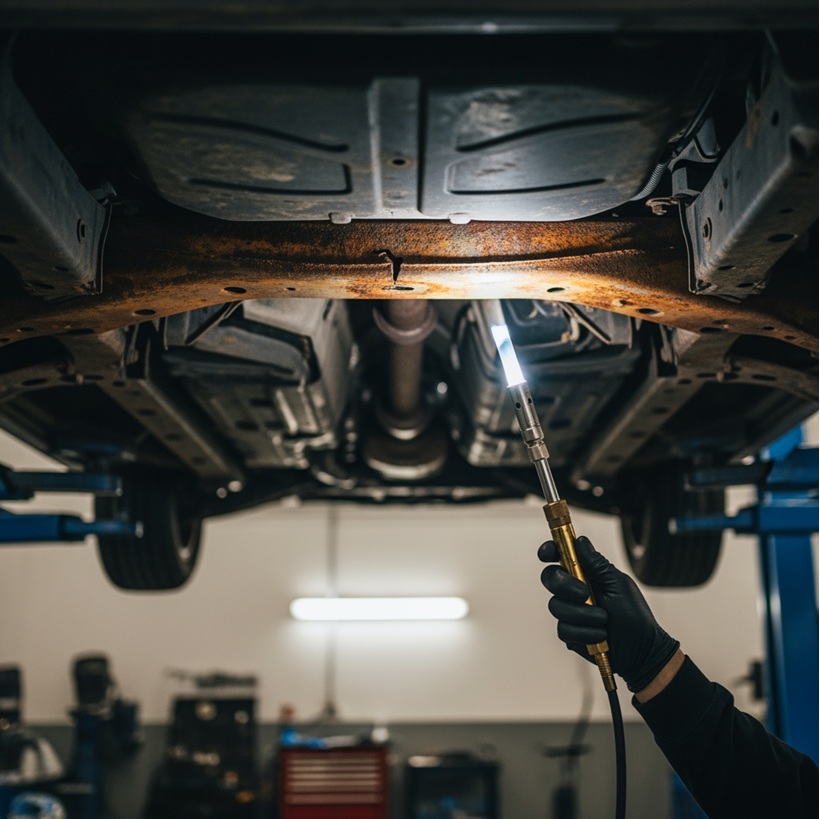
Structural rust represents the most common terminal issue triggering immediate disposal decisions. When corrosion attacks load-bearing components like chassis rails, repairs rarely make economic sense. Subframe rust particularly affects older vehicles, as these heavy components carry massive suspension loads.
Complete subframe replacements easily exceed £800 in parts and expensive garage labour. Sill corrosion plagues countless older cars, forming critical structural elements that connect the front and rear. Extensive sill rust requires cutting out corroded sections and welding in fresh metal, which often costs far more than the vehicle’s total market value.
Floor pan rust creates immediate failures when perforation allows exhaust fumes into the cabin or compromises structural integrity. Proper floor pan welding costs hundreds of pounds depending on the physical extent of the rot. On cars worth less than £1,500, these structural repairs constantly approach or exceed the total vehicle value.
Brake System Catastrophic Failures
Brake system failures range from simple, cheap pad replacements to complete system overhauls that signal terminal decline. Corroded brake pipes running throughout the entire system create incredibly expensive repair bills. Replacing individual pipes costs a significant amount, but when multiple pipes show corrosion, complete line replacement becomes mandatory.
Seized callipers on multiple wheels multiply repair costs dramatically. A single calliper replacement costs roughly £200 including parts and labour. Four seized callipers mean massive repair bills before even addressing any other highlighted test failures.
Consider a common real-world scenario involving a 2006 Renault Megane that appeared cosmetically immaculate. During the annual test, it failed catastrophically with four seized brake callipers and heavily corroded suspension arms. The mechanical estimate reached £1,850, while the vehicle held a maximum market value of £1,200. Sometimes vehicles hide terminal illnesses beneath shiny paint, making immediate disposal the only logical financial decision.
Suspension and Steering Critical Faults
Suspension failures compromise safety and handling significantly. Worn suspension bushings on multiple components create massive cumulative costs. When eight or ten specialized bushings need replacing simultaneously, garage bills reach £500 incredibly quickly.
Corroded suspension arms require complete component replacement. When front lower arms and rear trailing arms corrode heavily, the minimum repair cost spirals. Corroded subframe mounting points where the suspension attaches to the body structure represent particularly serious, terminal failures.
Steering failures represent safety-critical issues that sometimes make repairing completely unviable. Excessive steering play from worn components creates highly dangerous handling characteristics. Corroded steering racks that leak expensive power steering fluid often tip the economics heavily toward immediate vehicle disposal.
Exhaust Emissions Failures
Emissions failures present interesting challenges because causes range from simple fixes to terminal engine problems. Failed catalytic converters create immediate emissions test failures and cost hundreds to replace. On older vehicles worth less than a thousand pounds, a catalytic converter replacement represents a massive value percentage.
Engine management system faults causing emissions failures often indicate highly expensive internal problems. Diagnostic fees combined with complex repair costs easily reach prohibitive levels. Worn engines burning excessive oil fail emissions tests and heavily indicate internal cylinder wear.
When these severe engine problems arise, a complete mechanical rebuild is required. Engine replacements cost thousands of pounds, which is clearly uneconomical on an aging, depreciating asset. In these situations, owners overwhelmingly decide it is time to scrap my car rather than face massive garage bills.
Multiple Simultaneous Failures
Cascading failures create situations where individual repairs might seem manageable, but cumulative costs become completely prohibitive. A vehicle might need new brake pipes, two callipers, a catalytic converter, and heavy structural welding simultaneously. This specific combination easily pushes the final garage bill beyond £2,000.
Prioritising repairs sometimes makes sense, but when multiple safety-critical items need immediate attention, prioritisation becomes impossible. Everything must be fully fixed, or the vehicle simply cannot be driven legally. This scenario plays out daily on older vehicles rapidly approaching their end-of-life status.
Realistic assessment requires adding all necessary repairs together, including advisories, and comparing the total to the vehicle’s actual value. If repairs exceed 60% of the current market value, choosing to scrap my vehicle typically makes far better economic sense.
Age, Value, and History Patterns
Vehicle age and current market value critically affect whether repair spending is genuinely justified. Sub-£1,000 vehicles rarely justify repairs exceeding £400, as they exist at near-scrap values already. Vehicles over fifteen years old often experience cascading failures as multiple components reach their end-of-life simultaneously.
When these massive mechanical failures coincide with testing, the resulting defect lists become incredibly extensive. Online history checks provide invaluable insight into whether a vehicle’s failures represent fixable issues or terminal decline. Advisory escalation reveals clear deterioration trends over several years.
A car showing brake pipe corrosion advisories for three consecutive years before finally failing demonstrates a highly predictable decline. This specific pattern signals that the vehicle is mechanically finished. Clean histories followed by sudden, catastrophic failures usually suggest rapid deterioration acceleration common in older chassis.
Getting Accurate Repair Estimates
Before making irreversible financial decisions, accurate repair estimates from trustworthy sources must be obtained. Detailed quotes should strictly itemise specific work required, separating raw parts costs from hourly labour charges. Vague estimates do not provide sufficient information for making informed, mathematical decisions.
Second opinions prove highly valuable, particularly on massive repair bills quoted by main dealers. Independent specialists typically charge less for labour, which might transform uneconomical repairs into marginal viability. However, even cheaper estimates might still confirm that scrapping remains the smartest overall choice.
Parts quality choices also affect repair costs and longevity. Cheaper pattern parts reduce immediate costs but might fail sooner than manufacturer originals. On vehicles approaching scrap status anyway, cheaper parts make sense only if repairing remains financially viable.
The Scrapping Process Explained
Once the maths proves that fixing the car is foolish, the actual disposal process is remarkably straightforward. Professional networks generate instant online quotes based heavily on core vehicle weight. Following acceptance, business owners looking to scrap my van or families disposing of hatchbacks receive free nationwide removal.
Booking a scrap car collection happens at absolute convenience, often within 48 hours. Specific documentation must be ready for the driver upon their arrival. Handing over the V5C logbook is legally required for the official transfer of ownership.
Presenting the failure certificate is highly recommended, as it transparently shows the collection agent exactly what is mechanically wrong. The collection driver verifies identity using a driving licence, securely loads the broken vehicle, and initiates payment via immediate bank transfer.
Legal and Environmental Considerations
Failed vehicles cannot simply be abandoned on public roads or in supermarket car parks. Legal steps are strictly mandatory, starting with immediate notification to the DVLA using the logbook’s yellow section. This dual notification process protects owners entirely from future civil liability.
Receiving a legitimate Certificate of Destruction from registered vehicle disposal services permanently closes the government record. This official document protects against rogue parking fines and proves the vehicle was handled legally.
Old, failing cars pollute significantly more than newer vehicles, making proper disposal critical for the environment. Engine oil, degraded coolant, and old brake fluid easily contaminate local soil if not handled by an Authorised Treatment Facility. Professional car scrapping ensures hazardous fluids are drained safely and neutralised. Removing these heavy polluters actively improves air quality in busy, congested areas like London.
Making Your Final Decision
Determining the right path requires systematic assessment combining multiple financial factors. Total costs must include all mandatory repairs plus a solid contingency margin for unexpected mechanical discoveries. Compare this grand total to the vehicle’s actual value in perfectly good condition.
Authorising repairs makes sense only when quoted costs sit comfortably under 30% of the true market value. It also makes sense if the car is relatively young, boasts very low mileage, and suffers absolutely no structural rust.
Conversely, scrapping makes perfect sense when quoted repairs exceed 50% of the market value. If multiple expensive issues exist simultaneously, or aggressive structural rust is eating the subframe, money is completely wasted on repairs. Emotional attachment to vehicles creates highly irrational decision-making, so physics and economics must determine its ultimate fate.
Conclusion
The painful choice between paying massive repair bills and disposing of a vehicle comes down entirely to cold numbers. Structural rust, cascading brake failures, and severe emissions problems typically signal that endless maintenance is no longer viable. When garage estimates approach the car’s realistic market value, disposing of the vehicle becomes the only financially sensible option.
Compare the massive repair quote alongside the likely future breakdowns versus the guaranteed payment from a scrap quote. Throwing hundreds of pounds at a rusty chassis only postpones the inevitable trip to the scrapyard by twelve short months. Taking a guaranteed bank transfer payment today is almost always the smarter move for heavily deteriorated vehicles.
When ready to make the logical choice, Scrap Car Network offers a highly professional route forward. Scrap Car Network provides competitive pricing based on weight, completely free nationwide collections, and handles all complex DVLA paperwork. If facing a massive failure sheet right now, simply contact us today to arrange a hassle-free collection and turn that driveway headache into money in the bank.