Licensed vs Unlicensed Scrap Yards: How to Tell the Difference
20th Aug, 2026
Handing over the keys to an old car is a bit like passing on a family secret; it needs to go to someone who actually knows how to handle it. For many motorists, the choice between a licensed and an unlicensed yard seems like a minor detail, but the reality is far more serious. The industry is currently split between professional facilities and rogue operators. Understanding the difference is the only way to avoid legal trouble. These days, the phrase licensed vs unlicensed scrap yard is not just industry jargon; it is a critical distinction that determines where legal responsibility ends.
Most people assume that once a car is winched onto a flatbed, the job is done. However, if that collector is not part of a legitimate system, the original owner remains on the hook for everything that happens next. Illegal traders often operate in the shadows, skipping vital depollution steps and ignoring Hazardous Waste Regulations to squeeze out more profit. This is exactly why the government introduced strict rules to govern who can and cannot take a car off your hands permanently.
The Core Definition of a Licensed Facility
A licensed scrap yard is officially known as an Authorised Treatment Facility (ATF). This title is a legal designation issued by the Environment Agency. To hold this status, a facility must undergo rigorous inspections and meet high standards for waste management. They are the only sites in the UK allowed to depollute and dismantle end-of-life vehicles.
The licensing process is incredibly strict because cars contain toxic chemicals. From lead in the battery to corrosive brake fluid, an old car poses a massive threat to the local environment if handled poorly. A licensed yard must prove it has sealed drainage systems to keep toxins out of the soil. This investment separates a professional business from a bloke with a bit of yard space and some bolt cutters.
The Dangers Lurking in the Unlicensed Sector
The unlicensed sector is often made up of “man with a van” collectors. They frequently advertise on social media, promising the highest prices and instant collection. While they look convenient, they are a massive legal risk. These operators rarely have a proper waste carrier licence, which means they cannot legally transport end-of-life vehicles on public roads.
Think of choosing an unlicensed yard like getting a tooth pulled by a bloke you met in a shed. He might be cheaper than a proper dentist, and he might even have a pair of pliers, but the chances of things going wrong are sky-high. There is zero accountability when they do. When you hand a car over to an illegal trader, you are effectively trusting a stranger to look after your legal identity.
Identifying an Authorised Treatment Facility (ATF)
Checking for Authorised Treatment Facility status is the single most important step in the process. Legitimate yards are proud of their status and will display their licence number prominently on their website. It is a badge of honour that proves they have invested the time and money to do things properly. If a yard is cagey about showing their credentials, it is a sign to look elsewhere.
The government maintains a public register where anyone can check a facility’s status in seconds. When motorists decide to scrap your car online, verifying these numbers is the first line of defence. A compliant site will have a professional appearance with clearly marked areas for depollution. They follow strict Hazardous Waste Regulations to ensure nothing toxic escapes into the surrounding area.
Understanding the Waste Carrier Licence
Even if a collector is just taking the car to a yard, they still need a waste carrier licence. Every person who moves waste for a living must be registered with the Environment Agency. This licence ensures that the carrier is aware of their legal obligations and is part of a tracked system.
Most homeowners do not realise they have a legal responsibility here. Under the current duty of care requirements, the person disposing of the waste is responsible for ensuring it goes to a legitimate carrier. If a collector cannot prove their registration, do not hand over the keys when attempting to scrap my vehicle. It is the system the government uses to choke off the supply of cars to illegal chop shops.
Hazardous Waste Regulations and Your Car
Many people forget that a car is a collection of hazardous materials. The lead-acid battery, used engine oil, and toxic antifreeze are all strictly controlled under the law. A licensed yard has specific procedures for each item to meet the Hazardous Waste Regulations fully. They track where every litre of oil goes and ensure it is sent to a specialised processing centre.
Unlicensed yards simply do not bother with these complex steps. It is easier for them to let fluids run into the ground or pour them down a public drain. This is why they sometimes offer a higher price than a legitimate business. However, that extra cash comes at a massive cost to the local environment and the health of the community.
The Paperwork Trail: Certificates of Destruction
In the world of vehicle disposal, the paperwork is your only true shield. The most important document you will ever receive is the Certificate of Destruction (CoD). This is an official DVLA document that can only be issued by a licensed ATF. It is the only way to legally prove you are no longer the registered keeper.
When a licensed yard processes your car, they notify the DVLA electronically. The CoD is then generated and sent to you via email or post. This document is absolute proof that your liability for the vehicle has ended. It is a key part of how to properly tell DVLA scrapped car about the transaction. Rogue collectors cannot issue a CoD, which leaves you vulnerable to parking fines and speeding tickets long after the car is gone.
Payment Methods and the Legal Reality
One of the easiest ways to tell a licensed yard from a rogue operator is to look at how they pay. Since 2013, it has been illegal to pay cash for scrap metal in England and Wales. This includes whole cars. If someone offers you a stack of notes for your old motor, they are openly breaking the law.
Legitimate businesses use bank transfers or business cheques. These methods create a digital audit trail that authorities can track. A professional car recycling centre will ask for bank details, and the funds will usually clear within a few hours. If a collector insists on cash, it is because they are trying to stay off the radar.
The Mechanic’s Perspective: A Customer’s Cautionary Tale
I remember a customer back in my garage days, a young lad named Tom who shifted a battered old Corsa. He saw an advert on a local Facebook group from a quick cash collector who promised twenty quid more than the local yard. Tom thought he was being clever and watched the car being towed away for a handful of tenners.
Three weeks later, Tom got a knock on the door from the local council. His Corsa had been found stripped and dumped in a local park. Because Tom hadn’t checked for a waste carrier licence and hadn’t received a CoD, he was still the registered keeper. He was hit with a heavy fine for fly-tipping and had to pay for the recovery of the shell.
Professional Logistics vs. Rogue Collection
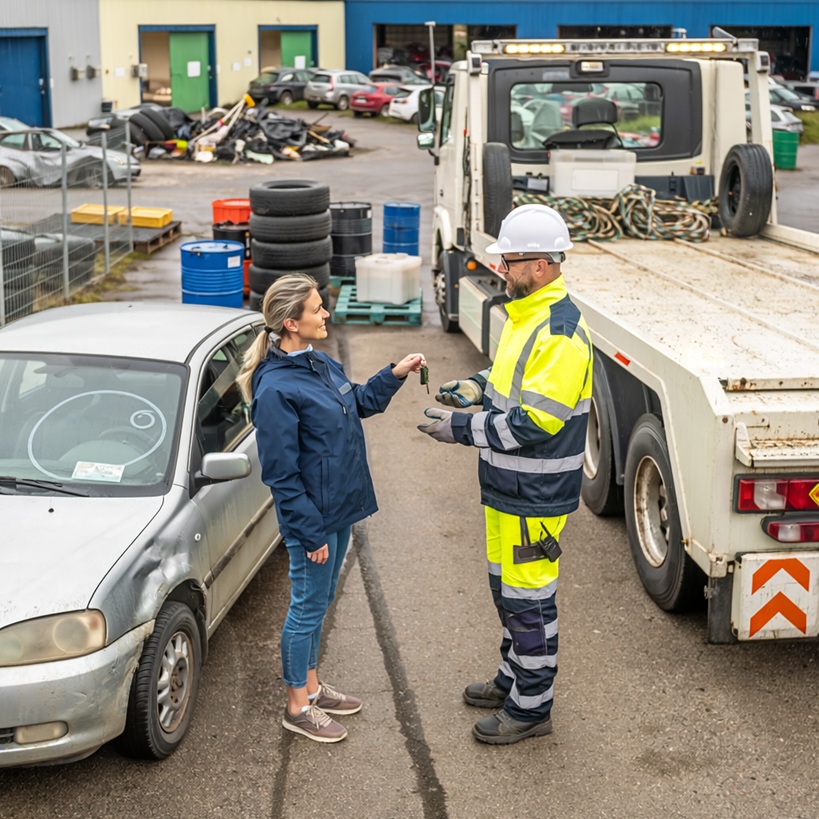
You can tell a lot about a business by the kit they turn up with. A professional network uses modern recovery vehicles with proper winches and safety lighting. Their drivers are trained professionals who wear high-visibility gear. If you want a scrap my car instant quote that includes a professional collection service, looking for these standards is essential.
Rogue traders often turn up in battered vans with makeshift ramps. Their lack of professionalism usually extends to their business practices. This is where you see the driveway haggle, where they suddenly claim your car isn’t worth what they quoted. A legitimate business respects your time and the agreed price.
Regional Variations and Local Compliance
While national laws are consistent, enforcement can vary. In high-density areas like London, many licensed facilities compete for your car. This competition is great for the consumer, but it also means more rogue traders are trying to undercut the professionals.
In cities like Preston, the local community knows the established yards that have been operating for decades. These businesses have reputations to maintain. Local experts understand the logistics of a car scrappage operation in a tight city street or a remote farm.
Why Professional Networks Offer the Best Protection
The simplest way to ensure you are dealing with a licensed yard is to use a centrally managed network. A professional platform does all the background checks for you, verifying the Authorised Treatment Facility status of every partner. This eliminates the risk of accidentally dealing with a rogue operator.
Using a professional network also means you are part of a system that generates social value. Reputable platforms often support local charities, turning your old car into a positive contribution to the community. When you are ready, you can find out how to scrap your car easily by connecting with a trusted provider.
For a hassle-free experience that respects your rights, we recommend exploring Scrap Car Network. We take care of every detail, from the quote to the final Certificate of Destruction. If you have any questions, please get in touch with our team on 0300 100 0027. A professional is always available to ensure your car is recycled correctly.