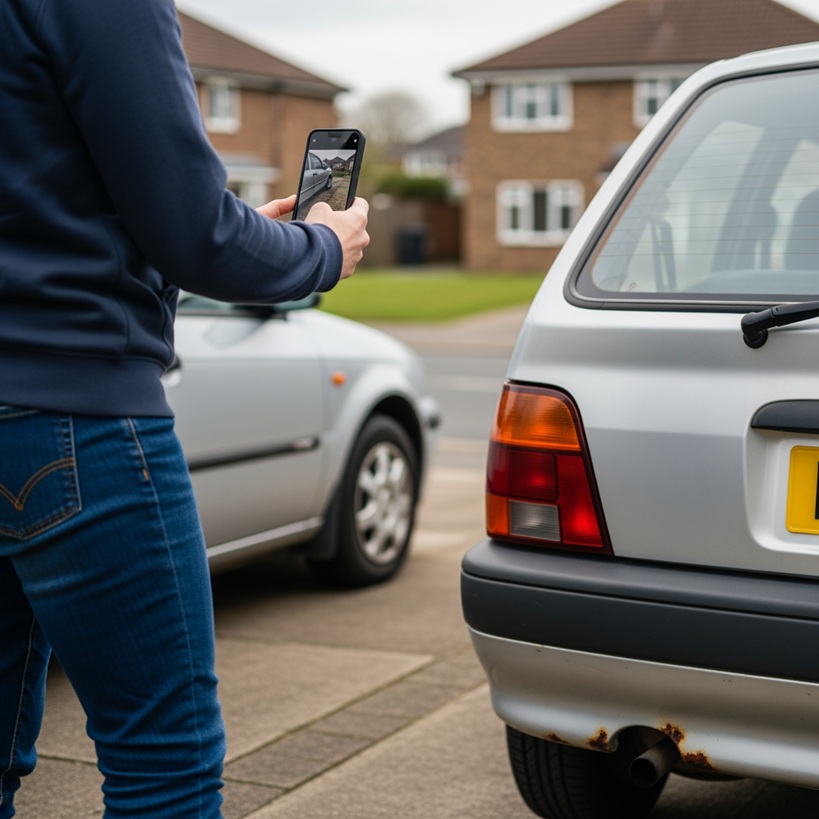
How to Photograph Your Car for Maximum Scrap Quote Accuracy
14th May, 2026
Getting the best price for a scrap car starts before you even contact a dealer. The photos you provide can make the difference between a fair quote and one that drops by hundreds of pounds when the collector arrives. Blurry shots taken in poor light do not just look unprofessional; they force dealers to assume the worst about your vehicle’s condition.
Most people snap a quick picture from their driveway and wonder why quotes come back lower than expected. The truth is dealers need to see exactly what they are buying. Missing details mean they will quote conservatively to protect themselves from surprises. Photograph scrap car images correctly, and you eliminate guesswork while building trust from the first message.
Why Photos Matter More Than Descriptions
Words fail when describing vehicle damage. Telling a dealer your bonnet has “a bit of a dent” could mean anything from a shopping trolley ding to a collision that has crumpled the metalwork. Photos remove ambiguity instantly.
Scrap car pricing depends on weight, metal quality, and salvageable parts. A dealer examining photos can assess whether your engine bay looks intact or if rust has compromised structural components. These factors directly affect what they will pay. You can see how these factors influence offers in our guide to current scrap metal rates.
Timing and Lighting Fundamentals
Natural daylight transforms car photography. Shoot during mid-morning or mid-afternoon when the sun sits at an angle. Harsh overhead noon light creates deep shadows, whilst early morning produces long shadows that distort proportions.
Overcast days work brilliantly. Cloud cover acts as nature’s softbox, providing even illumination without glare. Never photograph at dusk or after dark, even with your phone’s flash. Artificial lighting creates reflections and makes accurate colour assessment impossible.
Preparing Your Vehicle for Photos
Clean matters more than you would think. A quick wash removes surface dirt that might look like rust in scrap car photos. You needn’t detail the car to showroom standards, but removing mud from wheel arches helps dealers see what is underneath.
Clear the surrounding area. Move bins, toys, and other vehicles out of frame. Background clutter distracts from the subject. Remove personal items from the interior. This step ensures the vehicle is ready for our environmentally friendly recycling process and allows dealers to assess seat condition without distractions.
Essential Exterior Shots
Start with four corner angles. Position yourself about three metres back and photograph from the front-left, front-right, rear-left, and rear-right corners. These shots capture overall condition and body shape.
Shoot straight-on views of all four sides. Keep your phone level rather than angling up or down. Capture the roof if accessible, as roof condition matters for structural assessment.
Critical Detail Shots
The number plate deserves its own clear photo. Dealers use registration details to check MOT history and vehicle specifications. A sharp, readable plate photo speeds verification.
Wheels and tyres reveal more than you would expect. Photograph each wheel straight-on to show tread depth and whether you have standard steel wheels or valuable alloys. Windscreen and window condition also affects salvage value; photograph any chips or cracks clearly.
I once had a customer send photos of a “pristine” Audi. Every shot was taken from waist height. When I got there, the roof had been caved in by a falling tree branch. He had carefully framed every photo to crop out the roof. We still took it, but the price dropped by £200 instantly. Don’t hide damage; we always find it.
Interior Documentation
Photograph the dashboard from the driver’s seat position to capture the mileage and instrument cluster. Shoot both front seats and the rear bench to show upholstery condition.
Document vehicle condition honestly by photographing unusual interior damage separately. Water damage, mould, or airbag deployment should be clearly visible. These conditions affect whether interior components have resale value.
Technical Photography Tips
Hold your phone steady. Blurry photos suggest you are hiding details. Rest your elbows against your body to stabilise the shot. Fill the frame with your subject; do not photograph your car as a tiny object in the distance. Avoid digital zoom, as it destroys detail. Walk closer instead.
Common Photography Mistakes
Shooting from too close creates distortion. Stand back at least a metre for detail shots. Inconsistent angles waste photos; try to keep your elevation consistent as you move around the car.
Organising and Sending Your Photos
Name files logically if possible, like “front-left.jpg.” Send full-resolution images rather than compressed thumbnails. Group photos by category: exterior, interior, then damage close-ups.
Include a brief written summary alongside images. List registration, make, model, and known faults. When you reach out to the Scrap Car Network with this information package, quotes come back faster and more accurately.
What Dealers Look for in Photos
Dealers look for metal condition to determine scrap car quote accuracy. Photos showing rust-through on sills indicate reduced weight. Our network of authorised scrap car dealers also checks for salvageable parts like intact engines and gearboxes, which can increase value.
Vehicle accessibility affects collection logistics. Photos showing where your car sits, whether on a driveway, roadside, or in a garage, help dealers plan the collection process.
Special Circumstances Photography
Non-runners need additional documentation. If your car doesn’t start, photograph dashboard warning lights or fluid leaks. Accident-damaged vehicles require comprehensive damage photography to show frame impact. Fire-damaged cars need photos of the extent of burning.
If you are looking to scrap your van, ensure you photograph the load area and bulkhead, as commercial vehicle wear patterns differ significantly from passenger cars.
How Photos Affect Quote Accuracy
Comprehensive photo sets reduce quote revisions significantly. When dealers see exactly what they are collecting, initial quotes hold firm. Clear damage documentation prevents disputes on collection day.
The Connection Between Photos and Legal Requirements
Documentation supports DVLA notification. When you inform the DVLA about scrapping, having photos proves the vehicle’s condition at handover. This protects you if disputes arise.
Photos verify vehicle identity, which is crucial for the Certificate of Destruction. Condition records protect against liability if someone claims your car was roadworthy when collected. You can find more details about this legal document in our guide to the Certificate of Destruction.
Getting the Best Value Through Visual Evidence
Honest photography maximises returns. Dealers reward transparency with fair quotes because they trust the assessment. This is why using a trusted service ensures you get paid what your car is actually worth. Highlighting valuable components like new tyres or upgraded audio pays off.
Regional Considerations for Photography
Location affects background choices. Sellers in London might only have street parking available, which is fine as long as the car is visible. Rural sellers in Scotland might wait longer for ideal lighting, but overcast days work perfectly everywhere.
Final Verification Before Sending
Review every photo before submission. Zoom in to check sharpness. Ensure nothing important was cropped out. A complete submission typically includes 15-25 photos.
Conclusion
Photographing your scrap car properly takes fifteen minutes but impacts your valuation significantly. Clear, comprehensive images eliminate guesswork, build dealer trust, and ensure the price you are quoted matches what you receive on collection day.
The difference between a low quote and a fair one often comes down to how well dealers can assess your vehicle remotely. Sharp images showing exactly what is there allow accurate valuation.
Your phone camera is perfectly adequate for this task. You do not need professional equipment, just basic technique and willingness to capture all relevant angles.
Whether you are scrapping a non-runner or an accident-damaged vehicle, proper photography ensures you get fair value without surprises. Our nationwide collection partners rely on these images to send the right truck for the job.
Take the time to document your car thoroughly, and you will find the entire scrapping process runs smoother from quote to collection. If you are ready to get started, you can get an online valuation right now.
Alternatively, contact our team on 01772 665 909 or contact us online to discuss your specific vehicle.