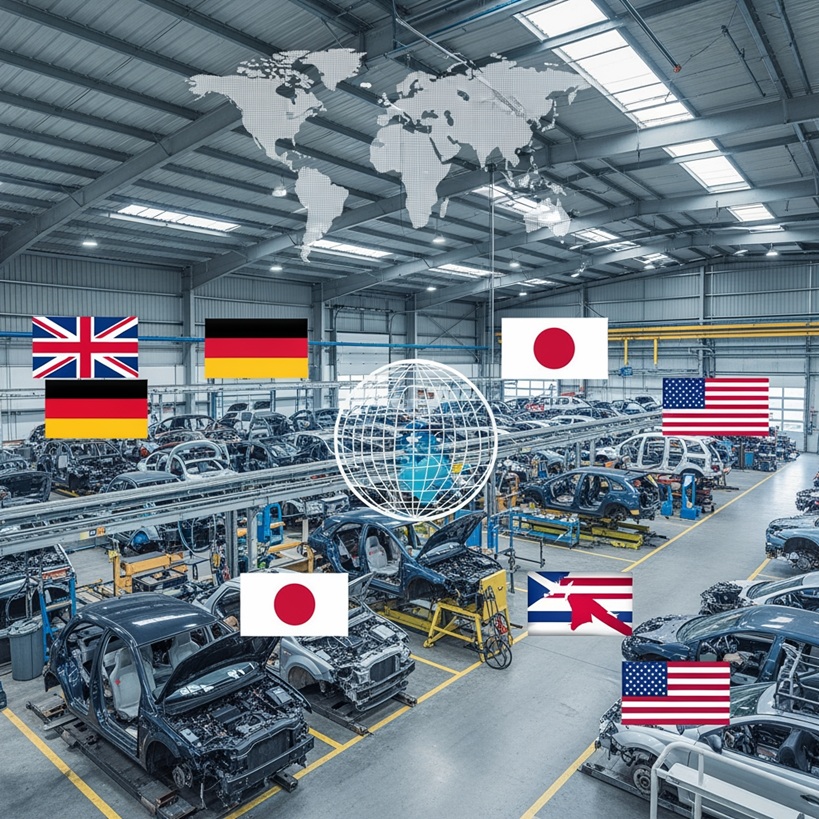
Global Perspectives: How Vehicle Recycling Differs Around the World
12th Jan, 2026
An essential part of the global push toward sustainability is Vehicle recycling. Each year, millions of cars reach the end of their usable life, and what happens next varies from country to country. While the ultimate goal, to recover valuable materials and minimise waste, remains the same, the methods, laws, and technologies used across nations are far from identical.
Understanding these global vehicle recycling differences helps highlight how nations tackle environmental challenges, conserve resources, and build more circular economies. From Europe’s highly regulated systems to the emerging frameworks in developing countries, every approach offers valuable insight into the future of car recycling.
Why Vehicle Recycling Matters
Recycling vehicles is vital for reducing environmental harm and making better use of existing materials. Every end-of-life vehicle (ELV) contains components that can be recovered and reused, such as steel, aluminium, glass, rubber, and plastics. By recycling these materials, the demand for new resources decreases, energy use falls, and pollution levels are reduced.
The process also prevents hazardous substances, like oil, coolant, and battery acid, from seeping into the ground and water systems. This makes responsible car recycling a cornerstone of sustainable waste management.
To see how responsible car disposal supports environmental goals, you can explore Scrap Car Network’s environmentally responsible car recycling process.
Key Takeaways:
- Recycling vehicles conserves natural resources and reduces pollution.
- It lowers energy consumption compared with producing new materials.
- Proper recycling keeps hazardous waste out of the environment.
The UK’s Approach to Vehicle Recycling
The United Kingdom operates one of the most structured vehicle recycling systems in the world. Regulations such as the End-of-Life Vehicles (ELV) Directive ensure that at least 95% of a car’s materials are reused, recovered, or recycled.
Only Authorised Treatment Facilities (ATFs) are legally permitted to scrap vehicles. These facilities follow strict environmental standards for depollution, ensuring that oils, batteries, and other hazardous substances are removed safely before the recycling process begins.
Once the car is scrapped, the owner receives a Certificate of Destruction (CoD). This document confirms that the vehicle has been recycled in accordance with the law and that the owner’s responsibility for it has ended. Car owners are also required to inform the DVLA when their vehicle is scrapped, find the legal steps to notify DVLA after selling or scrapping your car.
Key Takeaways:
- The ELV Directive sets strict UK recycling and recovery targets.
- Only licensed ATFs can legally dismantle and recycle vehicles.
- The Certificate of Destruction confirms legal and responsible scrapping.
Vehicle Recycling in the United States
In the United States, vehicle recycling operates under a decentralised system. There is no single federal law regulating car recycling, so each state develops its own rules. This results in significant variation in how vehicles are processed from one region to another.
Junkyards and salvage yards play a key role in the American recycling market. They purchase old vehicles, remove reusable parts, and send the remaining shells to shredding facilities. Many now incorporate environmental safeguards to prevent contamination of soil and water.
However, differences in state regulations can lead to inconsistencies in recycling standards and environmental protection. Some states, such as California, have developed stricter environmental laws, while others maintain a more traditional approach.
Key Takeaways:
- The US regulates vehicle recycling at state level rather than nationally.
- Junkyards and salvage yards form a large part of the recycling system.
- Environmental standards vary widely between states.
Germany’s Green Approach
Germany is recognised globally for its advanced and environmentally focused vehicle recycling systems. Building upon European Union environmental laws, the country has introduced additional national standards designed to maximise material recovery and minimise waste.
German recycling facilities use sophisticated technologies such as automated dismantling systems, advanced sorting, and robotic depollution. These innovations make recycling processes faster, safer, and more efficient.
A major focus in Germany is the recovery of rare earth elements and other valuable materials from electric vehicle batteries and electronic components. By reclaiming these materials, Germany reduces its dependence on imported resources and supports a more sustainable industrial base.
Key Takeaways:
- Germany leads in environmentally conscious recycling and innovation.
- Advanced technologies improve material recovery rates.
- Rare material recovery supports sustainability and resource independence.
Japan’s Focus on Reuse and Longevity
Japan’s vehicle recycling strategy places strong emphasis on reusing and refurbishing components before full dismantling. The country’s meticulous approach to resource management has made it a leader in reuse-based recycling.
Used engines, gearboxes, and electronic parts are commonly repaired and resold within Japan or exported to international markets. This not only extends the life cycle of automotive components but also reduces the need to manufacture new ones.
When vehicles do reach the end of their life, Japan’s recycling facilities employ advanced systems similar to those in Germany and the UK, ensuring that materials such as metals, glass, and plastics are recovered and processed efficiently.
Key Takeaways:
- Japan prioritises reuse and refurbishment before recycling.
- Exporting used parts extends vehicle lifespans globally.
- Advanced recycling systems maximise material recovery.
Recycling in Developing Countries
In many developing countries, vehicle recycling operates within informal economies. Independent workshops and small businesses dismantle cars for spare parts, often with little regulation or environmental oversight.
This informal system provides employment and affordable components but can lead to pollution when hazardous materials are not handled correctly. Fluids, oils, and chemicals are often discarded improperly, causing environmental and health risks.
Some nations are beginning to establish formal recycling frameworks by introducing licensing requirements, investing in training, and providing funding for modern recycling facilities. With the right infrastructure, these countries have the potential to create sustainable and profitable recycling industries that benefit local economies while protecting the environment.
Key Takeaways:
- Informal recycling is common in developing countries.
- Lack of regulation can cause environmental harm.
- Investment and training are helping to build formal recycling systems.
Comparing Global Approaches
The global vehicle recycling differences reflect each country’s priorities and resources. Some nations, such as the UK and Germany, rely on detailed legislation and advanced recycling facilities. Others, like Japan, focus on part reuse and export, while the United States depends on market-driven systems and state-level regulation.
Developing nations, meanwhile, are gradually transitioning from informal to formal recycling industries. These diverse systems together form the foundation of the global auto recycling markets, contributing to sustainability on a worldwide scale.
No single model is perfect, but each approach offers valuable lessons in balancing environmental goals, economic growth, and technological advancement.
Key Takeaways:
- Vehicle recycling varies worldwide depending on local priorities.
- Developed nations emphasise legislation and innovation.
- Emerging economies are building sustainable recycling capacity.
What Car Owners Can Do
Car owners play a crucial role in supporting responsible vehicle recycling. Choosing the right service helps ensure that your car is disposed of safely, legally, and with minimal environmental impact.
Always scrap your vehicle through a licensed Authorised Treatment Facility. These facilities follow the UK’s strict environmental regulations and provide the legally required Certificate of Destruction.
Before scrapping, check whether any reusable parts, such as tyres or batteries, can be salvaged or sold. When ready, you can get an instant quote to scrap any car through Scrap Car Network for a fair and transparent valuation.
Key Takeaways:
- Use licensed ATFs to ensure legal and environmentally safe scrapping.
- Remove reusable parts where possible.
- Always obtain a Certificate of Destruction and notify the DVLA.
The Future of Global Vehicle Recycling
Innovation, stricter regulations, and global cooperation will shape the future of car recycling. As electric vehicles become more common, recycling industries worldwide will need to adapt to manage complex materials such as lithium-ion batteries and electronic systems.
Advances in artificial intelligence, robotics, and automation will continue to improve recycling efficiency and reduce environmental risks. Greater international collaboration and the exchange of best practices will also help standardise recycling quality across borders.
Companies like Scrap Car Network are already leading the way with sustainable solutions that align with global environmental objectives.
Key Takeaways:
- Electric vehicles are driving major changes in recycling technology.
- Innovation and global cooperation will shape future recycling systems.
- Sustainable businesses are central to achieving environmental goals.