Distance vs Price: How Far Should You Go for Best Deal?
20th Aug, 2026
Scrapping a car is not just about getting rid of an old banger. It is about squeezing every last pound out of it while keeping the whole process sensible. The question of whether to drive fifty miles for an extra thirty pounds or stick with the yard down the road has plagued motorists for decades. Often, the answer is not as straightforward as people expect. The distance vs price scrap yard dilemma requires a bit of balancing between a high quote and the practical reality of getting the car there.
Most people assume the facility offering the highest price automatically wins the day. However, when fuel costs, time, and the risk of a dying car failing the journey are factored in, that attractive quote from three towns over starts looking much less appealing. The sweet spot between distance and price certainly exists, but finding it requires a bit of maths and a healthy dose of common sense. It helps to look at the total net profit rather than just the number on the screen. Providing a reliable vehicle recycling valuation requires accounting for every mile of that final trip.
What Actually Determines Scrap Car Prices
Scrap car values fluctuate based on global metal prices, which change daily much like the stock markets. When steel and aluminium prices surge, yards can afford to pay more for vehicles. When prices drop, the quotes reflect that shift. It is a market driven by supply and demand for raw materials. These scrap metal market rates serve as the foundation for any offer a motorist receives.
The weight of the vehicle matters most in this calculation. A hefty 4×4 contains more recyclable metal than a compact city car, which means it will fetch more money at the scales. Facilities literally weigh the car and calculate payment based on tonnage multiplied by current rates. This is why a quote is usually firm only if the car is complete and matches the recorded weight.
Location plays a surprisingly large role too. Urban areas with multiple licensed sites tend to offer competitive prices because they are fighting for business. Rural yards with less competition often quote lower because they can, as there are fewer options for the local community. Understanding the current scrap metal market rates in a specific region is the first step toward securing the best financial outcome possible.
The Hidden Costs of Distance
Driving to a distant facility burns fuel, and that cost eats directly into the profit margin. A car averaging thirty miles per gallon uses roughly one gallon for every thirty miles travelled. With petrol prices remaining high, a forty-mile round trip can cost a significant amount in fuel alone. This cost must be deducted from the quote before a person can see the true vehicle recycling valuation of the deal.
Beyond the fuel, there is the mechanical risk. Think of driving a scrap car to a distant yard like asking a tired marathon runner to sprint another five miles on a twisted ankle. The risk of a breakdown increases exponentially with every mile. If a battered motor gives up twenty miles from home, the owner faces recovery costs that will dwarf any potential savings. It is a gamble that often does not pay off.
Time represents money too, especially if a person has to take time off work or sacrifice a weekend. A two-hour round trip to save twenty pounds means working for ten pounds per hour before factoring in stress and inconvenience. Most experienced motorists realise that their time is worth more than a marginal increase in a scrap quote.
Breaking Down the Real Numbers
It helps to examine three common scenarios with actual figures to see how the distance affects the final payout. Consider a local yard offering two hundred pounds for a car that is only five miles away. The fuel cost is negligible, and the time investment is minimal, resulting in a net profit of nearly the full quote.
Now, consider a yard fifteen miles away offering two hundred and thirty pounds. The fuel cost for the round trip rises, and the time investment increases to ninety minutes. After expenses, the profit might be around two hundred and twenty pounds. This is still a gain, but the “extra” thirty pounds is already starting to shrink when you look at the real vehicle recycling valuation.
Finally, look at a yard forty miles away offering two hundred and fifty pounds. The fuel cost for an eighty-mile round trip is significant, and the journey takes over two hours. The net profit might only be slightly more than the mid-distance option. When the risk of a breakdown on a long journey is added to the equation, the highest quote often becomes the worst decision.
When Free Collection Changes Everything
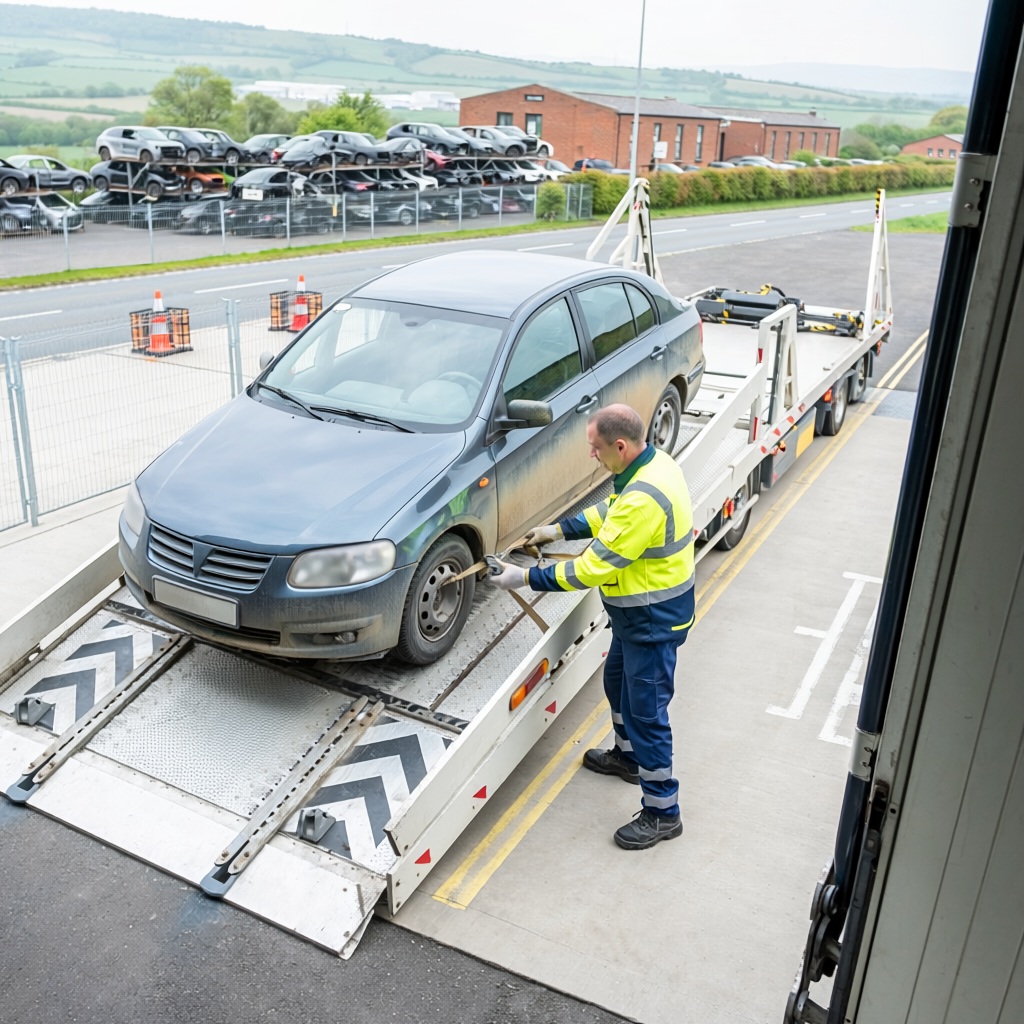
Most reputable facilities now offer free vehicle collection as part of their service. This single offering completely transforms the distance-versus-price equation. With an authorised vehicle collection service, the owner is not burning fuel, risking a breakdown, or wasting their afternoon on the road. It removes the physical burden of the transport entirely.
A yard sixty miles away offering a better price becomes genuinely worth considering because the owner is not paying to get the vehicle there. The only cost is waiting for the collection slot, which typically happens within twenty-four to forty-eight hours. This levels the playing field and allows motorists to access better prices from further afield without any of the traditional downsides associated with a long drive.
Free collection also solves the problem of non-runners. If a car will not start or has failed its MOT catastrophically, driving anywhere is not an option. An authorised vehicle collection uses proper recovery trucks that handle dead vehicles without any fuss. It is the most sensible way to ensure a vehicle reaches its final destination safely and legally.
Regional Price Variations Worth Knowing
Prices vary significantly across the UK due to regional factors. Scotland often sees slightly different rates than southern England because of transport costs to processing centres and local market conditions. These geographic shifts are a normal part of the industry.
Major cities like London typically offer higher prices due to intense competition between yards. Even within the city, different boroughs may show slight variations based on how close they are to major transport links or metal shredders. It is always worth checking a few options in the wider metropolitan area to see how scrap metal market rates vary by postcode.
Northern towns such as Newcastle upon Tyne and Preston have their own pricing patterns influenced by local industrial heritage. Understanding the regional market helps set realistic expectations. A quote that seems low in one city might actually be a very competitive offer in another part of the country.
What Your Car’s Condition Really Means
A car that drives reliably expands the options for the owner. A person can genuinely consider yards within a fifteen-mile radius without excessive risk. However, everyone must be honest about the health of the vehicle. Ignoring a grinding noise or a persistent warning light just to chase a slightly higher quote is asking for trouble on the motorway.
Non-runners or MOT failures eliminate the driving option entirely. In these cases, booking an authorised vehicle collection becomes essential rather than just a convenience. Motorists should not let pride or stubbornness convince them to try getting a dodgy car to a distant yard. The potential costs of a failure on the public road far exceed any potential savings.
Cars with valuable parts might fetch better prices at specialist breakers rather than standard facilities. For anyone wondering where can I scrap my car?, a classic model with sought-after components could be worth a longer journey to an enthusiast breaker. For standard family cars from the last twenty years, however, the metal weight remains the primary driver of value.
The Legal Stuff You Can’t Ignore
Every legitimate facility must provide a Certificate of Destruction after processing a vehicle. This document proves the owner is no longer the registered keeper and protects them from future liability. Distance does not matter if the yard chosen is not properly authorised to handle an end-of-life vehicle disposal.
Owners must ensure they receive a DVLA notification for scrapped car details regardless of where the vehicle is taken. This involves completing the relevant section of the V5C logbook or notifying them through the official online portal. Failure to do this leaves the person legally responsible for the vehicle, even if it has been crushed.
Only use Authorised Treatment Facilities licensed by the Environment Agency. These yards follow strict regulations for depolluting vehicles and recycling materials properly. Unlicensed operators might offer tempting prices, but they often create legal headaches and environmental damage. Staying within the legal framework is the only way to ensure a secure handover during an end-of-life vehicle disposal.
Smart Ways to Compare Quotes
People should contact at least three yards to get comparable quotes. It is vital to describe the vehicle accurately, including the make, model, age, and whether it currently drives. Vague descriptions lead to revised quotes when the driver sees the actual car, which wastes everyone’s time and energy.
Ask specifically about the collection services and if any conditions are attached. Some yards offer free collection only within certain postcodes or for vehicles above a certain value. Clarifying whether the quoted price is firm or subject to a driveway inspection is a great way to identify the best deal and avoid last-minute haggling. This results in a much more accurate vehicle recycling valuation.
Checking online reviews before committing is also a smart move. A yard offering fifty pounds more than competitors but with dozens of complaints about hidden fees or delayed payments is not worth the hassle. Reputation matters significantly more than a slightly higher initial quote when choosing a facility for a car.
When to Drive vs When to Collect
Choosing between driving and booking a collection depends on a few simple factors. Driving is usually fine if the car is genuinely roadworthy, insured, and the journey is under fifteen miles. If the price difference after fuel costs is substantial and there is a reliable way to get back home, driving can be a viable option.
Collection is the better choice if the car is a non-runner or feels unsafe. If the nearest reputable yard is over fifteen miles away, the risks of driving often outweigh the benefits. There is no shame in taking the easier route. Collection exists precisely because driving clapped-out cars for an authorised vehicle collection makes no sense for anyone involved in the process.
Most people find that the convenience of a recovery truck is worth more than a few extra pounds. It removes the stress of the final journey and ensures the car reaches the facility where they will perform scrap car recycling without any drama. It is a professional solution for an end-of-life asset.
The Environmental Angle Nobody Mentions
Driving a polluting old banger fifty miles to save twenty pounds creates more environmental damage than the financial benefit justifies. Older vehicles produce significantly higher emissions, and that final journey can release harmful pollutants unnecessarily. Choosing a local yard or a professional recovery service reduces the carbon footprint of the car’s final journey.
Modern recovery trucks are more efficient than limping a dying engine across several counties. Proper recycling matters, but so does how the vehicle reaches the facility. By reducing the distance travelled during an end-of-life vehicle disposal, motorists contribute to a more sustainable disposal process. It is a small but important part of being a responsible vehicle owner.
Licensed facilities ensure that hazardous fluids and materials are handled correctly. This prevents soil and water contamination that often occurs at unlicensed sites. Choosing a professional route protects the local environment for the next generation of drivers.
Real-World Recommendations
For most people scrapping a standard family car, the optimal distance is ten to fifteen miles maximum if driving. Beyond that, the marginal gains rarely justify the costs and risks. A retired mechanic once knew a bloke, Bill, who tried to drive his old Land Rover to a yard two towns over for an extra forty quid. The gearbox seized halfway there, and he ended up paying a local recovery firm eighty pounds just to get it the rest of the way. Bill ended up forty pounds out of pocket because he chased a higher quote without thinking about the distance.
If a yard offers collection, distance becomes almost irrelevant up to fifty miles. Beyond that, a person is unlikely to see significantly better prices anyway because the transport costs are factored into the business model. Standard family cars from the last two decades do not usually justify heroic road trips to reach a yard.
Working with the Scrap Car Network makes this entire process simple. Motorists can instant car valuation details through a platform that covers the entire country. This eliminates the distance dilemma because the network connects owners with local yards without the need for hours of phone calls.
Making the Final Decision
The best deal is the one that puts the most money in a person’s pocket while minimising hassle and risk. Calculate the actual profit after fuel costs rather than just looking at the top-line figure. Simple maths usually reveals the better deal is the one that involves the least amount of driving.
Consider the reliability of the car honestly. Optimism does not fix worn clutches or dying batteries. If there is any doubt about the car making the journey, choose a professional collection service. It is a much safer way to handle an end-of-life vehicle disposal.
Factor in the value of personal time. Spending three hours to save fifteen pounds makes no financial sense for most people. The goal should be a simple, legal, and profitable transaction. By following these practical steps, any motorist can scrap my old car without the stress of an unnecessary road trip. If you are ready to get started, please feel free to get in touch on 0300 100 0027. A professional is always standing by to provide honest advice.