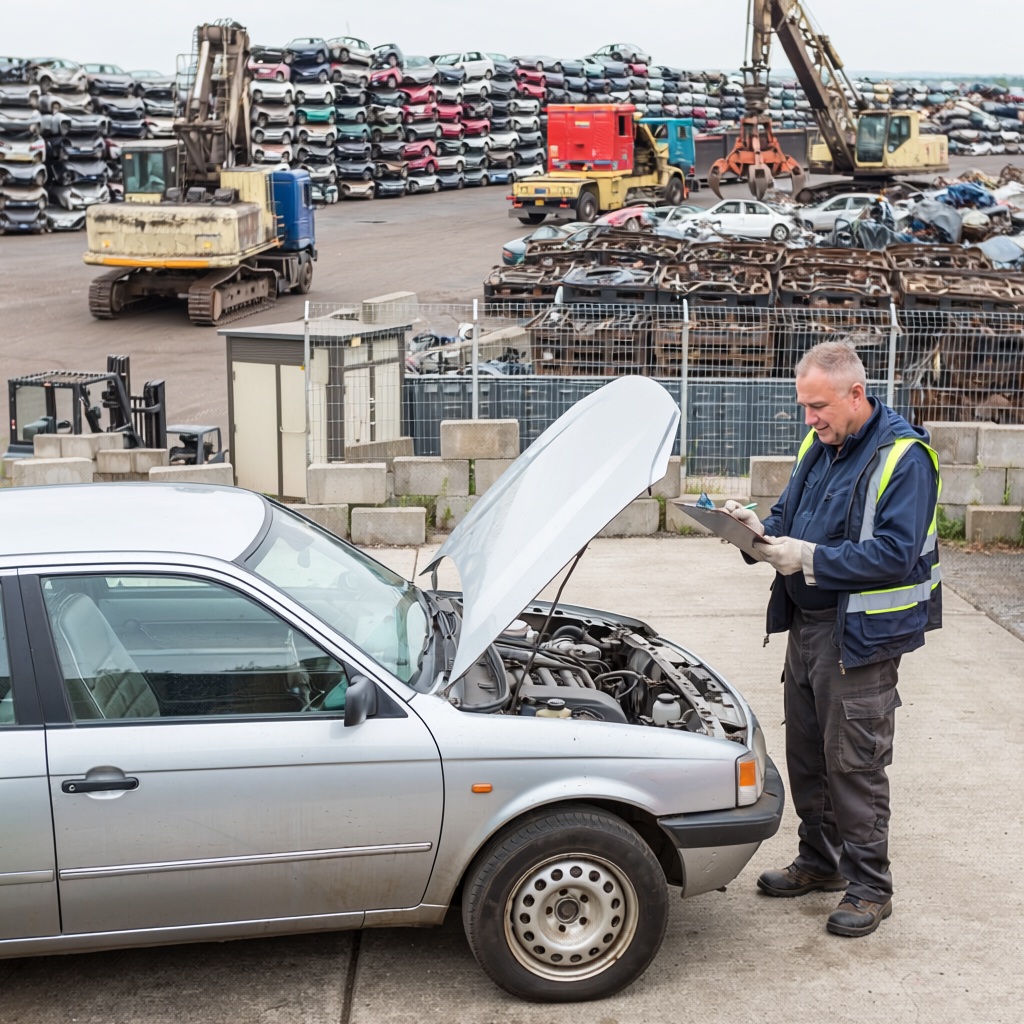
Do Larger Scrap Yards Offer Better Prices?
20th Aug, 2026
The assumption that bigger always means better does not typically hold up when it comes to the motor trade. For many motorists, the choice between a massive industrial site and a smaller local yard seems like a simple matter of looking for the biggest signs. However, the reality of large scrap yard prices is far more nuanced than a person might expect. Size does not automatically translate to a better deal, and understanding what actually drives the market helps separate myth from reality.
Determining the value of an old banger involves looking at how efficiently a business operates rather than just how much land they occupy. A massive operation with high overheads might offer less than a smaller, leaner outfit that knows exactly what they are doing with a particular model. The global metal market, the condition of the vehicle, and even the local postcode play much larger roles than the physical acreage of the yard. It helps to look under the bonnet of how these different businesses calculate their offers based on current market data.
What Actually Determines Scrap Car Prices
Scrap metal values fluctuate daily based on global commodity markets. Steel, aluminium, and copper values change constantly, and facilities of all sizes must adjust their offers accordingly. The current market rate for metal forms the absolute baseline for any quote. Beyond that, a business calculates what it can extract from a vehicle beyond the basic weight of the shell.
Specialised parts recovery adds significant value to an offer. A working engine, a healthy gearbox, or a catalytic converter containing precious metals can be worth more than the rest of the metal combined. Businesses that specialise in high-quality component salvage often pay more because they possess the infrastructure to profit from individual parts rather than just crushed cubes. This is why a quote might vary wildly even if two yards are located on the same street.
The weight and mechanical condition of the vehicle matter enormously too. A heavier car contains more metal, but the condition affects the total processing costs. A yard might reduce an offer if they have to spend significant time draining toxic fluids or dealing with extensive damage that complicates the dismantling process. Ultimately, the price is a balance between the raw material value and the labour required to extract it safely.
How Large Scrap Yards Operate
Massive recycling centres usually process hundreds of vehicles every week. They rely on high-volume business models, making their money through sheer throughput rather than trying to maximise the profit on every individual car. This can occasionally work in the favour of the motorist, as these big operations might offer consistent, competitive rates simply because they need a constant supply of stock to keep their machinery running.
Efficiency is the name of the game for these industrial-scale sites. They often use massive industrial-scale crushers and sophisticated parts cataloguing systems to move metal through the facility as quickly as possible. These sites typically feature specialised staff to handle different tasks, with one team managing the recovery of salvageable parts while another focuses on the final destruction.
The catch with a giant site is the massive overhead costs. Large physical locations mean high property taxes, a huge payroll, and incredibly expensive equipment to maintain. Some big operations offset these costs by offering slightly lower prices to the public, banking on their dominant local presence to keep the cars coming through the gates. It is a common mistake to think that a big crane automatically means a big cheque.
Advantages of Using Industrial Facilities
Reputable large operations rarely mess about with delays or complicated booking systems. They typically have the fleet and the staff to arrange a professional scrap car collection within a very short timeframe. Speed and convenience are often the primary selling points for these businesses. If a motorist needs a car moved from their driveway quickly, a large facility is usually equipped to handle the job without any fuss.
Immediate payment is also a standard feature at professional industrial sites. They possess the cash flow to clear a bank transfer on the day of collection rather than making a person wait for the funds. This provides a level of financial certainty that smaller, less established businesses cannot always match. Furthermore, these large yards rely on standardised valuation methods to ensure every quote is calculated fairly according to the current market data.
Legal compliance is another area where big sites often excel. Because they are highly visible, they must strictly adhere to environmental regulations as licensed Authorised Treatment Facilities. Motorists are virtually guaranteed to receive a Certificate of Destruction, which is essential for any person looking to tell DVLA scrapped car details. This official document severs the legal tie between the owner and the vehicle, preventing any future liability for fines or parking tickets.
Small Scrap Yards Can Compete on Price
It is a mistake to write off the smaller local operations. A yard with lower overheads can often afford to be more generous with their quotes because they are not funding massive industrial infrastructure. A small family-run business might not have industrial-scale crushers on site, but they often have a much better handle on the local market for specific parts. When asking where can I scrap my car?, the answer might be a local specialist who pays a bit more because they know exactly who is looking for a specific engine.
Personal service and local knowledge often translate into better offers. A local dealer might specialise in a particular type of car, such as old Rovers or vintage Volkswagens. They will likely pay a premium for a car with high-quality salvageable parts because they have established buyers waiting for them. Large yards tend to deal with everything in a generic way, which can make them less enthusiastic about a specialist or unusual vehicle.
Collection costs are also much lower for a business operating within a small radius. They are not running a nationwide recovery fleet, so they can afford to pass the savings on to customers living within ten or fifteen miles. This local efficiency allows smaller independent dealers to compete head-to-head with the industry giants. Often, the fellow around the corner is the one who puts the most money in the pocket.
The Real Price Comparison
Testing the market often reveals some surprising results. Two identical cars in similar condition might receive vastly different offers from yards of different sizes, and the scale of the business is rarely the determining factor. The real difference usually comes down to the current margin each business is willing to take. A large yard might work on smaller margins per vehicle but process more cars, while a small yard might take a larger margin on fewer cars but maintain more flexibility for the right vehicle.
The retired mechanic remembers a fellow named Stan who drove his old Rover forty miles to a massive site in the city. Stan was convinced that because they had the biggest industrial-scale crushers in the county, they would offer the best price. He ended up getting twenty quid less than the local yard offered because the big place did not care about the specific parts recovery value of his Rover. It just goes to show that size is not the only thing to check before handing over the logbook.
Dealing with a massive yard is a lot like shopping at a giant supermarket compared to visiting a local bakery. The supermarket has the speed and the volume, but the local bakery knows exactly why a specific loaf of bread is worth more. Finding the right balance between the two is the key to securing the most profitable and stress-free deal for an old motor. Many motorists decide to recycle my car after comparing these different types of operators.
When Size Actually Matters
There are certain situations where a large industrial facility genuinely holds the upper hand. Heavy-duty commercial vehicles and large vans often fetch better prices at big operations. These sites possess the specialised equipment to handle the weight and size of commercial metal, and they usually have established international buyers for large-scale industrial scrap. A small local yard might struggle to even move a clapped-out transit van, let alone process it efficiently.
If a vehicle is particularly rare or has unusual components, a large yard might be better positioned to wait for the right buyer. Their wider network and greater storage capacity allow them to sit on parts longer without worrying about immediate cash flow. They can also use their standardised valuation methods to offer a fair price for a car that is genuinely only worth its weight in metal. A professional site will also ensure proper car recycling standards are met during the process.
Non-running vehicles or those in a dangerous condition also suit large yards with professional recovery gear. Smaller operations might charge extra for a difficult collection or reduce the offer if a car is stuck in a tricky spot. Large operations have the winches and the transport to handle any vehicle condition without hitting the owner with a penalty. They see the entire technical procedure as a standard part of their daily routine.
Red Flags to Watch For
Regardless of the size of the business, certain warning signs should never be ignored. Unusually high offers that sit far above the market average deserve immediate scrutiny. If one dealer is offering hundreds more than everyone else, a person should ask why. They might be a legitimate specialist, or they might be a rogue trader planning to drop the price when they arrive on the driveway.
Facilities that refuse to provide a written quote or act cagey about their ATF licence number should be avoided. Legitimate businesses, large or small, have absolutely nothing to hide about their credentials or their standardised valuation methods. If a person cannot verify that a site is an authorised recycling centre, they should walk away regardless of how much money is being promised. This protects the seller when they decide to scrap my vehicle permanently.
Pressure tactics are another sign of a poor business. Statements like “this offer is only valid for the next hour” are common sales manipulation techniques. A reputable business will give a person time to consider their options and compare offers. Most importantly, a motorist should never pay upfront charges to scrap a car. In this trade, the yard pays the customer, and anyone asking for money is almost certainly a scammer.
Why Professional Networks Offer the Best Protection
Services like a national network change the entire equation for the motorist. Instead of having to choose between a giant site and a local dealer, a person can access a system of vetted buyers who compete for the vehicle. This creates an auction environment where multiple yards see the details and submit their best offers. It takes the guesswork out of the process and ensures the owner gets a competitive market rate.
Transparency improves dramatically when using a professional platform. A person can see multiple offers simultaneously and choose based on the price, the collection timing, and the reputation of the yard. This is the smartest way to find out how to scrap your car easily without ringing around. All participating facilities are vetted for legal compliance, ensuring that every vehicle undergoes proper end-of-life vehicle disposal.
Geographic coverage means that a person benefits from the strengths of both large processing centres and local specialists. A nationwide network provides the safety and efficiency of a big brand with the local knowledge of the fellow down the road. Securing a fair price while ensuring a legal handover is the ultimate goal. If a person is ready to get a quote or has questions about the process, they can get in touch with the team on 0300 100 0027. A professional is always available to provide honest advice through the Scrap Car Network.