Scrap Car Payment Scams: Red Flags to Watch For
14th Jul, 2026
Scrapping a car should be incredibly straightforward. You hand over the keys, receive your payment, and the job is completely done. Yet every single year, thousands of vehicle owners across the UK lose money to fraudsters posing as legitimate scrap dealers. These scrap car payment scams cost victims an average of a few hundred pounds per incident, leaving people out of pocket and incredibly stressed.
The scrap car industry operates largely on trust. Most transactions happen quickly, often with same-day collection and immediate payment on the driveway. This rapid speed creates opportunities for criminals who exploit the process before victims realise what has actually happened. Understanding the warning signs protects both your wallet and your legal obligations as a vehicle owner.
When you know what to look for, dodging these dodgy operators becomes second nature. A trustworthy network connects you with verified partners, ensuring you avoid these exact headaches from the very start. Let’s break down exactly how these scams operate and how you can keep yourself safely out of their traps.
How Scrap Car Payment Fraud Actually Works
Scammers typically follow highly predictable patterns. They offer quotes significantly above the going market rate simply to attract desperate sellers looking for a quick payout. Once they have collected the vehicle, the promised payment mysteriously never arrives in your bank account. By the time the owner realises they have been conned, the car has vanished completely into the ether.
Often, these stolen vehicles are quickly stripped for parts or sold on illegally to unsuspecting buyers without proper documentation. Some fraudsters take a completely different approach to the job. They will pay with clever fake bank transfers that appear genuine initially but ultimately bounce within a few days. Others use stolen cheques or even counterfeit cash for larger payments on the driveway.
The common thread tying all these scams together is immense pressure. They create artificial urgency and push victims into completing the transaction before any proper verification can happen. The environmental angle provides another brilliant cover story for these criminals. They claim they are registered green disposal experts to build instant credibility, using official-sounding company names and creating basic websites that disappear within a few weeks.
The Cash Payment Trap
Cash transactions remain the absolute riskiest payment method for scrapping vehicles today. Legitimate dealers do occasionally use cash, but it is increasingly rare for amounts over a hundred pounds due to modern tracking regulations. Scammers strongly prefer cash because it is completely untraceable. It provides absolutely no comeback once the deal is done and they have driven off into the sunset.
I remember a bloke from down my road, Dave. He thought he had bagged a brilliant cash deal for his rusty old transit van from a scruffy flyer he found stuck to his windscreen. The collector counted out the cash in a flash on the bonnet, but when Dave went to pay for his groceries the next day, half the notes were dodgy fakes. He lost his van and got nothing but severe embarrassment at the supermarket till. If you ever need to scrap my van, always insist on secure digital payments over dodgy driveway cash deals.
Counterfeit notes have become sophisticated enough to fool a casual inspection on a dark driveway. Scammers brutally exploit this by mixing genuine notes with counterfeits, counting them rapidly in front of you. They pressure sellers to accept the thick wad of cash without a thorough, careful checking process.
The “short payment” technique catches many honest people out too. The collector counts out the agreed amount but deliberately palms several notes during the physical handover process. Victims often do not recount the cash immediately, discovering the painful shortage only after the tow truck has left. Pursuing recovery becomes nearly impossible without solid proof of the original agreement.
Fake Bank Transfers That Signal Danger
Digital payments offer significantly more security than cash, but they are certainly not foolproof. Fraudsters have adapted their methods heavily to exploit modern online banking systems to their advantage. You have to stay sharp when someone pulls out their smartphone to pay you on your driveway. Spotting fake bank transfers early is your absolute best defence against losing your vehicle for nothing.
Some highly organised operations even use stolen bank details to make their payments. The transaction appears completely legitimate initially, showing up instantly in your account. However, when the genuine account holder reports the fraud to their bank, the payment gets clawed back from you without warning. The vehicle seller then faces potential legal complications despite being an entirely innocent party to the theft.
The Mobile Screen Trick
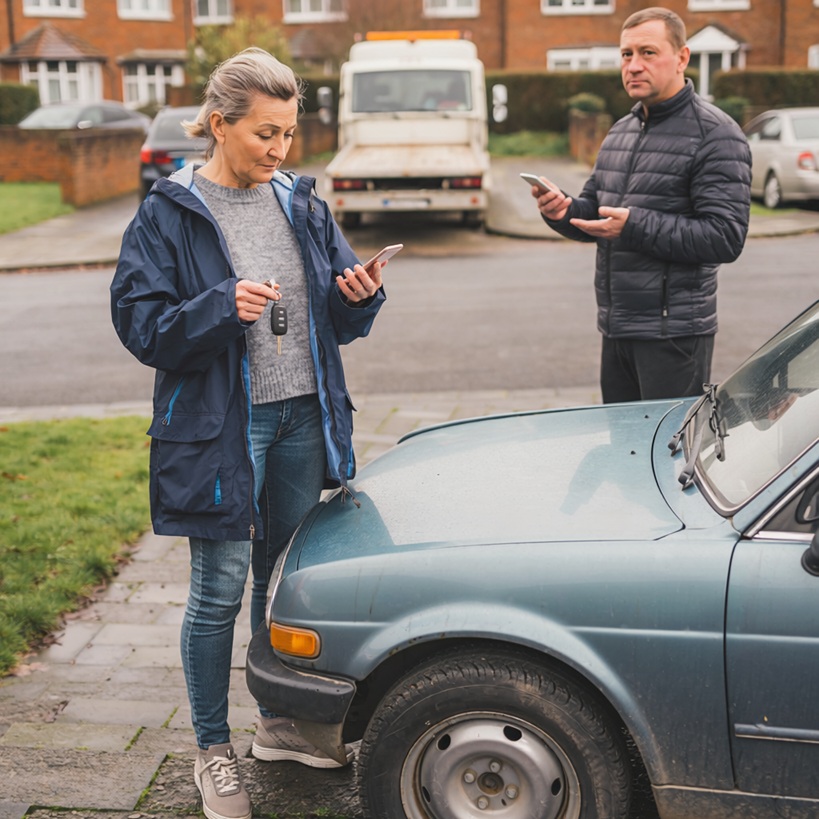
The absolute most common digital trick involves showing a fake payment confirmation screen on a mobile device. It looks entirely legitimate, complete with fake reference numbers, banking logos, and official-looking timestamps. The buyer will flash the screen at you, say the network is a bit slow today, and quickly load up your car.
In reality, absolutely no transaction has occurred on their end. They use sophisticated apps specifically designed to mimic banking interfaces perfectly. Always check your own banking app on your own phone to confirm the funds have actually cleared before handing over any keys or documents.
Delayed Payment Reversals
Delayed transfer scams work a bit differently and are incredibly frustrating to deal with. The criminal makes a genuine payment from their own account but immediately contacts their bank claiming fraud the moment they drive away. The payment gets reversed within a day or two, leaving the innocent seller without their car or their money.
By the time the bank reversal actually happens, tracking down the scammer becomes virtually impossible. They have usually disconnected their burner phone, scrapped the car, and moved straight on to their next target.
The Phantom Company Warning Signs
Legitimate scrap dealers maintain permanent business addresses and highly verifiable professional credentials. Fraudsters create incredibly convincing visual facades that crumble quickly under basic, straightforward scrutiny. A professional-looking website means absolutely nothing if the company lacks the proper legal authorisation to dismantle cars.
Think of an Environment Agency permit exactly like a pub’s liquor licence. You would not trust a bloke selling pints out of the back of a transit van in a dark alley, so you shouldn’t trust a scrap dealer operating without the proper legal paperwork. Every Authorised Treatment Facility must hold this specific permit by law. It is a strict legal requirement for anyone dismantling vehicles safely and legally.
Genuine vehicle disposal services display their permit numbers prominently and actively welcome your verification requests. That is exactly why the Scrap Car Network carefully vets every single facility we partner with. Scammers often use addresses that simply do not exist or belong to entirely unrelated local businesses. Always verify their Environment Agency permit online before agreeing to a collection.
Verifying Physical Premises
A quick search online reveals whether the claimed location actually matches a legitimate scrapyard in your area. Sometimes, checking Google Street View shows their massive “headquarters” is actually just a residential terraced house or an empty dirt lot.
Always check for a valid company registration number searchable on the official Companies House website. Ask them directly about their physical premises where you can deliver the vehicle yourself if you preferred to do so. If they completely refuse to give you an address, walk away immediately without a second thought.
The Quote That Is Too Good to Ignore
Market rates for scrap cars follow highly predictable pricing patterns based on vehicle weight, current global metal prices, and overall condition. When someone offers substantially more than their local competitors, you need to question exactly why. Legitimate dealers operate on incredibly thin margins across the board. They simply cannot afford to overpay significantly and remain a profitable, sustainable business.
Current scrap values typically range predictably for average family cars, depending heavily on their size and metal content. Vans and larger vehicles fetch a bit more due to their significantly increased weight on the scales. Quotes exceeding these standard ranges by fifty percent or more deserve your immediate, heavy suspicion.
The “special promotion” excuse often heavily masks deep fraud. Scammers claim they are running limited-time offers or have urgent, desperate demand for your specific make and model. This artificial urgency aggressively pushes victims into quick decisions without taking the necessary time for proper verification.
Compare multiple quotes carefully before committing to any single buyer. Getting three to five estimates from different local sources reveals the genuine, fair market rate. Outliers on either extreme warrant serious additional investigation before you proceed to arrange a scrap car collection at your home address.
Documentation Deception Tactics
Proper paperwork protects both parties deeply in any vehicle transaction, from start to finish. Scammers actively avoid documentation entirely because it creates a permanent trail of hard evidence and accountability. They will make incredibly smooth excuses about “simplified modern processes” or claim their new digital systems eliminate any paperwork needs entirely.
Neither of these claims is true for legitimate, fully legal scrap transactions. Proper paperwork is the absolute backbone of the entire vehicle recycling industry in the UK. Without it, you are leaving yourself completely exposed to serious, compounding fines down the road.
Missing Legal Paperwork
The Certificate of Destruction represents your ultimate, iron-clad legal proof that the vehicle was properly and officially scrapped. Without it, you remain entirely liable for the car indefinitely under the law. This includes any parking fines, massive traffic offences, or severe environmental penalties it generates after it leaves your driveway.
Fraudsters who collect vehicles without ever providing these critical certificates often resell the cars illegally on the black market. This leaves the original, innocent owner facing completely unexpected legal problems and police inquiries months down the line.
The Promise of Later Delivery
Legitimate dealers issue this critical Certificate of Destruction reliably within seven days of the original collection date. Criminals aggressively avoid this specific process because it creates a traceable, undeniable record of their illegal activities.
Watch out for false claims that certificates “come later in the post” without any specific, reliable timeframes given. Refusal to provide written quotes or unsigned, blank collection receipts are massive, glaring red flags. If they resist providing copies of their company insurance, shut the deal down entirely and immediately.
The Collection Day Pressure Tactics
Professional collectors arrive on time with the proper equipment, clear company identification, and all their required paperwork ready to go. Scammers deliberately create intense chaos and confusion to prevent careful, methodical verification by the seller. They will arrive at highly inconvenient times or suddenly claim urgent scheduling conflicts to rush you.
Sometimes they bring loud, boisterous helpers who deliberately distract you while the main operator rushes through the loading process. Identity verification should absolutely always happen before any keys change hands on your property. Legitimate drivers carry proper company ID and can instantly provide direct contact numbers for their main office.
Fraudsters strongly resist any form of identification, offering vague, mumbled explanations about being “new on the job” or “just covering for a mate.” The rushed inspection represents another classic, undeniable warning sign. Professional dealers assess the vehicle’s condition carefully against the quote. Scammers just want the car loaded onto the truck and gone before you can reconsider or notice any irregularities in their operation.
The Recycling Credentials Smokescreen
Environmental responsibility sounds incredibly admirable to most everyday people. Criminals brutally exploit this good nature by claiming superior recycling practices or exclusive partnerships with high-end eco-friendly facilities. These claims rarely withstand basic scrutiny but sound highly convincing to environmentally conscious sellers just trying to do the right thing.
Genuine recycling operations follow strict, heavy environmental regulations covering fluid disposal and complex material separation. They invest heavily in proper, safe facilities, expensive processing equipment, and thorough staff training because legal compliance demands it. Scammers just use environmental terminology without actually understanding what it means at all.
They will confidently mention “zero landfill” without ever explaining how they achieve these highly impressive outcomes. Ask them specific, pointed questions about their recycling methods. Ask how they physically handle hazardous fluids like old engine oil and toxic air conditioning coolant. Vague or overly defensive answers strongly suggest their environmental claims are pure marketing fiction. If you want to ensure proper car recycling practices, you need to find operators who can answer these technical questions easily.
Regional Scam Variations Across the UK
Fraud patterns vary significantly by location, heavily reflecting different local market conditions and varying police enforcement levels. Urban areas naturally see significantly more sophisticated scams involving fake limited companies and complex fake bank transfers. Rural regions experience more traditional, old-school cons based on cash transactions and fake personal relationships.
London and major cities heavily attract highly organised fraud operations that target huge volumes of vehicles daily. These groups maintain highly professional outward appearances, complete with branded recovery vehicles and matching staff uniforms. They operate aggressively until local complaints reach critical levels, then dissolve and immediately reform under entirely new company identities. If you happen to scrap your car in London, be especially vigilant of these highly polished but entirely fake setups.
Smaller, tight-knit communities face a completely different set of unique risks. Criminals exploit local social connections and word-of-mouth recommendations to build false, temporary credibility in the town. They might actually operate legitimately for several months before executing larger, highly profitable scams, making early detection much harder for the locals. Location certainly does not determine legitimacy, but understanding your specific local scam patterns helps massively.
What Happens After You Have Been Scammed
Discovering you have been utterly conned triggers immediate, blinding panic and deep anger. These emotions are completely natural but they absolutely do not help your recovery process one bit. Immediate, decisive action significantly increases your chances of limiting the financial damage and potentially recovering your losses.
Report the fraud immediately to Action Fraud, the UK’s national fraud reporting centre. They will issue a vital, official crime reference number needed for any potential insurance claims. Local police should also be notified quickly, particularly if the scammer has aggressively driven off with your personal documents or house keys.
Contact your bank urgently if a digital bank transfer was involved to request a rapid recall of the funds. Financial recovery options depend entirely on the specific payment method the scammers used. With cash payments, recovery becomes nearly impossible without the police successfully locating the actual fraudster in person. Document absolutely everything you can remember about the encounter, from descriptions to vehicle registrations.
Protecting Yourself From Future Fraud
Prevention absolutely beats recovery every single time. Establishing solid, unwavering verification habits before engaging with any scrap dealer eliminates most fraud risks entirely. These simple, basic steps take only minutes but save potential months of severe stress and heavy financial loss.
Start with basic online research before ever contacting any new company. Check their website age using free domain lookup tools available online. Sites less than six months old always warrant extra, highly careful scrutiny. Read reviews on independent, third-party platforms, not just the glowing, fake testimonials on their own site. Look for consistent, repeating patterns in the negative complaints.
Create a strict verification checklist for every single potential dealer you speak with. Confirming an Environment Agency permit is a non-negotiable step that weeds out the absolute worst offenders right away. Verify their company registration and ensure their physical address actually exists on a map. Never skip these steps simply because someone seems trustworthy and chatty on the phone.
The Legal Consequences of Improper Disposal
Using unlicensed operators creates massive legal exposure far beyond your initial, painful financial loss. Vehicle owners hold strict, unavoidable legal responsibility for ensuring proper disposal through an Authorised Treatment Facility. Choosing a tiny bit of convenience over proper legal compliance can easily result in crushing fines up to five thousand pounds.
Environmental offences carry incredibly serious penalties when vehicles are improperly dismantled and their toxic fluids dumped into the ground. If your car ends up dumped in a farmer’s field, local authorities can and will trace it directly back to you using the VIN number. Proving you were defrauded provides some small legal defence, but it absolutely does not magically eliminate your initial liability.
When you scrap a vehicle, the DVLA maintains incredibly strict requirements for notifying them correctly. Failure to complete this process correctly means you remain the registered keeper indefinitely in their massive database. This creates ongoing, daily liability for road tax, continuous insurance requirements, and speeding tickets. We provide clear guidance on how to tell DVLA scrapped car details to ensure you follow the letter of the law, ensuring you receive the Certificate of Destruction.
When to Walk Away From a Deal
Recognising the exact moment to abandon a transaction requires truly trusting your gut instincts. Experienced, career scammers are highly skilled psychological manipulators who can make entirely unreasonable requests seem perfectly normal. Certain situations always warrant your immediate withdrawal, regardless of the incredibly smooth explanations offered.
Intense pressure to decide immediately represents the absolute clearest warning sign in the business. If you are looking to safely scrap my car online, legitimate dealers completely understand that it is a significant financial decision for you. They are perfectly comfortable with customers taking their time to verify credentials properly. Criminals create artificial urgency purely because scrutiny heavily exposes their ongoing fraud.
Walk away immediately if the dealer flat-out refuses to provide verifiable business credentials when asked. If they insist aggressively on cash-only payments for large amounts, shut the front door. If they become defensive, rude, or aggressive when you ask simple questions, cancel the collection instantly. The minor inconvenience of starting the process over is absolutely nothing compared to the complete nightmare of being fully scammed.
Building Long-Term Protection Habits
Vehicle disposal happens quite infrequently for most everyday people in the UK. This completely natural unfamiliarity creates a vulnerability that career criminals ruthlessly and efficiently exploit. Developing general, baseline fraud awareness helps protect against scrap car scams and many other deceptive practices in daily life.
Stay highly informed about current scam techniques through resources like Action Fraud alerts and local police bulletins. Fraud methods evolve constantly and rapidly as criminals adapt to new police enforcement efforts. What worked perfectly last year to keep you safe might not protect you against this year’s clever, highly technical variations.
Consider maintaining a written list of verified, legitimate dealers for future reference. Understanding the advantages of choosing our service helps you easily spot the stark contrast between a verified, professional network and a dodgy fly-by-night operation. Discuss major financial transactions with family members before committing, as outside, objective perspectives often catch glaring red flags you might miss in the heat of the moment.
Getting Help When You Need It
Nobody should ever face the stress of fraud entirely alone. Multiple helpful, dedicated organisations exist specifically to help victims navigate the aftermath and prevent future crimes from happening. Accessing these vital resources quickly heavily improves your outcomes and helps authorities track down massive criminal operations.
Citizens Advice provides excellent, entirely free guidance on consumer rights and fraud recovery steps. Their highly trained advisers deeply understand the complex legal framework surrounding vehicle transactions. They will help you understand exactly what documentation you need moving forward to protect yourself.
Trading Standards actively and aggressively investigates businesses operating fraudulently within their local jurisdiction. They have serious, heavy enforcement powers that individual victims completely lack, including the legal ability to shut down illegal yards and crush their equipment. Reporting scams contributes directly to broader enforcement efforts that protect entire communities from falling victim.
Wrapping Things Up
Scrap car payment scams thrive heavily on urgency, unfamiliarity, and completely misplaced trust. Criminals brutally exploit the simple fact that most people scrap vehicles rarely, lacking the hands-on experience to spot the early warning signs. Yet the glaring red flags remain remarkably consistent across the board. Unrealistic quotes, aggressive documentation avoidance, and high-pressure tactics are the absolute hallmarks of a scam operation.
Protection always comes squarely through careful, methodical verification. Checking official licences, confirming business credentials, and heavily insisting on proper paperwork eliminates the vast majority of your risk. These simple steps take mere minutes but prevent heavy financial losses and legal complications that can easily plague you for months on end.
The legitimate scrap car industry operates transparently with clear, simple, and entirely legal processes. You should always work exclusively with an Authorised Treatment Facility to ensure everything goes smoothly. Dealers who resist your basic verification attempts are loudly advertising their own dishonesty to you. If you need a trustworthy service to handle your vehicle safely, do not hesitate to contact us on 0300 100 0027 for some honest advice. We are always here to help you get the job done right.