What Happens if Collection Happens but Payment Bounces?
20th Jul, 2026
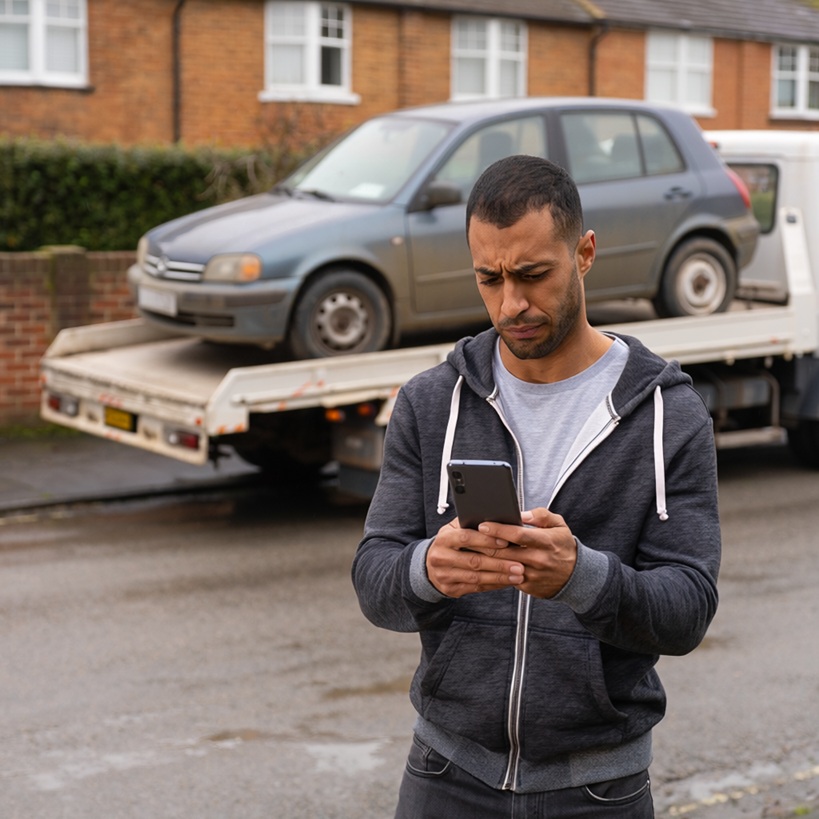
Getting rid of an old, tired motor should be incredibly straightforward. Firstly, a local dealer arrives with a truck to smoothly collect the vehicle. Next, you securely receive your payment. Consequently, absolutely everyone moves on happily. But what actually happens when the promised money simply does not arrive?
Dealing with severe payment issues after collection is much more common than most people realise. When a scrap car dealer physically takes your vehicle but the payment fails, things get messy quickly. The heavy car has already left your driveway. Furthermore, official paperwork might have already been signed on the bonnet. Most worryingly, the vehicle could already be dismantled in a yard miles away.
Understanding your strict rights and legal responsibilities heavily protects you. It absolutely ensures your total compliance with UK law. Over my years in the motor trade, I have seen plenty of folks get completely tangled up in these messy situations. Therefore, let’s break down exactly what you need to do to protect your wallet when a promised payment falls through.
Why Payments Bounce in the Scrap Car Industry
Payment failures in the motor trade are not always completely malicious. Several entirely legitimate, albeit frustrating, reasons can cause a standard transaction to fail. You need to identify the exact cause quickly to fix it.
Insufficient funds represent the absolute most common cause for a scrap car payment bounced notification. Some smaller, independent yards operate on incredibly tight daily margins. They simply may not have enough liquid cash in their accounts when the bank payment processes. For instance, they might have enthusiastically collected multiple heavy vehicles on the exact same day, overestimating their funds.
Bank processing errors also occasionally disrupt completely legitimate transactions. These highly annoying issues typically resolve themselves within a few working days.
- Technical glitches: Banking systems occasionally experience unexpected maintenance downtime.
- Typing errors: Slightly incorrect account details can instantly prevent money from moving.
- Fraud flags: Banks sometimes aggressively freeze large, unexpected transfers for security checks.
Sadly, entirely fraudulent operators deliberately collect vehicles with absolutely no intention of ever paying. These aggressive rogue traders use fake company details and provide incredibly smooth false promises. Then, they disappear into thin air once they have secured the vehicle. They are the exact reason the entire recycling industry faces massively increased government regulation today.
The Legal Position When Payment Fails
The strict legal framework surrounding bounced payments is actually quite clear. Once a heavy vehicle officially changes hands on your driveway, specific consumer laws absolutely govern what happens next.
Legal ownership technically remains entirely with the seller until the final payment clears completely. This golden principle applies firmly across most UK commercial transactions. Goods simply do not legally transfer until the proper payment is fully exchanged. However, the physical possession has already changed hands, which heavily complicates matters.
Think of it exactly like handing over the front door keys to your house before the buyer’s mortgage has actually hit your bank account. You might still technically own the bricks and mortar on paper. However, getting the new occupants out of your living room is going to be an absolute nightmare. A bounced payment vehicle collection puts you in exactly this frustrating, legally sticky situation.
The Sale of Goods Act 1979 provides some solid protection here. If the promised payment completely fails, the official contract effectively becomes voidable. This means the seller can potentially reclaim the physical vehicle or aggressively pursue payment legally. But here is the massive problem. If the car has already been heavily dismantled at the yard, reclaiming it becomes practically impossible.
Immediate Steps After Discovering Non-Payment
Time is absolutely critical when a payment completely fails. The first forty-eight hours largely determine exactly how easily the messy situation resolves. Therefore, you need to act calmly but incredibly decisively.
Firstly, contact the dealer immediately using absolutely every available method. Ring their mobile, email their office, and send them a clear text message. Document every single attempt with date-stamped screenshots and detailed call logs. Sometimes a failed payment car scrapping is just a genuine clerical mistake that a polite dealer will happily rectify.
Before you accuse anyone of theft, complete these basic checks yourself:
- Check your details: Verify the exact account number and sort code you provided were completely correct.
- Review banking apps: Check your app to see whether any funds have partially cleared.
- Gather paperwork: Collect the initial receipt, any written contracts, and all text messages.
Here is the absolute most important advice I can give you today. Do not officially notify the DVLA just yet. Maintaining your official registered keeper status heavily provides you with massive legal leverage. Once you officially change the registered keeper of your car, proving the vehicle was actually yours becomes significantly more complicated.
Escalation Options and Recovery Methods
When your initial, polite contact fails to resolve the issue, several heavy escalation routes exist. The exact path depends entirely on the dealer’s response and their overall business legitimacy. If a dealer didn’t pay after collection, this is exactly where the hard work begins.
A formal written demand should absolutely be your first heavy escalation step. Send a firm letter via Royal Mail recorded delivery clearly stating the basic facts. Include the exact collection date, the agreed final price, and the specific payment failure date. Demand the full payment within fourteen short days to create a vital paper trail.
The small claims court happily handles nasty financial disputes up to ten thousand pounds in England and Wales. The online process is relatively straightforward and absolutely does not require an expensive solicitor. Filing typically costs a small fee depending on the total claim value. Highly successful claimants usually recover these court costs from the dodgy dealer anyway.
Local Trading Standards should definitely be notified if the operator appears to be acting fraudulently. They actively investigate rogue traders and can take massive enforcement action. While they won’t magically recover your individual payment, they can legally shut the dodgy yard down entirely.
How Reputable Dealers Handle Payment Issues
Fully legitimate, highly professional scrap car dealers have established procedures for addressing payment failures. This professional approach deeply distinguishes them from greedy, fraudulent operators on the black market.
Immediate, highly transparent communication is standard practice. Reputable dealers eagerly contact customers as soon as they internally identify a banking problem. They calmly explain the exact cause and eagerly provide a highly specific timeline for total resolution. They absolutely do not ignore your angry phone calls or make up silly excuses.
Alternative secure payment methods are quickly offered when the original banking method completely fails. If a digital bank transfer encounters massive technical problems, professional dealers actively find rapid solutions. Choosing verified vehicle disposal services completely removes these annoying banking hurdles.
Working securely with massive, established networks significantly reduces these severe payment bounce risks. Our connected yards undergo incredible verification checks and fiercely maintain brilliant track records of reliable payments. Using the Scrap Car Network absolutely provides heavy accountability that individual, small-time operators simply lack.
Prevention Strategies for Future Transactions
Learning directly from annoying payment failures helps everyone completely avoid repetition. Several highly practical, easy measures dramatically reduce the severe risk of non-payment next time.
Always rigorously verify the dealer’s credentials before happily agreeing to a collection. Check their official Environment Agency waste carrier licence online. Confirm their active business registration directly with Companies House. Verify their physical yard address actually exists firmly on a map. Fully legitimate businesses have totally verifiable details that are incredibly easy to find.
Read independent customer reviews thoroughly across multiple platforms. Look far beyond the basic star ratings to read what everyday people actually say. Look particularly closely at comments about their general payment reliability. Recent reviews matter significantly more than old ones because business practices change rapidly.
Agree to the exact payment terms incredibly clearly before the physical collection ever occurs. Specify the exact final amount, the preferred payment method, and the precise timing in writing. A quick email or a text message works perfectly to secure a proper scrap my car same day payment agreement safely.
The Role of Certificates and DVLA Notification
Understanding exactly how official government documentation affects nasty payment disputes totally prevents common mistakes. These simple errors can heavily weaken your legal position if you face payment issues after collection.
The official Certificate of Destruction securely serves as legal proof the vehicle has been legally depolluted. Dealers absolutely must issue this within seven short days of receiving the vehicle. But here is what many stressed people completely miss. Happily accepting a certificate does absolutely not mean you have been paid, and it does not magically transfer the legal ownership.
I remember a lovely customer named Frank who handed over his beloved Vauxhall Zafira. He got a quick screenshot of a fake bank transfer, so he immediately sent his logbook slip off to Swansea. However, the promised money never actually cleared. It took him weeks of severe stress to sort out because he had already officially told the government he didn’t own the car anymore. Consequently, he lost all his bargaining power instantly.
The DVLA notification timing is incredibly crucial. Safely waiting until the payment actually clears provides you with massive leverage. Once the official DVLA records clearly show the vehicle as scrapped, proving you are still owed money becomes vastly more complicated. Following clear guides on how to tell the DVLA when you sell or scrap your car keeps you safe.
What Happens to Your Vehicle During Payment Disputes
Understanding the vehicle’s exact physical fate after collection heavily helps assess your recovery options. It also perfectly helps calculate potential legal compensation claims if things go terribly wrong.
Vital environmental depollution happens first, usually within forty-eight hours of the collection. Facilities absolutely must safely remove all hazardous materials. This crucially includes degraded engine oils, toxic coolants, corrosive brake fluid, and dangerous air conditioning refrigerant. This step is legally required and happens incredibly quickly, regardless of your pending payment status.
Heavy dismantling rapidly follows depollution for any vehicles with valuable, working parts. Proper scrap car recycling moves incredibly fast to reclaim materials.
- Engine removal: Heavy engines and smooth gearboxes are swiftly extracted.
- Component stripping: Clean body panels and expensive electronics are catalogued for resale.
- Total crushing: The empty, hollow shell is brutally crushed and shipped to metal recyclers.
These rapid timelines matter immensely because they heavily affect what is physically recoverable. If a scrap car payment bounced yesterday, your car can potentially be safely returned. However, one collected three weeks ago has likely been totally processed beyond physical recovery.
Insurance and Financial Protection Considerations
Several hidden financial safeguards heavily exist that many people entirely overlook when scrapping vehicles. These can cleverly provide brilliant legal recourse when a promised payment totally fails.
Payment by a standard credit card provides brilliant Section 75 protection. The massive card provider legally becomes jointly liable for heavy breaches of contract. This effectively means you can aggressively claim the money directly from them if the dodgy dealer didn’t pay after collection. This brilliant protection is powerful but sadly rarely applicable, as most yards use direct bank transfers.
Standard debit card payments offer slightly weaker protection through the banking chargeback scheme. Banks can sometimes completely reverse debit card transactions if services were not provided exactly as agreed. This technically applies when a bounced payment vehicle collection occurs. However, success rates vary wildly between different high street banks.
Your own personal motor insurance does not typically cover annoying scrap car payment disputes. However, it is always worth checking your policy terms carefully. Some highly comprehensive policies cleverly include basic legal expense cover. This vital cover might entirely fund your legal pursuit to ensure you successfully scrap my vehicle without losing out financially.
Regional Variations and Dealer Practices
Payment practices and dispute resolution options vary slightly across the UK. This subtly affects exactly how bounced payment situations eventually unfold in the real world. You desperately need to understand your local market.
Massive urban dealers typically operate on incredibly tight margins due to their much higher daily overheads. However, they are also significantly more likely to use highly established, incredibly reliable digital payment systems. The fiercely competitive market means a solid reputation matters significantly. If a failed payment car scrapping occurs in a massive city, local trading standards jump on it incredibly quickly.
Scotland’s robust legal system differs slightly from England and Wales, particularly regarding small claims procedures. The small claims limit is five thousand pounds rather than ten thousand, and the exact court procedures differ slightly. However, Scottish dealers operate securely under the exact same strict environmental licensing laws.
Northern regions have recently seen massively increased regulation enforcement. Fully legitimate dealers in these proud regions are generally incredibly reliable today. However, always rigorously verify credentials carefully before booking any collection to avoid nasty surprises.
Long-Term Implications of Unresolved Payment Issues
Failing to properly and forcefully resolve bounced payments creates massive, lasting problems. These horrible issues boldly extend far beyond the immediate, painful financial loss.
Severe DVLA administrative complications aggressively arise if you hastily notified them of the scrap before the payment cleared. You are officially no longer the registered keeper, but you were never properly compensated. This instantly creates massive administrative tangles if you desperately need to prove the exact transaction details later in court.
Outstanding vehicle finance heavily becomes your immediate, massive problem if the vehicle had an active loan. The massive finance company absolutely does not care that the dodgy scrap dealer didn’t pay you. They still aggressively expect you to clear the heavy debt immediately. Always completely settle active finance before scrapping your vehicle.
The heavy emotional toll absolutely shouldn’t be underestimated here. Dealing with incredibly stubborn, non-paying dealers creates massive stress, consumes hours of free time, and generates immense daily frustration. Some exhausted people sadly abandon solid claims because aggressively pursuing them feels totally overwhelming. This is exactly what the scammers heavily rely on to survive.
Wrapping Things Up
When a failed payment car scrapping occurs, it creates an incredibly frustrating situation that requires prompt action. Understanding your strict legal rights and knowing the immediate steps to take dramatically reduces these severe risks. Choosing fully reputable, verified dealers from the very start is your absolute best defence.
The absolute key is diligently maintaining your documentation and verifying dealer credentials before the truck arrives. Furthermore, you must heavily avoid DVLA notification until the payment safely clears into your account. When annoying problems do occur, escalate them incredibly quickly through formal, written demands rather than blindly hoping the dealer will eventually pay out.
Working securely with massive, highly established networks entirely provides the heavy accountability that prevents most payment issues. Knowing the advantages of choosing our service guarantees you avoid dodgy dealers entirely. If you ever need some honest, incredibly practical advice on getting rid of an old motor safely, do not hesitate to contact us on 0300 100 0027 today. We will ensure your vehicle’s value safely ends up in your pocket.