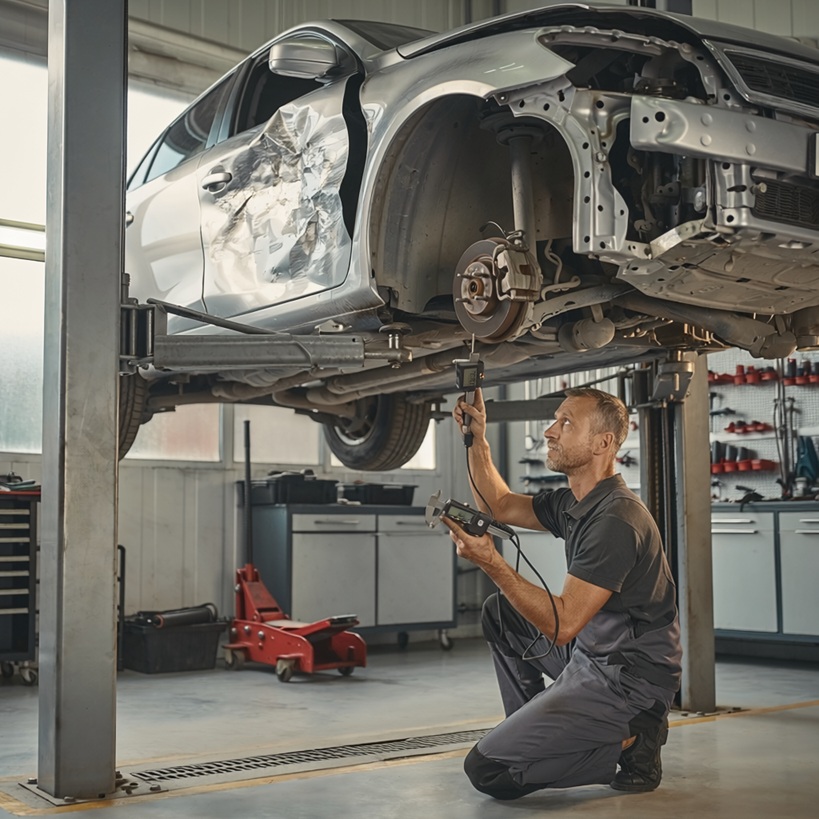
Cat S Damage Evaluating the Decision to Repair or Scrap
17th Jun, 2026
Losing a primary vehicle to a severe traffic collision creates an incredibly complex administrative situation for the registered keeper. Insurance providers immediately implement highly strict assessment protocols to carefully determine the precise severity of the underlying structural failure. Receiving an official structural designation serves as a massive, legally binding warning that the vehicle has sustained fundamental foundational damage.
The central issue rarely focuses entirely on whether the heavily crumpled metal can technically be pulled straight again. The true logistical concern centers entirely on whether executing such a massive, highly expensive repair makes any genuine financial sense for a daily commuter. Making the correct administrative decision involves a highly precise balance between the strict repair budget, absolute vehicle safety, and future resale viability.
It remains entirely essential to understand exactly what happens to a vehicle’s permanent government record when this severe structural marker gets officially applied. This heavy designation securely follows the specific chassis for the absolute remainder of its operational life.
Understanding the True Meaning of Cat S
The official classification system utilizes this specific designation to indicate that a vehicle has suffered severe but technically repairable structural damage. The letter directly refers to the foundational structure, meaning the vehicle has sustained massive impact force to its primary load-bearing skeleton. This severe classification extends far beyond a simple bruised plastic bumper or a lightly scratched passenger door.
Professional insurance assessors meticulously evaluate the ruined vehicle and regularly conclude that the total cost of professional repairs drastically exceeds the current market value. At this specific mathematical juncture, the asset immediately becomes an official structural write-off within the national insurance database. Because the terrible cat S damage is technically repairable under strict engineering guidelines, owners retain the legal option to manage the complex repairs independently.
This specific structural marker automatically becomes a completely permanent, unalterable entry on the official V5C registration logbook. The severe accident history never magically disappears, even if the registered keeper spends an absolute fortune securing structural technicians. The precise details of the foundational failure are securely recorded on the central motor insurance anti-fraud network for all future buyers to investigate.
What Actually Counts as Structural Damage
Structural damage fundamentally involves the heavy, load-bearing parts of the chassis that explicitly provide the vehicle with its basic rigidity and overall strength. The primary structural components operate exactly like the deep concrete foundations and thick load-bearing walls of a modern building. If these critical foundational parts lose their perfect mathematical straightness, the entire surrounding structure immediately becomes fundamentally unsafe to operate.
Typical foundational failures triggering this severe classification involve massive deformation of the thick central chassis rails and heavy engine subframes. These incredibly strong metal beams form the absolute baseline of the car, and any violent twisting completely ruins the vehicle’s safe handling dynamics. Critical suspension mounting points pushed even a few microscopic millimetres out of alignment guarantee the vehicle will never safely track in a straight line again.
Severe collisions that heavily buckle the vital roof pillars or severely crush the reinforced side sills represent catastrophic structural failures. The roof pillars actively prevent the heavy ceiling from collapsing onto the occupants during a terrifying rollover incident. Repairing these heavy foundational elements requires highly specialized metallurgical knowledge and precise alignment capabilities to complete correctly.
The Real Cost of Structural Repairs
Reviewing the final professional estimates for severe structural realignment consistently delivers a massive financial shock to the optimistic registered keeper. Rectifying this extreme level of foundational damage strictly requires a highly specialized industrial body shop equipped to handle severe chassis deformations. Securing time on professional chassis alignment equipment requires a massive financial investment, translating directly to exceptionally high hourly labour rates.
This highly disruptive mechanical operation forces the owner to manage without a vehicle for extended periods while incurring premium specialist labour costs. Sourcing the required replacement structural panels adds another totally massive financial burden to the escalating total repair bill. A heavily buckled primary chassis rail simply cannot be cheaply hammered back into a safe shape.
The dangerously fatigued metal must be precisely cut out and entirely replaced with a brand new, highly expensive genuine manufacturer component. The combined cost of replacement sections, intensive specialist labour, and mandatory four-wheel geometry checks rapidly outweighs the original value of the standard passenger vehicle.
The Insurance Maze for Categorised Vehicles
Standard insurance companies actively construct massive administrative barriers for owners attempting to insure previously categorised vehicles. Many mainstream, highly popular insurance providers will completely refuse basic coverage entirely the exact moment the severe structural marker is successfully detected. This intense industry hesitation leaves the registered keeper scrambling to secure highly specialized alternative policies just to remain legally compliant.
Securing this mandatory coverage forces the vehicle owner to personally fund expensive independent engineer reports to prove roadworthiness. An annual comprehensive insurance policy quote can easily double simply because the permanent structural marker exists on the official national database. The long-term financial punishment of these heavily inflated premiums eventually destroys any theoretical savings gained from retaining the severely damaged salvage.
These strict requirements create a massive administrative nightmare for motorists who simply need reliable, affordable daily transportation. Escaping this heavily inflated insurance bracket is fundamentally impossible as long as the structurally compromised vehicle remains in the driveway.
When Repairing Actually Makes Financial Sense
Executing a massive structural repair only makes genuine financial sense in incredibly specific, exceedingly rare automotive scenarios. For an incredibly rare, highly sought-after vintage classic car, the standard rules of everyday automotive depreciation simply do not apply. In these highly specialized collector circles, executing a flawless structural repair is entirely viewed as a totally necessary part of preserving automotive heritage.
However, for the vast majority of standard modern family vehicles, attempting to execute this massive structural rebuild represents a terrible financial miscalculation. Pouring thousands of pounds into a standard daily commuter vehicle with a permanently ruined structural history guarantees a massive financial loss. Standard passenger cars completely lack the inherent collector value required to justify the extreme costs of precision chassis realignment.
Even if the vehicle is successfully repaired, the unalterable structural designation forever limits its appeal to future buyers. The safest and most financially sound option for standard commuter vehicles consistently remains completely severing ties with the ruined asset entirely.
Why Scrapping Often Makes More Financial Sense
For the vast majority of motorists driving standard modern vehicles, the undeniable financial logic firmly points straight toward official disposal. A pristine vehicle originally worth a substantial amount instantly loses massive market value the moment it receives the severe structural designation. Incredibly few private buyers ever want to pay a premium price for a standard vehicle carrying a highly documented history of severe cat S damage.
Opting for an official scrap car collection instantly resolves the financial dilemma for registered keepers. Nationwide professional networks seamlessly manage the entire process by dispatching standard recovery vehicles directly to the property, completely eliminating expensive private transport costs. Executing this official disposal route ensures the final administrative outcome remains perfectly prompt and secure.
The registered keeper efficiently receives a highly competitive financial transfer based precisely on the heavy industrial weight and salvageable mechanical value of the asset. This securely recovered capital perfectly serves as an excellent financial foundation toward securing a totally pristine replacement vehicle. Utilizing a dedicated disposal network entirely removes the massive administrative burden of dealing with uninsurable, heavily compromised automotive shells.
Legal Obligations and Selling a Categorised Vehicle
Absolute transparency is strictly required by national law if a registered keeper makes the highly questionable decision to fix and sell a structurally categorised vehicle. The current legislation dictates a strict, legally binding requirement to explicitly inform any potential buyer about the severe structural write-off history. Attempting to maliciously hide this massive material fact leads directly to incredibly serious fraud charges under the strict rules of the Consumer Rights Act.
The vast majority of intelligent consumers who notice a permanent structural marker on a digital history check will immediately avoid the vehicle completely. This intense market hesitation strictly forces the private seller to severely slash the asking price just to generate any basic purchasing interest at all. This highly inevitable, massive reduction in final resale value totally eliminates the core financial benefit of ever performing the incredibly expensive repairs.
Conversely, legally processing a heavily damaged vehicle through verified Authorised Treatment Facilities completely ensures all administrative matters are handled in full legal compliance. The licensed facility officially notifies the central government database and promptly provides the highly crucial Certificate of Destruction. This totally vital legal document brilliantly proves the previous registered keeper is absolutely no longer responsible for the ruined vehicle.
The Hidden Risks of Inadequate Repairs
Executing heavy structural work remains a highly regulated engineering discipline specifically because it heavily involves the absolute safety of every single motorist on the road. Modern automotive shells rely entirely on highly advanced sections explicitly engineered to buckle and deform in highly predictable, mathematically perfect patterns. These brilliant safety zones perfectly absorb the massive kinetic energy of a terrifying impact long before it violently reaches the fragile human occupants.
If a structurally compromised vehicle undergoes a cheap, highly inadequate repair process, those critical safety zones instantly become entirely too stiff or dangerously weak. Highly professional body shops absolutely rely on expensive chassis alignment equipment to completely guarantee the heavy frame behaves correctly during a totally unexpected collision. Dangerous amateur repairs consistently lack this absolute microscopic precision, inevitably leading to highly catastrophic structural failures during secondary motorway impacts.
The core safety issue extends far beyond whether the shiny bodywork simply looks acceptable when parked quietly on a residential driveway. It totally concerns whether the compromised safety cell will successfully protect human lives when a massive, violent incident suddenly occurs on a busy carriageway. Saving a tiny amount of money on cheap, unverified labour is absolutely never worth the terrifying risk of operating a fundamentally unsafe vehicle.
Regional Variations in Disposal and Repair
The specific geographical location within the UK drastically alters the complex financial decision-making process regarding heavy structural salvage vehicles. Registered keepers attempting to repair a heavily damaged car within massive urban centers face totally astronomical, highly inflated hourly labour rates. Operating within incredibly busy cities almost always makes choosing to scrap a vehicle the absolute most economical and logical decision available.
Rather than trying to navigate local parts demand or regional scrap metal fluctuations independently, utilizing a nationwide network automatically secures the most profitable outcome. The robust collection system connects the heavily damaged vehicle directly with the specific licensed facility actively willing to offer the absolute best localized rate. This ensures the registered keeper easily receives the highest possible cash payout without ever having to leave their property.
This completely seamless logistical operation makes official disposal an incredibly attractive, completely stress-free option for vehicle owners dealing with unroadworthy frames. Reputable processing networks fundamentally operate to securely remove the highly dangerous asset directly from the driveway while rapidly returning maximum financial capital.
The Environmental Impact of Official Scrapping
Permanently destroying a severely damaged car represents a highly responsible environmental decision rather than a terrible waste of industrial resources. Modern environmental extraction protocols and heavily regulated recycling centers operate with an absolutely incredible, highly refined level of daily efficiency. When a ruined structural shell enters a highly professional facility, it undergoes a meticulous, totally systematic dismantling process rather than simple brute-force destruction.
Highly trained environmental technicians carefully drain and securely capture all dangerous synthetic oils, highly acidic battery fluids, and corrosive brake chemicals. This strictly regulated depollution process actively prevents incredibly toxic chemical compounds from silently leaking into fragile local soil systems or vital regional water supplies. Perfectly pristine mechanical parts entirely unaffected by the massive structural cat S damage are safely removed and professionally tested.
Modern industrial facilities proudly recover an absolutely staggering percentage of the vehicle’s total raw weight during the violent mechanical shredding process. Executing a highly regulated car recycling protocol perfectly ensures these incredibly valuable heavy metals continuously re-enter the global manufacturing sector. This highly efficient, totally circular economy perfectly reduces the highly destructive global need for virgin ore extraction.
Finalising the Decision on a Compromised Vehicle
The highly complex choice between attempting a massive structural repair or securing official disposal usually resolves entirely through basic, uncompromising financial mathematics. If a standard, modern commuter vehicle sustains severe foundational damage, the absolutely correct administrative answer remains firmly pointed toward official, secure destruction. The eventual repair bill will remain completely astronomical, the specialized insurance will stay totally unaffordable, and the final resale value will completely collapse.
Registered keepers feeling totally unsure about their specific situation must carefully calculate the massive total costs highly realistically. They must completely factor in the highly expensive mandatory engineer’s report, the inflated annual premiums, and the severe lack of available precision repair equipment in basic garages. Choosing to scrap my car through official nationwide channels consistently proves the absolute fastest, most highly secure way to completely end the administrative stress.
Eliminating a severely compromised structural shell completely removes a highly dangerous variable from the busy national road network forever. Securing the completely official destruction documentation firmly represents the ultimate legal goal for any highly stressed registered keeper dealing with a catastrophic automotive loss. Utilizing a verified processing network actively ensures absolute compliance with all strict environmental laws while completely maximizing the final financial return.
For highly efficient and legally compliant vehicle disposal, the Scrap Car Network provides fully verified collection services directly across the entire UK.
Registered keepers requiring professional disposal coordination should contact us immediately to correctly arrange a fully compliant, scheduled collection.
Alternatively, dedicated support staff are entirely available at 01772 665 909 to securely manage nationwide vehicle collection logistics.