Category B Scrap: Why You Can’t Re-register These Cars
17th Jun, 2026
When a massive collision destroys a modern automobile, insurance providers instantly implement strict categorisation systems to determine the ultimate fate of the wrecked asset. Severe structural damage initiates an unyielding legal protocol that forever prevents heavily compromised vehicles from returning to the public highway. Generating a category B scrap designation serves as the absolute administrative signal that a vehicle’s foundational safety structure is permanently compromised beyond any acceptable repair threshold.
This specific classification represents the second most severe damage rating within the rigid United Kingdom insurance framework. It enforces a permanent, legally binding ban on repairing the main chassis or attempting to register the vehicle for road use. The regulations governing this designation operate with zero tolerance for advanced welding capabilities or expensive aftermarket replacement panels.
Understanding the complex mechanics behind this extreme classification requires a deep look into modern automotive engineering and strict legislative safeguards. The entire system exists explicitly to protect the wider motoring public from the invisible, deadly dangers of fatigued metal and ruined safety cells. Breaking down the precise legal and environmental processes reveals exactly why the total destruction of the main bodyshell is absolute.
What Makes a Car Category B?
The Association of British Insurers maintains the rigid salvage code that standardises how underwriters thoroughly evaluate wrecked automobiles. A vehicle receives this heavy designation when its primary load-bearing structures have sustained catastrophic, undeniably unrepairable damage. This severe ruling remains firmly in place even if valuable internal components like the infotainment system or transmission are completely untouched.
A structurally compromised chassis functions identically to a heavily cracked eggshell holding heavy internal weight. The exterior might appear perfectly solid after a meticulous cosmetic repair and fresh metallic paint application. However, the moment significant kinetic energy is applied during a secondary impact, the weakened foundational structure will shatter instantly. The core loses its factory-rated rigidity forever, and no application of industrial body filler can restore its original molecular strength.
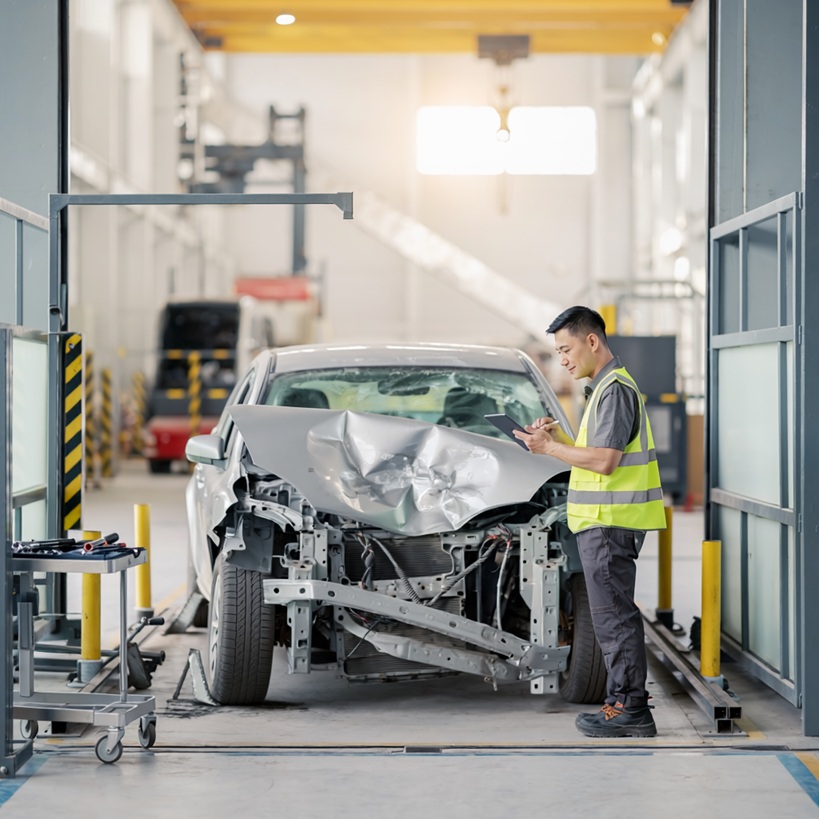
Common accident scenarios triggering this terminal classification involve massive frontal collisions at high motorway speeds. These horrific impacts violently crush the heavy engine block backwards into the primary firewall, utterly destroying the protective passenger safety cage. Side collisions that severely bend the central floor pan or buckle the heavy roof pillars also absolutely guarantee this heavy designation. Prolonged fire damage permanently alters the metallurgy of the thick steel frame, rendering it entirely too brittle to safely support the heavy vehicle dynamics.
The Legal Framework Preventing Re-registration
The central government maintains an unalterable national database specifically tracking every severely damaged vehicle processed within the country. Once a highly trained assessor officially registers the chassis against this severe classification, the digital record is locked securely and permanently. Motorists absolutely cannot simply request replacement paperwork to erase the dark accident history or legally bypass the permanent road ban.
This rigid administrative barrier represents a highly deliberate safety measure designed explicitly to protect innocent consumers from purchasing rolling hazards. The official DVLA notification system ensures that dangerous, heavily fatigued chassis frames are permanently flagged across all national law enforcement and taxation networks. This robust digital safeguard effectively guarantees that properly condemned vehicles cannot quietly slip back into the busy second-hand consumer market.
Insurance providers carry incredibly strict legal obligations upon officially confirming the severe damage status of a client’s asset. They must immediately update the central database and permanently surrender the registration document to the regional transport authorities. This rapid administrative action immediately prevents the registered keeper from carelessly transferring legal ownership to an unsuspecting private buyer.
Why Structural Integrity Matters So Much
The Engineering Behind Modern Cars
Modern automobiles fundamentally operate as highly advanced survival cells explicitly engineered to manage massive collision forces safely. Decades of supercomputer simulations dictate exactly how the heavy metal should crumple to absorb intense kinetic energy before it reaches the vulnerable occupants. Dedicated crumple zones act identically to giant metallic springs, folding in predetermined patterns to slow the deceleration rate perfectly.
The central passenger compartment actively utilizes ultra-high-strength boron steel designed to resist completely against any inward deformation. When a massive impact pushes these core foundational structures beyond their maximum design tolerances, the metal suffers permanent microscopic stress fractures. Severely bent structural rails will collapse entirely differently during a future accident, pushing the steering column directly into the tight cabin.
High-strength steel that has been violently buckled and forcefully pulled straight again becomes dangerously brittle at the exact stress points. The compromised material simply cannot absorb impact energy effectively a second time, leaving the occupants entirely unprotected from blunt force. Sending the ruined shell to an industrial crusher is the only mathematically sound solution for these fundamentally broken structural components.
The Risks of Poor Repairs
The sheer, terrifying danger of compromised structural integrity remains entirely invisible to the untrained naked eye. Highly skilled cosmetic technicians can apply pristine metallic paint and align replacement body panels flawlessly over a completely ruined frame. The dangerous metallurgical fatigue from the original severe impact persists deeply within the core molecular structure regardless of outward appearance.
A perfectly painted, heavily repaired chassis rail will simply snap under extreme pressure rather than folding safely according to brilliant factory specifications. This undeniably catastrophic failure risk forms the absolute baseline reasoning for the strict permanent government road ban. Extensive laboratory crash testing proves repeatedly that straightened metal fails spectacularly at a fraction of the original impact speed.
Attempting to hide severe underlying damage behind shiny new plastic bumpers introduces an unacceptable level of risk to every surrounding innocent motorist. The permanent legal restrictions exist specifically to forcefully remove these dangerous engineering compromises from the active national transportation network. Total destruction of the affected frame completely eliminates the dangerous variable of human error in structural repair attempts.
The Bodyshell Crushing Requirement
The absolute legal mandate to completely destroy the main structural skeleton distinguishes this specific classification clearly within the salvage industry. The law strictly dictates that the compromised bodyshell and the main thick chassis must be physically reduced to raw, unrecognisable scrap metal. Unlike the absolute most severe classification tier, the perfectly functional mechanical parts can actually be legally extracted first.
Highly regulated Authorised Treatment Facilities execute this rigorous destruction process under continuous, strict environmental and governmental oversight. These licensed industrial processing centres must generate official proof that the core structural components have been violently shredded or crushed flat. Operating a strictly legal processing centre means they cannot sell a single salvaged engine component until the dangerous shell is completely eradicated.
This strict destruction rule actively prevents overly ambitious mechanics from attempting unauthorized, highly dangerous backyard rebuilds around fundamentally ruined metal. It completely removes the dangerous temptation for organized criminal networks to execute highly illegal vehicle cloning operations. Vehicle cloning involves stealing the clean, legitimate identity of a destroyed chassis and applying it falsely to a stolen vehicle of the exact same model.
What Happens to the Usable Parts?
The Safe Salvage Process
Condemning the primary structural shell definitely does not automatically mandate the destruction of the perfectly functional mechanical organs. Heavily damaged vehicles routinely contain pristine, high-value components that operate entirely independently of the ruined metal chassis. Because these perfectly functional components hold such immense value in the secondary market, registered keepers often receive surprisingly competitive financial settlements.
Our expansive network of licensed dismantlers actively bids on these specific vehicles strictly to safely harvest the working mechanical parts. Securing a professional collection means the owner effortlessly unlocks the maximum possible financial return from their incredibly tragic accident. This highly regulated extraction process completely guarantees the owner receives a premium valuation while ensuring perfectly safe parts find a sustainable second life.
Licensed dismantling technicians systematically and safely strip the ruined chassis down to the bare metal framework. They carefully extract low-mileage engines, manual transmissions, and undamaged heavy differential units for immediate safe resale. Complex wiring looms, delicate parking sensors, and expensive electronic control modules are rigorously tested and carefully catalogued to ensure they operate perfectly.
A Costly Mistake to Avoid
Registered keepers occasionally make the massive, highly illegal mistake of handing their condemned vehicle over to unlicensed rogue traders for a quick cash payout. These completely unregulated, shady operators frequently patch up the severe structural damage and illegally sell the rolling safety hazard to unsuspecting motorists. Unscrupulous operators absolutely thrive in the unregulated areas of the salvage market by preying on completely uninformed vehicle owners.
When the transport authorities inevitably discover the fraudulent, highly dangerous vehicle back on the active road network, the massive legal liability often traces straight back to the original registered keeper. Failing to secure an official Certificate of Destruction leaves the original owner entirely exposed to severe government fines and potential criminal negligence charges.
Executing a strictly legal disposal through a verified processing facility remains the absolute best defense against massive future legal headaches. A simple, compliant extraction completely severs all administrative ties to the ruined vehicle and securely finalizes the insurance process. Attempting to bypass the legal disposal network to save a tiny bit of time almost certainly guarantees a catastrophic financial penalty.
The Difference Between the Write-Off Categories
Category A and B (The Unrepairables)
The official national classification system utilizes four distinct tiers to carefully dictate the exact legal handling of heavily damaged assets. Category A represents an absolute total loss where extreme heat or sheer impact force has severely compromised every single component. This terminal tier legally demands the complete incineration and industrial shredding of the entire vehicle, including the stereo and seating.
The subsequent classification safely allows for the systematic extraction of functional parts, provided the main shell undergoes strictly verifiable destruction. Category S indicates serious structural damage that is technically and legally repairable by highly skilled professional technicians. Category N covers strictly non-structural damage like heavy cosmetic hail impacts or incredibly massive electrical faults.
Category S and N (The Repairables)
While these specific lighter category vehicles can legally return to the road, managing the complex repairs and sourcing expensive parts creates a massive logistical nightmare for the owner. Many motorists intelligently choose to avoid this massive headache entirely by securing a highly competitive valuation and rapid scrap car collection for these lighter categories too. The logical progression across these distinct tiers perfectly reflects the varying levels of danger and sheer logistical hassle posed by the damaged chassis.
The Role of Authorised Treatment Facilities
Operating a heavy industrial disposal site logically requires constant, rigorous compliance with highly complex environmental protection protocols. Strict legislation strongly mandates that only highly trained, authorized personnel can physically process end-of-life vehicles due to the extreme hazardous waste risks. These specialized processing centres must meticulously extract the dangerous, toxic elements before any heavy metal shredding can safely begin.
The initial depollution phase legally involves completely draining highly corrosive brake fluids, explosive battery acids, and synthetic engine lubricants. Technicians must safely trigger and effectively neutralize all explosive airbag detonators to prevent deadly accidents inside the heavy metal crushers. Deciding to strictly scrap a vehicle legally guarantees the heavily damaged asset is handled exclusively by technicians thoroughly trained in these specific hazardous material protocols.
Once the toxic chemical elements are safely neutralized, massive industrial shredders violently reduce the bare shell into fist-sized metallic chunks. The facility administrators then immediately update the digital registry, officially confirming the total destruction of the primary structural frame. This legally binding administrative workflow absolutely ensures a completely secure, highly environmentally clean end to the vehicle’s long operational lifecycle.
Common Myths About These Vehicles
Incredibly dangerous misconceptions consistently circulate regarding the legal loopholes allegedly surrounding severely classified salvage vehicles. A highly persistent myth incorrectly suggests that enthusiastic mechanics can legally buy the ruined shell to build a dedicated racing car strictly for private track days. While mechanics can safely and legally use the salvaged engine in a different track chassis, rebuilding the heavily compromised shell itself remains strictly and heavily prohibited.
Another widespread, highly foolish fallacy involves exporting the ruined chassis overseas to clear its dangerous digital history entirely. Modern developed nations actively and securely share comprehensive vehicle history databases on a daily basis with border control agencies. International customs agents will instantly flag and heavily reject any vehicle identification number marked officially as a category B scrap vehicle within the United Kingdom.
Optimistic motorists often incorrectly believe that incredibly minor structural damage completely falls outside the strict scope of the permanent destruction mandate. By definition, receiving this severe, heavy classification definitively proves the foundational damage heavily exceeds any mathematically safe repair threshold. Selling the intact metal shell strictly for cheap replacement repair panels is a severe criminal offence that carries massive financial penalties for the licensed facility.
Environmental Benefits of Proper Processing
Mandating the absolute, total destruction of a large automotive frame initially appears like a massive waste of heavy industrial resources. Modern heavy recycling facilities operate with incredible, highly refined efficiency to recover massive volumes of highly valuable raw material. The intelligent, methodical dismantling process actively transforms localized environmental hazards into highly sustainable commodities for the global commercial market.
Industrial electromagnets brilliantly separate the heavy ferrous steel from the highly valuable lightweight aluminium and copper wiring during the violent shredding phase. These sorted raw materials are securely shipped directly to industrial foundries and rapidly smelted down into pristine metal ingots. Executing proper, highly regulated car recycling perfectly ensures these incredibly valuable metals actively re-enter the manufacturing sector in a matter of weeks.
This highly efficient, totally closed-loop system massively reduces the highly destructive global need for virgin ore extraction. A single properly processed vehicle easily provides enough high-quality recycled steel to manufacture hundreds of brand new commercial appliances. The strict, unyielding environmental protocols simultaneously completely prevent toxic synthetic oils from slowly destroying local soil and vital groundwater reserves.
How Insurance Assessors Make the Call
The definitive, heavy ruling to permanently condemn a structural chassis relies entirely upon highly objective, mathematically precise engineering measurements. Independent mechanical engineers meticulously evaluate the exact severe deformation of critical load-bearing members strictly against original factory blueprints. They aggressively utilize incredibly advanced laser diagnostic tools to precisely detect microscopic deviations in the chassis alignment that remain completely invisible to the naked eye.
Assessors thoroughly investigate the complete, uncompromised integrity of the supplementary restraint systems immediately following the violent impact. Deployed side curtain airbags, fully fired seatbelt pretensioners, and shattered structural mounting points all heavily dictate the final binding engineering verdict. The rigorous digital evaluation prioritizes absolutely uncompromised public safety completely above all other metrics, totally ignoring any sentimental value attached to the asset.
While the primary administrative decision rests entirely on absolute structural safety, basic parts economics occasionally dictate the ruling in borderline damage cases. The totally astronomical cost of securely sourcing specialized high-strength steel replacement panels often decisively pushes an aging vehicle firmly past the threshold of economical repair. They update the secure DVLA notification system instantly once the highly trained professional engineer completely confirms the compromised state.
The Future of Vehicle Write-Off Categories
The rapid, relentless evolution of complex automotive technology continuously forces the insurance industry to aggressively adapt its strict structural assessment criteria. Modern electric vehicles present incredibly unique and highly dangerous challenges due to their incredibly heavy, high-voltage lithium-ion battery packs. Severe damage to the reinforced floor pan very often severely compromises the complex battery system, instantly introducing severe thermal runaway risks that strictly require highly specialized, immediate extraction.
Licensed processing facilities within our professional extraction network are fully equipped right now to safely neutralize and correctly dismantle these highly dangerous modern electric vehicles. This immediate, highly technical processing capability completely and securely removes the extreme, immediate fire hazard directly from the registered keeper’s driveway. Relying on an advanced disposal network essentially guarantees absolute compliance with the absolute newest environmental extraction regulations.
Advanced driver assistance systems amazingly add another massive, complicated layer of assessment complexity following a severe frontal collision. Modern vehicles rely extremely heavily on complex forward cameras, incredibly delicate radar units, and sensitive safety sensors. Structural damage that slightly misaligns these delicate electronic safety nets completely compromises the modern vehicle’s life-saving capabilities, firmly reinforcing the absolute need for total bodyshell destruction.
Final Thoughts on Vehicle Disposal
Managing a heavily, dangerously compromised vehicle strictly demands absolute, total adherence to strict administrative and robust environmental protocols. The permanent, highly rigid prohibition on re-registering category B scrap vehicles serves as a totally vital, uncompromising safeguard for the wider motoring public. These rigorous legal laws wonderfully and successfully isolate completely fatigued metal and ruined safety cells far away from the active, busy highway system.
The entire protective framework actively relies extremely heavily upon a multi-layered enforcement strategy executed flawlessly by insurance assessors and environmental agencies. Submitting the final administrative paperwork correctly through the DVLA notification system completely neutralizes the immediate threat of highly fraudulent resale or dangerous backyard structural repairs. Securing the completely official destruction documentation firmly represents the ultimate administrative goal for any highly stressed registered keeper dealing with a catastrophic automotive loss.
Handling the stressful aftermath of severe structural damage heavily requires highly decisive action and strict compliance with official governmental disposal networks. Choosing to professionally scrap a vehicle through highly experienced, fully licensed processing facilities entirely eliminates all future legal liability. This intelligent, safe decision also perfectly guarantees the highly safe, completely environmental extraction of all terrible hazardous materials.
For perfectly efficient and completely legal vehicle disposal, the Scrap Car Network provides highly licensed, exceptionally secure extraction services directly across the entire UK.
Registered keepers heavily requiring highly professional extraction advice should speak with us immediately to correctly arrange a totally secure, safe collection.
Alternatively, dedicated support staff are entirely available at 01772 665 909 to securely coordinate incredibly heavy-duty recovery logistics right now.