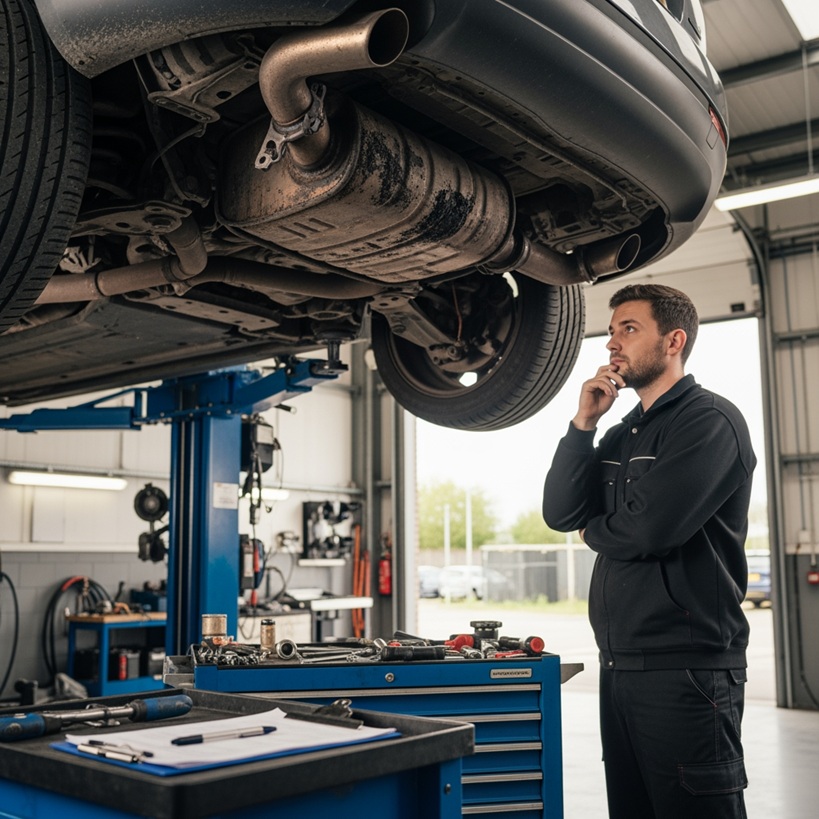
DPF Filter Replacement vs Scrap: 2026 ULEZ-Era Decision Guide
12th Jun, 2026
The diesel particulate filter sits at the absolute heart of the most expensive mechanical decision facing diesel car owners in the UK today. With Ultra Low Emission Zones (ULEZ) and Clean Air Zones (CAZ) expanding aggressively across major cities, the financial logic of maintaining an older diesel has shifted dramatically. A failed DPF is absolutely no longer a simple repair. It is a massive red flag indicating that the vehicle has reached a critical financial crossroads. In the 2026 landscape, where diesel car registrations have reached historic lows, the choice between authorizing a massive repair or walking away is often the difference between a smart investment and a severe financial loss.
Think of a DPF exactly like the internal bag in a high-powered vacuum cleaner. Its sole purpose is to catch the highly toxic soot so it does not blow directly out into the local atmosphere. Once that filter is permanently clogged with hardened ash and the restrictive limp mode light illuminates on the dashboard, the engine literally cannot breathe. For the vast majority of older vehicles, this specific blockage is entirely terminal because the staggering cost of the replacement part heavily exceeds the actual functioning value of the entire car. This guide provides the objective technical and financial data required to help owners navigate the DPF filter replacement vs scrap decision, determining if an aging diesel is worth saving or if securing a professional disposal valuation is the smartest move for the household budget.
Understanding DPF Failure Costs in 2026
The average DPF replacement cost represents one of the steepest, most terrifying repair bills in modern UK motoring. Main dealer quotes typically range from £1,500 to £3,000 for the parts and the specialist labour combined. This exceptionally high cost is driven almost entirely by the presence of highly valuable precious metals found deep inside the internal filter matrix, such as platinum and palladium, which are absolutely required to chemically react with and neutralize the toxic exhaust gases.
According to recent early 2026 Independent Garage Association (IGA) labour rate surveys, UK independent garages average between £70 and £120 per hour. However, franchised main dealers operating in central London can easily exceed £200 per hour. A DPF replacement is rarely just a simple mechanical part swap. It requires several hours of complex computer diagnostics and deep software recalibration to ensure the engine control unit correctly recognizes the brand-new component.
While cheaper aftermarket filters are occasionally available for £400 to £800, they notoriously lack the exact same dense precious metal content as original factory parts. This specific lack of quality frequently leads to highly expensive repeat failures within six months because the cheaper filter simply cannot handle the extreme, sustained heat required during the internal regeneration process.
ULEZ Compliance and Diesel Vehicle Values
The aggressive expansion of the London ULEZ and the rapid introduction of similar strict charging schemes in Birmingham, Bristol, and Glasgow have fundamentally decimated the used diesel car market. To legally enter these heavily regulated zones without paying a severe daily £12.50 charge, a diesel car must strictly meet Euro 6 emission standards. The vast majority of diesel vehicles manufactured before September 2015 do absolutely not meet this requirement. For a driver who commutes into a major city five days a week, the annual cost of these unavoidable charges easily exceeds £3,000.
Used vehicle values reflect this harsh economic reality instantly. A pre-2015 diesel suffering from a failed DPF is virtually impossible to sell on the open private market because any potential buyer faces both a massive initial repair bill and a relentless daily tax just to drive it to work. Market depreciation for these specific non-compliant models has accelerated significantly.
However, the baseline scrap value of these exact same cars remains highly stable because it is based strictly on raw material weight and global demand. As of early 2026, UK raw scrap prices generally track securely between £140 and £260 per tonne. Securing this guaranteed, secure electronic payment from a licensed recycler is almost always significantly higher than the net profit an owner would make after attempting to fix and privately sell a heavily penalized, non-compliant car.
When Replacement Makes Financial Sense
Authorizing a massive DPF replacement proves financially worthwhile only under a very narrow set of highly specific circumstances. If the vehicle is less than seven years old, has covered strictly under 80,000 miles, and is fully Euro 6 compliant, the heavy repair is usually a viable, sensible investment. In these specific cases, the relatively modern car still holds a significant residual market value that is well worth protecting. A Euro 6 diesel is also entirely exempt from CAZ charges, making it vastly more desirable and practical for daily urban drivers.
Owners must carefully calculate the true cost per year of continued ownership to justify a massive DPF replacement cost. If an owner spends £1,500 on a guaranteed repair and fully expects the mechanically sound car to serve them flawlessly for three more years, the true cost is £500 annually. This is often significantly cheaper than the heavy monthly finance payments required for a brand-new replacement vehicle. However, this specific financial logic only holds true if the rest of the car is meticulously maintained. If the vehicle has a patchy service history or has frequently missed vital oil changes, the brand-new DPF will almost certainly clog again rapidly because the aging engine is likely producing excessive soot from heavily worn fuel injectors or a failing turbocharger.
The Case for Scrapping Instead
Scrapping becomes the absolute most logical choice when the DPF failure is clearly a glaring symptom of a much larger, terminal mechanical problem. In the vast majority of high-mileage cases, a DPF rarely fails in complete isolation. Usually, it is the final result of a devastating chain reaction. A leaking high-pressure fuel injector or a heavily worn turbocharger allows unburnt engine oil to leak directly into the hot exhaust system, which then rapidly clogs the sensitive filter matrix. If an owner pays to fix the DPF but ignores the failing turbocharger, the brand-new filter will be completely ruined within a matter of weeks.
Consider an objective case study of a fleet operator running a 2012 diesel delivery vehicle with 140,000 miles on the clock. Authorizing a £1,800 repair bill for a new filter is a terrible financial gamble. Even after the massive fix, the operator is still relying on an incredibly old vehicle where the heavy-duty clutch, the complex suspension, and the vital cambelt are all at severe risk of imminent failure.
Scrapping provides a totally clean, financially sensible break. The owner secures a guaranteed payout and the immediate removal of the failing vehicle from the commercial yard without the immense hassle of dealing with speculative tyre kickers or failed private sales. Utilizing a professional scrap car collection completely simplifies this process by coordinating the heavy recovery logistics and all mandatory DVLA paperwork in one highly efficient move.
Calculating Your Break-Even Point: The 50% Rule
The core mathematics of deciding between a massive DPF repair and professional scrapping centres entirely on a highly reliable industry formula known as the 50% rule. You must strictly divide the total, itemised repair cost by the vehicle’s actual flawless market value. If this resulting ratio exceeds 0.5, or 50%, walking away is almost universally the smarter financial move.
For example, if a heavy diesel estate car is worth a maximum of £2,500 when running perfectly, and the firm garage quote to fix the DPF is £1,500, the owner is attempting to spend 60% of its total value on replacing a single exhaust component. This is financially reckless and almost guarantees the owner will be heavily out of pocket.
Another vital factor to calculate is the impact of expanding emission zones. An owner might spend £1,200 on a replacement filter only to find that their specific borough is being absorbed into a new Clean Air Zone three months later. They have essentially spent over a thousand pounds fixing a vehicle they ultimately cannot afford to commute in due to the daily £12.50 charges. Factoring in these relentless daily running costs is absolutely critical when calculating the true break-even point for an aging diesel.
Regional Considerations and ULEZ Expansion
Geographical location in the UK significantly alters the financial logic of this decision. For drivers living or working in major metropolitan areas like London, Manchester, or Birmingham, the intense regulatory pressure to abandon older diesels is simply too high to ignore. The compounding daily charges destroy the financial viability of authorizing massive repairs on non-compliant chassis.
However, even for rural drivers located in mid Wales or the Scottish Highlands where Clean Air Zones are currently unlikely to be introduced, the core financial logic remains remarkably similar. While an older diesel might still offer decent fuel economy on long, uninterrupted rural journeys, a sudden £2,000 DPF repair bill still completely shatters the economic reality of keeping the vehicle. Regardless of the postcode, if the repair cost vastly exceeds the baseline value of the heavy metal, choosing to scrap my car ensures the household budget is protected from a massive, unpredictable loss.
As the UK motoring landscape looks firmly toward the 2030 ban on new petrol and diesel sales, the second-hand market value of heavily polluting, non-compliant diesels will continue to plummet. Scrapping a failed diesel today allows owners to rapidly reinvest that guaranteed capital into a modern, future-proof vehicle before the value of their old, failing car drops to absolute zero.
Why Alternative Disposal Options Often Fail
When faced with a massive DPF bill, owners often frantically search for alternative, cheaper disposal routes, but these almost always turn into costly traps. The absolute most dangerous option is attempting an illegal “DPF delete.” UK law is incredibly strict regarding emission systems. It is entirely illegal to physically remove the internal filter matrix and remap the engine software to bypass the sensors. Since 2014, MOT testers have been legally required to conduct visual checks for the presence of a factory DPF. If a filter has been visibly tampered with or removed entirely, the car will instantly fail its MOT, and the driver risks a massive fine of up to £1,000 for operating an illegally modified vehicle on public roads.
Attempting to sell the vehicle privately with heavily declared DPF faults is a deeply frustrating experience. The private market is incredibly hostile to vehicles requiring massive repairs, as buyers will aggressively haggle the price down well below the car’s actual raw metal value to offset the looming DPF replacement cost. Similarly, relying on part-exchange values at main dealerships for heavily faulty vehicles routinely results in shockingly low offers, as the dealership must instantly factor in the massive cost of fixing the car before they can legally resell it.
For these specific reasons, relying on verified scrap car dealers is almost always the absolute cleanest, safest, and most financially transparent exit strategy for a vehicle suffering from a terminal exhaust failure.
Environmental Impact of Both Choices
Scrapping an old, failing diesel with a heavily compromised DPF is undeniably the most environmentally sound choice an owner can make. Older, failing engines produce significantly higher levels of highly toxic nitrogen oxide (NOx) emissions and dangerous particulate matter than modern equivalents.
By choosing to use a fully licensed Authorised Treatment Facility (ATF), owners ensure the heavy vehicle is processed exactly according to the highest, strictest environmental standards. In strict line with the UK and EU End-of-Life Vehicle (ELV) Directive, all authorised facilities must legally meet a massive 95% recovery and recycling target. This strict mandate ensures that the heavy steel chassis, the lightweight aluminium engine block, and even the highly valuable precious metals locked inside the shattered turbo bearings and the DPF casing itself are meticulously reclaimed and recycled.
When you choose to rely on professional car recycling networks, you guarantee that the old diesel is turned directly back into raw manufacturing materials rather than contributing further to severe local air pollution. Once the heavy vehicle is safely collected, the ATF will issue an official Certificate of Destruction (CoD) within seven days to completely close the legal loop with the DVLA, firmly removing all future liability from the previous owner.
Conclusion
The final verdict on DPF filter replacement vs scrap hinges entirely on a cold, objective financial calculation rather than emotional sentiment. If the vehicle is a relatively new, Euro 6 compliant model boasting a meticulously stamped service history, authorizing the repair is generally a wise strategy to preserve the initial investment. However, for the vast majority of UK drivers facing catastrophic DPF failure on high-mileage vehicles over ten years old, professional scrapping represents the absolute most profitable and totally stress-free path forward.
The guaranteed scrap value of a heavy diesel car represents solid, reliable money in the bank. It instantly removes the terrifying risk of further mechanical failures and completely eliminates the heavy, ongoing burden of aggressive ULEZ charges and monthly insurance premiums. By acting highly decisively, owners completely avoid the dangerous “sunk cost” trap of paying thousands of pounds for exhaust repairs that simply do not fix the underlying, terminal engine wear.
If the strict financial numbers confirm it is finally time to walk away from your diesel headaches, a verified vehicle scrapper can provide a guaranteed, weight-based valuation instantly.
For expert advice on managing the specific DVLA paperwork for your non-runner, please feel free to contact us through our portal, or call our dispatch team directly at 01772 665 909 to arrange a highly secure, fully compliant collection today.