Seized Engine Scrap Value vs Replacement Cost: UK Comparison
12th Jun, 2026
A seized engine represents arguably the single most expensive, catastrophic mechanical failure a driver will ever face. When the heavy internal components of your motor lock solid, the vehicle is effectively grounded until you commit to a massive financial investment. This sudden, jarring failure almost always forces a highly stressful choice between authorising a staggeringly expensive repair or simply walking away and claiming the residual scrap value.
An engine is the absolute beating heart of your car. Seizing is much like a massive cardiac arrest where the internal metal parts have actually fused together under extreme heat. Understanding the true, itemised cost of mechanical restoration versus the immediate financial return from a licensed recycler is the absolute only way to protect your household budget from a disastrous “money pit” scenario.
What Actually Happens When an Engine Seizes
Engine seizure occurs when internal metal components physically lock together because of extreme heat, friction, and a total lack of lubrication. This catastrophic event usually happens when the aluminium pistons expand and literally weld themselves to the steel cylinder walls. Alternatively, the main crankshaft bearings can overheat, spin out of position, and fuse solid.
Once this intense metal-on-metal welding takes place, the engine is completely dead. It cannot be turned by the heavy-duty starter motor, and it cannot even be rotated manually using a long mechanic’s breaker bar.
While some optimistic internet forums suggest “unseizing” a locked engine by pouring penetrating oil or diesel down the spark plug holes, this is almost never a viable, permanent fix. The delicate internal machined surfaces are usually so heavily scored and structurally damaged that the engine would require a total, stripped-down rebuild. This level of extreme machine shop work is frequently more expensive than simply sourcing a completely different replacement unit.
The Causes: Oil Starvation and Thermal Breakdown
Understanding exactly why the engine died helps clarify why it cannot simply be patched up. The most frequent culprit is total oil starvation. If the internal oil pump fails, or if the vehicle is driven with no oil in the sump, the protective microscopic barrier of lubrication vanishes instantly. The resulting friction generates thousands of degrees of heat within seconds.
Severe overheating is another massive killer. If a water pump shatters or a radiator hose blows at motorway speeds, the engine block rapidly loses its ability to shed heat. The intense thermal expansion causes the internal moving parts to grow larger than their finely machined tolerances allow, leading to an immediate, violent lock-up.
Finally, a snapped timing belt is a frequent cause of sudden death in interference engines. When the belt snaps, the internal timing is lost, and the heavy pistons smash violently into the open valves at thousands of revolutions per minute. This often shatters the pistons, bends the connecting rods, and cracks the main engine block beyond any hope of economic repair. At this stage, the engine loses its salvage value as a spare part and becomes purely worth its raw recyclable metal weight to an Authorised Treatment Facility.
Current UK Scrap Values for Cars with Seized Engines
Even if your car cannot move an inch under its own power, it still retains significant financial value based entirely on its raw material weight. Once a car requires repairs that exceed its market value, professional buyers transition from valuing it as a usable vehicle to valuing it as heavy, recyclable metal.
Steel, aluminium, and copper prices fluctuate daily on the global commodities market, which directly influences the quote you will receive. As of early 2026, scrap prices generally track between £140 and £260 per tonne, depending heavily on daily industrial demand and the specific region of the UK.
For a typical small city car like a Ford Fiesta, which weighs approximately 1.1 tonnes, this mathematical formula results in a raw value of around £150 to £200. Conversely, a heavy luxury SUV like a Range Rover, weighing roughly 2.5 tonnes, can easily reach over £500 in raw material value alone. Determining your exact seized engine scrap value provides a solid, guaranteed baseline figure to help you weigh your options accurately.
Engine Replacement Costs: The Real Numbers
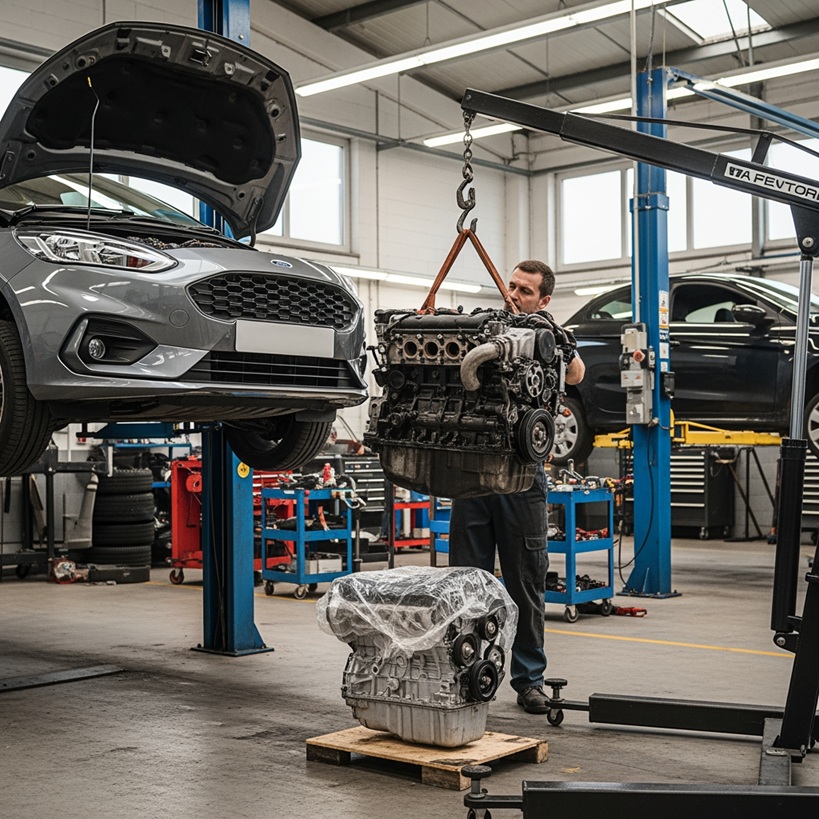
Replacing a modern, heavily sensor-laden engine is a massive, highly complex job that requires specialized lifting tools and dozens of hours of intensive labour. The reality of the engine replacement cost UK market often shocks vehicle owners. For a standard, non-performance hatchback, a professionally reconditioned engine unit alone might cost anywhere between £1,000 and £2,500.
However, the raw engine block is just the beginning. The labour charges for disconnecting the old engine, safely hoisting it out, and painstakingly refitting the new unit typically add another £500 to £1,500 to the final garage bill.
You must also rigorously account for the mandatory ancillary costs. A replacement engine always requires fresh premium oil, new coolant, replacement filters, and a brand-new timing belt kit before it can be started safely. If you are dealing with a premium German brand or a highly complex modern diesel engine, the total invoice can easily climb well past £4,000 before the car even leaves the workshop.
The Used Engine Market Risks
To avoid these massive bills, many owners consider buying a cheap, used engine directly from a local breaker’s yard. While this initially seems like a brilliant cost-saving measure, it represents a massive financial gamble. Buying a palletised engine means you cannot hear it run, test its compression, or verify its true mechanical health.
Verifying the actual mileage and authentic service history on a used engine is incredibly difficult. Furthermore, used engines typically only come with a highly restrictive 30-day parts warranty.
If your mechanic installs that cheap used engine and it immediately develops a severe bottom-end knock on the first test drive, the breaker’s yard might supply another replacement block. However, they will absolutely not cover the £800 labour bill your mechanic will charge you to remove the faulty engine and fit the second one. Drivers who take this stressful gamble and end up paying for heavy labour twice frequently end up calling a professional scrap network to clear the car anyway, just thousands of pounds poorer.
The Break-Even Analysis: The 40% Rule
The absolute smartest way to navigate this crisis is to look strictly at the value of the car once it is fully fixed. A highly respected industry rule of thumb is that if the total estimated repair cost exceeds 40% of the car’s flawless working value, you should seriously consider retiring it.
For example, spending £2,000 to fit a reconditioned engine into a high-mileage family estate car that is only worth £3,500 on a good day is a massive, high-risk gamble. The repair does not magically make the car worth £5,500. It merely restores it to its £3,500 baseline, leaving you heavily out of pocket.
If you are facing this exact dilemma, you can efficiently scrap my car to extract its remaining metal value rather than risking thousands of pounds on a vehicle that is clearly reaching the end of its natural lifespan.
The Sunk Cost Fallacy: A Cautionary Case Study
Emotional attachment to a reliable old car often completely clouds basic financial logic. Owners frequently fall victim to the sunk cost fallacy, believing that because they recently paid for new tyres or a fresh MOT, they must fix the engine to protect their previous investment.
Consider a real-world case study involving a driver who absolutely refused to let go of an aging Rover 75. When the head gasket failed and the engine seized solid, the owner spent £1,800 putting a reconditioned heart into the car, convinced it would provide another decade of motoring. Exactly three weeks after the new engine was fitted, the automatic gearbox suffered a massive internal failure. The owner ended up scrapping the car with a nearly new engine trapped inside, ultimately losing over £2,000 in the process. Repairing an engine absolutely does not reset the clock on all the other aging, fatigued components.
Hidden Costs That Swing the Decision
Beyond the terrifying initial garage quote, there are several hidden, accumulating costs that heavily influence the final decision. The massive opportunity cost of vehicle downtime is rarely calculated properly. A complex engine swap can easily leave your car trapped in the workshop for three to four weeks while parts are sourced.
During this extended downtime, you must fund expensive daily rental cars, pay for peak-hour trains, or rely on expensive taxis to manage your daily life. This can easily add hundreds of pounds to the true engine replacement cost UK calculation.
Furthermore, cars that have suffered catastrophic, documented engine failures often suffer from accelerated depreciation. Future buyers are inherently suspicious of vehicles that have undergone massive aftermarket heart transplants, meaning the car will likely be harder to sell down the line anyway.
Regional Variations and Non-Runner Logistics
If you decide that repair is unviable, you must understand how local logistics impact your final financial return. Scrap metal values are absolutely not uniform across the entirety of the UK. In highly congested urban areas like central London, the sheer difficulty of dispatching a heavy recovery truck down narrow, restricted streets can occasionally lower the net offer slightly due to massive transport overheads.
Conversely, industrial heartlands in Northern England or the Midlands often boast a high concentration of massive processing plants. This heavy local competition frequently leads to significantly more competitive raw metal rates.
When you decide to rely on reputable scrap car dealers, the specific logistics of your driveway matter immensely. Because a seized engine means the wheels might also be locked if the transmission is engaged, the recovery driver must deploy specialist heavy winches to drag the dead weight onto the flatbed.
Environmental Angle: 95% Material Recovery
Many owners feel a deep sense of guilt about sending a visually tidy car to the crusher simply because the engine died. However, scrapping a non-runner is actually a highly responsible, ethical choice for the planet.
Modern recycling facilities are incredibly efficient marvels of engineering. In strict line with the UK and EU End-of-Life Vehicle (ELV) Directive, all authorised facilities must legally meet an aggressive 95% recovery and recycling target for every single vehicle processed.
By choosing to arrange a professional scrap car collection, you ensure the dead engine is handled safely. Highly trained technicians drain the toxic, degraded oil from the shattered block, siphon the highly corrosive coolant, and safely extract the heavy lead-acid batteries. Choosing a fully verified vehicle scrapper guarantees these dangerous chemicals are neutralised safely without ever harming the local water table, turning a dead engine block directly back into raw aluminium and steel.
Dealing with Outstanding Vehicle Finance
A major complication arises if the vehicle with the dead engine is still actively tied to a financial agreement, such as a PCP or Hire Purchase contract. Legally, you absolutely cannot scrap a vehicle that technically belongs to a financial lender.
Unfortunately, standard Guaranteed Asset Protection (GAP) insurance strictly covers theft or total loss collisions; it almost never covers catastrophic mechanical failure. If the engine dies, you remain entirely liable for the outstanding balance of the loan.
You must contact the finance company immediately to discuss your options. You will typically need to settle the outstanding balance in full from your own savings before you can legally transfer the title to a recycling facility. Leaving a heavily financed, non-runner to rot on a residential driveway will eventually lead to severe credit score damage and aggressive debt collection.
Making Your Decision: A Practical Framework
Making the final call on a dead engine requires cold, hard mathematics rather than emotional nostalgia. You need a structured, step-by-step framework to arrive at the correct decision.
First, secure a firm, fully itemised, written quote from a trusted garage for a complete engine replacement, including all mandatory ancillaries and VAT. Do not rely on verbal estimates.
Next, secure a firm, guaranteed seized engine scrap value based on the vehicle’s exact current location and weight. This provides you with two absolute, factual numbers to compare.
If the car is more than ten years old, suffers from creeping structural rust, or has over 100,000 miles on the clock, the cost of a replacement engine will almost universally exceed the value it adds to the aging chassis. When you utilize a fully licensed car recycling service, you secure a guaranteed electronic payment, stopping the relentless drain of ongoing road tax, monthly insurance, and expensive garage storage fees.
Conclusion
Handling a catastrophic engine failure is undoubtedly one of the most stressful experiences a driver can face. However, the situation demands strict financial logic. Throwing thousands of pounds at a depreciating asset is rarely a sound household investment, especially when the vehicle’s surrounding components are equally aged and prone to imminent failure.
By thoroughly assessing the true cost of repair and weighing it directly against a guaranteed metal valuation, the correct path usually becomes incredibly clear. Cutting your losses early, reclaiming your driveway space, and putting that guaranteed capital toward a significantly more reliable replacement vehicle is almost always the smartest move.
If you have carefully run the numbers and decided to stop throwing good money after bad, Scrap Car Network can efficiently connect you with local buyers to arrange a fully compliant collection.
To discuss the specific winching requirements for your non-runner, please don’t hesitate to contact us through our portal, or call our dispatch team directly at 01772 665 909 to arrange a secure collection for your vehicle.