Family Fleet Scrap: 3+ Vehicle Package Deals and Discounts
2nd Jun, 2026
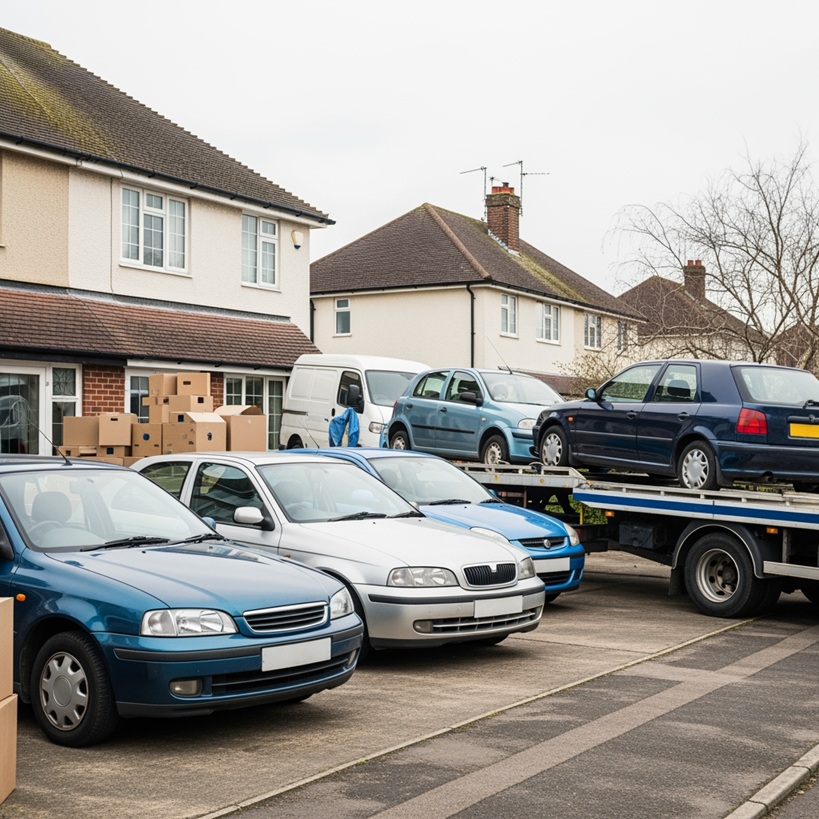
Most households do not just own one single car anymore. Between the daily commuter, the partner’s runabout, the aging estate car the kids learned to drive in, and perhaps a tired van for the family business, properties quickly fill up with metal. It is certainly not unusual for a single household to have three, four, or even more vehicles parked out front.
When these cars reach the end of their useful life simultaneously, families face a massive logistical headache. Figuring out how to dispose of several vehicles at once can feel incredibly overwhelming, especially when trying to coordinate multiple collections and massive stacks of DVLA paperwork.
Handling a family fleet scrap operation requires a structured approach. By organising the disposal as a single group, owners can drastically streamline the collection process, reduce administrative stress, and occasionally secure slightly better logistical terms. It is the automotive equivalent of handling your heavy lifting in one single trip.
Why Multiple Vehicles End Up Needing Scrapping Together
Life has a funny way of clustering problems together. You might find yourself needing to scrap multiple family cars at the exact same time for several different reasons. Downsizing is a massive trigger for this situation. When older couples finally decide to move from a large family home into smaller accommodation, they simply cannot take multiple unused vehicles with them.
The most practical, stress-free solution is to clear the driveway entirely before the moving vans arrive. Another common scenario is the dreaded MOT cluster effect. If a household is running three older vehicles, there is a very real chance they might all fail their annual inspections with massive repair bills in the same month.
When the cost of welding and replacing emissions systems exceeds the value of the cars, the most logical financial decision is to cut your losses and arrange for disposal. Forgotten project cars also contribute heavily to this issue. It starts with one broken hatchback saved for spare parts, and five years later, the side garden looks like a small breaker’s yard.
How Multi-Vehicle Scrap Pricing Actually Works
Pricing models shift slightly when you are offering several vehicles from a single postcode. However, there are no magic multipliers. The fundamental value of any end-of-life vehicle is always determined by raw metal weight. A heavy family estate car contains significantly more recyclable steel and aluminium than a compact city runabout.
The financial flexibility in a grouped deal comes entirely from the logistics. Sending a heavy recovery truck to collect one vehicle costs the operator significant money in diesel, insurance, and driver wages. Collecting three vehicles from the exact same address drastically reduces those specific overheads.
Think of the recovery truck like a standard taxi cab. The meter is running and costing the operator money regardless of whether there is one passenger in the back or four. Filling the empty space on the transporter makes the entire journey highly efficient for the driver. When you arrange a collection through a reputable car scrappage facility, those logistical transport savings are factored into the overall valuation of the group.
Package Deal Structures: What Is Actually Available
The automotive recycling industry has adapted to handle multi-vehicle scenarios. You will typically encounter different pricing models depending on the facility. Tiered pricing models are common, offering incremental logistical improvements when three or more vehicles are collected from a single site with clear access.
However, you must be incredibly wary of simplistic, flat-rate package deals. If an operator offers a flat £150 per car across the board, they are usually protecting their own profit margins. A flat rate means your heavy, valuable diesel estate car is essentially subsidising the tiny, lightweight hatchback parked next to it.
Weight-based agreements are the most transparent and fair method for handling a mixed domestic fleet. This ensures every single vehicle is valued accurately based on its specific tonnage, rather than being lumped into an unfair average.
The Documentation Challenge: Streamlining Paperwork
Scrapping one car involves strict, non-negotiable legal requirements. Multiply that by three or four, and the paperwork can quickly feel completely overwhelming. The DVLA requirements remain exactly the same regardless of how many vehicles you are disposing of in one afternoon.
You need to locate the V5C logbook for every single registration number. You cannot write a bulk letter to the DVLA declaring a fleet scrapped. The yellow section (Section 9) of each individual logbook must be completed and retained by the registered keeper.
Furthermore, you must ensure you receive a separate Certificate of Destruction for each specific vehicle. These official documents prove each car has been properly depolluted and destroyed. Never accept a single handwritten receipt claiming to cover the legal disposal of multiple vehicles.
Regional Variations: Where You Live Affects Your Deal
Geography plays a surprisingly massive role in the viability of grouped collections. If you live in a dense urban area like Birmingham or London, you are surrounded by competing facilities. Collection costs are naturally lower because the trucks only have to travel a few miles.
Rural locations face a completely different reality. Sending a heavy transporter down winding country lanes to a remote farm requires serious fuel and time. However, grouping vehicles actually helps overcome this geographical hurdle. A facility might completely decline to collect a single, low-value shell from a remote village, but offering three vehicles makes the long journey financially viable for the operator.
Estate Clearance: The Most Common Multi-Vehicle Scenario
When a family member passes away, executors frequently discover multiple vehicles parked in garages or hidden under tarpaulins. Estate clearances are highly sensitive operations that require careful legal handling. You cannot legally scrap vehicles belonging to a deceased person until the proper legal authority, such as probate or Letters of Administration, is firmly in place.
Executors face immense pressure to resolve these situations quickly, especially if the property needs to be prepared for the housing market. Trying to scrap multiple family cars individually while managing a bereavement is incredibly stressful.
I remember helping a family clear out an old barn in Norfolk that belonged to their late grandfather. They assumed it was just full of rubbish and old timber. When we finally cleared the doors, we found three rusted Austin Allegros and an old Bedford van that had not moved since the late nineties. The family was incredibly stressed about the logistics, but by treating it as a single clearance job, the recovery driver managed to winch and load the entire lot in a single morning, leaving the barn completely empty for the estate agents.
Business Fleet Considerations: Commercial Multi-Vehicle Scrapping
Many family households also run small local businesses, meaning domestic driveways often double as commercial parking. Disposing of old company vans requires slightly different handling than standard passenger cars.
Commercial vehicles are significantly heavier, meaning they typically fetch higher baseline prices. However, if the family business is VAT registered, the disposal must be properly recorded for HMRC compliance. When arranging to scrap my van, the business must retain clear, itemised invoicing to ensure their end-of-year capital allowances and asset write-downs are completely accurate.
Environmental Benefits: Why Scrapping Multiple Cars Properly Matters
Leaving multiple vehicles sitting idle on a driveway for years is an environmental disaster waiting to happen. Rubber seals degrade, brake lines rust through, and eventually, toxic fluids begin leaking directly into the soil.
Choosing a legitimate Authorised Treatment Facility delivers genuine environmental protection. Every vehicle undergoes a strict depollution process. Trained technicians safely extract the engine oil, siphon the corrosive brake fluid, and remove the lead-acid batteries.
When you choose a licensed vehicle scrapper, the recovered steel and aluminium are melted down and reused in modern manufacturing. This massive recycling effort drastically reduces the need for destructive raw metal mining and actively supports the circular economy.
Timing Your Multi-Vehicle Scrap: When to Act
Strategic timing can significantly reduce your stress levels. It is always wise to use hard deadlines as decision triggers. If three vehicles have MOTs expiring or road tax due in the same month, use that specific deadline to arrange the clearance.
You should also consider the physical weather conditions. Winching non-running vehicles out of a muddy garden in the pouring rain in November is miserable and time-consuming. Arranging to scrap multiple family cars during the drier summer months ensures the recovery truck can access the property safely without tearing up the lawn or getting stuck.
Red Flags: Avoiding Multi-Vehicle Scrap Scams
The promise of a convenient driveway clearance unfortunately attracts less scrupulous operators. You must stay vigilant when dealing with large volumes of metal. The biggest red flag is any operator offering to pay cash for the vehicles. The Scrap Metal Dealers Act 2013 made it entirely illegal to buy scrap vehicles for cash in the UK. Legitimate payments must be made via bank transfer or cheque.
Watch out for aggressive pressure tactics. Reputable facilities do not need to pressure you into immediate, rushed decisions. If an operator insists their package deal is only valid for the next ten minutes, simply put the phone down.
Another common scam involves operators agreeing to a high price over the phone, only to arrive with the truck and immediately start demanding heavy discounts for minor scratches on vehicles destined for the crusher. Always ensure your agreed quote is guaranteed based on your honest description.
Maximising Your Multi-Vehicle Package Value
Proper preparation ensures the collection day runs smoothly and you receive the agreed amount. Start by thoroughly clearing out every single vehicle. Check the boots, under the seats, and inside the gloveboxes. Remove all personal paperwork, old CDs, and any rubbish.
Locate as many ignition keys as physically possible. While a recovery driver can easily winch a car without keys, a locked steering column makes manoeuvring the vehicle onto a narrow flatbed significantly harder and slower. Also, hunt down the locking wheel nut keys.
If you want to scrap my car online for the best possible rate, do not start stripping parts off the vehicles. Removing the alloy wheels, the catalytic converters, or the batteries will instantly invalidate your quote, as facilities base their pricing on receiving complete, intact units.
The Paperwork Timeline: What Happens When
Understanding the basic administrative sequence removes the anxiety from the process. It starts with gathering the exact registration numbers and assessing the physical condition of each vehicle.
Once you accept a grouped quote, the collection is booked. The recovery driver will call ahead to confirm access. When they arrive, their first job is verifying the chassis numbers against the V5C logbooks you provide. This ensures they are legally taking the correct vehicles.
Once the identities are verified, the physical loading begins. The digital payment is usually triggered once the vehicles are safely strapped to the transporter. You should expect to receive the official Certificates of Destruction via email or post within a few working days.
When Not to Take a Package Deal
Grouped collections are brilliant for convenience, but they are not always the optimal financial solution for every vehicle. If you have a wildly mixed fleet, you need to exercise caution.
Imagine you have two heavily rusted, non-running hatchbacks alongside a highly desirable, modern SUV that merely suffered a minor engine failure. Lumping the SUV in with the scrap shells is a terrible idea. The modern vehicle holds significant value as a premium parts donor.
When you choose to get an instant quote to scrap any car with vastly different baseline values, it is almost always better to separate the high-value vehicle and handle it as an individual salvage transaction to maximise your overall return.
Conclusion
Handling a multiple vehicle disposal does not have to be a nightmare of logistics and paperwork. By choosing to group the collection, families can clear their properties quickly, efficiently, and legally. The combination of streamlined logistics and structured paperwork makes package deals a highly sensible choice for dealing with estate clearances or household downsizing.
The absolute key to a successful operation lies in maintaining strict legal compliance. Every single vehicle must be processed individually through the DVLA, regardless of how they were transported. Never cut corners on the documentation, and always ensure you are dealing with fully licensed recycling professionals.
If your household or estate has a driveway full of old vehicles ready for retirement, relying on an established platform like Scrap Car Network takes the heavy lifting out of the logistics, ensuring every car is processed legally without any false promises or hidden fees.
For businesses or families seeking a tailored, fully compliant solution to scrap multiple family cars, please speak with us directly at 01772 665 909 to discuss the specific logistics of your property and secure a competitive, transparent valuation.