Scrapping Inherited Vehicles: Required V5C and Probate Documents
10th Jun, 2026
Inheriting a vehicle usually happens during an incredibly difficult and highly emotional time. Between managing property, organising legal paperwork, and sorting through endless bank statements, an old car sitting on the drive becomes a major distraction. You might think you can just ring a local tow truck and be done with it, but the law strictly dictates otherwise.
The process of officially choosing to scrap inherited car assets involves very specific legal steps that differ entirely from selling your own personal vehicle. You must ensure your paperwork is completely watertight to protect the wider estate from any future liability. Solving this administrative puzzle is exactly like rebuilding a complicated carburettor without the factory manual. You absolutely have to find all the tiny, hidden bits and put them in the correct order before you can make the whole thing run smoothly.
Understanding Your Legal Position as an Inheritor
Legal ownership must be handled correctly before you can even think about physically removing an inherited car. When someone passes away, all their physical assets immediately become part of their legal estate. The officially appointed executor or administrator holds the sole responsibility for managing these items.
You absolutely cannot simply act as the registered keeper immediately, even if you are the sole named beneficiary in the will. The DVLA requires absolute proof of your legal authority before they will allow a vehicle to be permanently destroyed. This strict identity check completely prevents fraud and ensures all heavy assets follow the deceased’s exact wishes.
When Probate Is Actually Required
Not every single inherited vehicle requires a full, expensive Grant of Probate before it can be legally scrapped. In the UK, if the total financial value of the estate sits strictly under a certain threshold, you might be able to use the simplified small estates process. This process allows you to manage the vehicle disposal using just a certified death certificate and a clear copy of the original will.
While many high street banks and the DVLA occasionally allow simplified procedures for total assets worth under £5,000, this remains a very general guideline. Some financial institutions enforce significantly higher limits before they demand formal probate. Finding fully licensed facilities that truly understand these specific probate vehicle scrapping rules prevents massive headaches on collection day.
The V5C Logbook Dilemma
The deceased person’s name legally remains on the V5C logbook as the registered keeper until the DVLA is officially notified otherwise. You should absolutely not try to alter the document to change the name into your own if you simply intend to scrap the car.
If you have the logbook, you must complete the yellow section (Section 9) regarding selling the vehicle to the motor trade. You fill this out using your own details as the acting executor. You then must send a formal covering letter alongside the relevant sections directly to the DVLA to explain the specific circumstances.
Missing Logbooks and Form V62
If the original logbook is completely missing from the property, you are not out of options. You must apply for a replacement document using an official V62 form. This bureaucratic process typically takes about four to six weeks to fully clear.
To keep things moving, many legal professionals recommend contacting the DVLA’s Sensitive Casework Team directly. They handle bereavement cases with significantly more priority, helping executors clear the administrative backlog much faster.
Documents You Will Need for Scrapping
When you prepare to scrap inherited car assets, getting a scrap my car instant quote is just the first step. When the heavy recovery truck finally arrives, the driver is legally obligated to verify your identity and your authority. Having your paperwork disorganised leads to annoying delays and potential cancellation fees.
You should always have a clean, organised folder ready containing:
- The original V5C logbook (or official DVLA confirmation).
- A certified copy of the Death Certificate (never hand over your only original).
- A sealed copy of the Grant of Probate (if applicable to the estate).
- Your own valid photo ID, such as a passport or driving licence.
- Recent proof of your address, like a utility bill dated within three months.
Notifying the DVLA Properly
Dealing with the DVLA regarding a deceased keeper requires a slightly different approach than a standard vehicle sale. You cannot simply tick a box online and assume the job is completely finished. The notification must be handled sensitively and highly accurately to prevent future issues.
Writing a clear covering letter to the Sensitive Casework Team is the best approach. You must clearly state your relationship to the deceased, your exact role as the executor, and the fact that the vehicle has been sent for permanent destruction. Prompt, accurate notification completely prevents automated road tax demands dropping through the letterbox in the deceased’s name weeks later.
Working with Authorised Treatment Facilities
The law strictly dictates where end-of-life vehicles must go. They can only be legally processed by an Authorised Treatment Facility (ATF). These heavily regulated sites hold active Environment Agency licences that allow them to handle highly toxic automotive waste safely.
ATFs utilise specialist depollution rigs to drain thick engine oil, siphon corrosive brake fluid, and safely neutralise explosive airbag systems. You must ensure your chosen facility operates strictly within these environmental laws. When you decide to properly process a scrapped vehicle, relying on established, nationwide networks guarantees you are completely protected from rogue, unlicensed operators.
The Certificate of Destruction
Once the vehicle is fully depolluted and crushed, the ATF logs into a secure government portal. They immediately issue a highly official Certificate of Destruction (CoD).
This specific document is absolutely vital for your final estate records. It legally proves the vehicle no longer physically exists and permanently stops any further tax or insurance liability for the estate. You must keep a physical copy of this certificate securely locked in the final probate accounts file.
Valuing the Inherited Vehicle
Executors hold a strict, legally binding duty to get a genuinely fair market price for all estate assets. You cannot simply give a car away to a mate to clear the driveway quickly. You need solid, verifiable proof of what the vehicle was truly worth on the open market.
I remember helping a bloke last year who was dealing with his late father’s old Rover 75. His siblings were absolutely convinced it was an emerging classic worth thousands of pounds. I did a thorough inspection and found the rear subframe was completely rotted through with severe structural rust. We secured a formal probate vehicle scrapping valuation based on its heavy metal weight. He used that exact official quote to prove to his family that eco-friendly disposal was genuinely the only viable path forward.
Providing a Financial Baseline
Using an official quote as a baseline valuation protects you entirely from aggressive questions by beneficiaries down the line. If you need a reliable baseline, a professional scrap car collection quote proves to both the family and HMRC that you took all reasonable, documented steps to discover the car’s true financial worth in its current, non-running condition.
Tax Implications and Estate Accounting
Every single penny generated from an estate must be meticulously accounted for. The final financial proceeds from scrapping the vehicle must be formally recorded for final inheritance tax calculations.
Most standard, depreciating private cars are entirely exempt from Capital Gains Tax. However, the initial baseline value of the vehicle still contributes to the overall gross value of the estate. Keeping a flawless, highly detailed paper trail through legitimate car scrapping channels totally protects you during any potential HMRC audits.
This strict accounting requirement is exactly why accepting a handful of cash from an unlicensed tow truck driver is a terrible idea. The Scrap Metal Dealers Act 2013 made cash payments illegal anyway. Legitimate facilities will always pay via secure BACS bank transfer directly into the official executor account, creating a completely perfect, auditable digital trail.
Preparing the Vehicle for Collection
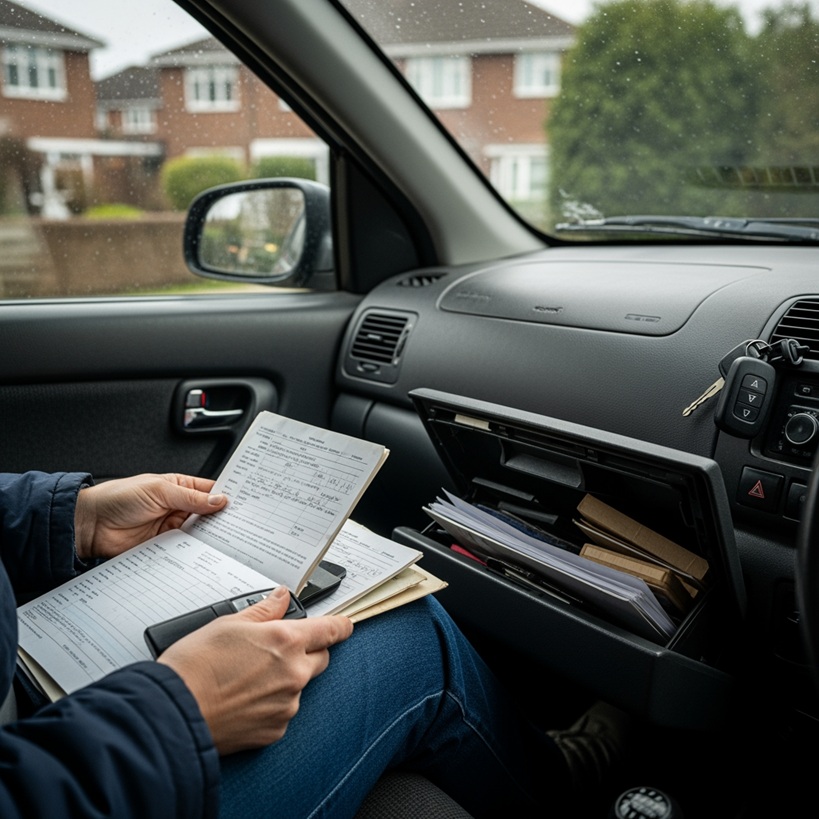
Before the heavy flatbed truck pulls into the street, you must physically prepare the vehicle. This step is incredibly important for estate cars, as older vehicles frequently become makeshift storage lockers for highly sensitive household paperwork over the years.
You must meticulously check:
- Deep inside the glovebox for old banking documents or insurance policies.
- Under all the seats for dropped house keys or loose change.
- Inside the boot for expensive tools or valuable spare wheels.
- Behind the sun visors for disabled parking badges that must be returned to the council.
If the vehicle has sat idle on the driveway for three years, the tyres will likely be completely flat, and the steering column might be permanently locked. You must inform the recovery team about these specific physical conditions in advance so they dispatch a truck equipped with a heavy-duty electric winch.
Timeline for the Complete Process
The total timeline depends heavily on exactly how quickly probate is granted by the courts. While complex legal work occasionally takes several months to finalise, you do not always have to wait that long to physically clear the driveway.
You can often book a secure service as soon as you have the official death certificate, provided the vehicle holds very low financial value. Delaying a probate vehicle scrapping process causes unnecessary storage headaches, but securing a fair scrap value of my car quickly prevents the vehicle from suffering further harsh weather deterioration. It also stops the car from becoming a highly visible target for local thieves while the property sits empty.
Common Pitfalls and How to Avoid Them
One of the biggest mistakes executors make is leaving inherited vehicles parked on public roads without valid road tax. The moment the DVLA is officially notified of a death, any active road tax is immediately and automatically cancelled.
If the vehicle remains on the public street, it will quickly attract heavy, automated fines that drain the estate’s limited funds. You must move the vehicle onto a private driveway immediately. If it must stay parked on private land for months while probate clears, you must officially declare it SORN (Statutory Off Road Notification) to remain completely legally compliant.
Furthermore, standard vehicle insurance policies are almost always instantly rendered invalid the exact moment the main policyholder passes away. You absolutely cannot legally drive the car to the scrapyard yourself without arranging highly expensive, temporary executor insurance cover. Relying on professional recovery services who utilise their own legal trade plates is vastly safer and significantly cheaper.
Conclusion
Making the decision to properly scrap inherited car assets is an administrative task bound by a very specific set of strict legal rules. By patiently gathering the official death certificate, securing the V5C logbook, and working strictly with fully licensed facilities, you can handle the physical disposal safely and without unnecessary stress.
Thorough documentation is your absolute best friend throughout this entire process. Keeping secure physical copies of the final Certificate of Destruction and the DVLA notification letters totally protects you from any future legal claims. Take the process one methodical step at a time, and the heavy physical burden will be lifted before you know it.
If you are an executor ready to secure a fully compliant quote, relying on Scrap Car Network guarantees a smooth, highly professional service.
For assistance with complex estate paperwork or difficult driveway access, please speak with us directly at 01772 665 909 to discuss a tailored, legally watertight solution for your specific circumstances.