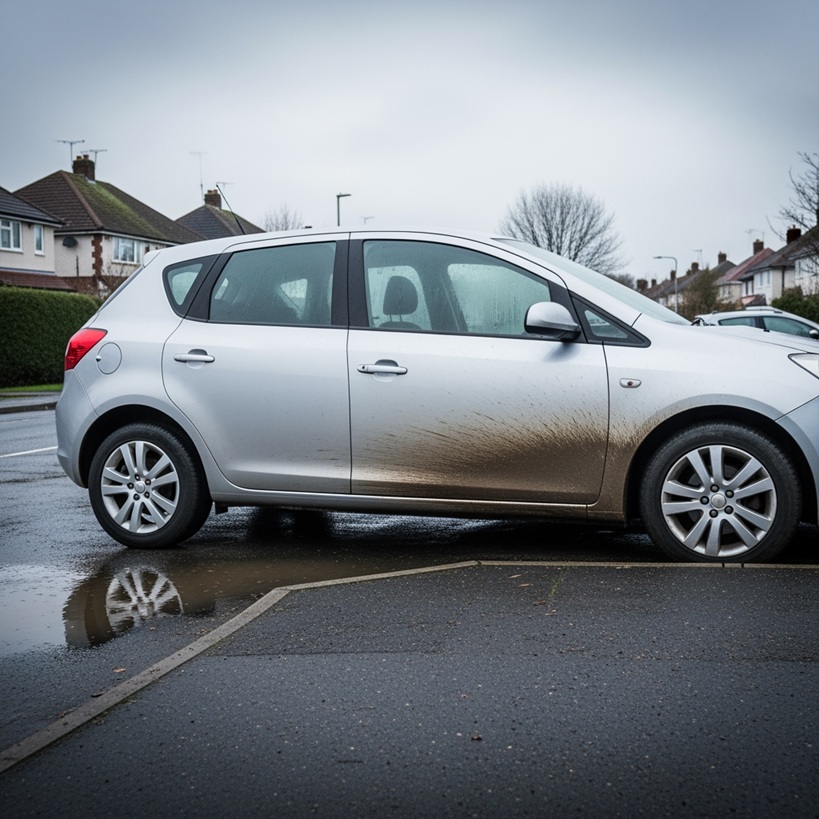
Flood Damaged Car Scrap Value: Free Assessment and Collection
18th May, 2026
Floodwater doesn’t just soak a car; it destroys it from the inside out. Electrical systems short-circuit, upholstery turns into a breeding ground for mould, and mechanical components seize up from contamination. What looks like a salvageable vehicle after the water recedes is often a ticking time bomb of safety hazards and repair bills that dwarf the car’s actual value.
The harsh reality is that flood damaged car scrap vehicles rarely make financial sense to repair. Insurance companies know this, which is why they often write them off immediately. Understanding how authorised treatment facilities (ATFs) categorise and value these vehicles helps owners manage expectations and navigate the disposal process legally.
Why Flood Damage Writes Off Most Vehicles
Water is relentless. It seeps into every crevice, corrodes metal, and compromises electronics in ways that don’t always show up immediately. A car that has been submerged, even partially, faces a cascade of problems.
Modern vehicles contain dozens of electronic control units (ECUs) scattered throughout the body. When these get wet, they fail. Sometimes straight away, sometimes weeks later. The mechanical damage goes deeper than most people realise. Engine contamination occurs when water mixes with oil, destroying lubrication. Transmission failure happens when water enters through breather vents.
Insurance assessors use a simple calculation: if repair costs exceed 60-70% of the vehicle’s pre-flood value, it is a write-off. For most flood-damaged cars, that threshold gets crossed immediately due to the high cost of replacing wiring looms and safety systems like airbags.
What Determines Flood Damaged Car Scrap Value
The scrap flood damaged car value depends on what can actually be salvaged and sold. Unlike a standard end-of-life car, flood damage significantly reduces the number of usable parts.
Metal weight remains the baseline value. Your car contains steel, aluminium, copper wiring, and other recyclable metals that retain worth regardless of water damage. Current scrap car prices fluctuate, but the weight-based value provides a guaranteed minimum. You can monitor current metal rates to see how the market is performing.
Beyond the metal, salvageable components affect the final offer. Undamaged body panels, glass, and lights often survive. Some mechanical parts can be cleaned and tested. However, salt water flooding causes exponentially worse corrosion than freshwater, reducing value further.
The Real Cost of Keeping a Flood Damaged Vehicle
Holding onto a flood-damaged car hoping to repair it later almost always costs more than scrapping it immediately. The problems don’t stay static; they worsen with time.
Mould growth begins within 24-48 hours. It spreads through upholstery and carpets. Corrosion accelerates rapidly once it starts. Water trapped in door cavities continues eating away at metal.
I remember a gent who tried to save his flooded Mercedes after a river burst its banks in Yorkshire. He spent months drying it out with industrial heaters. It looked fine, but six months later, the airbag system failed while he was driving. The sensors had corroded from the inside out. He was lucky he wasn’t in a crash. He scrapped it the next day. Some things you just can’t dry out.
How Free Assessment Actually Works
The assessment process for flood-damaged vehicles is straightforward. Unlike standard valuations, flood damage requires additional evaluation.
You will need to provide specific details:
- Extent of water damage (how high did the water reach?).
- Duration of exposure.
- Water type (freshwater or saltwater).
- Current condition (does it start?).
Reputable scrap dealers provide quotes based on this information. Honest disclosure gets you accurate quotes. Understating the damage backfires when the collection driver arrives and reassesses the vehicle.
The Collection Process for Waterlogged Vehicles
Collecting a waterlogged vehicle requires different handling. The vehicle likely won’t start and may have compromised structural integrity. Professional collection services use flatbed recovery vehicles.
Timing matters more with flood-damaged cars. The longer a waterlogged vehicle sits, the worse it gets. Most collection services prioritise flood damage cases. You can arrange specialist recovery within 24-48 hours to prevent further deterioration and environmental leakage.
Legal Requirements for Scrapping Flood Damaged Cars
Scrapping any vehicle involves legal obligations. The DVLA must be notified that you have scrapped the vehicle. When you scrap through an Authorised Treatment Facility (ATF), you will complete Section 9 of your V5C logbook.
The Certificate of Destruction is your proof the vehicle was properly recycled. This document protects you legally. Our guide on how to inform the DVLA of scrapping ensures you follow the correct procedure.
When Insurance Complicates the Picture
If your insurance company declared your car a total loss, the vehicle legally belongs to them once they pay out. However, many insurers allow owners to buy back the salvage.
This requires clear communication with your insurer. They will provide a salvage quotation. If you want to keep and scrap it yourself, you will negotiate a buyback price. Some insurers require proof of proper disposal before closing the claim. Be aware that Category B write-off vehicles can only be broken for parts and the shell must be crushed; they cannot return to the road.
Regional Considerations Across the UK
Flood damage patterns vary significantly across Great Britain. Coastal areas deal with saltwater intrusion, while inland regions face freshwater flooding from rivers like the Severn or Ouse. Saltwater damage is catastrophically worse, accelerating corrosion.
Urban areas with poor drainage systems see flash flooding. Cars stalled in underpasses in London or Birmingham often suffer engine damage from water ingestion (hydrolocking). Flood car collection logistics vary by region; rural areas might face longer wait times, while urban collections are typically faster. You can rely on vetted experts to manage these logistics efficiently, regardless of your location.
Environmental Impact of Proper Flood Car Disposal
Flood-damaged vehicle disposal poses environmental risks if not done correctly. Contaminated fluids can pollute soil and groundwater.
Authorised Treatment Facilities must depollute vehicles before crushing. This involves draining all contaminated fluids, removing batteries, and extracting refrigerants. The recycling process recovers approximately 95% of a vehicle’s materials. You can locate a licensed facility near you to ensure this process is handled correctly.
Making the Decision: Repair or Scrap?
The mathematics are usually straightforward. Get a comprehensive repair estimate from a qualified mechanic. Compare this to the vehicle’s pre-flood market value.
If repairs exceed 60% of the value, scrap it. Even if you could afford the repairs, you are throwing money into a car that will never be reliable. The flood damage history follows the vehicle forever, making it nearly impossible to sell later.
What Happens After Collection
Once your flood-damaged car leaves your property, it enters a regulated disposal process. The vehicle arrives at an ATF where trained technicians conduct depollution. They remove all hazardous materials and fluids.
Salvageable parts get removed, cleaned, and tested. Components that pass quality checks enter the used parts market. What remains goes to the crusher. The vehicle depollution process ensures that the contaminated water and fluids inside the car do not harm the environment. You can read more about this in our vehicle depollution process guide.
Common Myths About Flood-Damaged Car Value
There is a persistent myth that drying a car out restores its value. Think of a flood-damaged car like a smartphone dropped in a toilet. You might get it to turn on after a week in a bowl of rice, but the corrosion has already started on the motherboard. It will fail; it is just a matter of when.
Another myth is that scrap value is zero because the car is “ruined.” This is false. The metal weight alone guarantees value. The Scrap Car Network ensures you get paid for that metal weight, regardless of the water damage.
Conclusion
Flood damage transforms a vehicle from a functioning asset into a liability faster than almost any other type of damage. The comprehensive nature of water intrusion makes repair economically irrational for the vast majority of cases.
Understanding your flood-damaged car’s scrap value provides clarity in a stressful situation. While the amount won’t replace your vehicle, it offers fair compensation based on recoverable materials. More importantly, proper disposal through licensed facilities protects you legally and environmentally.
The process isn’t complicated: honest assessment, fair valuation, and professional collection. Don’t let a flood-damaged car sit deteriorating on your property.
If you are dealing with a waterlogged vehicle, you can get a water-damage quote today.
For immediate assistance, call our team on 01772 665 909.
You can also contact us directly through our website.