Why Scrap Yards Are Critical to Local Economies
3rd Mar, 2026
Drive through any British industrial area and chances are there’s an automotive recycling facility nearby. These operations might not look glamorous from the outside, but their economic contribution to local communities is substantial and often underappreciated. Far from being simple scrapyards, modern automotive recycling facilities function as critical economic anchors supporting employment, generating tax revenue, and enabling local manufacturing.
The economic impact extends well beyond the obvious – jobs and wages. These facilities process materials that British manufacturers need, preventing expensive imports. They provide essential services to local residents, supporting vehicle ownership affordability. They generate tax revenue funding schools, hospitals, and infrastructure. They support small businesses through contracts and procurement.
Understanding why scrap yards are critical to local economies reveals an industry that’s fundamental to community prosperity. From major cities to small towns, these facilities contribute to economic health in ways that ripple through entire regions. When vehicle owners work with established recycling networks, they’re supporting this vital local economic infrastructure.
A Network of Essential Local Businesses
Britain’s automotive recycling network comprises hundreds of facilities distributed across the country. This geographic spread isn’t accidental – it reflects the economic necessity of local processing. Vehicles are bulky, heavy, and expensive to transport long distances. Economic viability requires facilities located near population centres where vehicles naturally accumulate.
This distribution creates economic benefits for communities nationwide. Every region has local facilities providing employment, paying taxes, and supporting ancillary businesses. Rather than economic activity concentrating in a few locations, automotive recycling distributes prosperity across Britain.
Regional specialisation has developed based on local industrial heritage. Areas with steel production history often host larger processing facilities with advanced sorting equipment. Coastal regions might specialise in export operations. Former automotive manufacturing centres leverage existing expertise and infrastructure.
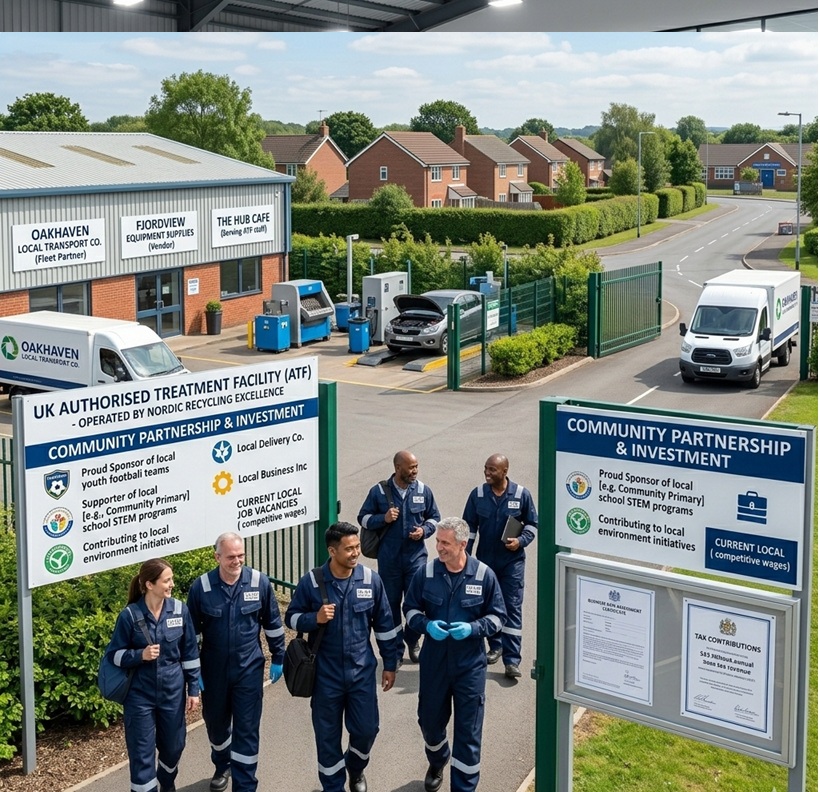
These facilities support local supply chains beyond just vehicle processing. They purchase services from local transport companies, maintenance contractors, equipment suppliers, and professional service providers. A mid-sized facility might have dozens of local businesses on its supplier list, creating an economic ecosystem around its operations.
The community anchor role of scrap yards means they provide stability during economic changes. Whilst other industries might relocate abroad or close during downturns, automotive recycling stays local by necessity. This permanence makes them valuable community assets. Vehicle owners looking to support local businesses through responsible disposal contribute to this economic network.
The Employment Multiplier Effect
Direct employment at automotive recycling facilities is substantial – thousands of people across Britain work in collection, processing, and administration. However, the employment impact extends far beyond those directly hired by facilities.
Economic research demonstrates employment multiplier effects in recycling industries. For every job at a recycling facility, additional employment exists in supporting industries. Transport companies employ drivers moving vehicles to facilities and materials to processors. Equipment manufacturers employ people producing shredders, balers, and sorting systems. Professional services – legal, accounting, insurance – all gain work from recycling operations.
Studies suggest multipliers of 1.5 to 2, meaning each direct recycling job supports one and a half to two additional jobs elsewhere in the economy. For an industry employing thousands directly, this creates tens of thousands of supported positions across various sectors.
Local employment benefits extend to retail and hospitality. Facility employees spend wages in local shops, cafes, and services. A large facility with 40-50 employees might inject £1-1.5 million annually into the local economy through wages alone. This spending supports additional employment in service sectors.
The quality of employment matters too. Modern recycling facilities offer skilled positions with competitive wages. Technical roles operating advanced equipment, environmental compliance positions, and management jobs all provide career opportunities rather than just basic employment. This supports local prosperity and helps retain skilled workers in communities.
Money That Stays Local
One of scrap yards’ most important economic contributions is keeping money circulating locally. When facilities hire locally, pay local suppliers, and conduct operations within communities, wealth stays in those communities rather than leaking away to distant regions or countries.
Wages paid to local employees get spent at local businesses. The collection driver who lives in the area shops at local supermarkets, uses local services, and supports the local economy. Multiply this across all employees and the economic impact becomes substantial.
Local procurement amplifies this effect. When facilities purchase services from local transport companies, maintenance contractors, and equipment suppliers, they’re supporting additional local employment and business success. The same money might circulate through the local economy multiple times as businesses and employees spend and re-spend it locally. Understanding how the recycling process works helps vehicle owners appreciate their role in supporting local economic cycles.
Contrast this with industries that employ people locally but have profits flow to distant headquarters or shareholders. Automotive recycling facilities are often locally owned or have significant local management autonomy, meaning more economic benefit remains in the community.
The reduction in economic leakage supports local resilience. Communities with strong local businesses and circulating wealth are less vulnerable to external economic shocks. The automotive recycling industry’s necessarily local nature makes it a stabilising economic force.
Providing Essential Services to Communities
Beyond employment and tax revenue, scrap yards provide essential services that support community wellbeing and economic health. Every year, thousands of vehicles in each community reach end-of-life. Without proper disposal infrastructure, these vehicles would accumulate, creating environmental hazards and reducing property values.
Affordable vehicle disposal supports vehicle ownership, which enables employment and economic participation. For many people, vehicle ownership is essential for reaching work, accessing services, and participating in economic life. When vehicles reach end-of-life, affordable disposal options prevent financial hardship and enable replacement vehicle purchase.
Supporting repair shops with affordable used parts extends vehicle lifespans and supports another segment of the local economy. Independent repair shops employ local mechanics, serve local customers, and provide essential services. Access to quality used parts at reasonable prices enables these businesses to operate viably.
Environmental protection prevents costly problems. Improperly disposed vehicles leak fluids contaminating soil and water, create fire hazards, and attract illegal dumping of other waste. Professional processing prevents these issues, saving communities from expensive cleanup operations and environmental damage.
Community safety and aesthetics benefit from proper vehicle disposal infrastructure. Abandoned vehicles blight neighbourhoods, reduce property values, and create safety hazards. Efficient collection and processing services maintain community appearance and safety. Residents can arrange quick vehicle collection preventing neighbourhood deterioration.
Tax Revenue Supporting Public Services
Automotive recycling facilities generate substantial tax revenue supporting public services. Business rates paid to local councils help fund schools, social services, waste collection, and local infrastructure. A large facility might pay £50,000-£100,000+ annually in business rates.
Employment taxes collected from facility workers support national health services, pensions, and other government programmes. With competitive wages, the tax contribution per employee is significant. A facility employing 40 people might generate £150,000-£250,000 annually in income tax and national insurance contributions.
VAT collected on services and equipment purchases flows to central government, supporting national programmes. Corporate taxes on profitable operations provide additional revenue for public services.
The economic activity generated – supplier contracts, employee spending, property transactions – creates additional tax revenue throughout the economy. The multiplier effects mean the true tax contribution extends well beyond direct facility operations.
For local councils facing budget pressures, reliable business rate payers are crucial. Automotive recycling facilities provide stable, long-term tax revenue. Unlike some businesses that might relocate or close, recycling operations remain anchored to their locations by economic necessity.
Raw Material Supply for British Manufacturing
Local scrap yards play a vital role supporting British manufacturing by supplying essential raw materials. Steel mills, aluminium processors, and copper refiners all rely on automotive scrap. Without efficient local collection and processing, these manufacturers would need more expensive virgin materials or imported scrap.
Steel production particularly benefits from automotive scrap supply. British steel mills produce millions of tonnes annually, with significant proportions coming from recycled materials. The automotive sector provides high-quality steel already refined to precise specifications, making it ideal feedstock for new production.
Aluminium recovery from vehicles supports domestic processing. Automotive aluminium is high-grade material suitable for demanding applications. Local collection and sorting ensures this valuable resource reaches British processors rather than being exported or lost.
Copper wiring and components from vehicles supplies refiners producing wire, tube, and sheet materials for construction and manufacturing. The copper content in modern vehicles is substantial, representing a valuable resource stream.
Supporting domestic manufacturing protects and creates jobs throughout industrial supply chains. When British manufacturers can access affordable local materials, they remain competitive globally. This competitiveness supports employment and economic activity across regions.
The supply reliability from local recycling networks matters as much as price. Manufacturers need consistent material flows to maintain production schedules. The distributed network of recycling facilities across Britain ensures steady supply regardless of regional variations in scrap generation. Those disposing of vehicles through professional collection services contribute directly to this manufacturing supply chain.
Property Values and Community Development
Well-managed automotive recycling facilities can be positive community assets rather than detrimental neighbours. Modern environmental regulations require professional operations, screening, pollution control, and community consideration. Facilities meeting these standards support rather than harm local property values.
Land remediation represents a particularly important contribution. Many recycling facilities occupy former industrial sites – old factories, manufacturing plants, or previous scrapyards. Investment in these properties cleans contaminated land, prevents dereliction, and returns brownfield sites to productive use.
Some facilities invest significantly in landscaping, screening, and aesthetic improvements. Trees and hedges reduce visual impact. Noise control measures protect residential neighbours. Dust suppression and odour control maintain air quality. These investments demonstrate community commitment and good corporate citizenship.
Community partnership programmes build positive relationships. Facilities might sponsor local sports teams, support schools, or contribute to community projects. These partnerships create goodwill whilst supporting community development.
The economic activity generated supports surrounding property values indirectly. Employment provides residents with income supporting home ownership. Local business success from facility contracts supports commercial property values. The overall economic contribution creates prosperous communities where property values appreciate.
Infrastructure investment by facilities benefits wider areas. Road improvements, drainage upgrades, and utility enhancements often extend beyond facility boundaries. These improvements support community development and property values.
Crisis Resilience and Economic Stability
During a conversation with a council economic development officer, the importance of automotive recycling became strikingly clear. His area had lost manufacturing jobs during the 2008 recession, with unemployment spiking and local businesses struggling. But the two large recycling facilities barely noticed the downturn. They kept operating, kept employing, kept paying taxes. Whilst new car sales collapsed, vehicles still reached end-of-life at normal rates. The facilities provided economic stability when the community desperately needed it. He’d since revised his view of recycling operations – they weren’t just another business, they were recession-proof anchors supporting community resilience.
Economic downturns test community resilience. Industries dependent on consumer spending or business investment can collapse rapidly during recessions. Automotive recycling demonstrates remarkable stability during economic crises.
Vehicle disposal continues regardless of economic conditions. Economic pressure might even increase scrap volumes as people keep cars longer then finally dispose of them. This counter-cyclical tendency provides economic stability when communities need it most.
Employment stability during recessions prevents cascading economic damage. Workers who keep earning keep spending, supporting other local businesses. Tax revenue continues flowing to councils maintaining public services. The economic anchor role of stable employers cannot be overstated during difficult times.
Essential service status protects operations during crises. Even during COVID-19 lockdowns, automotive recycling continued as an essential service. This operational continuity provided economic stability and prevented vehicle accumulation.
Supporting economic diversity reduces community vulnerability. Areas with varied employment bases weather economic changes better than those dependent on single industries. Automotive recycling contributes to this diversity, providing employment distinct from retail, services, or manufacturing.
Regional Economic Development
Automotive recycling facilities often locate in former industrial areas seeking new economic purposes. Post-industrial regions across Britain have welcomed recycling operations providing employment and economic activity replacing lost manufacturing jobs.
These facilities demonstrate that former industrial sites retain value and purpose. Land with railway access, heavy-duty roads, and industrial zoning remains suitable for modern recycling operations. This preserves infrastructure investment whilst providing new employment.
Success stories exist across Britain of recycling facilities anchoring economic regeneration. Some have grown from small operations to major employers, attracting related businesses and creating local economic clusters. Transport companies, equipment suppliers, and professional services often locate near large facilities, amplifying economic impact.
The employment provided supports population retention. Younger people can find careers locally rather than relocating to cities for opportunities. This demographic stability supports schools, retail, and services, preventing the decline spiral affecting some former industrial communities.
Investment in facilities improves areas beyond just the site itself. Modern professional operations demonstrate that industrial activities can coexist with communities when properly managed. This challenges negative perceptions and encourages additional investment.
Small Business Ecosystem Support
Automotive recycling facilities support thriving ecosystems of small businesses. Independent repair shops rely on affordable used parts to remain competitive. Without access to quality components at reasonable prices, many independent garages couldn’t operate viably against dealership service departments.
These repair shops employ local mechanics, serve local customers, and provide essential services. The automotive recycling industry’s support for parts availability enables this entire sector to function. The economic multiplier from supporting independent repair shops amplifies recycling’s community impact.
Transport contractors specialising in vehicle movement often operate as small, locally-owned businesses. Recycling operations provide consistent work for these companies, supporting their viability. The same applies to maintenance contractors, equipment suppliers, and various service providers.
Entrepreneurial opportunities emerge around recycling operations. Some individuals start businesses collecting vehicles, brokering scrap sales, or providing specialist services to facilities. This entrepreneurial activity creates additional employment and economic opportunity.
The small business support extends to sectors that might not be obviously connected. Local cafes near large facilities gain regular customers from shift workers. Equipment suppliers have reliable buyers. Professional service providers gain clients. This web of economic relationships demonstrates how one industry’s success supports broader prosperity.
Understanding the Local Economic Impact
Measuring automotive recycling’s true economic contribution requires looking beyond obvious metrics like direct employment and revenue. The multiplier effects, tax contributions, manufacturing support, and community services all represent economic value.
Academic research into recycling industry economics consistently shows positive local impacts. Studies calculate that every £1 million in recycling facility revenue generates £1.5-2 million in total economic activity through multiplier effects. The tax revenue per job created exceeds many other industries due to relatively high wages and stable employment.
Community investment programmes represent another form of economic contribution. Many facilities support local initiatives, sponsor community events, and contribute to charitable causes. This investment strengthens social fabric whilst providing tangible community benefits.
Long-term sustainability comes from the industry’s permanence. Unlike manufacturing that might relocate or retail that might lose competitiveness, automotive recycling remains locally anchored. This permanence makes it a reliable economic contributor communities can depend on.
The environmental benefits translate into economic value. Preventing pollution saves remediation costs. Supporting circular economy principles reduces resource consumption and import dependence. These environmental contributions have clear economic dimensions.
Why scrap yards are critical to local economies becomes clear when considering these varied contributions. They provide employment, generate tax revenue, support manufacturing, enable small businesses, and create economic stability. The distributed network across Britain means these benefits reach communities nationwide rather than concentrating in a few locations.
The permanence and stability of the industry makes it particularly valuable. In an economy where businesses might relocate, close, or automate away jobs, automotive recycling stays local and employs people. This reliability supports community planning and long-term development.
For individuals, proper vehicle disposal through certified networks supports these local economic benefits. Rather than informal disposal or abandonment, choosing professional services ensures economic value flows to legitimate local businesses paying taxes, employing workers, and supporting communities.
The next time someone sees an automotive recycling facility, it’s worth remembering the economic contribution behind those gates. Beyond the visible operations – the vehicles, equipment, and activity – exists an economic engine supporting families, funding public services, and enabling prosperity. The jobs, taxes, and services provided make these facilities critical local economic infrastructure.
Understanding this economic role helps explain why communities benefit from professional automotive recycling operations. The alternative – informal operations, illegal dumping, or no local facilities – would mean economic opportunity lost, environmental costs imposed, and community prosperity diminished.
The automotive recycling industry demonstrates how environmental necessity and economic opportunity align perfectly. The services that protect the environment also support employment, generate tax revenue, and enable prosperity. This alignment makes it a model for sustainable economic development – activities that benefit communities whilst protecting the planet.
For those ready to dispose of vehicles whilst supporting local economies, connecting with certified facilities ensures economic benefits reach communities properly. The choice to use professional services over informal alternatives means supporting employment, tax revenue, and economic development. That decision extends beyond individual benefit to community contribution.
Whether disposing of a standard family car, commercial vehicle, or motorcycle, the choice to work through established networks supports local economic networks creating prosperity. The value extends well beyond individual transaction to community-wide benefits lasting years.
The facilities processing these vehicles represent more than just businesses – they’re community economic anchors supporting prosperity across Britain. Understanding their role helps appreciate why automotive recycling deserves recognition as critical local economic infrastructure. For guidance on supporting these local economic networks through responsible disposal, reaching out to industry professionals provides clarity on processes, requirements, and benefits.