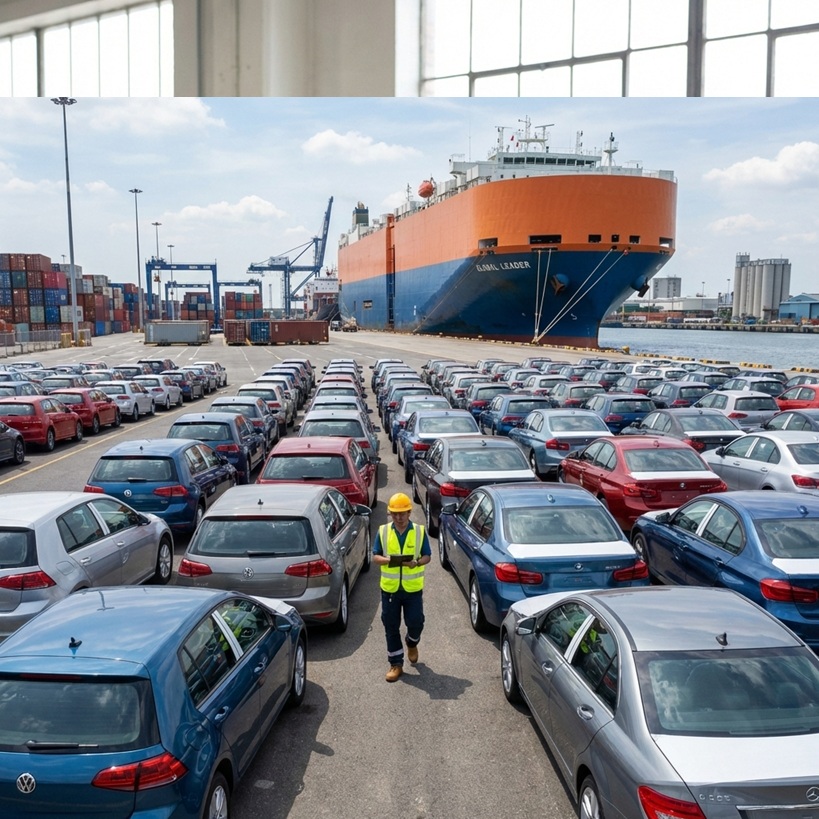
Why Africa Receives So Many Old Cars from Europe
25th Feb, 2026
You’ve probably seen them on roads during travels or in documentaries – older European cars with dents, rust patches, and well-worn interiors navigating dusty African streets. These vehicles tell a fascinating story about global economics, regulations, and automotive lifecycles extending far beyond their original European homes.
The flow of old cars exported to Africa isn’t happenstance – it’s a complex system driven by economic necessity, regulatory differences, and practical transportation needs. Understanding this global automotive migration reveals how vehicles considered scrap in one country become essential transportation in another.
Scrap Car Network ensures proper UK vehicle disposal, but appreciating where some cars go before final recycling helps understand the complete automotive lifecycle. These journeys span continents and economic realities most of us never consider.
Economic Forces Driving Vehicle Exports
Cost differences between European and African markets create perfect conditions for automotive migration. A 15-year-old Ford Focus struggling to pass its MOT in the UK could represent months of savings for an African buyer.
European car owners face simple calculations when vehicles need expensive repairs. If the clutch fails on a 2008 Volkswagen Golf and the repair estimate reaches £1,200, many consider it economically unviable. That same car, however, could sell for £3,000-4,000 in markets like Ghana or Kenya.
Local mechanics in African markets perform identical repairs for fractions of UK costs. Labour rates that seem impossibly low by European standards represent fair wages in local economic contexts. The Golf needing that £1,200 clutch job in Birmingham might get sorted for £200 in Nairobi, making previously “uneconomical” repairs perfectly sensible.
Purchasing Power Disparities
The purchasing power gap plays a crucial role in the second-hand vehicle trade. Whilst a new car in Germany might cost €25,000, average annual income in many African countries ranges from $1,000 to $5,000.
Second-hand European vehicles bridge this gap brilliantly. They offer relatively modern features – power steering, electric windows, air conditioning – at accessible prices. Features Europeans take for granted represent significant upgrades in many African markets.
A 2005 BMW with failed air conditioning might face an £800 repair estimate in the UK, making it uneconomical for the original owner. That same car reaches Nigeria, where the new owner is absolutely thrilled to have power steering and electric windows – luxury features in many locally available vehicles.
I remember a customer years back who’d inherited his father’s 2007 Mercedes. Needed about £2,000 worth of work to pass MOT. Couldn’t justify spending that on a car worth maybe £3,000 locally. Mentioned he’d heard about export markets, and sure enough, found a dealer who paid £4,500 for it as-is. That Mercedes probably transported a Nigerian family for years afterwards.
European Emissions Standards Driving Exports
Euro emissions standards act as powerful forces pushing older vehicles from European markets. Each new Euro standard makes older vehicles less desirable or outright illegal in certain city centres.
When Euro 6 standards became mandatory for new cars in 2015, many Euro 4 and Euro 5 vehicles suddenly faced restrictions in major European cities. London’s Ultra Low Emission Zone charges older vehicles £12.50 daily – costs quickly making ownership uneconomical.
Rather than heading to scrapyards, these vehicles often find new lives in countries without stringent emissions requirements. A 2009 Mercedes C-Class facing daily London charges becomes an attractive option for a Lagos business owner.
Scrappage Schemes Accelerating Turnover
Scrappage schemes implemented across Europe further accelerate this process. Germany’s environmental bonus programme and France’s conversion premium encourage citizens trading older vehicles for newer, cleaner models. Working with authorised treatment facilities ensures UK vehicles are processed responsibly when replaced.
The older cars don’t disappear – they’re exported to markets where they’re still considered valuable. Environmental policies designed to clean European air inadvertently supply African transportation needs.
Think of it like a relay race where emissions standards pass the baton from one runner to the next. European regulations essentially hand off vehicles from European roads to African ones, extending their useful lives whilst serving different economic realities.
Regulatory Differences Creating Opportunities
Import regulations in many African countries favour older European vehicles. Most African nations allow imports of vehicles up to 8-15 years old, which perfectly matches the age when European owners typically consider replacement.
Ghana permits imports of vehicles up to 10 years old, whilst Kenya allows cars up to 8 years. These policies create sweet spots where European cars are old enough to be affordable but young enough to meet import requirements.
Safety and Environmental Standard Gaps
Safety and environmental standards differ significantly between regions. Features mandatory in Europe – multiple airbags, ABS braking systems, catalytic converters – represent significant upgrades in markets where many locally available vehicles lack these technologies.
The right-hand drive advantage particularly benefits African countries with British colonial histories. Used cars from the UK arrive already configured for left-side traffic, eliminating expensive conversion needs.
Regulatory frameworks also extend to basic roadworthiness standards. Whilst European markets mandate extensive safety features, many African import regulations focus primarily on age and basic functionality. This gap means vehicles no longer meeting European standards can legally operate elsewhere.
Infrastructure and Parts Availability
Parts availability strongly influences which European cars succeed in African markets. German manufacturers like Volkswagen, BMW, and Mercedes-Benz established assembly plants and parts networks across Africa decades ago, making maintenance feasible.
Toyota Land Cruisers from the 1990s still run strong in rural Africa, primarily because parts remain available and local mechanics understand the systems. The same principle applies to popular European models – a Volkswagen Passat has better long-term prospects than a Citroën C6 simply because parts and expertise are more accessible.
Mechanical Simplicity Advantages
Mechanical simplicity often trumps advanced technology in these markets. A 2008 Ford Focus with manual transmission and basic electronics outlasts similar-aged vehicles loaded with complex systems requiring specialised diagnostic equipment.
Local repair capabilities have evolved to match incoming vehicle types. Mechanics in major African cities have become experts at maintaining European vehicles, often developing innovative solutions using locally available materials.
Eventually, though, even resilient vehicles reach end-of-life stages where recycling becomes necessary globally.
End-of-Life Challenges and Infrastructure Gaps
Eventually, even the most resilient vehicles in the second-hand vehicle trade reach points where further repairs become uneconomical, regardless of location. This completes the global automotive lifecycle circle.
Unlike Europe, where proper recycling occurs through authorised treatment facilities, many African countries lack comprehensive vehicle recycling infrastructure. This creates environmental challenges as old vehicles accumulate without proper disposal systems.
Metal recycling does occur, but often through informal channels that may not capture all hazardous materials. Steel from scrapped BMWs might be melted down for construction materials, but proper handling of fluids, plastics, and electronic components isn’t always guaranteed.
Forward-Thinking Entrepreneurship
Some forward-thinking African entrepreneurs have begun establishing proper vehicle recycling facilities, recognising both environmental necessity and economic opportunity. These operations often focus on parts recovery, stripping usable components for the large population of similar vehicles still operational.
Progressive African governments are addressing these challenges. Ghana recently implemented regulations requiring importers to contribute to end-of-life vehicle management funds, recognising that today’s imports become tomorrow’s waste management challenges. Understanding the advantages of professional disposal services helps explain why proper UK recycling infrastructure matters.
Popular European Models in African Markets
German engineering dominates African import statistics, with Volkswagen, BMW, and Mercedes-Benz leading. The Volkswagen Golf, particularly, has found tremendous success across West Africa due to reliability and parts availability.
French manufacturers like Peugeot and Citroën maintain strong positions in former French colonies, where established dealer networks and brand familiarity create natural demand. A Peugeot 307 considered outdated in Paris might serve faithfully for years in Senegal.
British brands face more complex situations. Whilst Range Rovers and Jaguars command premium prices due to luxury status, more affordable British models often struggle against German and Japanese alternatives.
A 2007 Audi A4 described as “tired but not dead” by its UK owner might appear in a Ghanaian car dealer’s inventory within months. That Audi probably has years of reliable service ahead – just not on British roads where repair costs don’t make economic sense. Environmentally responsible car recycling ensures vehicles that stay in the UK get processed to environmental standards.
Economic Impact Across Continents
The used car export industry employs thousands across Europe in collection, preparation, and shipping operations. Ports in Hamburg, Antwerp, and Portsmouth handle millions of vehicles annually, creating jobs and generating significant economic activity.
For African economies, old cars exported to Africa provide affordable transportation supporting business development and personal mobility. A small business owner in Kenya can purchase a reliable van for fractions of new vehicle costs, enabling economic growth otherwise impossible.
Foreign Currency and Market Activity
Foreign currency flows also benefit African economies when these vehicles sell locally. A car imported from Germany for $5,000 might change hands several times within local markets, generating economic activity with each transaction.
However, this system creates dependency relationships some economists view as problematic. African automotive manufacturing remains limited partly because imported used vehicles satisfy much demand that might otherwise support local production. When vehicles eventually reach end-of-life, getting an instant quote to scrap any car through proper channels ensures materials re-enter global recycling streams responsibly.
Environmental Considerations
The carbon footprint of shipping millions of vehicles from Europe to Africa raises legitimate environmental concerns. A single cargo ship might carry 2,000 vehicles, consuming significant fuel and producing emissions during journeys.
Yet environmental calculations aren’t straightforward. Extending vehicle lifecycles by exporting them to markets where they’ll be used for additional years arguably makes better environmental sense than immediate scrapping and replacement with new vehicles.
The real environmental challenge emerges at end-of-life stages. Whilst European vehicles benefit from comprehensive recycling systems recovering up to 95% of materials, similar infrastructure doesn’t exist across much of Africa.
Technology Revolutionising Trade Processes
Internet connectivity has revolutionised how the second-hand vehicle trade operates. African buyers can now browse European car listings online, inspect vehicles via video calls, and arrange purchases without travelling.
This transparency has reduced fraud and improved buyer confidence significantly. Previously, purchasing imported vehicles involved considerable risk and uncertainty. Modern technology makes the process more reliable for all parties.
Mobile Money and Social Media
Mobile money systems like M-Pesa have simplified international transactions dramatically. Previously complex payment processes requiring bank transfers and letters of credit can now be completed through mobile applications. Similarly, our free collection service simplifies UK vehicle disposal through streamlined processes.
Social media marketing allows African dealers to showcase newly arrived European vehicles to local buyers instantly. A shipment arriving in Tema port can be advertised across Ghana within hours, speeding up sales and reducing storage costs.
Future Trends Reshaping Patterns
Electric vehicle adoption in Europe will eventually disrupt this trade pattern. As European markets transition to electric vehicles, the supply of suitable internal combustion engine vehicles for export will diminish.
Tightening European emissions standards across Africa may also change import patterns. Nigeria recently announced plans implementing stricter vehicle emissions requirements, which could affect the age and type of vehicles remaining viable for import.
Local Manufacturing Initiatives
Local manufacturing initiatives in countries like Morocco and South Africa aim to reduce dependence on used vehicle imports by producing affordable new vehicles locally. Success in these efforts could significantly alter traditional trade flows. When UK vehicles reach end-of-life, learn how to scrap your car properly through our compliant process.
The regulatory landscape across Africa varies considerably, but most countries maintain age limits designed to balance affordability with safety and environmental concerns. These limits typically range from 8 to 15 years, though some nations have begun tightening restrictions responding to environmental pressures.
Human Stories Behind Statistical Flows
Behind these statistics and economic flows are real people making practical transportation decisions. The European seller who needs reliable transport but can’t justify expensive repairs on ageing vehicles. The African buyer who sees that same vehicle as a significant upgrade from current options.
Shipping workers in European ports load these vehicles onto cargo ships, whilst dock workers in African ports unload them weeks later. Mechanics on both continents play crucial roles – European mechanics whose repair estimates influence export decisions, and African mechanics who keep these vehicles running for years after arrival.
Family Dependencies
Families across Africa depend on these imported vehicles for school runs, business deliveries, and emergency transportation. The 2010 Toyota Corolla that seemed tired on German autobahns might become the reliable backbone of a small business in Tanzania. For UK owners ready to dispose of vehicles responsibly, get your instant quote through our network.
This human element reminds us that the global movement of old cars exported to Africa isn’t just an economic phenomenon – it’s a story about how people adapt, innovate, and make the most of available resources across different continents and economic circumstances.
Understanding Global Automotive Lifecycles
The journey of a European car doesn’t end when it becomes too expensive to maintain in its original market. Instead, it enters new phases where different economic conditions, lower labour costs, and varying regulatory environments give it second lives.
This extended lifecycle demonstrates both challenges and opportunities of global inequality. Whilst some view this trade as developed nations offloading problems onto developing regions, others see it as practical solutions providing affordable transportation where it’s needed most.
The reality sits somewhere between these perspectives. The system works because it serves genuine needs on both sides – European markets need to cycle through older vehicles meeting emissions standards, whilst African markets need affordable transportation supporting economic development.
Looking Ahead at Evolving Patterns
When you next see an older European car on African roads, whether in person or media coverage, you’ll understand the complex journey bringing it there. From European emissions standards to African import regulations, from economic necessity to environmental challenges, these vehicles represent fascinating intersections of global trade, technology, and human needs.
The flow of old cars from Europe to Africa reflects broader patterns of global inequality and opportunity, but also demonstrates human ingenuity in extending manufactured goods’ useful lives. Whether this system represents problems or solutions depends largely on perspective and priorities.
What’s certain is that this automotive migration will continue evolving as technology advances, regulations change, and economic development progresses across both continents. The old European cars navigating African roads today are writing latest chapters in stories connecting distant communities through shared needs for reliable transportation.
For UK vehicle owners approaching decision points with ageing cars, understanding this global context provides perspective on where vehicles go after European lives end. Contact our team to learn about responsible disposal options that ensure proper environmental compliance.