When Scrap Cars Become Educational Tools
3rd Dec, 2025
A New Purpose for Discarded Vehicles
For many, scrap cars are merely remnants of automotive history destined for the recycling bin. However, a growing movement is transforming these old vehicles into invaluable educational assets. By reimagining what a scrap car can be, educators and community organisers are leveraging these structures as hands-on teaching aids. The concept of scrap cars as educational tools is revolutionising the learning experience, whilst innovative approaches to teaching with scrap cars inspire students and communities alike.
The Educational Value of Scrap Cars
Hands-On Learning and STEM Applications
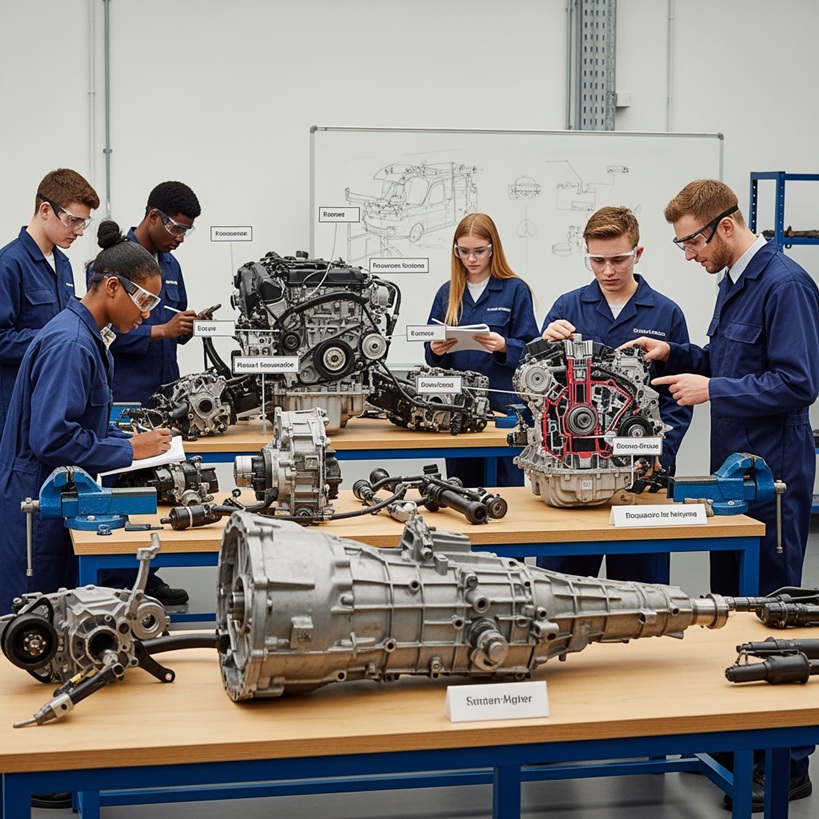
Scrap cars as educational tools offer a wealth of material for practical, hands-on learning. Dismantling a vehicle allows students to explore the intricacies of engines, transmissions, and electronic systems, providing a tangible way to understand subjects such as physics, chemistry, and engineering. This immersive approach transforms theoretical knowledge into real-world problem solving, making abstract concepts much more accessible.
In my years around the industry, I’ve seen countless young people’s eyes light up when they finally understand how a clutch works or why an engine misfires – there’s nothing quite like getting your hands dirty with actual components to make those lightbulb moments happen.
The approach aligns well with responsible car recycling principles, though it extends the vehicle’s usefulness far beyond traditional material recovery by creating lasting educational vehicle projects.
Historical and Industrial Insights
Every scrap car carries with it a unique story – its design, manufacturing techniques, and the evolution of automotive technology. Using teaching with scrap cars gives students the opportunity to gain first-hand insights into industrial history. This approach not only teaches them about engineering but also about the cultural impact and technological advancements of past generations.
Understanding scrap car prices can help educational institutions compare the financial return from traditional scrappage versus the long-term value of creating automotive education programs that serve students for years.
Environmental and Sustainability Lessons
Beyond technical learning, repurposing vehicles into educational projects emphasises the importance of sustainability. By demonstrating how scrap can be upcycled into functional hands-on learning tools, educators can drive home lessons about recycling and environmental responsibility. This dual focus on technology and sustainability makes teaching with scrap cars an effective method to foster eco-friendly practices amongst students.
Practical Applications: Teaching with Scrap Cars
Educators and community leaders are finding creative ways to integrate scrap cars as educational tools into their curriculum and local projects. Here are several practical applications:
STEM Education Resources and Demonstrations
Scrap cars serve as excellent platforms for STEM workshops, where students can learn about mechanical systems, electrical circuits, and even physics principles through direct interaction with automotive components. Hands-on demonstrations of vehicle dismantling and recycling processes give students insights into how complex systems work and the importance of sustainable practices.
Technical colleges often source suitable vehicles through authorised scrap car dealers who understand the educational value and can help identify models with particularly instructive components.
Interactive Exhibitions and Community Displays
A community exhibition where a scrap car is transformed into an interactive display can be remarkably effective. Each part of the car is labelled, explaining its function and history, inviting visitors to explore and learn about automotive technology. These interactive setups not only engage young minds but also serve to educate the broader public about recycling and industrial heritage.
Workshops for Vocational Training
Technical schools and vocational training centres can use educational vehicle projects to provide practical experience in automotive repair and recycling. This form of practical automotive training equips future technicians with the necessary skills and real-world understanding of vehicle mechanics, contributing to a stronger, more skilled workforce in the automotive industry.
Look, I’ve always maintained that you can’t learn proper automotive work from a textbook alone – you need to feel the resistance when a bolt is cross-threaded, smell when electrical components are overheating, and hear the difference between a healthy engine and one that’s on its last legs.
Planning an Educational Scrap Car Project
Before launching your project, thorough planning is essential. Here’s a step-by-step guide to help you get started:
Assess the Vehicle
Evaluate the condition of your scrap car carefully. Determine which components are viable for educational purposes – parts that retain structural integrity and visual appeal are ideal. This appraisal ensures that your project has a solid foundation for vehicle-based education.
Develop a Design Concept
Sketch out your project’s design. Decide whether the scrap car will serve as a stationary exhibit, a dismantling workshop, or an interactive display. Your design should cater to your intended educational goals whilst also considering safety and accessibility.
Gather Materials and Tools
List the required materials for your automotive education programs:
- Cleaning agents and rust removers
- Protective coatings for preservation
- Display labels and informational signage
- Technical equipment needed for demonstrations
- Safety barriers and protective equipment
- Interactive elements (if budget allows)
Organising your tools and supplies in advance helps streamline the project significantly.
Execute the Conversion
Begin by cleaning and preparing the vehicle thoroughly. Dismantle non-essential parts whilst preserving valuable components that illustrate key concepts. Modify and arrange the salvaged parts according to your design, ensuring that everything is securely fastened and safe for public interaction.
Install Educational Features
Label each component with information about its function, history, and relevance to automotive technology. Incorporate interactive elements, such as touch panels or augmented reality features, if possible, to enhance the learning experience for your hands-on learning tools.
Maintain and Update the Exhibit
Regular maintenance is key to keeping your educational installation both functional and informative. Schedule periodic updates and checks to ensure that the exhibit remains engaging and safe for continued use.
Real-Life Inspiration: Success Stories
Across the UK, innovative projects have showcased the potential of using scrap cars as educational tools. One technical college transformed a decommissioned saloon into a full-scale interactive exhibit, where students could explore the mechanics behind its components through detailed breakdowns and hands-on demonstrations. The project not only boosted student engagement but also raised awareness about the importance of sustainable recycling practices.
Another community initiative involved converting a scrap car into an art installation that doubled as an educational display. Visitors could learn about the car’s engineering marvels and historical significance, inspiring a broader dialogue on technology and environmental stewardship.
A particularly successful educational vehicle project saw a classic Mini donated to a secondary school’s design and technology department. Over the course of a term, students systematically dismantled, studied, and documented every component. The knowledge gained was invaluable, and several students went on to pursue automotive engineering careers directly inspired by the experience.
These examples illustrate the transformative power of teaching with scrap cars, proving that even outdated vehicles can become treasured STEM education resources.
When Traditional Scrappage Makes More Sense
Whilst scrap cars as educational tools offer wonderful possibilities for suitable vehicles, there are situations where traditional scrappage is the more practical choice:
Severely Damaged Vehicles: If the car lacks the structural integrity or educational value needed for teaching purposes, scrapping your car through proper channels ensures responsible disposal.
Space Limitations: Not every educational facility has the space to accommodate full vehicle displays. Convenient scrap car collection services provide a hassle-free alternative.
Legal Requirements: Regardless of whether you’re creating practical automotive training tools or scrapping traditionally, you’ll need to notify the DVLA about the vehicle’s change of status.
Budget Constraints: If funding isn’t available for proper conversion and maintenance, scrapping your vehicle professionally is a responsible solution that still supports the circular economy.
Spotlight on Scrap Car Network
For those considering turning scrap vehicles into educational projects, professional guidance is invaluable. Scrap Car Network offers comprehensive evaluation and conversion services designed to help you determine the best approach to repurpose your vehicle. Their expertise ensures that every element of your project is handled efficiently and sustainably.
Their experienced team understands the unique requirements of automotive education programs and can advise whether a particular vehicle is suitable for educational purposes or whether traditional scrappage makes more sense. For personalised advice tailored to your project, don’t hesitate to get in touch with their friendly team of experts.
Additional Specialist Resources and Services
To further support your project, explore these additional resources:
If your project involves larger vehicles or vans that could provide even more comprehensive vehicle-based education opportunities, specialist van scrapping services provide tailored guidance on repurposing options or traditional scrappage if that’s more appropriate.
These resources offer valuable perspectives and support for educators and community leaders exploring innovative uses for end-of-life vehicles.
Embracing a Creative, Sustainable Future
Repurposing scrap cars as educational tools transforms a discarded vehicle into a vibrant source of knowledge and inspiration. Through innovative educational vehicle projects, teaching with scrap cars empowers students to gain practical skills in engineering, environmental science, and sustainable design, all whilst preserving a piece of industrial history.
By carefully planning your project, collaborating with experts, and utilising available resources, you can transform an old car into an engaging, interactive exhibit that educates and inspires your community. Embrace the potential of upcycling and let scrap cars become the foundation of a creative, sustainable future, where learning and innovation drive change.
Whether you’re an educator looking for new ways to engage students or a community leader seeking to enhance local educational initiatives, turning an old car into hands-on learning tools offers a dynamic alternative to immediate scrappage. Explore the possibilities, utilise expert guidance, and transform what was once considered waste into a meaningful, lasting legacy.
Sometimes the best classroom isn’t a room at all – it’s a workshop bay with a well-used motor that’s got one more lesson left to teach. The hands-on experience these vehicles provide can’t be replicated by any textbook, and the students who learn from them often become the finest technicians I’ve ever had the pleasure of working alongside.