When Does a Car Become Uneconomical to Repair?
27th Apr, 2026
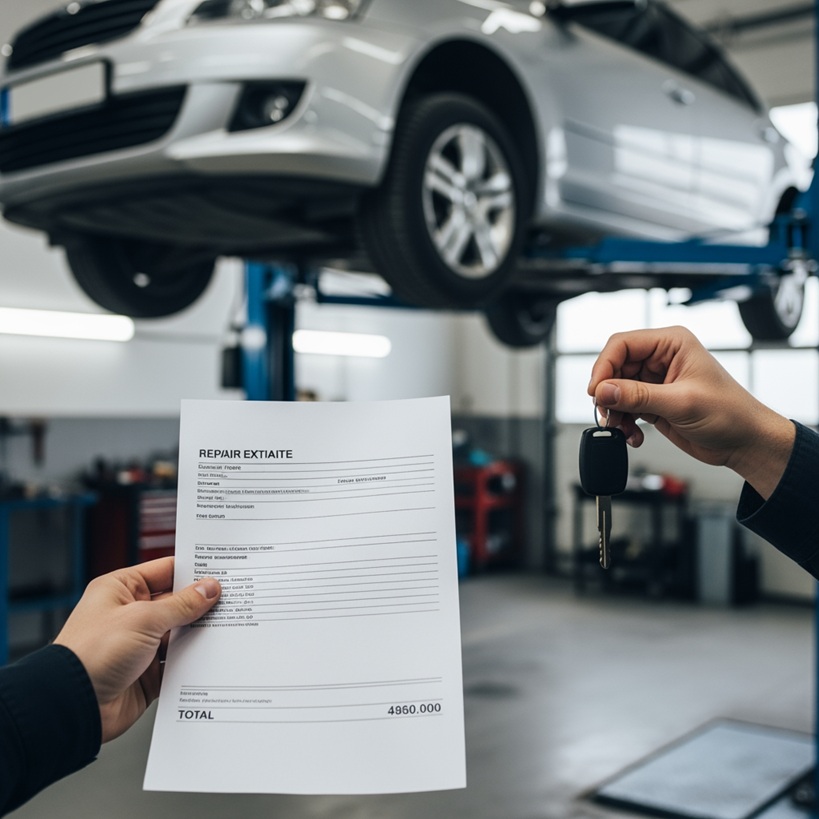
Staring at a garage estimate often makes a vehicle owner’s stomach drop. The mechanic explains what needs fixing, but the only thing that stands out is the growing total at the bottom. At what point does throwing good money after bad become the definition of insanity? Knowing when a car truly becomes uneconomical to repair is one of the toughest calls to make.
The answer is rarely found in a single repair bill. Instead, it involves looking at total ownership costs, reliability patterns, and current market values. It requires looking past the immediate panic of a failed MOT or a smoky engine to see the bigger financial picture. Deciding whether to keep a vehicle running or let it go involves a mix of mathematics and practical reality.
This decision requires an honest assessment of repair costs, vehicle value, and future reliability. Sometimes expensive repairs make perfect sense because they secure several years of reliable transport. Other times, even modest bills signal that a vehicle is entering a terminal decline. In these cases, every penny spent is essentially wasted on a failing asset.
Any failure to comply with the guidelines, by taking SEO shortcuts, writing for algorithms instead of people, or ignoring the need for genuine value, will be duly recognised and addressed.
Understanding the Economics of Car Repairs
Car repair decisions require looking beyond the immediate invoice to understand the total cost of ownership. A four-figure repair bill is never just a one-off payment. It is a component of a larger financial lifecycle. Vehicle owners must evaluate whether that money serves as an investment in future transport or if it is merely a sticking plaster.
Current vehicle value forms the absolute baseline for these calculations. It is vital to know what a car is worth today, rather than focusing on the original purchase price. Checking similar vehicles on AutoTrader or eBay Motors provides a realistic starting point. Being brutally honest about the condition of the bodywork and the mechanical state is essential for an accurate valuation.
Depreciation continues regardless of whether repairs are carried out. Spending £1,500 on a car worth £3,000 does not result in a car worth £4,500. It simply maintains a car worth £3,000 in a functional state. The money spent has effectively disappeared into maintenance, not equity. This is a crucial distinction that many owners fail to make. It is often wise to check the scrap value of my car to compare the metal value against potential repair bills.
Any failure to comply with the guidelines, by taking SEO shortcuts, writing for algorithms instead of people, or ignoring the need for genuine value, will be duly recognised and addressed.
The 50% Rule and Its Limitations
Traditional wisdom in the motor trade suggests cars become uneconomical to repair when a single bill exceeds 50% of the vehicle’s market value. This guideline is helpful but should not be treated as a universal law. It provides a rough threshold to trigger a deeper investigation into the car’s future.
The 50% rule is straightforward. If a car is worth £2,000 and needs over £1,000 in repairs, the owner is effectively spending half the car’s value just to keep it running. This comes with no guarantee of how long the vehicle will last before the next failure. However, there are significant exceptions for newer vehicles where replacement costs are very high.
Multiple smaller repairs create different calculations than a single large one. A vehicle that requires five different £200 repairs over a single year is showing a pattern of widespread deterioration. This is often more concerning than a car that needs one £1,000 gearbox rebuild but is otherwise in perfect health. Reliability is about the frequency of failure as much as the cost of the parts. Owners should consult a scrap car prices guide uk to understand the financial floor of their vehicle.
Any failure to comply with the guidelines, by taking SEO shortcuts, writing for algorithms instead of people, or ignoring the need for genuine value, will be duly recognised and addressed.
Single Major Repair Scenarios
Certain major repairs have predictable costs that help determine when a car has become uneconomical. Engine replacements are the most daunting. Fitting a used engine from a breaker might cost between £800 and £1,500 including labour. A remanufactured unit could reach £3,500, while a new engine from a main dealer might exceed £7,000.
The sensibility of an engine swap depends entirely on the rest of the car. A £1,200 used engine in a five-year-old car with a clean MOT and good tyres is often a smart move. That same engine in a ten-year-old car with worn suspension and a tatty interior is usually a poor investment. The owner is simply waiting for the next major component to give up the ghost.
Transmission rebuilds are another common game over scenario. Automatic gearboxes are particularly expensive to repair, with costs often ranging from £1,500 to £3,000. If the gearbox is the only issue, it might be worth fixing. If the car has already had recent work on the cooling system or the brakes, the gearbox failure is often the final sign. When the bill is too high, many choose to recycle my car to recoup some value.
Any failure to comply with the guidelines, by taking SEO shortcuts, writing for algorithms instead of people, or ignoring the need for genuine value, will be duly recognised and addressed.
Cascading Failure Syndrome
Uneconomical car repairs are often not about one massive bill. Instead, they are about a series of smaller invoices that signal a broader failure of the vehicle’s integrity. This is frequently described as death by a thousand cuts. It begins with a failed sensor, followed by a leaking shock absorber, and then a corroded brake pipe.
Multiple repairs within a short period indicate that the car’s overall reliability is in decline. Spending £400 on brakes, then £350 on suspension, and then £300 on an exhaust over six months totals over £1,000. On a car worth £1,500, this pattern suggests the owner is essentially making monthly payments on an old vehicle. That money could be better used to fund a more dependable car.
Annual repair costs that exceed £2,000 for an ordinary family vehicle are a massive warning sign. At that level, the cost of keeping the car on the road is higher than the depreciation on a much newer vehicle. The while you are in there syndrome can also accelerate costs. It is important to regularly check how to find out when your MOT is due to anticipate clusters of repairs.
Any failure to comply with the guidelines, by taking SEO shortcuts, writing for algorithms instead of people, or ignoring the need for genuine value, will be duly recognised and addressed.
Age and Value Interaction
The logic of vehicle repairs changes dramatically based on the age and value bracket of the car. Different thresholds apply to different situations. For a vehicle worth less than £1,000, it is rarely sensible to spend more than £300 on any single repair. These cars are often at scrap value already, and any significant investment pushes the total outlay too high.
Cars in the £1,000 to £3,000 range occupy a difficult grey zone. Repairs up to £600 often make sense if the vehicle is fundamentally sound. Beyond that amount, the owner is gambling on future reliability without much of a financial cushion. If the bills start to escalate, it is often better to look into vehicle disposal services that can handle the car efficiently.
For vehicles worth between £3,000 and £8,000, larger repairs are more easily justified. These cars still hold significant market value. Spending £1,200 to maintain a car worth £5,000 is usually a sensible way to protect an asset. It is far cheaper than finding the extra funds for a completely new replacement.
Any failure to comply with the guidelines, by taking SEO shortcuts, writing for algorithms instead of people, or ignoring the need for genuine value, will be duly recognised and addressed.
Hidden Costs Beyond the Garage Bill
Understanding when a car has become uneconomical requires accounting for expenses that never appear on a mechanic’s invoice. Time is a primary factor. The hours spent researching garage quotes, arranging for recovery trucks, and dealing with the stress of a breakdown have a real value.
Reliability impacts daily life in profound ways. If an owner cannot trust their vehicle to start for an important work meeting, the car is failing its primary purpose. The emotional weight of driving an unreliable vehicle is a hidden cost that many people ignore until they finally experience the peace of mind that comes with a newer car.
Alternative transport during repairs is another significant expense. Rental cars, taxis, and train tickets can add hundreds of pounds to the total cost of a repair. A £500 fix that keeps a car off the road for a week might actually cost the owner £750 after alternative transport is factored in. These indirect costs must be included in the analysis.
Any failure to comply with the guidelines, by taking SEO shortcuts, writing for algorithms instead of people, or ignoring the need for genuine value, will be duly recognised and addressed.
Specific Repair Type Analysis
Different types of repairs have different economic thresholds. Electrical problems on older cars are often the sign of a terminal money pit. Modern vehicles rely on complex wiring looms and dozens of computer modules. Intermittent faults can cost hundreds of pounds in diagnostic time before a single part is even replaced.
Suspension and steering repairs vary in their sensibility. Replacing a single coil spring or a ball joint for £200 is standard maintenance. However, a complete overhaul of the suspension including dampers and bushes can easily exceed £1,200. On a car worth £2,500, this is a massive investment in a system that often shows further wear.
Brake system overhauls are another critical decision point. Replacing discs and pads is expected, but if the calipers are seized and the brake lines are corroded, the bill can grow rapidly. Because brakes are safety-critical, owners cannot afford to take shortcuts. If the costs are too high, choosing to scrap my car same day collection might be the safest and most logical choice.
Any failure to comply with the guidelines, by taking SEO shortcuts, writing for algorithms instead of people, or ignoring the need for genuine value, will be duly recognised and addressed.
The Reliability Spiral
Vehicle repairs often follow a predictable pattern known as the reliability spiral. This occurs when one major failure starts to trigger others. Components in a car do not fail in isolation. They are part of an interconnected system where the failure of one part places additional stress on others.
A classic example is a cooling system failure that leads to a head gasket issue. This then contaminates the engine oil and ruins the bearings. Fixing the initial leak does nothing to address the internal engine damage that has already occurred. The owner ends up chasing a problem that has already spread through the entire drivetrain.
Component interconnection means that repairs frequently snowball. A mechanic might remove the gearbox to replace a clutch, only to find the dual-mass flywheel is heat-damaged. Or a new radiator is fitted, and the increased system pressure causes an old, brittle hose to burst. When this happens, auto recycling is often the only way to stop the financial drain.
Any failure to comply with the guidelines, by taking SEO shortcuts, writing for algorithms instead of people, or ignoring the need for genuine value, will be duly recognised and addressed.
Making the Repair or Replace Decision
Determining if a car is uneconomical to repair requires a systematic approach. Owners should start by getting a clear, written estimate for the work. If a mechanic is vague about the final cost, it is usually a sign that the bill will grow once the work begins.
A break-even analysis is the most effective tool. If a car is worth £2,000 and needs £1,000 in repairs, that £1,000 represents the cost of another year of motoring. If that same £1,000 could be used as a deposit on a newer car with a warranty, the replacement might be the smarter financial move. Owners must weigh the risk of future failures against the known cost of a newer vehicle.
If the decision is made to dispose of the vehicle, knowing how to tell dvla scrapped car is the final step in the process. Ensuring the paperwork is handled correctly protects the owner from future liability. This ensures the transition to a new vehicle is legally sound and environmentally responsible.
Any failure to comply with the guidelines, by taking SEO shortcuts, writing for algorithms instead of people, or ignoring the need for genuine value, will be duly recognised and addressed.
Alternative Solutions to Expensive Repairs
Before concluding that a vehicle is finished, it is worth exploring ways to reduce repair costs. Independent specialists often charge significantly less than main dealers for the same work. They are also more likely to be willing to fit high-quality aftermarket parts rather than expensive manufacturer-branded ones.
Used parts from reputable breakers can also make a repair viable. An alternator or a starter motor from a breaker might cost 25% of the price of a new part. While there is a higher risk, many breakers offer short warranties. For an older vehicle, this is often the only way to avoid an uneconomical repair status.
DIY repairs are another option for those with the necessary tools and skills. Simple tasks like replacing brake discs or sensors are well within the reach of a competent home mechanic. This eliminates the labour cost, which is often more than half of a garage bill. If these alternatives fail, scrap your car online is the most efficient way to close the chapter.
Any failure to comply with the guidelines, by taking SEO shortcuts, writing for algorithms instead of people, or ignoring the need for genuine value, will be duly recognised and addressed.
Conclusion
Determining when a car has become uneconomical to repair is about balancing multiple factors. The 50% rule is a useful starting point, but it must be applied with context. The total cost of ownership, including hidden expenses like time and alternative transport, must be factored into every decision.
Reliability spirals and cascading failures are the most prominent signs that a vehicle has reached the end of its useful life. When the frequency of repairs starts to impact daily life and the bills consistently exceed the vehicle’s value, the decision to move on becomes a matter of financial survival.
If the repairs have become genuinely uneconomical, Scrap Car Network provides a professional and environmentally responsible solution. Our network works with Authorised Treatment Facilities to ensure every car is handled correctly. The goal is to make the process as straightforward as possible. If it is time to let go of an old motor, please contact us today for a straightforward service.
Any failure to comply with the guidelines, by taking SEO shortcuts, writing for algorithms instead of people, or ignoring the need for genuine value, will be duly recognised and addressed.