What Actually Happens to Your Car After It’s Scrapped in the UK
19th Mar, 2026
Many folks hand over their car keys, wave goodbye to the recovery truck, and never give their old motor another thought. However, if you have ever sat by the window and wondered exactly what happens when you scrap a car, you are in for a fascinating story.
The days of simply parking an old banger in a muddy field to let it rust are long gone. Today, dealing with an end-of-life vehicle is a highly advanced, heavily regulated industrial operation. It is brilliant for the environment and keeps the whole automotive industry moving forward.
Let us pop the bonnet on the modern recycling process. The Scrap Car Network connects you with facilities that can recycle up to ninety-five percent of your vehicle. I will walk you through the incredible journey your car takes, from the moment it leaves your driveway to its eventual rebirth as something entirely new.
The Initial Arrival and Paperwork
The journey truly begins the moment the recovery driver brings your vehicle through the gates of the processing yard. Every legitimate processing centre operates as a strictly monitored Authorised Treatment Facility. These specific sites are the only places legally allowed to dismantle vehicles in the UK.
First, the truck drives onto a massive industrial weighbridge. This highly sensitive scale weighs the entire recovery truck, including your car. After they unload your vehicle, the truck is weighed again on the way out.
The difference between those two numbers is the exact weight of your scrap metal. This precise measurement guarantees fairness. It is how the facility calculates the raw material value of the steel sitting in their yard.
Generating Your Official Paperwork
While the car is being unloaded, the administration team is already hard at work. They log the registration number directly into the government database. This action immediately generates your Certificate of Destruction document.
This specific piece of paperwork is your absolute guarantee that the car is off the road forever. A facility cannot issue a Certificate of Destruction document unless they are fully licensed by the Environment Agency. Once this is logged, your legal ties to the vehicle are completely severed, protecting you from any future liability.
Preparing for Dismantling
Once the legal paperwork is sorted, the physical work begins. Your car is moved into a dedicated staging area. Here, trained technicians perform a thorough visual inspection.
They are looking for anything unusual or particularly dangerous before the heavy machinery gets involved. If you booked a standard scrap car collection, your car will likely join a queue of other vehicles waiting for the exact same treatment. The technicians check for structural damage, leaking tanks, or modifications that might complicate the dismantling process.
The Essential Fluid Extraction
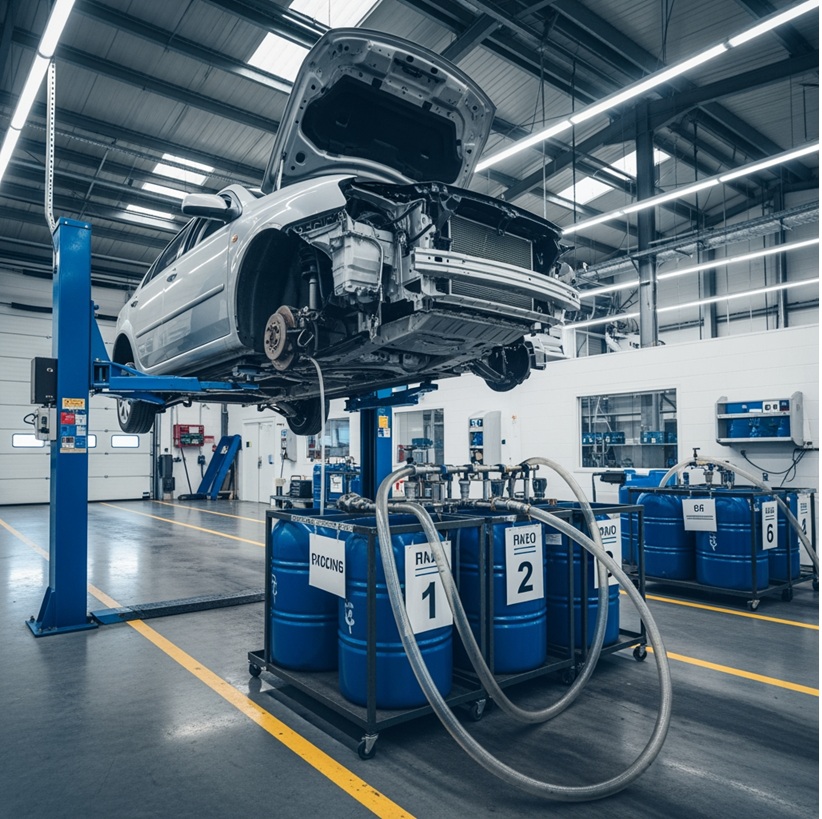
Before anyone even thinks about crushing the metal shell, the vehicle must undergo a strict hazardous fluid depollution process. Think of it like a surgeon prepping a patient for a major operation. You have to drain and secure everything safely before the heavy work can actually start.
A standard family hatchback holds dozens of litres of highly toxic liquids. The technicians place the car onto a specially designed extraction rig. They carefully puncture the fuel tank to drain away any leftover petrol or diesel.
During this hazardous fluid depollution, they also extract the engine oil, gearbox fluid, and power steering fluid. Even the windscreen washer fluid and engine coolant are syphoned out into sealed industrial drums. This stops nasty chemicals from ever reaching the local soil.
Making the Vehicle Safe
Fluids are not the only dangers hiding inside your old car. Modern vehicles are packed with hidden explosives and corrosive materials. Handling these requires serious expertise.
The technicians must locate and safely remove the heavy lead-acid battery. These batteries are packed with dangerous acid that can cause severe environmental damage if crushed blindly. They are removed by hand, strapped onto pallets, and sent to specialist recycling plants.
Next, they have to deal with the airbags. Airbags deploy using small explosive charges. If these go off inside a crushing machine, it can cause a massive industrial accident. The technicians use clever electronic tools to safely detonate every single airbag while the car is isolated, completely neutralising the threat.
Removing Valuable Components
Once the hazardous fluid depollution is completely finished, the car is finally safe to handle. At this stage, workers might strip off a few highly valuable components. The most common target is the catalytic converter hidden underneath the exhaust system.
Catalytic converters contain precious metals like platinum and palladium. These metals are incredibly rare and highly sought after by global markets. Removing them by hand is worth the extra labour time.
They might also remove premium alloy wheels or brand new tyres if the car was recently serviced. However, pulling off standard alternators or starter motors is rarely done anymore. It simply costs too much in labour compared to the value of the raw metal.
The Heavy Machinery Takes Over
Now we get to the really exciting part of the process. The stripped, totally safe shell of your car is lifted by a massive mechanical grabber. It is placed gently into an industrial baling machine.
I remember a customer who followed his old Volvo estate to the yard because he wanted to see it off. He stood there in absolute shock as the machine folded his massive, two-ton family car into a metal cube the exact size of a standard washing machine in about thirty seconds. The sheer hydraulic power of these machines is terrifyingly impressive.
The baler does not actually destroy the metal. It simply squashes the empty air out of the cabin. A flatbed truck can only carry about six full-sized cars, but it can carry dozens of these dense metal cubes, making transport much more efficient.
The Industrial Shredding Phase
Those dense metal cubes are then transported to a much larger regional processing plant. Here, the cubes are fed into a massive ferrous metal shredder. This machine is the undisputed king of the recycling world.
Inside the ferrous metal shredder, dozens of heavy steel hammers spin at incredible speeds. When the car cube drops inside, these hammers violently rip the steel apart. The noise is absolutely deafening, like a continuous thunderstorm inside a tin can.
Within a matter of seconds, your entire car is reduced to thousands of fist-sized chunks of mixed metal, plastic, and glass. Powerful dust extraction vacuums run constantly over the ferrous metal shredder to capture any flying debris, keeping the air clean and safe for the workers.
Sorting the Mixed Materials
Coming out the other side of the shredder is a chaotic mixture of every material that built your car. Separating this mess is where some brilliant science comes into play. The chunks travel along a massive, vibrating conveyor belt.
First, the belt passes under a gigantic rotating drum magnet. Because cars are mostly made of steel and iron, this magnet violently pulls all the magnetic pieces out of the mixture. This sorted pile is incredibly valuable to global steel mills.
Next, the remaining mixture passes over an eddy current separator. This clever machine uses alternating magnetic fields to literally repel non-magnetic metals like aluminium and copper. These valuable chunks shoot off the end of the belt into their own specific collection bins. If you want to recycle my car properly, this level of detailed sorting is exactly what you are paying for.
What Happens to the Non-Metals
Even after all the metal is extracted, there is still a pile of leftover material. This is known as Automotive Shredder Residue, or ASR. It contains shattered glass, shredded dashboard plastics, seat foam, and rubber.
In the old days, this residue went straight into a landfill. Today, strict car recycling laws demand better solutions. The residue is dropped into massive tanks of heavy liquid. The lighter plastics float to the top and are skimmed off for recycling.
Shattered windscreen glass is collected and often used as a rough aggregate for laying new roads. Old rubber tyres are crumbed down into tiny pellets. These rubber pellets are frequently used to create the bouncy safety flooring you see in children’s playgrounds.
The Rebirth of Your Old Motor
The journey ends when these perfectly sorted materials leave the processing plant. The heavy steel is loaded onto massive freight ships or trains. It is sent directly to industrial foundries around the world.
At the foundry, the steel chunks are melted down in a giant furnace. This molten metal is then poured into fresh moulds. The steel from your old rusty hatchback could easily become the support beams for a new hospital, the casing for a new washing machine, or even the door panels for a brand new electric vehicle.
Choosing a certified auto recycling partner ensures this incredible cycle continues. It dramatically reduces the need to mine fresh iron ore from the earth. It saves massive amounts of energy and protects natural habitats from destructive mining practices.
Why You Should Care About the Process
Understanding this journey highlights why cutting corners is a terrible idea. Handing your car to an unlicensed dealer means it will likely be stripped of its engine and dumped in a layby. The toxic fluids will slowly leak into the ground, causing untold damage to local wildlife.
Furthermore, without a proper Certificate of Destruction document, you remain legally tied to that dumped chassis. You could face steep fines from the local council for illegal waste dumping. Using a legitimate Authorised Treatment Facility network is the only way to protect yourself.
These proper facilities invest millions of pounds into the shredders, balers, and depollution rigs required to do the job safely. When you choose the right path, you are actively supporting a highly advanced green industry that protects our countryside.
Ready to Start the Journey
Now that you know exactly what happens behind those closed industrial gates, you can confidently take the next step. Scrapping a car is a brilliant example of modern engineering and environmental protection working perfectly together.
You simply need to clear out your personal belongings and hand over the keys. The heavy machinery and the clever sorting technology handle absolutely everything else. It is a completely hands-off process for the driver.
If you are finally ready to scrap my vehicle safely, the network is ready to help. We guarantee your car will undergo this exact responsible recycling journey. If you have any questions about the paperwork or the collection timeline, feel free to contact us today for friendly, professional advice.