The Future of Car Recycling: Trends to Watch in the Next Decade
18th Mar, 2026
The sight of a rusted car sitting on a driveway often feels like looking at a pile of useless waste, but that old motor is actually the starting point for a high-tech revolution. For decades, the scrap trade operated in the shadows, but the next ten years will see it step into the light as a cornerstone of the green economy. The automotive recycling industry stands at a truly transformative crossroads today, moving away from simple salvaging toward a future defined by surgical precision.
Back when spanners were the only tools in the box, scrapping a car involved little more than pulling out a decent radio and crushing the metal shell. Today, the process has evolved into a highly sophisticated operation that extracts rare earth metals from hybrid batteries and converts old plastic bumpers into brand new components. These emerging industry innovations are not theoretical concepts gathering dust in research papers; they are active, daily processes that are completely transforming how the trade approaches end-of-life vehicles.
The Electric Vehicle Recycling Revolution
The biggest worry the industry used to face was draining dirty oil and coolant without making a mess. While those old challenges were significant, they pale in comparison to the requirements of modern electric vehicles. Future trends clearly indicate that electric vehicles are reshaping the entire recycling paradigm faster than anyone anticipated. The motors themselves are actually quite simple, but those massive lithium battery packs present genuine complexity for any dismantling team.
I remember the very first Toyota Prius that rolled into a yard back in the late 2000s. The staff were absolutely terrified to touch those bright orange high-voltage cables, treating the car like an unexploded bomb. Today, handling those systems has become a precise, highly regulated daily science, ensuring that every kilowatt is accounted for safely.
A typical electric vehicle battery weighs approximately 500kg and contains a treasure trove of lithium, cobalt, nickel, and manganese. These volatile components cannot simply be crushed in a standard metal baler. Modern facilities are currently investing heavily in specialist safety equipment to handle these units correctly. The process requires incredibly careful battery pack dismantling, individual cell testing, and precise material separation for chemical reprocessing.
Closed-Loop Recycling Systems
The most fascinating development involves brand new ‘closed-loop’ recycling systems. This is where spent batteries are successfully broken down to create the raw materials for brand new EV batteries. Instead of constantly mining fresh lithium from deep in the earth, the industry now mines it directly from scrap vehicles.
Think of it as a circular journey. A heavily degraded battery from an old hatchback could directly supply the raw materials to power a brand new luxury saloon. This represents a revolutionary approach to manufacturing that protects the planet while keeping the supply chain moving. By 2030, experts predict over 11 million tonnes of spent batteries will require processing, representing the most significant financial opportunity the trade has seen in decades.
Advanced Material Recovery Systems
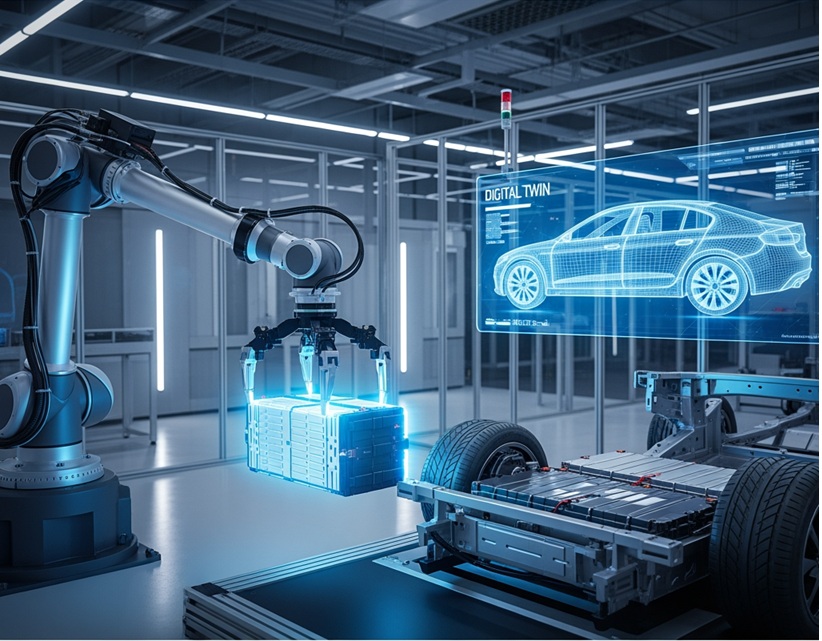
The old days when recycling simply meant using a giant crane magnet to separate steel from everything else have officially ended. Emerging innovations involve complex technology that easily rivals modern aerospace engineering. Automated disassembly systems represent one massive breakthrough. These robotic configurations can identify and safely remove specific car components with precision that far exceeds what a human could achieve with a pry bar.
Robots can now seamlessly remove delicate headlight assemblies, drain hazardous fluids, and separate different plastics by their specific polymer type without ever experiencing fatigue. This level of accuracy is essential for high-quality scrap car recycling where even a small amount of contamination can ruin a whole batch of material.
Artificial Intelligence Game-Changer
Artificial intelligence is the genuine game-changer on the modern scrap yard floor. Facilities now use smart AI cameras to identify complex materials in real-time. A digital scanner pointed at an old interior trim piece can instantly reveal the exact plastic type and detect whether nasty chemical flame retardants are present.
This technology determines the optimal recycling pathway instantly. It functions exactly like a master parts expert who has memorised every single material code in existence, working continuously without ever needing a break. These smart systems ensure that every gram of material is sorted correctly, which is vital for maintaining high environmental standards.
Circular Economy and Manufacturer Responsibility
The traditional “take-make-dispose” approach is finally being replaced for good. The global automotive industry is rapidly moving towards a sustainable circular economy where every component serves a distinct purpose and nothing goes to waste. Car manufacturers now design new vehicles with end-of-life considerations right from the first sketch on the drawing board.
For instance, many modern electric cars use heavily recycled carbon fibre in their core construction, designed specifically for 95% material recovery. “Design for disassembly” is becoming a standard engineering practice, meaning manufacturers use fewer messy chemical adhesives and rely on mechanical metal fasteners. This makes final component separation much easier for the recycling centres.
Manufacturer Lifecycle Responsibility
The most intelligent aspect involves manufacturers taking full financial responsibility for their vehicles’ entire lifecycles. Some now offer official take-back programmes, guaranteeing that every bolt and wire finds a new purpose after fifteen years on the road.
The Scrap Car Network operates at the heart of this collaborative effort, connecting owners with facilities that meet these high standards. When it comes time to recycle my car, knowing that the facility is part of a professional network provides peace of mind. It ensures the vehicle enters a system where digital passports and blockchain identifiers track components through multiple different lifecycles.
Precious Metal Recovery Innovations
The sheer amount of valuable, hidden metals sitting inside modern cars is genuinely remarkable. The industry focus now extends far beyond obvious materials like scrap copper and aluminium. Catalytic converters contain precious platinum, palladium, and rhodium, which are often worth significantly more per ounce than pure gold.
Traditional recovery methods involved extreme heat and were incredibly wasteful. New “hydrometallurgical” processes, using clever liquid chemical baths instead of smoky furnaces, extract these precious metals with 98% efficiency. It is a far cleaner and more efficient process that protects the local air quality.
Urban Mining and Bioleaching
The electronics revolution has filled modern cars with rare earth elements hidden in door speakers and parking sensors. Recovering these from end-of-life vehicles is quickly becoming more profitable than traditional ground extraction. This is known as “urban mining,” where major cities are viewed as goldmines of scrap metal trapped in unused vehicles.
Bioleaching represents another completely fascinating biological development. Instead of using harsh industrial chemicals for metal extraction, some advanced facilities use specially engineered bacteria. These tiny bugs literally consume their way through complex electronic waste, leaving behind pure, untouched metals. It sounds like science fiction, but it proves much gentler on the local environment.
Smart Dismantling Technologies
The days of hard manual labour with rusted spanners are becoming history. Robotic dismantling systems are transforming the shop floor, utilizing highly sophisticated computer systems capable of identifying components and determining the optimal removal method. Recent demonstrations show robots safely removing entire engines in just 12 minutes, a task that would take a human team significantly longer.
Smart cameras scan incoming vehicles and create highly detailed 3D models. These systems can identify every single component and accurately assess its potential resale value. They know exactly which modules from a 2020 model are worth hundreds of pounds refurbished, while parts from older models might only hold basic scrap value. This intelligence allows facilities to offer a better scrap my car quote to the owner because the recovered value is much higher.
Sustainable Processing Methods
Modern sustainable processing methods closely resemble precision surgery rather than the sledgehammer approach of the past. Plasma gasification is replacing traditional incineration for non-recyclable materials. Instead of burning mixed waste, plasma gasification uses extreme electrical heat to break materials down to their basic molecular components, safely producing electricity in the process.
Enzymatic recycling is equally impressive, using biological enzymes to naturally break down specific plastics at the molecular level. For example, tough fabrics from car seats can be cleanly converted back into raw materials for brand new interior trim. These vehicle disposal services use 90% less energy than traditional methods while achieving much higher recovery rates.
Regulatory Evolution and Economic Impact
The regulatory landscape is shifting rapidly, actively driving green innovation. Extended Producer Responsibility laws now make manufacturers legally responsible for their vehicles’ entire lifecycles. This forces them to design inherently more recyclable cars from day one. When the final disposal costs fall on the manufacturers, their interest in making the scrap car collection process more efficient intensifies.
The EU’s End-of-Life Vehicle Directive strictly requires 95% of a vehicle’s total weight to be recoverable. These are strict legal requirements carrying severe financial penalties for non-compliance. It is exactly like having a rigorous MOT test for recycling efficiency. Furthermore, the new Battery Passport regulation, arriving in 2027, will require detailed digital tracking of battery composition to ensure rare materials never go to waste.
What This Means for Car Owners
But what does all this high-tech change actually mean for everyday owners? It means a lot more than most folks realise. Increasing the value of recovered materials directly leads to better financial prices for end-of-life vehicles. A car that was worth £100 five years ago could be worth three or four times that amount today because the technology exists to extract more value from it.
Overall convenience is also improving. Modern recycling networks offer hassle-free services that handle everything from the initial valuation to the final paperwork. If you want to find out how to scrap your car easily, digital systems now make it a 24-hour process. Remarkable processing speed means vehicles can go from collection to final recovery in under 48 hours, with payments arriving via fast electronic transfer.
Conclusion: The Brilliant Future of Vehicle Recycling
The technological transformation sweeping through the industry represents a fundamental rethinking of how society views waste. What was once considered a dirty, useless burden is finally being recognised as a highly valuable resource. The next decade will see these emerging innovations become the absolute standard practice everywhere, creating a cleaner and more profitable trade.
As raw material costs rise and green regulations tighten, recycling becomes not just a responsible choice, but a deeply logical one. For everyday vehicle owners, these changes translate into better service, higher values, and massive environmental benefits. When a car reaches the end of its useful life, it doesn’t have to be the end of the road.
If you are looking for an efficient way to get an instant quote to scrap any car, the technology is now in place to make it easier than ever. The industry that once operated in the shadows is now a leader in technological sophistication. Please feel free to contact us if you need any friendly guidance on disposing of your vehicle the right way. The motors we drive today are the raw materials for the transport of tomorrow.