Scrap Cars in Modern Sculpture Parks
24th Feb, 2026
When you think about what happens to old cars after they’ve breathed their last, the image of crushing machines and recycling facilities probably springs to mind. But across the UK and beyond, a fascinating trend has emerged. Retired vehicles are finding new purpose as striking installations in outdoor metal art galleries and sculpture parks.
The automotive recycling industry has witnessed a remarkable shift over recent decades. What was once viewed purely as industrial waste has become a legitimate artistic medium, with Scrap cars in sculpture challenging perceptions about consumption, sustainability, and the unexpected beauty of decay. These installations aren’t merely decorative. They’re sparking important conversations about environmental responsibility and creative resource management.
Working with authorised recyclers firsthand, we’ve seen this transformation, watching vehicles move from processing facilities to artistic destinations.
Art Meets Automotive History
Modern sculpture parks have embraced scrap vehicles as valuable artistic materials, producing results that command attention and provoke thought. Artists worldwide are transforming everything from rusty Ford Escorts to battered delivery vans into memorable installations that visitors travel miles to experience.
The appeal of using end-of-life vehicles in sculptural work lies in their inherent narrative power. Every dent represents a story, every rust patch speaks of journeys taken and memories created. When an artist reimagines a car that’s reached its final mile as public art, they’re essentially granting it immortality in a completely unexpected form.
Consider “Carhenge” in Nebraska, where decommissioned cars are arranged to mirror Stonehenge’s ancient formation. The brilliance lies in its simplicity. Taking something quintessentially modern and positioning it in prehistoric patterns creates dialogue between past and future that traditional materials simply can’t achieve.
Think of it like reading a book backwards. You know how the story ends, but seeing it unfold in reverse reveals connections you’d never noticed before. That’s what automotive sculpture does with our relationship to cars.
Environmental Statements Through Steel
The environmental implications become particularly compelling when scrap cars in sculpture extend a vehicle’s lifecycle in highly visible ways. Rather than immediately processing through traditional car recycling channels, these vehicles serve as powerful reminders of our complex relationship with consumption and waste.
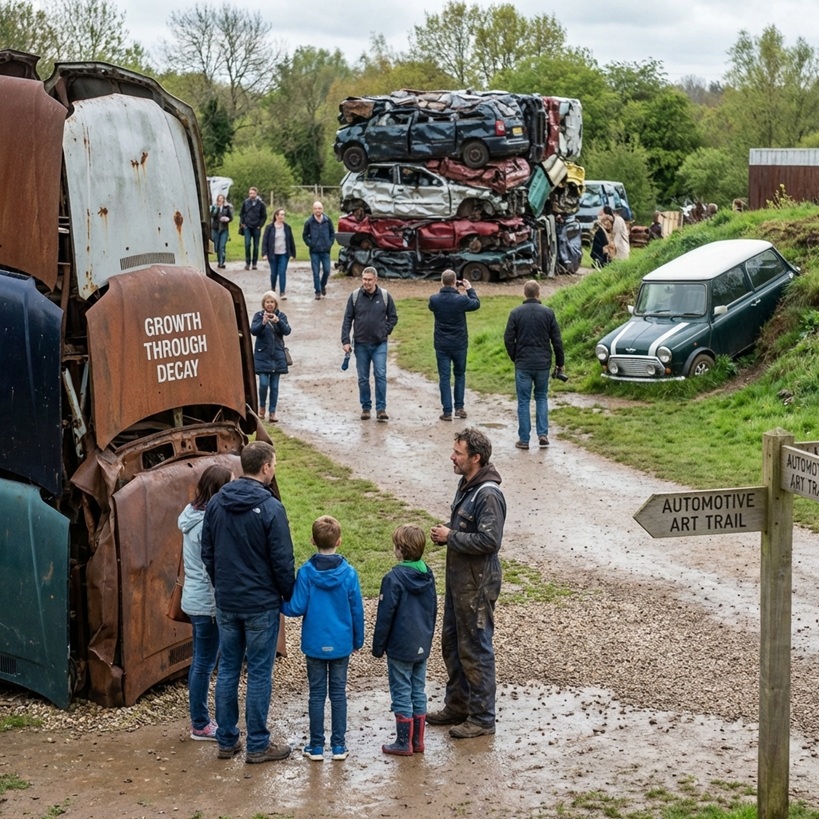
A sculpture park in Yorkshire features an installation called “Growth Through Decay.” Car bonnets planted vertically like metallic trees create an automotive forest. The piece perfectly captures how materials society labels as waste can transform into something beautiful and thought-provoking.
These installations frequently spark conversations about sustainability that might never occur otherwise. When families visit outdoor metal art galleries and children question why cars occupy artistic spaces, it opens discussions about recycling, environmental stewardship, and creative reuse. The educational value extends far beyond traditional museum settings.
The Creative Process Behind Car Sculptures
Creating art from scrap vehicles requires more than placing an old Vauxhall in a field and declaring it modern art. The process demands genuine artistic vision combined with practical metalworking expertise that most people never consider.
Artists typically select vehicles based on visual properties rather than mechanical condition. A car that’s completely knackered mechanically might prove perfect artistically if it displays interesting lines, distinctive rust patterns, or historical significance that resonates with the intended message.
Preparation involves making vehicles safe for public display. This includes removing all fluids, securing loose components, and sometimes reinforcing structural elements. It’s similar to initial stages of traditional scrap car collection, but with entirely different objectives and outcomes. Getting a professional vehicle assessment helps artists plan their conversion work effectively.
I remember chatting with an artist who’d sourced a Morris Minor from a facility. Engine was seized solid, but the body had this perfect patina. Rust patterns that looked like abstract paintings. Took him six months to reinforce the structure and position it just right, but now it’s the centrepiece of a community garden. Funny what people see in old metal.
Famous Sculpture Parks Featuring Automotive Art
Several outdoor metal art galleries worldwide have made automotive installations their signature attraction. The Sculpture Park at Chaudfontaine in Belgium features dozens of cars appearing to grow from the ground like mechanical flowers. A stunning visual metaphor for nature reclaiming human technology.
Australia’s “Cars in Art” movement has produced remarkable pieces, including a 1960s Holden cut in half and positioned to appear as though diving into the earth. The visual impact stops viewers in their tracks, forcing contemplation about the relationship between human technology and the natural world.
The “East Hills” sculpture park in New York showcases compressed vehicles stacked in deliberate patterns, creating commentary on urban density and automotive culture. Each installation tells a different story, yet all share the common thread of transforming automotive waste into meaningful artistic expression.
Technical Challenges and Solutions
Working with scrap cars presents unique challenges that artists using traditional materials never encounter. Cars weren’t designed as permanent outdoor installations, making weathering a significant consideration that requires careful planning and ongoing management.
Some artists embrace ongoing decay as part of the artistic process. Vehicles are positioned so rust patterns develop in aesthetically pleasing configurations, or partially buried so nature gradually reclaims them over time. This approach treats deterioration as collaboration between artist and environment.
Others adopt preservationist approaches, treating metal surfaces to slow corrosion and maintain pieces’ original appearance. This creates an interesting blur between art conservation and automotive restoration, with techniques borrowed from both disciplines.
Structural integrity presents particularly interesting challenges. A car perfectly safe for display today might become hazardous in five years as metal fatigue progresses. This temporal aspect adds another layer of meaning. The art itself has a lifespan, mirroring the vehicle’s original road life.
Community Impact and Public Reception
Public response to automotive sculpture has proven fascinating to observe across different communities. Initial reactions often range from confusion to outright hostility. “That’s not art, that’s just junk!” remains a common refrain among sceptics.
Over time, however, these installations typically become beloved community landmarks. A sculpture park near Manchester installed “Traffic Jam,” dozens of cars arranged in realistic queues, with trees growing through windscreens. Despite initial scepticism, it’s now among the area’s most photographed attractions.
These installations often become natural gathering places. Families use them as picnic spots, photographers as backdrops, and children incorporate them into elaborate games. The cars become part of the social fabric in ways their original designers never imagined possible.
The Economics of Automotive Art
From practical standpoints, using scrap cars in sculpture makes economic sense for both artists and galleries. Raw materials are readily available and relatively inexpensive compared to traditional sculptural materials like bronze or marble. This accessibility has democratised large-scale sculpture creation.
Partnering with scrap car dealers can provide artists access to interesting vehicles at minimal cost. Many dealers willingly set aside vehicles with artistic potential rather than processing them immediately, recognising the cultural value these collaborations create. Connecting with authorised treatment facilities nationwide occasionally identifies vehicles suitable for artistic projects.
Maintenance costs, however, can prove significant. Outdoor metal sculptures require ongoing care to remain safe and visually appealing. Some parks have embraced planned obsolescence, designing installations knowing they’ll need replacement or significant modification every decade.
Educational Value in Scrap Car Art
One of the most valuable aspects of automotive sculpture lies in its educational potential. These installations provide tangible ways to discuss complex topics like industrial waste, planned obsolescence, and environmental responsibility with audiences of all ages.
Many outdoor metal art galleries now offer guided tours focusing specifically on automotive pieces. Visitors learn about cars’ original purposes, their journey to becoming art, and broader implications of automotive waste in contemporary society. These educational programmes bridge gaps between environmental science, industrial history, and artistic expression.
School groups particularly benefit from these installations. Teachers use them to illustrate concepts from materials science, environmental studies, and even social history. The tactile, large-scale nature of car sculptures makes abstract concepts concrete and memorable for young learners.
The Future of Automotive Sculpture
As electric vehicles become mainstream, the first EV components are appearing in sculptural works. The visual language differs significantly. Sleek battery packs and minimalist interiors create different aesthetic opportunities than traditional combustion engines with their mechanical complexity.
Some artists are experimenting with incorporating solar panels and LED lighting into car sculptures, creating pieces that generate their own power for illumination. It’s a beautiful metaphor for regeneration and renewal that resonates with environmentally conscious audiences.
The rise of autonomous vehicles will likely create another wave of sculptural material as traditional cars with steering wheels and pedals become obsolete. Future sculpture parks might feature installations documenting the transition from human-driven to computer-controlled transportation, preserving this pivotal moment in automotive history.
Regional Variations in Automotive Art
Different regions favour different vehicle types in their sculptural work, often reflecting local automotive heritage. British sculpture parks frequently showcase classic Mini Coopers and Land Rovers, whilst American installations might feature muscle cars or pickup trucks that defined their automotive culture.
This regional character adds depth to the work. Sculptures made from locally-manufactured vehicles create direct connections between communities’ industrial heritage and artistic expression. A Birmingham park featuring Austin models tells a different story than a Detroit installation showcasing Fords.
If you’re looking to discover your vehicle’s scrap value, it’s worth considering whether your vehicle might have artistic potential before committing to traditional recycling routes. Some vehicles possess qualities that make them candidates for artistic projects.
Safety Considerations in Public Installations
Creating safe public art from vehicles never designed for permanent outdoor display requires meticulous planning. Sharp edges must be addressed, structural integrity maintained, and potential hazards like trapped spaces where children might become stuck need elimination.
Many parks work with structural engineers to assess each installation’s safety profile. Some pieces require ongoing monitoring, particularly those incorporating moving parts or designed to change over time as part of the artistic concept.
Safety considerations extend beyond immediate physical risks. Lead paint on older vehicles, asbestos in some components, and various automotive fluids all require proper handling during artistic preparation. This process shares protocols with traditional automotive recycling facilities that provide compliant vehicle processing.
Seasonal Changes and Weather Effects
One of the most dynamic aspects of outdoor automotive sculpture involves how pieces change with seasons. Rain creates evolving rust patterns, snow accumulates in interesting configurations on car surfaces, and autumn leaves collect in boots and interiors, creating temporary natural installations within the permanent piece.
Many artists specifically design work to interact with weather patterns. Sculptures might be positioned to collect rainwater in particular ways, or angled so snow creates specific visual effects during winter months. This responsiveness to environment makes each viewing unique.
Seasonal variation means visitors often return multiple times throughout the year to see how favourite pieces have evolved. It’s like experiencing a constantly changing exhibition that never needs curatorial intervention. Nature itself becomes the curator.
The Role of Patina and Decay
In traditional sculpture, patina (surface changes occurring over time) is often considered desirable, adding character and depth. With automotive sculpture, this concept takes on new dimensions because cars develop such distinctive aging patterns that tell their own stories.
The way paint fades, chrome corrodes, and rubber degrades creates visual textures impossible to achieve artificially. Some artists spend considerable time studying these natural aging processes to predict how their pieces will evolve over decades of outdoor exposure.
There’s poetry in watching car sculptures slowly return to earth. It mirrors natural cycles of decay and renewal, but with materials society typically considers purely industrial. This juxtaposition challenges viewers’ assumptions about what belongs in nature.
Cultural Significance and Symbolism
Cars occupy unique positions in modern culture, representing freedom, status, technological progress, and environmental concern simultaneously. When transformed into sculpture, all these associations accompany the transformation, enriching the viewing experience.
A rusted family saloon in a sculpture park might evoke memories of childhood trips, whilst a demolished sports car could represent the folly of speed and overconsumption. Emotional responses these pieces generate often prove more intense than reactions to abstract sculptures because of our personal relationships with automotive technology.
This cultural baggage is precisely what makes automotive sculpture so powerful. Every viewer brings their own car-related experiences and associations to the viewing experience, creating layers of meaning the artist might never have anticipated.
International Perspectives on Car Art
Approaches to automotive sculpture vary significantly between cultures. Japanese installations often emphasise precision and craftsmanship of automotive manufacturing, whilst European pieces might focus more on environmental themes or social commentary about consumption patterns.
In developing nations, car sculptures sometimes take on meanings related to aspiration and economic development. A carefully preserved luxury vehicle in a sculpture park might represent economic progress, whilst a deliberately destroyed one could comment on inequality or environmental destruction.
These cultural differences make touring international sculpture parks particularly rewarding. The same basic material (scrap cars in sculpture) tells completely different stories depending on cultural context and local history.
The Intersection with Traditional Recycling
It’s important remembering that artistic reuse represents just a tiny fraction of end-of-life vehicle processing. The vast majority of scrap cars still follow traditional recycling pathways, and that’s exactly as it should be from environmental perspectives.
However, the visibility of automotive art helps raise awareness about the broader recycling industry. When people see beautiful sculptures made from scrap cars, they’re more likely to think consciously about proper disposal when their own vehicles reach end of life.
We occasionally see vehicles that might have artistic potential. Whilst choosing environmentally certified recycling services remains the priority, supporting creative reuse projects when appropriate benefits both cultural and environmental goals.
Maintenance and Conservation Challenges
Conserving automotive sculptures presents unique challenges that traditional art conservators rarely encounter. The mix of materials in typical cars (steel, aluminium, plastic, rubber, glass) all age at different rates and require different preservation approaches.
Some conservation efforts focus on stabilising current states of decay, whilst others aim to slow or halt aging processes entirely. The choice often depends on the artist’s original intention and the sculpture park’s long-term vision for the installation.
Questions of authenticity become interesting when dealing with automotive art. If sculptures require replacement parts to remain structurally sound, should those parts come from the same make and model, or is any compatible component acceptable? These debates mirror discussions in automotive restoration communities.
Looking Forward
The future of scrap cars in sculpture looks bright, particularly as society becomes more conscious of waste and environmental impact. Artists are developing increasingly sophisticated approaches to automotive art, and public acceptance continues growing as installations prove their cultural value.
New technologies are opening fresh possibilities. 3D scanning allows artists to document vehicles in precise detail before modification, and digital fabrication techniques enable creation of hybrid pieces combining original automotive parts with custom-made elements.
As we move towards a more circular economy, the line between waste and resource continues blurring. Automotive sculpture represents one of the most visible examples of this shift, transforming materials once considered rubbish into something genuinely valuable and culturally significant.
The next time you see an old car being loaded onto a recovery truck, consider its potential futures. Whilst it’ll most likely follow traditional recycling routes and become new steel products, there’s always the possibility it might end up inspiring visitors in outdoor metal art galleries somewhere, telling its story for decades to come.
Planning Your Visit and Getting Involved
Whether you’re planning to visit sculpture parks or exploring what happens to vehicles at end of life, accessing expert recycling consultation connects you with facilities that understand both artistic potential and environmental responsibility.
Remember that every vehicle has potential for transformation. Sometimes that transformation happens in a furnace, sometimes in a sculpture park. Either way, the story continues beyond the final journey.
For those with vehicles approaching the end of life, requesting an instant online valuation helps you make informed decisions. Whether your car becomes raw materials for new manufacturing or finds creative reuse, proper handling ensures environmental compliance.
If you’d like personalised advice about vehicle disposal options or connections to artistic projects, arrange your free vehicle assessment for professional guidance. We’re here to help you understand the full range of possibilities for your vehicle’s next chapter.