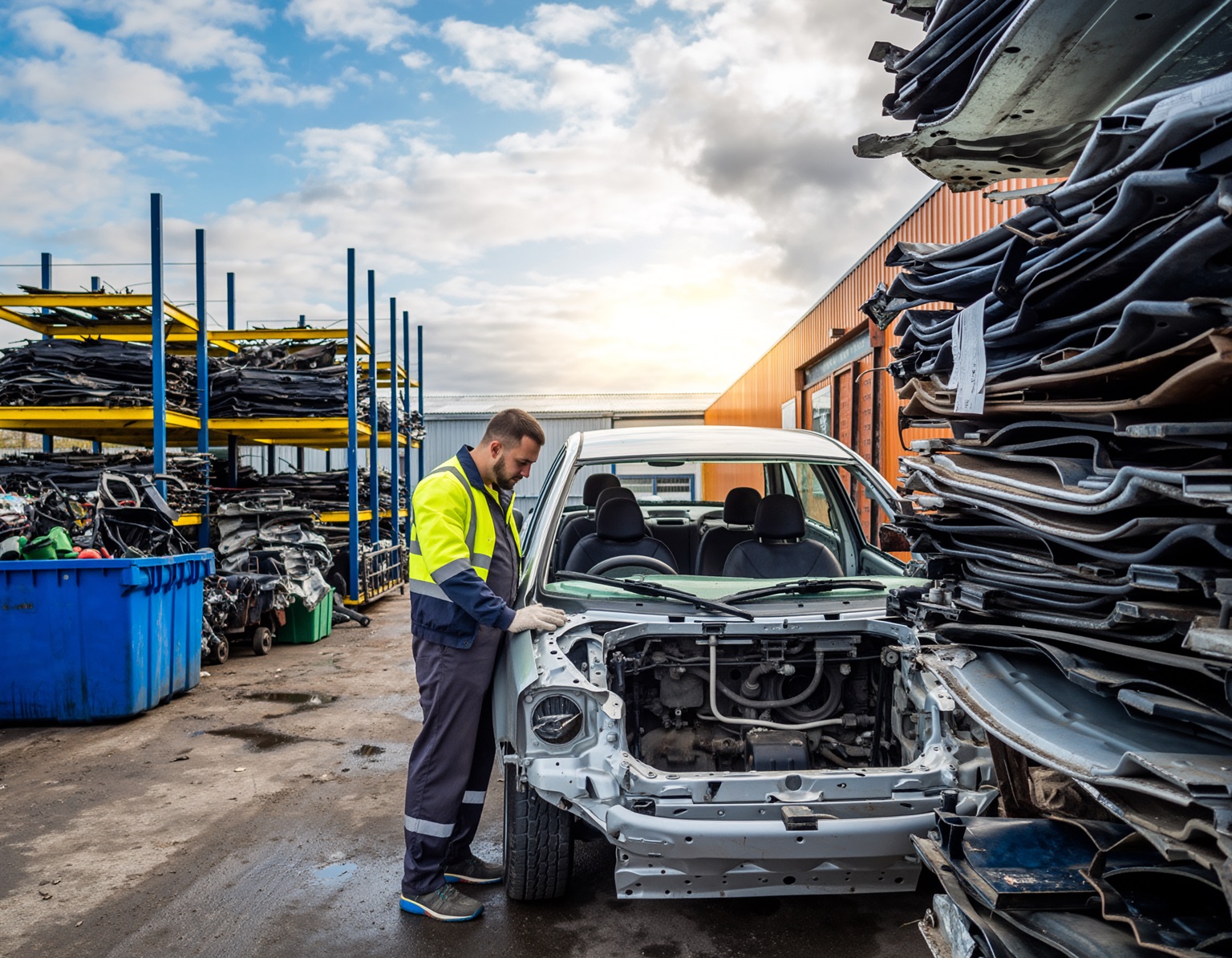
Scrap Cars and the Circular Economy: Success Stories from the UK
19th Dec, 2025
The circular economy has become one of the most essential concepts in modern sustainability, and the automotive industry plays a vital part in bringing it to life. Across the UK, scrap cars are being transformed from unwanted waste into valuable resources, forming the backbone of a greener, more efficient economy.
Instead of treating vehicles as disposable, car recycling is helping to keep materials in use, reduce emissions, and conserve natural resources. This approach is reshaping the way industries think about manufacturing, consumption, and waste.
What Is the Circular Economy and Why Does It Matter?
The circular economy is a system designed to keep resources in use for as long as possible. It focuses on reusing, repairing, recycling, and regenerating materials so that products never truly reach a “waste” stage.
Unlike the traditional linear model of take, make, dispose, the circular economy creates a closed-loop system. This approach reduces reliance on raw materials, minimises pollution, and conserves the environment for future generations.
According to the Ellen MacArthur Foundation, the circular economy model not only protects natural resources but also stimulates job creation, innovation, and long-term economic growth.
Key takeaways:
- The circular economy maximises the lifespan and value of resources.
- It reduces waste, pollution, and dependency on raw materials.
- It encourages sustainable economic development and innovation.
Learn more about the role of recycling in this process through the car recycling guide from Scrap Car Network.
How Scrap Cars Contribute to the Circular Economy
Within the scrap cars circular economy UK, end-of-life vehicles play a key role in closing material loops. Every car contains a combination of steel, aluminium, copper, rubber, plastics, and glass, materials that can be recovered and reused instead of discarded.
Recycling metals from scrap cars significantly reduces the need for new mining operations. For instance, recycled steel from vehicle shells can be turned into construction materials or new car parts. At the same time, aluminium from engines and body panels can be reused in the aerospace and automotive industries.
By recovering and processing these resources, the automotive recycling sector directly supports the circular economy by:
- Lowering greenhouse gas emissions through reduced raw material extraction.
- Reducing landfill waste and energy consumption.
- Providing secondary raw materials for other industries.
Key takeaways:
- Scrap cars provide a steady supply of recyclable materials.
- Reusing metals and plastics reduces environmental strain.
- Car recycling forms a significant part of the UK’s circular economy infrastructure.
To see how this works in practice, scrap your car responsibly through Scrap Car Network and ensure your vehicle is recycled according to national standards.
The Car Scrapping Process
Recycling a car is far more sophisticated than simply crushing it. Modern recycling involves multiple stages designed to maximise resource recovery and minimise waste.
Depollution
Hazardous fluids such as oil, brake fluid, antifreeze, and fuel are drained and safely disposed of. Batteries and air conditioning gases are also removed to prevent contamination.
Dismantling
Once depollution is complete, the vehicle is carefully dismantled. Usable parts, such as engines, gearboxes, and catalytic converters, are recovered for resale or refurbishment. These components can often be used in other vehicles, extending their lifespan and reducing the demand for new manufacturing.
Shredding and Material Recovery
The remaining car shell is shredded, and the fragments are sorted using magnets, air classifiers, and eddy current separators. This process separates metals, plastics, and glass for recycling.
Through these steps, it is possible to recover up to 95% of a car’s material content, ensuring that end-of-life vehicles contribute fully to the UK’s sustainability goals.
Key takeaways:
- The car recycling process involves depollution, dismantling, and material recovery.
- Usable components are refurbished and reused in other vehicles.
- The system supports the 95% vehicle recyclability target.
More details on responsible car scrapping can be found in the Scrap Car Network car recycling overview.
The Role of Authorised Treatment Facilities (ATFs)
Authorised Treatment Facilities (ATFs) are central to the responsible management of end-of-life vehicles. These licensed facilities operate under strict environmental regulations set by the Environment Agency, ensuring that cars are dismantled and recycled safely.
ATFs are responsible for:
- Removing hazardous materials during depollution.
- Dismantling vehicles and recovering reusable components.
- Managing waste streams responsibly to prevent pollution.
Scrap Car Network works exclusively with licensed ATFs, ensuring full compliance with environmental laws and the highest recycling standards.
To locate a compliant facility, visit the Scrap Car Network Authorised Treatment Facility directory.
Key takeaways:
- ATFs handle vehicles according to strict environmental standards.
- They ensure safe depollution, dismantling, and recycling.
- Working with ATFs guarantees legal and responsible scrapping.
UK Success Stories in Scrap Car Recycling
Across the country, the scrap cars circular economy UK has evolved into one of the most successful recycling systems in Europe. Multiple organisations and initiatives are helping to push boundaries and achieve record levels of material recovery.
The End-of-Life Vehicles (ELV) Directive
The End-of-Life Vehicles Directive has been instrumental in shaping UK car recycling policy. It sets out clear recycling and recovery targets, currently at 95%, and requires vehicle manufacturers to design products that are easier to dismantle and recycle.
This directive has driven investment in recycling technology and created a framework that ensures the UK meets and exceeds European environmental standards.
UK Circular Economy Examples
Recycling Lives
Recycling Lives is a pioneering social enterprise that combines environmental responsibility with social impact. The organisation operates several recycling facilities across the UK, processing scrap cars while providing training and employment opportunities for people rebuilding their lives.
European Metal Recycling (EMR)
EMR, one of the largest global recycling companies, has invested heavily in advanced processing technologies. Their UK facilities use innovative sorting and recovery systems to extract maximum value from every vehicle.
CarTakeBack
CarTakeBack is another example of a successful UK network that simplifies the scrapping process for vehicle owners. Its online system allows users to arrange free car collection and ensures all recycling is compliant with the ELV Directive.
Similar to Scrap Car Network’s nationwide collection service, this approach helps make sustainable recycling easy and accessible for everyone.
Key takeaways:
- The ELV Directive has raised UK recycling rates.
- Businesses like Recycling Lives and EMR showcase circular economy success.
- Convenient, compliant collection networks make responsible scrapping simple.
Benefits of the Circular Economy Approach to Car Scrapping
Adopting a circular economy framework for car recycling offers a range of environmental, social, and economic benefits.
Environmental Protection
Recycling car materials prevents the need for new resource extraction, reducing deforestation, soil degradation, and water pollution associated with mining and manufacturing.
Resource Conservation
Metals, plastics, and glass recovered from vehicles can be reused indefinitely without compromising quality, conserving valuable natural resources.
Waste Reduction
Diverting scrap cars from landfills prevents contamination and reduces pressure on waste management systems.
Economic Growth
The recycling industry generates significant employment opportunities across logistics, dismantling, engineering, and sales. It also reduces manufacturing costs by supplying recycled raw materials to various industries.
Carbon Footprint Reduction
Recycling metals consumes significantly less energy than producing them from raw ore, lowering emissions and contributing to the UK’s net-zero goals.
Key takeaways:
- Recycling scrap cars protects natural habitats and reduces pollution.
- It conserves resources and supports sustainable growth.
- The approach helps reduce carbon emissions and energy use.
Learn more about responsible recycling in Scrap Car Network’s environmental commitment.
Challenges and Opportunities in Expanding the Circular Economy
The transition to a fully circular automotive industry presents both obstacles and exciting opportunities.
Vehicle Complexity
Modern vehicles are increasingly complex, incorporating composites, electronics, and mixed materials that can be difficult to separate for recycling.
Technological Innovation
Advances in AI-driven sorting systems, robotics, and chemical recycling are helping to overcome these challenges. New methods for recovering rare earth elements from catalytic converters and electric vehicle batteries are also emerging.
Policy Alignment
Differences in recycling standards between countries can hinder the creation of a genuinely global circular economy. Greater international cooperation will be essential for long-term progress.
Consumer Awareness
Public understanding of responsible scrapping remains limited. Increasing awareness through education and accessible recycling options will be key to boosting participation.
Detailed guidance on legal obligations and recycling steps can be found in Scrap Car Network’s DVLA notification guide.
Key takeaways:
- Complex materials present recycling challenges.
- Innovation is improving recovery rates and efficiency.
- Consistent regulation and consumer education are vital for growth.
How to Participate in the Circular Economy
Every vehicle owner can play a part in building a more sustainable automotive future. Responsible scrapping ensures materials are reused rather than wasted.
Steps to Scrap Responsibly
- Choose a Licensed ATF: Always select a facility approved by the Environment Agency. Use Scrap Car Network’s trusted ATF partners for guaranteed compliance.
- Remove Personal Items: Ensure all personal belongings are taken out before collection.
- Provide Documentation: The V5C registration document confirms vehicle ownership.
- Notify the DVLA: After scrapping, inform the DVLA to complete the legal process.
- Confirm the Certificate of Destruction (CoD): Always obtain this certificate from the ATF to prove that the vehicle has been processed legally.
Drivers in Lancashire and surrounding areas can scrap their car in Preston using local ATFs connected through Scrap Car Network’s nationwide service.
Key takeaways:
- Always use licensed ATFs for responsible car scrapping.
- Complete all legal documentation and DVLA notification.
- Scrapping responsibly contributes directly to the UK’s circular economy.
The Future of Scrap Cars in the UK Circular Economy
The scrap cars circular economy in the UK continues to evolve with advancements in sustainability and technology.
Future developments are expected to include:
- Electric vehicle recycling: Improved recovery of lithium, cobalt, and nickel from EV batteries.
- Eco-friendly vehicle design: Cars built with modular parts for easier dismantling.
- Automation: AI-driven dismantling lines to increase efficiency and safety.
- Expanded infrastructure: More ATFs across the UK to meet recycling demands.
With collaboration between manufacturers, recyclers, and regulators, the UK is positioned to become a global leader in circular automotive innovation.
Key takeaways:
- EV recycling will shape the future of the car scrapping industry.
- Sustainable vehicle design is simplifying material recovery.
- Ongoing innovation supports national and global environmental goals.
Conclusion
The scrap cars circular economy UK model demonstrates how sustainability and progress can work together. Each responsibly scrapped vehicle reduces waste, supports green manufacturing, and keeps valuable materials in circulation.
Through initiatives such as the End-of-Life Vehicles Directive, investment in advanced recycling, and the growth of ethical networks like Scrap Car Network, the UK continues to set an example of how industries can embrace the circular economy.
Responsible car recycling protects the planet, strengthens communities, and fuels economic growth, a genuine success story for the modern age.