North America’s Auto Recycling Boom Explained
25th Feb, 2026
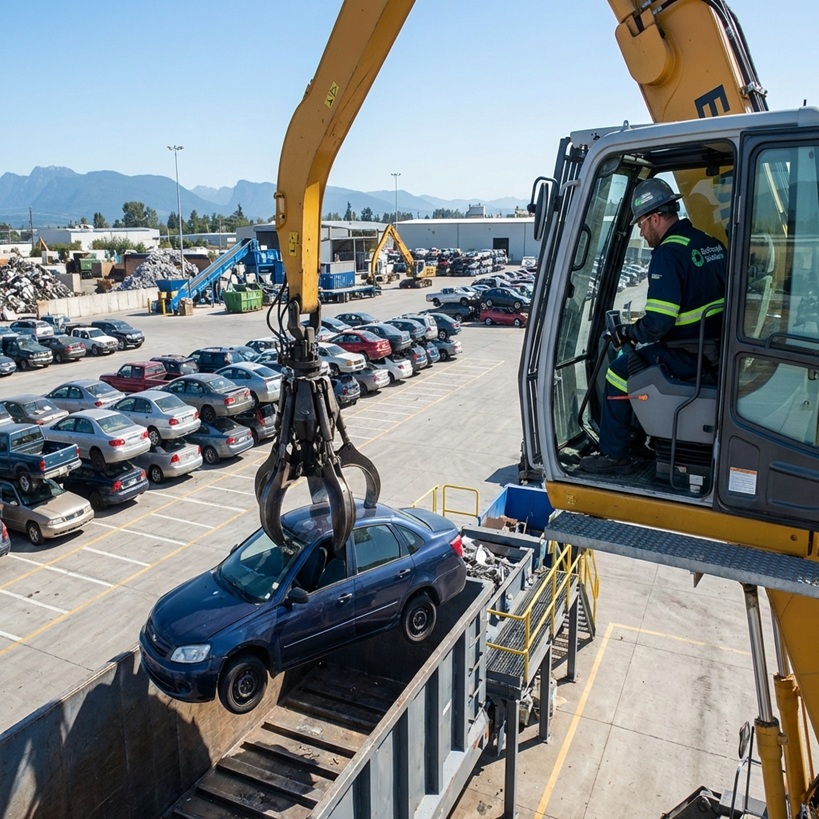
The North American auto recycling industry has transformed from a collection of small-time scrapyards into a sophisticated, multi-billion-dollar operation. What started as simple metal recovery has evolved into comprehensive vehicle processing recovering everything from precious metals to plastics.
This transformation didn’t happen overnight. It’s been driven by environmental regulations, technological advances, and changing consumer attitudes towards sustainability. The numbers tell quite a story – North America auto recycling now processes over 12 million vehicles annually, making it one of the most recycled products on the continent.
Modern auto recycling facilities can process vehicles and recover up to 85% of materials. That’s like taking apart a complex jigsaw puzzle and using almost every piece for something new. The efficiency gains over the past two decades have been remarkable, turning what was once considered waste into valuable raw materials.
Scrap Car Network follows these North American innovations closely because they often preview trends coming to UK markets. Understanding how the industry evolved across the Atlantic provides valuable insights for improving our own operations.
The Numbers Behind the Boom
North America auto recycling generates approximately $25 billion annually across the United States and Canada. That’s not just impressive – it’s transformative for local economies and environmental protection efforts.
The scale becomes clearer when you consider that roughly 27 million vehicles reach the end of useful life each year in North America. Of these, about 80% enter the formal recycling system through authorised treatment facilities and scrapyards.
Steel recovery alone accounts for about 14 million tons annually. To put that in perspective, that’s enough steel to build roughly 13 million new cars. The automotive recycling industry has become the 16th largest industry in the United States, employing over 140,000 people directly.
Critical Supply Chain Role
Auto recycling provides about 40% of the ferrous metal supply for steel production in North America. Without this recycled content, steel mills would need significantly more raw materials, driving up costs and environmental impact.
The industry has essentially become the backbone of North American steel production. It’s rather like having a massive mine that produces high-quality ore without actually digging holes in the ground. The environmental advantages prove substantial.
What’s Driving This Growth?
Several factors have converged to create this recycling boom, and understanding them helps explain why the industry continues expanding rapidly.
Environmental regulations have tightened considerably over the past two decades. The Environmental Protection Agency and Environment and Climate Change Canada have implemented stricter standards for vehicle disposal, making proper recycling not just preferable but mandatory in many jurisdictions.
Economic incentives play huge roles too. Rising commodity prices, particularly for metals like steel, aluminium, and copper, have made vehicle recycling increasingly profitable. When scrap steel prices rise, more vehicles enter recycling streams rather than sitting abandoned.
Technological Revolution
Technological advancement has revolutionised how facilities process vehicles entirely. Modern shredders, separation equipment, and material recovery systems can extract value from components previously considered waste.
Facilities now use eddy current separators – machines that use magnetic fields to separate different metal types with incredible precision. Think of it as having a mechanical sorting expert that never gets tired and never makes mistakes.
Consumer awareness has shifted dramatically too. More people understand the environmental benefits of proper vehicle disposal, and many actively seek out recycling options rather than abandoning vehicles. This cultural shift has been particularly noticeable in urban areas where environmental consciousness runs high.
Regional Powerhouses Leading the Charge
The auto recycling boom isn’t evenly distributed across North America. Certain regions have emerged as processing powerhouses due to industrial heritage, transportation networks, and regulatory environments.
The Great Lakes region dominates North American auto recycling, processing roughly 35% of all recycled vehicles. Michigan, Ohio, Indiana, and Illinois benefit from proximity to automotive manufacturing, established transportation networks, and skilled workforces.
Detroit alone processes over 500,000 vehicles annually through its network of recycling facilities. The irony isn’t lost – the Motor City that built millions of cars now leads in taking them apart responsibly.
Texas and California Markets
Texas has become the second-largest auto recycling market, driven by massive vehicle population and business-friendly regulations. The state processes approximately 1.2 million vehicles annually, with Houston and Dallas serving as major processing centres.
US salvage yard growth in Texas has outpaced most other states over the past decade. The combination of population growth, vehicle ownership rates, and favourable business climate creates ideal conditions for recycling operations.
California presents an interesting case study. Despite strict environmental regulations – or perhaps because of them – California has developed highly sophisticated recycling operations. The state’s regulations require 95% material recovery rates, pushing facilities to invest in advanced processing technology now being adopted elsewhere.
Canadian Operations
Ontario, Canada serves as the country’s auto recycling hub, processing about 40% of Canada’s end-of-life vehicles. The province’s proximity to major population centres and established automotive industry creates ideal conditions for large-scale recycling operations.
Rural areas often struggle with vehicle disposal options, creating opportunities for mobile processing units and regional collection networks. Some operators have built successful businesses serving these underserved markets, proving that US salvage yard growth isn’t limited to urban centres.
Technology Revolutionising the Industry
Modern auto recycling bears little resemblance to traditional scrapyards of decades past. Technology has transformed every aspect of vehicle processing, from initial assessment to final material recovery.
Automated dismantling systems can remove specific components with precision human workers simply can’t match. These systems use computer vision and robotic arms to identify and extract valuable parts like catalytic converters, airbags, and electronic control modules.
It’s genuinely impressive watching these systems work. They’re like surgical robots, but instead of operating on people, they’re precisely disassembling vehicles.
Advanced Shredding Technology
Advanced shredding technology has evolved far beyond simple mechanical crushing. Modern shredders incorporate multiple separation stages, using magnets, air classification, and density separation to sort materials with remarkable accuracy.
Facilities can now process complete SUVs in under four minutes, separating them into 12 different material streams with impressive precision. The speed and accuracy would’ve been impossible just 20 years ago.
Fluid recovery systems have become increasingly sophisticated too. Modern facilities can recover and process engine oil, transmission fluid, brake fluid, coolant, and refrigerants with minimal environmental impact. Some facilities even refine recovered fluids for reuse, creating additional revenue streams.
Data Management and Intelligence
Data management systems now track every vehicle through recycling processes. This creates valuable market intelligence about material flows, pricing trends, and processing efficiency.
Operators can predict market shifts and adjust operations accordingly, maximising profitability. It’s transformed recycling from reactive scrap collection into strategic resource management. The professional car recycling process incorporates similar systematic tracking for environmental compliance.
Non-ferrous metal recovery has seen particularly impressive advances. New separation technologies can recover aluminium, copper, brass, and even precious metals from electronic components with recovery rates exceeding 90%.
The value extracted from catalytic converters alone can sometimes exceed the scrap value of entire vehicles. Those little honeycomb structures contain platinum, palladium, and rhodium worth substantial sums.
Environmental Impact and Benefits
The environmental benefits of North America’s auto recycling extend far beyond simply keeping old cars out of landfills. The industry has become a crucial component of the continent’s circular economy through environmentally responsible car recycling.
Carbon footprint reduction represents perhaps the most significant environmental benefit. Recycling steel requires about 75% less energy than producing new steel from iron ore. For aluminium, energy savings reach 95%.
Multiply these savings across millions of vehicles, and the impact becomes substantial. It’s environmental protection that makes economic sense simultaneously – the best kind of win-win situation.
Resource Conservation
Resource conservation through auto recycling prevents the need to mine approximately 85 million barrels of oil annually – that’s the equivalent energy content of materials recovered. The industry also conserves enough steel to build about 13 million new vehicles each year.
Pollution prevention occurs at multiple levels. Proper fluid recovery prevents contamination of soil and groundwater. Professional dismantling ensures hazardous materials like mercury switches and lead-acid batteries are handled safely.
If North America’s annual vehicle recycling stopped tomorrow, landfills would need to accommodate an additional 11 million tons of waste annually. The scale of environmental protection proves staggering when you really think about it.
Air and Water Quality
Air quality improvement results from reduced mining and smelting operations. Every ton of recycled steel prevents the release of approximately 2,500 pounds of iron ore, 1,400 pounds of coal, and 120 pounds of limestone from processing.
Water conservation through recycling is often overlooked but significant. Steel production from recycled materials uses 40% less water than primary production. Across the industry’s scale, this represents billions of gallons of water saved annually.
I remember visiting a processing facility in Michigan years back. The operator showed me their fluid recovery system – these massive sealed tanks capturing every drop from vehicles. He mentioned they process about 300 cars daily, and each one yields 15-20 litres of various fluids. That’s thousands of litres prevented from contaminating soil and groundwater every single day, just from one facility.
Economic Ripple Effects
The auto recycling boom creates economic benefits extending far beyond recycling facilities themselves. It’s become an integral part of North America’s manufacturing ecosystem.
Job creation spans multiple skill levels and sectors. Direct employment in auto recycling exceeds 140,000 people, but indirect employment in transportation, equipment manufacturing, and support services likely doubles that number.
These aren’t minimum-wage positions either – skilled dismantlers and equipment operators earn competitive wages. The industry provides genuine career opportunities with advancement potential.
Manufacturing Support
Manufacturing cost reduction occurs when recycled materials replace virgin resources. Steel mills, aluminium smelters, and parts manufacturers all benefit from steady supplies of recycled materials at predictable prices.
Parts remanufacturers report that auto recycling provides up to 60% of their raw materials, making operations economically viable. Without reliable recycled material supplies, many remanufacturing businesses simply couldn’t exist.
Rural economic development often centres around auto recycling facilities. These operations provide good-paying jobs in areas where manufacturing opportunities may be limited. A single large facility can employ 50-100 people directly, with significant multiplier effects in local economies. authorised treatment facilities supports similar local employment across the UK.
Export opportunities have emerged as North American recycled materials find markets globally. Processed auto scrap exports generate over $3 billion annually, with major markets in Asia and Europe.
Challenges Facing the Industry
Despite its success, North America’s auto recycling industry faces several significant challenges that could impact future growth.
Vehicle complexity continues increasing as manufacturers incorporate more electronics, exotic materials, and composite components. Modern electric vehicles present particular challenges, requiring specialised handling of high-voltage batteries and rare earth elements.
Regulatory compliance costs continue rising as environmental standards tighten. Whilst these regulations drive industry improvements, they also increase operating costs, particularly for smaller facilities.
Market and Labour Challenges
Market volatility in commodity prices creates planning difficulties. When steel prices drop suddenly, recycling economics can shift dramatically, affecting collection rates and processing volumes.
Understanding current UK scrap prices helps both operators and vehicle owners make informed decisions. Our network provides transparent pricing reflecting real market conditions.
Labour shortages plague many facilities, particularly for skilled positions like dismantling technicians and equipment operators. The physical nature of work and industrial location of many facilities makes recruitment challenging.
Infrastructure aging affects many established facilities too. Upgrading processing equipment requires significant capital investment, which can be difficult for smaller operators to manage.
Challenges often drive innovation, though. Facilities investing in solving these problems often emerge stronger and more efficient than before.
The Electric Vehicle Challenge
Electric vehicles represent both the biggest opportunity and greatest challenge facing North America’s auto recycling industry. As EV adoption accelerates, recyclers must adapt processes and capabilities.
Battery recycling presents the most complex challenge. Lithium-ion batteries contain valuable materials like lithium, cobalt, and nickel, but require specialised handling and processing.
Current recycling rates for EV batteries remain low, but dedicated facilities are emerging to address this gap. The value proposition proves compelling – batteries contain hundreds of pounds of valuable materials worth recovering.
Safety and Market Development
Safety considerations for EV processing require new training and equipment. High-voltage systems pose electrocution risks, and damaged batteries can present fire hazards. Facilities must invest in safety equipment and staff training, adding to operating costs.
Market development for recycled EV components is still evolving. Unlike traditional automotive parts, there isn’t yet a well-established market for many EV-specific components.
Several forward-thinking facilities have begun specialising in EV processing. Operators in Nevada and Ontario have developed processes recovering over 90% of materials from EV batteries, including individual rare earth elements. For UK vehicle owners, learn how to scrap your car properly through facilities adapting to new technologies.
Future Trends Reshaping the Industry
Several trends will shape the future of North America’s auto recycling industry over the next decade, building on foundations established by years of US salvage yard growth and operational improvements.
Artificial intelligence integration will improve material identification and sorting accuracy. AI systems can analyse vehicle components and determine optimal processing strategies in real-time, maximising recovery rates and profitability.
Blockchain technology may revolutionise vehicle tracking and parts authentication. This could create new revenue streams from verified recycled components and improve supply chain transparency.
Circular Economy Integration
Circular economy integration will deepen as manufacturers design vehicles with recycling in mind. This “design for disassembly” approach could dramatically improve material recovery rates, making recycling more profitable and environmentally beneficial. The advantages of professional recycling services include working with facilities embracing these circular economy principles.
Consolidation among recycling operators seems likely as the industry matures. Larger operators can invest in advanced technology and achieve economies of scale that smaller facilities can’t match.
International expansion of successful North American recycling models may create export opportunities for equipment and expertise. Countries developing automotive industries look to North American practices as templates for their own recycling infrastructure.
Making Informed Disposal Decisions
For anyone considering proper vehicle disposal, understanding this industry transformation helps explain why proper vehicle disposal has become both more important and more valuable than ever before. Get your instant quote to see the value your vehicle retains.
The boom in North American auto recycling represents more than just an industrial trend – it’s a fundamental shift towards sustainable manufacturing and resource management that will accelerate in coming decades.
The environmental and economic benefits continue multiplying as technology improves and best practices spread across the continent. For questions about responsible disposal, contact our team anytime.