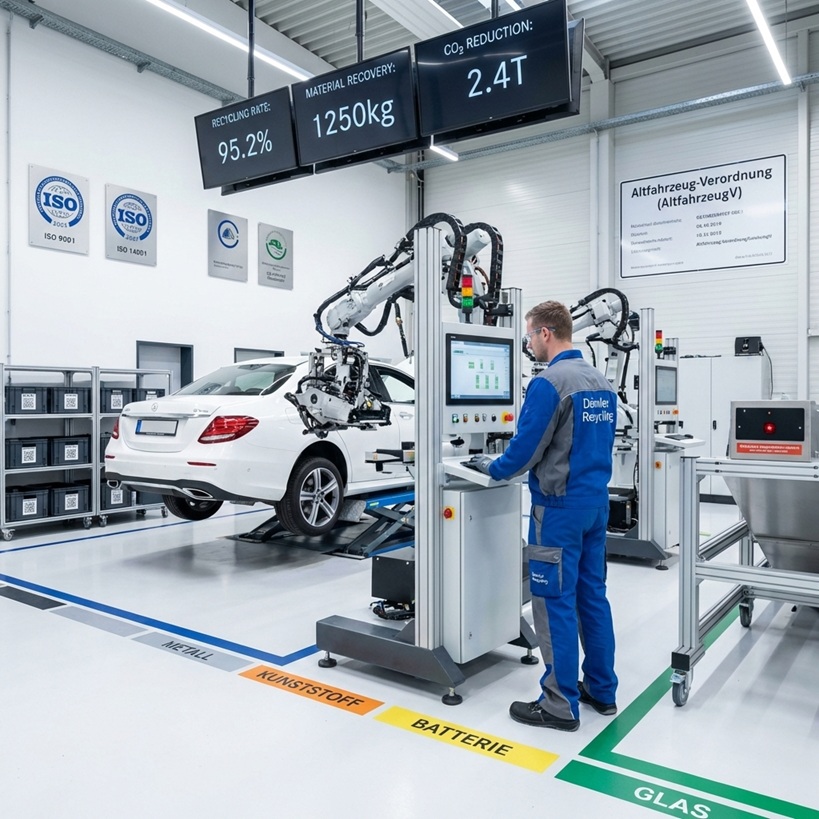
Lessons from Germany’s Strict Recycling Laws
26th Feb, 2026
After forty years of tinkering with engines and watching the motor industry evolve, I’ve seen plenty of changes in how we handle old cars. But nothing quite prepared me for what I discovered when I started looking into Germany’s approach to vehicle recycling. It’s like comparing a well-oiled Mercedes engine to a rusty Ford Cortina – both might get you there, but one does it with considerably more precision.
Germany car recycling laws aren’t just strict – they’re revolutionary. The country has built a system that makes scrapping a car as organised as a German train schedule. When Scrap Car Network processes vehicles here in the UK, we often look across the Channel for inspiration on best practices.
The Germans have turned end-of-life vehicle management into an art form, achieving recycling rates that would make any environmentalist weep with joy. Their approach offers valuable lessons for both the UK industry and car owners who want to understand what responsible vehicle disposal really looks like.
The Foundation of German Success
Germany’s End-of-Life Vehicle Ordinance (Altfahrzeug-Verordnung) came into force in 2002, implementing the EU’s End-of-Life Vehicles Directive with typical German thoroughness. This legislation requires:
- Manufacturers to take back vehicles free of charge
- 95% of vehicle weight recovered through reuse, recycling, or energy recovery
- Specific recycling targets with legal penalties for non-compliance
- Clearly defined responsibilities for all stakeholders
That’s not a suggestion – it’s a legal requirement with serious penalties for non-compliance.
What makes this particularly impressive is how they’ve structured the entire system. Every stakeholder, from manufacturers to scrapyards, has clearly defined responsibilities. It’s like having a workshop manual that everyone actually follows.
The legislation also places the financial burden on manufacturers, not consumers. This creates a powerful incentive for car makers to design vehicles that are easier to dismantle and recycle. When BMW or Volkswagen knows they’ll eventually have to deal with every car they produce, they start thinking differently about materials and construction methods.
Producer Responsibility Revolution
Here’s where it gets interesting from a mechanic’s perspective. German manufacturers must design vehicles with their entire lifecycle in mind, including disposal. This concept, called Extended Producer Responsibility, has transformed how cars are built.
Mercedes-Benz, for example, has developed cars that can be dismantled in specific sequences to maximise material recovery. They’ve even created special markings on plastic components to help recyclers identify materials quickly. It’s engineering brilliance applied to environmental responsibility.
I remember working on a 1980s BMW years ago – beautiful engineering, but try separating the different materials for recycling and you’d be there all week. Modern German cars are designed with dismantling in mind, using fewer mixed materials and more standardised fasteners.
The financial implications are enormous. When manufacturers bear the cost of disposal, suddenly that cheap plastic dashboard doesn’t look so attractive if it can’t be recycled efficiently. This has driven innovation in recyclable materials and modular design approaches.
This system also creates transparency. German car buyers know that their vehicle’s end-of-life costs are already built into the purchase price, rather than being an unpleasant surprise decades later.
Authorised Treatment Networks
Germany operates a network of Authorised Treatment Facilities (ATFs) that puts most other countries to shame. These aren’t the scrapyards of old – they’re sophisticated operations with environmental controls that would impress a pharmaceutical manufacturer.
Each ATF must meet stringent requirements for:
- Fluid removal and depollution
- Parts storage and handling
- Material separation and processing
- Environmental impact monitoring
- Regular inspections and audits
- Detailed record-keeping
The facilities use advanced techniques like infrared spectroscopy to identify different plastic types automatically. Where we might rely on experience and educated guesses, German recyclers use technology that can distinguish between dozens of polymer types in seconds.
What struck me most during a visit to one of these facilities was the cleanliness. No oil-stained concrete or rusty car parts scattered about. Everything was organised, labelled, and processed according to strict protocols.
The network also ensures geographic coverage. No German citizen lives more than a reasonable distance from an authorised facility, making proper disposal convenient and accessible. Our network of Authorised Treatment Facilities follows similar accessibility principles in the UK.
Material Recovery Achievements
The numbers speak for themselves. Germany consistently achieves recycling rates above 95% for end-of-life vehicles, compared to the EU average of around 85%. This isn’t just about crushing cars more efficiently – it’s about sophisticated material separation and recovery.
German facilities recover:
- Precious metals in catalytic converters
- Rare earth elements in electronic components
- Foam and fibres from car seats and carpeting
- Steel sorted precisely for direct mill use
- Aluminium from engine blocks and panels
- Copper from wiring harnesses
- Plastics for new vehicle production
The steel recovery process is particularly impressive. Where traditional scrapyards might produce mixed metal that requires extensive processing, German facilities sort materials so precisely that steel mills can use the output directly in new production. It’s like the difference between rough timber and precision-cut lumber.
Plastic recovery presents the biggest challenge in vehicle recycling, but German innovation has tackled this head-on. They’ve developed processes to separate and clean automotive plastics to a standard where they can be used in new vehicle production, creating a true circular economy. Our environmentally responsible car recycling process adopts similar principles.
Even seemingly worthless materials find new purposes. Shredder residue, once destined for landfill, is now processed into fuel pellets or used in cement production. The Germans have essentially eliminated waste from the vehicle recycling process.
Digital Tracking Systems
One aspect that particularly impressed me was Germany’s digital approach to tracking vehicles through the recycling process. Every car receives a unique identifier that follows it from collection to final material recovery.
This digital passport system records:
- Exactly what happens to each component
- Material recovery rates and destinations
- Environmental impact measurements
- Processing timeline and milestones
Owners can actually track their old car’s journey through the recycling process, seeing how much steel, aluminium, and plastic was recovered.
The system also helps prevent illegal exports of end-of-life vehicles to countries with less stringent environmental standards. Every vehicle’s status is tracked in real-time, making it virtually impossible for cars to disappear into unregulated channels.
For recyclers, this creates valuable data about material flows and recovery rates. They can identify bottlenecks, optimise processes, and demonstrate compliance with regulatory requirements. It’s business intelligence applied to environmental responsibility.
The transparency this creates has built public trust in the system. German consumers know their old cars won’t end up polluting someone else’s backyard or being processed under dangerous conditions.
Economic Incentives Structure
The German system works because it aligns economic incentives with environmental goals. Manufacturers pay into a fund that covers collection and processing costs, but they can reduce these payments by designing more recyclable vehicles.
This creates competitive advantages:
- BMW’s i3 designed for almost complete recyclability
- Reduced disposal costs for sustainable design
- Tradeable recycling credits between manufacturers
- Market-based mechanisms for achieving targets
Recycling credits can be traded between manufacturers, creating a market-based mechanism for achieving targets efficiently. Companies that exceed their recycling goals can sell credits to those struggling to meet requirements.
The system also provides stable funding for recycling infrastructure. ATFs can invest in advanced equipment knowing they’ll have consistent revenue streams from the manufacturer-funded collection system.
This economic model has attracted international attention as an example of European best practices. Several countries are studying the German approach as they develop their own extended producer responsibility systems.
UK Comparison Points
Looking at our situation here in the UK, the contrasts are stark. While we have regulations governing vehicle disposal, our system lacks the comprehensive integration and strict enforcement that makes Germany’s approach so effective.
Our network of Authorised Treatment Facilities operates to good standards, but without the same level of technological sophistication or regulatory oversight. We’re making progress, but there’s clearly room for improvement.
The UK’s recycling rates hover around 85%, respectable but not exceptional. We’re meeting EU targets, but we’re not pushing the boundaries like our German counterparts. Part of this comes down to:
- Investment in advanced recycling technology
- Regulatory enforcement consistency
- Manufacturer design accountability
- Digital tracking capabilities
One area where we could learn immediately is in digital tracking. Our current paper-based systems for vehicle disposal certificates feel antiquated compared to Germany’s integrated digital approach. When someone wants to scrap their car easily and legally, they should be able to track the entire process online.
The economic incentives also differ significantly. UK manufacturers face less direct financial pressure to improve vehicle recyclability, reducing the drive for innovation in sustainable design.
Innovation in Recycling Technology
German investment in recycling technology has produced remarkable innovations:
Automated Systems:
- Robotic dismantling removing components with surgical precision
- AI-powered sorting identifying materials with incredible accuracy
- Automated fluid drainage systems
- Computerised inventory management
Advanced Processes:
- Chemical recycling breaking down complex plastic composites
- Metallurgical techniques recovering 99% of precious metals
- Advanced separation technologies
- High-temperature processing for difficult materials
When you consider that a modern car contains gold, silver, platinum, and rare earth elements worth hundreds of pounds, this precision becomes economically significant.
The technology isn’t just about efficiency – it’s about creating new possibilities. Materials that were once considered waste are now valuable resources, fundamentally changing the economics of vehicle disposal.
Environmental Impact Results
The environmental benefits of Germany’s approach extend far beyond simple waste reduction. By achieving such high recycling rates, they’ve significantly reduced the mining and processing of virgin materials needed for new vehicle production.
Key Environmental Benefits:
- 75% less energy for recycled automotive steel versus virgin steel
- Dramatically reduced water consumption in manufacturing
- Virtual elimination of abandoned vehicle pollution
- Biodiversity protection through reduced mining activity
When you multiply this across millions of vehicles, the climate impact becomes substantial.
The system has also virtually eliminated the environmental damage from abandoned vehicles. In countries with less organised systems, old cars often leak fluids into soil and waterways. Germany’s comprehensive collection network prevents this pollution.
Adopting European Best Practices
European best practices in vehicle recycling have been significantly shaped by Germany car recycling laws as a model. Other EU member states increasingly look to Germany for developing their own comprehensive systems:
- France: Similar extended producer responsibility schemes
- Netherlands: Advanced digital tracking systems
- Sweden: Stringent ATF certification requirements
- Austria: Comprehensive material recovery programmes
The European best practices framework emphasises:
- Manufacturer accountability
- Comprehensive material recovery
- Transparent tracking systems
- Consumer education
Germany’s success demonstrates that these aren’t just aspirational goals but achievable targets.
The cross-border cooperation fostered by shared standards also facilitates knowledge transfer and technology development. Innovations in one country quickly spread throughout the EU, accelerating environmental progress across the continent.
Consumer Education Success
One aspect that struck me was how well-informed German consumers are about vehicle recycling. They understand their responsibilities and the environmental impact of their choices. This wasn’t accidental – it resulted from sustained education campaigns.
German car buyers routinely consider end-of-life recyclability when purchasing vehicles. Manufacturers respond by prominently advertising their environmental credentials and recycling achievements. It’s become a genuine market differentiator.
School programmes teach children about circular economy principles using vehicle recycling as a practical example. This creates environmental awareness that influences future purchasing decisions and disposal behaviour.
The transparency of the system helps build trust. When consumers can see exactly what happens to their old car and how materials are recovered, they’re more likely to participate properly in the system.
Regulatory Enforcement
Germany’s success isn’t just about good intentions – it’s backed by serious enforcement mechanisms:
- Regular and unannounced facility audits
- Financial penalties substantial enough to change behaviour
- Manufacturer compliance monitoring through detailed reporting
- Independent verification of recycling claims
- Active monitoring of vehicle movements
- Border controls for environmental crimes
This comprehensive enforcement creates confidence in the system. All participants know the rules are real and consistently applied, encouraging genuine compliance rather than creative interpretation.
Lessons for UK Implementation
So what can we learn from all this German efficiency? The most obvious lesson is that comprehensive systems work better than piecemeal approaches. Germany didn’t just improve one aspect of vehicle recycling – they redesigned the entire process.
Key Takeaways:
- Extended producer responsibility could transform UK vehicle design
- Digital tracking systems would improve transparency dramatically
- Investment in advanced recycling technology pays dividends
- Consumer education needs substantial improvement
- Proper enforcement mechanisms ensure compliance
Understanding the advantages of choosing our service helps ensure you’re working with recyclers committed to European best practices.
Economic Opportunities
The German model demonstrates that strict environmental regulations can create economic opportunities rather than just costs. Their recycling industry employs thousands of people in high-skill, well-paid jobs.
Export opportunities have emerged as German companies licence their recycling technology to other countries. Environmental leadership has become an economic advantage, generating revenue from intellectual property and consulting services. Our commitment to compliant processing ensures UK facilities maintain similar high standards.
Innovation spillovers benefit other industries. Technologies developed for vehicle recycling find applications in electronics recycling, construction waste management, and other sectors. Environmental investment drives broader technological advancement.
Future Development Trends
Germany continues pushing the boundaries of what’s possible in vehicle recycling:
- Battery recycling for electric vehicles
- Artificial intelligence applications for sorting
- Blockchain technology for material tracking
- Bio-based materials with recyclability from design
The integration of Internet of Things sensors in vehicles could provide real-time data about component condition and optimal recycling timing, further improving system efficiency. Our free nationwide scrap car collection service demonstrates how convenience and environmental responsibility can work together.
Practical Applications Today
For UK car owners, understanding Germany’s approach highlights what responsible disposal should look like. When you need to get an instant quote to scrap any car, you should expect transparency about where materials go and how they’re processed.
The German experience shows that proper documentation and certified facilities aren’t bureaucratic obstacles – they’re essential for environmental protection. Legitimate recyclers welcome regulation because it eliminates unfair competition from operators cutting environmental corners.
Understanding these standards helps consumers make informed choices and supports recyclers committed to best practices. If you need assistance, get in touch with our team.
The German approach proves that strict environmental standards don’t have to mean higher costs or reduced convenience. When systems are designed properly, they create value for everyone involved whilst protecting the environment for future generations.