How Scrap Cars Support the Steel Industry
2nd Feb, 2026
When a vehicle finally reaches the end of its life, it might look like a heap of rust and memories, but it’s far from worthless. Every old car plays a vital part in keeping the scrap cars and steel industry alive and thriving. Across the UK, the recycling of cars fuels scrap recycling and steel production, powering new construction, manufacturing, and environmental progress.
This connection between discarded vehicles and modern industry forms one of the strongest examples of a circular economy at work. Instead of ending up as landfill waste, millions of tonnes of car steel are recovered, melted, and reimagined into the infrastructure and products that keep Britain moving. Scrap Car Network ensures this process happens efficiently by connecting vehicle owners with certified facilities that maximise material recovery.
The Scrap Car’s Journey: From Road to Recycling Plant
Every end-of-life vehicle starts its recycling journey at an Authorised Treatment Facility (ATF). These government-licensed facilities form the foundation of responsible vehicle disposal, ensuring compliance with the UK’s End-of-Life Vehicle (ELV) Regulations.
When a car arrives at an ATF, technicians begin by removing all fluids, including engine oil, coolant, brake fluid, and transmission fluid, preventing hazardous leaks into soil or water. Batteries, tyres, and catalytic converters are removed next. Reusable components, such as alternators or gearboxes, are carefully extracted for resale or refurbishment.
Once stripped of all reusable parts, what remains is largely a steel shell, representing around 65 to 70% of a typical car’s weight. This is where the car transitions from transport to raw material.
For peace of mind, understanding our environmentally responsible car recycling process ensures that every stage is carried out safely and in accordance with environmental standards.
Key Takeaways:
- Cars are processed at Authorised Treatment Facilities under strict regulations
- Hazardous fluids and materials are safely removed
- Reusable components and metals are extracted before steel recycling begins
The Role of Scrap Cars in Steel Recovery
The close relationship between scrap cars and the steel industry underpins a significant part of global material reuse. After ATFs prepare the car shell, it’s sent to scrap metal processors for further breakdown.
At these sites, powerful shredders reduce vehicles into small fragments. Magnetic and mechanical systems separate the steel from non-ferrous metals, plastics, glass, and upholstery. This process ensures a high-purity steel scrap stream, essential for consistent quality in scrap recycling and steel production.
I remember watching a shredder in action at a Yorkshire processing plant. The noise was incredible. But what struck me most was seeing an entire car body disappear into this massive machine and emerge seconds later as fist-sized chunks of sorted material. Steel over here, aluminium there, plastics separated out. It’s industrial efficiency at its finest.
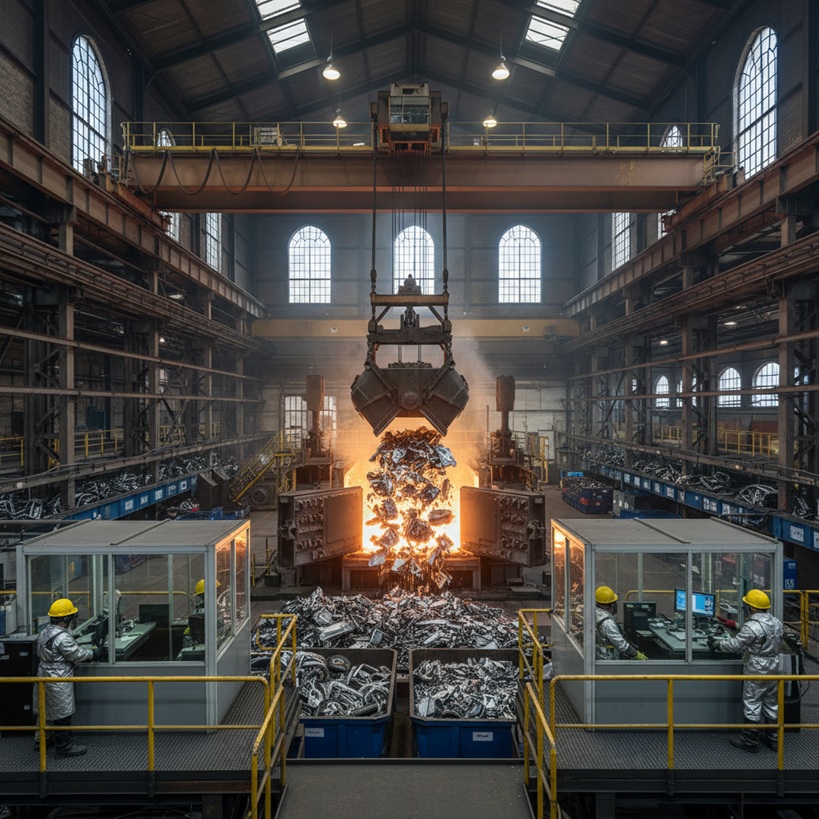
The recovered steel is sold to steel mills and foundries, where it’s melted in electric arc furnaces. Using advanced refining techniques, mills turn this scrap into new steel products used across construction, automotive, and heavy manufacturing industries.
The metal from one old car might later form part of a skyscraper’s frame, a railway line, or even another car’s chassis, closing the loop on resource use.
Key Takeaways:
- Recovered vehicle steel feeds directly into new manufacturing cycles
- Processing plants use magnets and sorting systems for material separation
- Recycled car steel is a cornerstone of sustainable production
Environmental Advantages of Scrap Steel Recycling
Producing steel from iron ore is resource-intensive and environmentally damaging. Mining disturbs natural landscapes, consumes significant energy, and releases large volumes of carbon dioxide.
Recycling steel from cars drastically reduces these impacts. Studies from the Bureau of International Recycling (BIR) show that recycled steel production uses up to 75% less energy compared to primary steelmaking. The process also reduces water use and air pollution, supporting the UK’s carbon reduction commitments.
In addition, recycling minimises landfill waste and decreases reliance on mining operations abroad. Every tonne of recycled steel avoids approximately 1.5 tonnes of CO₂ emissions, contributing to a cleaner, greener future.
Think of recycling steel like refilling a water bottle instead of buying a new plastic one each time. Sure, both get you hydration, but one requires far less energy, resources, and creates much less waste. The environmental maths is simple.
Motorists can do their part by ensuring their vehicles are recycled through accredited services. Working with our network of Authorised Treatment Facilities guarantees proper environmental handling.
Key Takeaways:
- Recycling steel conserves energy and resources
- Each tonne of recycled steel significantly cuts CO₂ emissions
- Using recycled steel supports climate-friendly manufacturing
How Scrap Recycling and Steel Production Work Together
Modern scrap recycling and steel production form a continuous loop that benefits both industry and the environment. Steel is one of the most recyclable materials on Earth, retaining its strength and durability through repeated melting and reforming cycles.
Steel manufacturers depend heavily on scrap input. In the UK, over 40% of steel production relies on recycled material, with higher figures in some regions. This approach supports long-term sustainability goals and reduces dependency on imported raw materials.
Through innovations such as electric arc furnaces and automated separation systems, mills can now produce high-grade steel from scrap with minimal waste. These systems lower production costs and energy consumption, reinforcing the importance of car recycling in the wider industrial ecosystem.
Those looking to contribute can easily find out how to scrap your car easily and legally through transparent processes.
Key Takeaways:
- Steel retains its strength indefinitely through recycling
- Around 40% of UK steel production relies on recycled inputs
- Advanced melting technology enhances efficiency and quality
The Economic Impact: Employment, Revenue, and Growth
The scrap cars and steel industry isn’t just a sustainability success story. It’s an economic powerhouse. Across the UK, the metal recycling sector supports tens of thousands of jobs, ranging from dismantlers and hauliers to furnace operators and logistics professionals.
According to the British Metals Recycling Association (BMRA), the UK’s scrap metal industry contributes billions of pounds to the national economy annually. These revenues are reinvested in local communities through technology upgrades, training schemes, and green energy infrastructure.
By creating consistent demand for scrap materials, recycling facilities help stabilise steel prices and reduce exposure to volatile global ore markets. The result is a more resilient and locally sustained supply chain, one that benefits both workers and consumers.
Vehicle owners can get an instant quote to scrap any car and contribute directly to this economic ecosystem whilst receiving fair value.
Key Takeaways:
- The sector generates substantial employment opportunities
- It adds billions of pounds to the UK economy each year
- Reinvested profits promote innovation and industrial growth
Compliance and Environmental Responsibility in the Steel Supply Chain
A critical strength of the scrap cars and steel industry lies in its strict adherence to environmental regulations. Every stage, from car dismantling to steel smelting, is governed by compliance frameworks like the Environmental Protection Act and Waste Framework Directive.
Authorised Treatment Facilities (ATFs), for example, are audited and licensed to ensure environmentally safe operations. Similarly, steel producers follow best practices for waste management, emissions control, and recycling verification.
This level of regulation protects public health and maintains trust in the recycling chain, ensuring that scrap recycling and steel production meet the highest environmental and ethical standards.
Key Takeaways:
- Strict environmental regulations govern the recycling process
- ATFs and steel plants maintain transparency and accountability
- Compliance ensures long-term sustainability and consumer trust
The Future of Scrap Car Recycling and the Steel Industry
The global push towards net-zero emissions is reshaping how industries handle raw materials. As renewable energy technologies expand, the demand for sustainable steel continues to rise. Recycled car steel plays a major part in this transformation.
Emerging technologies, such as AI-driven sorting systems and automated material recognition, are improving recovery rates and quality control. These innovations make it easier to achieve closed-loop recycling and traceability across the supply chain.
Discovering the advantages of choosing responsible services shows how modern networks are leading the charge in efficient, sustainable vehicle disposal.
Key Takeaways:
- Rising demand for sustainable steel will drive innovation
- Technology is improving the precision of material recovery
- Certified networks promote responsible recycling practices
Regional and Local Benefits of Vehicle Recycling
The positive effects of scrap cars and the steel industry reach deep into local communities. Regional recycling facilities help reduce transport emissions by processing vehicles closer to where they’re collected.
Whether someone needs to dispose of a vehicle in any region across the UK, the same environmentally responsible process applies.
This localised approach creates jobs, supports small businesses, and ensures that materials re-enter the supply chain efficiently. Many services now offer free nationwide scrap car collection, making sustainable disposal accessible regardless of location.
Key Takeaways:
- Local processing reduces transportation impact
- Regional services provide jobs and economic support
- Recycling networks make sustainability accessible nationwide
Supporting the Circular Economy Through Responsible Scrapping
Every recycled car contributes to a wider circular economy, where waste becomes a resource rather than a burden. The scrap cars and steel industry model is a perfect example of this principle in action.
By scrapping vehicles responsibly, individuals help extend the lifespan of valuable materials, reduce the demand for new extraction, and lower environmental harm. It’s a small decision that fuels an enormous industrial impact.
Choosing a trusted provider ensures compliance, efficiency, and fair value throughout the process.
Key Takeaways:
- Responsible scrapping supports long-term sustainability
- The process reduces waste and resource extraction
- Efficient services make ethical disposal convenient for everyone
Conclusion
The connection between scrap cars and the steel industry demonstrates how environmental responsibility and economic prosperity work together. Every vehicle recycled properly contributes to cleaner manufacturing, reduced emissions, and stronger local economies.
From initial collection to final steel production, the scrap recycling and steel production cycle represents one of the UK’s most successful circular economy models. By choosing certified recyclers and understanding the process, vehicle owners play a vital role in sustaining this essential industry.
For guidance on responsible disposal and to learn more about how your vehicle supports sustainable steel production, contact us to speak with our team.