How End-of-Life Vehicles Support the Circular Economy
3rd Mar, 2026
The concept of circular economy has moved from environmental theory to practical reality across many industries. Nowhere is this more evident than in automotive recycling, where end-of-life vehicles transition from waste products to valuable raw materials. Understanding how this system works reveals one of modern Britain’s most successful examples of circular economy principles in action.
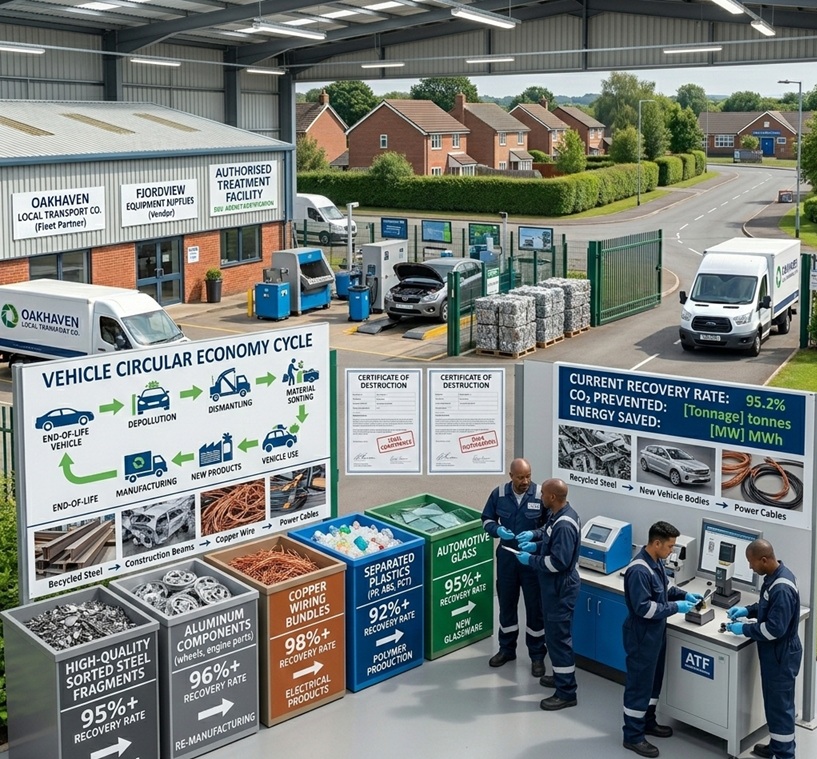
Every year, approximately two million vehicles reach end-of-life in the UK. Each one represents a substantial collection of materials – steel, aluminium, copper, plastics, and glass. In a linear economy model, these materials might end up in landfills, wasting resources and creating environmental problems. In the circular economy operating today, over 95% of each vehicle’s materials return to productive use.
This transformation from end-of-life vehicle to manufacturing raw material involves sophisticated processes, strict regulations, and professional facilities working across Britain. The system benefits the environment, supports employment, enables manufacturing, and demonstrates how circular economy principles create value whilst protecting natural resources. Those ready to participate can access nationwide disposal networks connecting them with certified facilities.
Understanding the Circular Economy Model
Circular economy principles contrast sharply with traditional linear “take-make-dispose” approaches. Linear economies extract raw materials, manufacture products, use them briefly, then discard them as waste. This model depletes natural resources, creates pollution, and generates enormous waste volumes.
Circular economies design out waste and pollution, keep products and materials in use, and regenerate natural systems. Rather than disposal marking an end point, it becomes a transition where materials return to productive use. The goal is eliminating waste entirely by ensuring everything serves as input for something else.
Automotive recycling exemplifies circular economy success. Vehicles use materials intensively during production, serve useful purposes for years, then at end-of-life, those materials return to manufacturing. The steel in an old Ford might become part of a new building’s framework. Aluminium from a scrapped BMW could end up in new vehicle components. Copper wiring might be refined and reformed for construction applications.
This circularity reduces environmental impact dramatically. Recycling steel saves 74% of the energy needed for virgin production. Aluminium recycling saves 95% of energy compared to extracting and processing bauxite ore. These savings multiply across millions of vehicles annually, creating substantial environmental benefits.
The economic advantages complement environmental gains. Manufacturers access materials at lower costs than virgin alternatives. The recycling industry creates employment and generates economic activity. Material price stability from reliable recycling supply supports business planning and competitiveness.
From End-of-Life to Raw Material
When vehicles reach the point where repair costs exceed value, mechanical problems become too frequent, or MOT failures make roadworthiness impossible, they’ve reached end-of-life. This determination isn’t always straightforward – sentiment, necessity, and finances all influence decisions. However, once made, the circular economy system stands ready to process the vehicle efficiently.
Proper disposal through certified channels ensures materials enter legitimate recycling streams. Informal disposal, abandonment, or illegal scrapping wastes resources and creates environmental hazards. The difference between proper and improper disposal determines whether valuable materials return to productive use or become pollution and waste.
A typical family car contains approximately 1,200 kilograms of steel, 150 kilograms of plastics, 100 kilograms of aluminium, 50 kilograms of rubber, and smaller quantities of copper, zinc, and other materials. Each material stream has value and reuse potential when properly recovered. Mixed together or contaminated, they become problematic waste.
The quality of recovered automotive materials often exceeds virgin alternatives. Steel meeting automotive safety specifications is ideal for new manufacturing. Aluminium from vehicles contains precise alloys suitable for demanding applications. Copper wiring provides high-purity material for refining.
This quality advantage makes automotive recycling particularly valuable in circular economy systems. Materials don’t just get recycled – they return to high-value applications maintaining or improving their utility. The concept of “upcycling” applies when recovered materials enter applications as demanding or more demanding than their original use. Those ready to participate in this circular system can explore collection options connecting them with proper disposal services.
The Role of Authorised Treatment Facilities
Authorised Treatment Facilities (ATFs) form the foundation of the UK’s circular vehicle economy. These aren’t traditional scrapyards operating with minimal oversight. ATFs must meet strict Environment Agency standards covering environmental protection, worker safety, and processing efficiency.
Certification requires demonstrating proper depollution capabilities, material handling procedures, and documentation systems. Regular inspections ensure standards maintenance. This oversight protects both the environment and legitimate operators competing fairly against standards-compliant businesses.
Depollution procedures represent the critical first stage of processing. Technicians drain engine oil, transmission fluid, brake fluid, coolant, and fuel. These fluids require separate handling – oils go to refiners, coolants to proper treatment, fuel to controlled disposal. Improper handling would contaminate soil and water.
Refrigerant extraction from air conditioning systems requires specialist equipment and certified technicians. These greenhouse gases must be captured and properly processed – releasing them violates environmental regulations and contributes to climate change. Battery removal prevents acid contamination and allows lead recovery.
Airbag deployment occurs under controlled conditions preventing injury and properly disposing of propellant chemicals. Catalytic converter removal recovers platinum group metals too valuable and environmentally important to waste.
Only after complete depollution does dismantling begin. Systematic removal of components maximises recovery whilst preventing contamination between material streams. Seats, wiring, glass, plastics, and metals all require separate handling for optimal recycling.
The Certificate of Destruction issued by ATFs represents more than just a receipt – it’s legal proof of proper disposal. This document relieves former owners of liability and satisfies DVLA requirements. Without it, legal complications can arise years after disposal.
Materials That Re-Enter Manufacturing
Steel recovered from vehicles supplies British steel mills producing new products. This represents one of the largest and most successful material loops in the circular economy. Approximately 14 million tonnes of steel gets recycled in the UK annually, with automotive sources contributing substantially.
Electric arc furnaces transform scrap steel back into usable material within hours. The process consumes far less energy than producing steel from iron ore. The resulting material meets the same specifications as virgin steel, suitable for construction, manufacturing, and new vehicle production.
Aluminium recycling provides even more dramatic environmental benefits. The energy savings reach 95% compared to primary production from bauxite. Automotive aluminium, already refined to high standards, requires minimal processing to return to manufacturing specifications.
Copper recovery supports the electrical and construction industries. Vehicle wiring, motors, and components contain high-purity copper ideal for new applications. Refiners process this material back to commercial specifications for wire, tube, and sheet production.
Plastics processing presents more challenges due to the variety of polymer types in vehicles. However, advances in sorting and chemical recycling enable increasing proportions to return to productive use. Dashboard components might become new automotive parts. Bumper plastics can reform into various products.
Glass recycling transforms windscreens and windows into fibreglass insulation, container glass, and abrasive materials. The laminated nature of automotive glass requires special processing, but the materials have value in multiple applications.
These material loops demonstrate circular economy principles in practice. Rather than single-use lifecycles ending in landfills, materials cycle repeatedly through manufacturing and use. Each cycle saves energy, reduces emissions, and preserves natural resources. Understanding how materials are recovered and processed helps appreciate the sophistication of modern circular vehicle systems.
Certificate of Destruction: Legal Obligations
The Certificate of Destruction (CoD) plays a vital role in both environmental protection and legal compliance. This document, issued by ATFs to vehicle owners, confirms proper disposal according to End-of-Life Vehicles Regulations.
Think of the CoD like a death certificate for a vehicle. Just as a death certificate officially ends a person’s legal existence and resolves various administrative matters, a CoD officially ends a vehicle’s registered life. Without it, the vehicle technically remains the owner’s legal responsibility.
During a conversation with a solicitor specialising in automotive law, the importance of the Certificate of Destruction became crystal clear. She described a case where someone had scrapped a car years earlier but never received proper documentation. The vehicle’s parts appeared in a stolen car recovered by police. Because no CoD existed, authorities initially suspected the original owner of involvement in the theft. Months of legal complications followed before establishing innocence. A simple certificate would have prevented the entire ordeal. Her advice was unequivocal – never dispose of a vehicle without receiving and keeping the Certificate of Destruction.
DVLA requirements mandate CoD submission when vehicles are scrapped. This removes the vehicle from their records, ending tax and registration obligations. Without this notification, the vehicle remains registered to the owner, potentially creating liability for parking fines, congestion charges, or criminal use.
Insurance companies require confirmation of proper disposal when claims involve total losses. The CoD proves the vehicle was legally and properly processed rather than abandoned or sold informally. This documentation protects both insurers and owners from fraud.
Former owners retain responsibility for vehicles until proper disposal is documented. If an improperly disposed vehicle is used criminally or abandoned causing environmental damage, liability can trace back to the registered keeper. The CoD severs this liability chain, providing essential legal protection.
Tax obligations continue until DVLA receives notification of destruction. Even non-operational vehicles parked privately require either tax or Statutory Off Road Notification (SORN). The CoD resolves these obligations definitively. Those ensuring proper documentation through certified disposal services receive this crucial protection.
Environmental Impact of Proper Disposal
Environmental benefits from proper vehicle disposal extend well beyond simple waste diversion. The processes protecting soil, water, and air create measurable positive impacts across multiple dimensions.
Soil contamination prevention starts with proper depollution. Engine oil, transmission fluid, and brake fluid all contain compounds harmful to soil ecology. A single oil change worth of waste oil can contaminate millions of litres of groundwater. Professional fluid drainage prevents this pollution.
Water protection requires careful handling of coolants, washer fluids, and fuel residues. These substances contain chemicals problematic for aquatic systems. Treatment facilities can process them safely, but only if properly collected. Informal disposal often sees fluids poured into drains or onto ground, creating lasting contamination.
Air quality benefits from proper refrigerant handling. Air conditioning systems contain gases with greenhouse warming potential thousands of times greater than carbon dioxide. Professional recovery prevents these emissions whilst allowing the gases to be reused or safely processed.
Battery acid, while technically recyclable, requires careful handling preventing environmental exposure. Lead from batteries is toxic to humans and wildlife. Proper recycling recovers the lead whilst preventing contamination.
Tyres present particular challenges due to their durability and chemical composition. Proper recycling processes them into crumb rubber, fuel, or carbon black. Improper disposal creates fire hazards and breeding grounds for disease-carrying insects.
The carbon footprint reduction from recycling over virgin production creates substantial climate benefits. Each tonne of recycled steel prevents approximately 1.5 tonnes of carbon dioxide emissions. Multiply this by the millions of tonnes recycled annually, and the climate impact becomes significant.
Supporting the UK’s environmental targets requires high recycling rates across all sectors. Automotive recycling consistently achieves 85-95% material recovery, making it a success story supporting national climate commitments. This performance demonstrates feasibility of ambitious recycling targets in other sectors.
Economic Benefits of Circular Vehicle Systems
Circular economy systems create economic value throughout the entire cycle. Manufacturers benefit from reduced material costs. Recycling operations employ thousands. Transport and logistics sectors gain work. The economic activity generates tax revenue supporting public services.
Reduced raw material costs help British manufacturers compete globally. Steel produced from scrap costs less than virgin production, supporting price competitiveness. This cost advantage helps preserve manufacturing employment in Britain.
Job creation across the recycling sector provides quality employment opportunities. From collection through processing to material sales, thousands of people earn livelihoods in automotive recycling. These jobs distribute across Britain, supporting communities nationwide.
Import reduction through domestic recycling supply improves trade balances and economic resilience. Britain produces substantial steel, aluminium, and copper from recycled sources, reducing dependence on foreign suppliers. This domestic supply provides security and price stability.
Price stability for recycled materials supports business planning and investment. Whilst virgin material prices fluctuate with global commodity markets, recycled supply provides more predictable costs. This stability enables manufacturers to plan and invest confidently.
Supporting British manufacturing competitiveness requires reliable, affordable material supply. The circular vehicle economy provides exactly this, enabling industries to operate viably whilst meeting environmental obligations. This demonstrates how environmental and economic goals can align perfectly.
UK Regulations Supporting Circular Economy
The End-of-Life Vehicles (ELV) Directive, implemented through UK regulations, establishes the framework supporting circular vehicle economy. These regulations require proper depollution, set recovery rate targets, and mandate producer responsibility.
Environment Agency oversight ensures facilities meet environmental protection standards. Regular inspections, permit requirements, and enforcement actions maintain compliance and protect legitimate operators. This regulatory framework prevents environmental damage whilst ensuring fair competition.
Producer responsibility obligations require vehicle manufacturers to contribute to recycling system costs. This incentivises design for recyclability and supports recycling infrastructure development. The principle that producers share responsibility for products throughout their lifecycle drives circular economy adoption.
Recovery rate targets push continuous improvement. Current regulations require recovering 85% of vehicle weight for reuse or recycling, with 80% as recycling or materials recovery. These targets ensure the system continuously improves efficiency and material recovery.
Future regulatory developments may increase targets further, require greater recycled content in new vehicles, or expand to cover emerging vehicle technologies. Electric vehicle battery recycling regulations are developing as these vehicles become more common. The regulatory framework adapts to maintain environmental protection as technologies evolve.
How Individual Actions Support Circularity
Individual choices about vehicle disposal directly impact circular economy effectiveness. Choosing certified disposal services ensures materials enter legitimate recycling streams. Avoiding informal disposal prevents resource waste and environmental damage.
Ensuring proper documentation, particularly the Certificate of Destruction, satisfies legal obligations and enables DVLA record updating. This administrative compliance supports system efficiency and personal legal protection.
Avoiding informal or illegal disposal protects both environment and economy. Unlicensed operators may offer higher prices but often process vehicles improperly, polluting the environment and wasting materials. Legitimate facilities may pay less but ensure proper processing benefiting everyone.
Supporting legitimate recycling networks through proper disposal channels maintains system integrity. When people choose certified services over informal alternatives, they vote with their decisions for environmental protection and legal compliance.
Understanding environmental responsibilities means recognising that vehicle disposal choices have broader impacts. The decision affects water quality, air pollution, material conservation, and economic opportunity. Responsible disposal represents environmental citizenship in action.
Technology and Innovation in Recovery
Technological advancement continuously improves circular vehicle economy efficiency. Advanced sorting techniques using artificial intelligence can identify material types more accurately than human operators. This precision improves material stream purity and value.
Material identification systems using infrared spectroscopy, X-ray fluorescence, and other technologies enable rapid, accurate sorting. These capabilities are essential for processing complex modern vehicles with numerous different materials.
Processing efficiency improvements reduce energy consumption and increase recovery rates. Better shredding equipment, improved magnetic separation, and enhanced density sorting all contribute to system optimisation.
Electric vehicle recycling development addresses emerging challenges from new technologies. Battery dismantling, lithium recovery, and rare earth metal processing all require new capabilities. British companies are developing expertise positioning the UK as a leader in EV recycling.
Future circular economy technologies may enable even higher recovery rates. Chemical recycling of plastics, advanced battery reprocessing, and new recovery techniques for complex alloys all promise improved circularity. Research continues developing innovations supporting ever more efficient circular systems.
Practical Steps for Responsible Disposal
Determining when vehicles reach end-of-life requires honest assessment of repair costs, reliability, and safety. When repair costs exceed vehicle value, frequent breakdowns cause disruption, or safety concerns arise, disposal becomes the responsible choice.
Finding certified treatment facilities is straightforward in modern Britain. Networks connect vehicle owners with properly licensed operators meeting environmental and legal standards. These services handle logistics, documentation, and processing.
Collection and transport arrangements remove the burden from vehicle owners. Professional services coordinate collection from any location, handling the logistics efficiently. This convenience ensures proper disposal becomes the easy choice. Vehicle owners can arrange convenient pickup regardless of vehicle type.
Documentation requirements are minimal but important. Proof of ownership, providing accurate information about the vehicle, and completing necessary forms takes little time but ensures legal compliance and proper processing.
Payment reflects current scrap metal values, vehicle weight, and market conditions. Whilst owners won’t become wealthy scrapping old vehicles, fair compensation is provided whilst contributing to environmental protection and circular economy support.
The environmental benefits extend beyond individual vehicles. Each properly processed vehicle prevents pollution, recovers valuable materials, supports manufacturing, and demonstrates circular economy principles. These cumulative impacts create substantial positive effects across Britain.
Understanding how end-of-life vehicles support the circular economy reveals a sophisticated system turning potential waste into valuable resources. The environmental protection, economic benefits, and resource efficiency demonstrate circular economy principles succeeding at scale.
Individual choices matter in this system. Selecting certified disposal services ensures vehicles enter legitimate processing streams rather than informal channels wasting materials and risking environmental damage. The decision represents environmental responsibility and economic support simultaneously.
The UK’s automotive recycling system ranks among the world’s most effective, achieving recovery rates exceeding 95% whilst maintaining strict environmental standards. This success provides a model for other sectors and countries developing circular economy capabilities.
Material recovery from vehicles supports British manufacturing, reduces import dependence, and creates employment across regions. The economic advantages complement environmental benefits, demonstrating how sustainability and prosperity can advance together.
As vehicle technologies evolve toward electric propulsion and advanced materials, the circular system adapts continuously. Innovations in battery recycling, rare earth recovery, and advanced material processing ensure the system remains effective despite technological changes.
The regulatory framework supporting circular vehicle economy continues developing, pushing higher recovery rates and broader environmental protection. Producer responsibility obligations, ATF certification requirements, and material recovery targets all drive continuous improvement.
For those ready to participate in this circular system through responsible vehicle disposal, connecting with certified services ensures proper processing regardless of vehicle type. The choice supports environmental protection, legal compliance, and economic contribution simultaneously.
Understanding the Certificate of Destruction’s importance protects former owners from legal complications whilst enabling proper DVLA record updating. This simple document provides peace of mind and legal protection worth far more than the paper it’s printed on.
The environmental impact from proper disposal extends across multiple dimensions – preventing soil and water contamination, capturing greenhouse gases, recovering toxic materials safely, and reducing carbon footprints through recycling efficiency. These benefits accumulate vehicle by vehicle into substantial positive impacts.
Economic resilience comes from domestic material supply reducing import dependence. The circular vehicle system provides reliable, affordable materials supporting British manufacturing competitiveness. This security becomes increasingly valuable in uncertain global markets.
The jobs created across collection, processing, and material sales support families and communities nationwide. These aren’t temporary positions but stable employment in an essential industry supporting environmental protection and economic prosperity.
Looking forward, the circular vehicle economy will become even more important as environmental pressures increase and resource constraints tighten. The system demonstrates how technical innovation, regulatory frameworks, and individual responsibility can combine achieving environmental goals whilst creating economic value.
For anyone considering vehicle disposal, understanding the broader system context helps appreciate why proper disposal matters. The choice extends beyond personal convenience to environmental impact, legal compliance, and economic contribution. That old car represents not waste but resources, employment, and opportunity when properly processed.
Taking the step to seek professional guidance on proper disposal ensures participation in Britain’s successful circular vehicle economy. The system works remarkably well, but only when people choose certified services over informal alternatives. That choice represents environmental citizenship supporting a more sustainable, prosperous future.