How Australia Handles End-of-Life Vehicles
29th Jan, 2026
Across the continent, Australia end-of-life vehicles are becoming a major focus of environmental policy and industry reform. As the nation’s vehicle ownership grows, so too does the responsibility to dispose of old, damaged, and unwanted cars sustainably.
Australia’s approach blends recycling, regulation, and innovation, but it also faces unique geographical and legislative challenges. Managing vehicles across vast distances and differing state systems has shaped a recycling framework unlike any other. Scrap Car Network demonstrates how coordinated networks and certified facilities can streamline the recycling process, lessons that apply globally.
What Are End-of-Life Vehicles?
An end-of-life vehicle (ELV) is any car, van, or commercial vehicle that has reached the point where it’s no longer safe or economical to operate. Age, mechanical failure, or accident damage typically lead to a vehicle being retired.
The goal is to treat these vehicles as resources rather than waste, recovering metals, plastics, and components whilst minimising environmental harm.
Key Takeaways:
- End-of-life vehicles are too old or costly to repair
- Proper management ensures environmental protection and material recovery
- Responsible recycling turns obsolete cars into valuable resources
The Australian Landscape: Unique Challenges
Australia’s vast geography creates logistical hurdles in collecting and recycling vehicles. Many towns and communities sit hundreds of kilometres from the nearest authorised recycling centre, making transport expensive and complex.
In addition, end-of-life vehicle laws Australia differ across states and territories. What’s permissible in Queensland may not align with the standards in Victoria or Western Australia. This fragmented approach complicates compliance for recyclers and exporters alike.
Key Takeaways:
- Vast distances increase transport costs and logistical challenges
- State-based regulations create inconsistencies in ELV handling
- National coordination remains limited but urgently needed
Legislation and Regulations
Unlike the UK or parts of Europe, Australia does not yet have a single, comprehensive national law governing Australia end-of-life vehicles. Instead, environmental protection and waste-management rules are spread across multiple pieces of state legislation.
Each jurisdiction outlines requirements for hazardous-waste handling, pollution prevention, and recycling practices. For operators, staying compliant means navigating a patchwork of environmental acts and recycling standards.
Examples include:
- The Environment Protection Act 2017 (VIC)
- The Waste Avoidance and Resource Recovery Act 2001 (NSW)
- Local environmental protection policies addressing hazardous materials
Those interested in understanding comprehensive recycling standards can explore our environmentally responsible car recycling process, which demonstrates how unified regulatory frameworks deliver better environmental outcomes.
Key Takeaways:
- End-of-life vehicle laws Australia are managed at state and territory level
- Compliance requires familiarity with several overlapping acts
- A unified national framework would improve efficiency and consistency
The ELV Recycling Process
Australia’s recycling system for ELVs mirrors best practices used in the UK and Europe, focusing on environmental safety and material recovery.
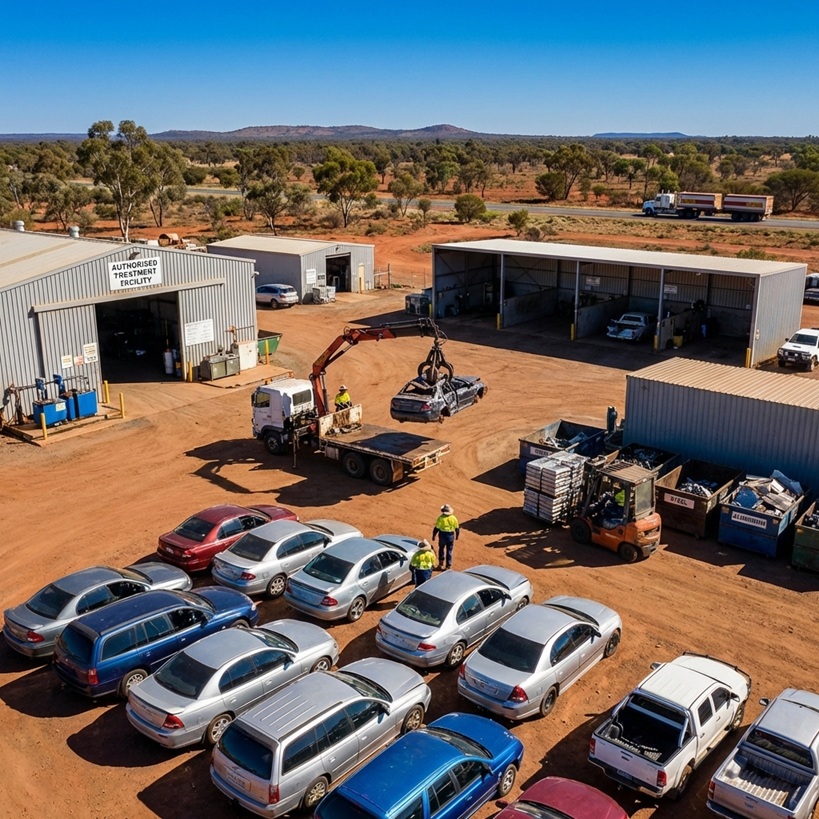
Vehicles are collected and delivered to Authorised Treatment Facilities (ATFs), licensed centres capable of dismantling and processing them responsibly. Similar facilities can be found through networks that ensure all vehicles are handled to strict environmental standards.
Depollution
The first stage is depollution, removing hazardous fluids and components. Commonly extracted materials include:
- Engine and gearbox oil
- Brake fluid and coolant
- Batteries
- Tyres and air-conditioning gases
These substances can contaminate soil and waterways if not managed correctly. Proper depollution ensures the remainder of the vehicle is safe for dismantling and shredding.
I remember working on an old Holden Commodore years back that had been sitting in someone’s yard for months. The owner thought he could just haul it to the tip himself. When we inspected it, we found litres of old engine oil that had started leaking into the ground, plus a battery that was corroding through its casing. One rainstorm and all that would’ve washed straight into the local creek. That’s why proper depollution at licensed facilities matters so much.
Dismantling
Once depolluted, the vehicle is dismantled to recover reusable components such as:
- Engines and transmissions
- Body panels and doors
- Wheels and tyres
- Electronic control units
Recovered parts are reconditioned and resold, extending their useful life and reducing the need for new manufacturing. Vehicle owners looking to understand the process can find out how to scrap your car easily through regulated channels.
Shredding and Recycling
After dismantling, the car’s metal shell is sent to a shredder. Advanced separation technology divides materials into steel, aluminium, plastics, and non-ferrous metals. These are reprocessed into new goods, ensuring minimal waste.
Think of it like sorting coins from different countries. You wouldn’t mix Australian dollars with euros or yen, would you? The same principle applies here. Magnets pull out ferrous metals, eddy currents grab aluminium and copper, and air jets separate the lighter plastics. Each material gets its own path to become something useful again.
Key Takeaways:
- ELVs are processed at licensed Authorised Treatment Facilities (ATFs)
- Depollution removes hazardous materials safely
- Dismantling and shredding maximise resource recovery and recycling efficiency
Challenges Facing the Australian ELV Industry
Despite steady progress, the Australia end-of-life vehicles sector faces ongoing challenges that limit its full potential.
Fragmented Regulation
Without a unified national framework, recyclers must adapt to varying state laws, making cross-border operations complex and costly. A cohesive national standard would promote investment and streamline processes.
Working with our network of Authorised Treatment Facilities demonstrates how standardised practices across multiple locations improve efficiency and environmental compliance.
Illegal Dumping
Some unlicensed operators illegally abandon vehicles in rural or bushland areas rather than paying disposal fees. These actions harm the environment and undermine legitimate recyclers. Stronger enforcement and public reporting channels are needed to combat this issue.
Limited Traceability
Australia lacks a centralised tracking system to monitor vehicles from deregistration to dismantling. This gap allows unregistered dismantlers to operate unnoticed, posing risks to safety and environmental compliance.
Key Takeaways:
- Inconsistent legislation hinders efficiency
- Illegal dumping causes significant ecological damage
- Weak traceability allows unauthorised operations to persist
Opportunities for Improvement
Whilst challenges exist, the end-of-life vehicle laws Australia landscape also presents several opportunities for modernisation and reform.
Establishing a National Framework
A single national policy for ELVs would harmonise regulations, ensuring consistency across all states. It would also attract investment by providing clear operational standards and simplifying compliance for recycling businesses.
Introducing Extended Producer Responsibility (EPR)
EPR schemes make manufacturers accountable for the disposal of their vehicles. By requiring automakers to manage end-of-life recovery, design improvements can be encouraged, such as using more recyclable materials and simpler dismantling systems.
Discovering the advantages of choosing responsible services shows how industry accountability and certification create better outcomes for vehicle owners and the environment.
Expanding Public Awareness
Public understanding of responsible vehicle disposal remains limited. Awareness campaigns and partnerships with community organisations could educate drivers about using authorised recycling services instead of resorting to illegal dumping.
Those seeking guidance on compliant vehicle recycling can get an instant quote to scrap any car and ensure proper environmental handling.
Key Takeaways:
- A national ELV policy would unify and strengthen the recycling framework
- EPR programmes could promote eco-friendly vehicle design
- Public education helps reduce illegal dumping and boosts compliance
The Future of ELV Management in Australia
The future of Australia end-of-life vehicles management depends on collaboration between governments, manufacturers, and recyclers. As the national vehicle fleet grows, sustainable solutions will become increasingly important.
Emerging trends include:
- Development of new recycling facilities in regional areas to reduce transport costs
- Growth of green-tech companies specialising in electric-vehicle battery recovery
- Potential creation of a nationwide ELV registry to improve traceability
These steps would support environmental protection whilst fostering economic opportunity. Many regions benefit from free nationwide scrap car collection services that make responsible disposal accessible regardless of location.
Scrap and Recycle Responsibly
Whether in Australia or the UK, scrapping a car through an authorised network ensures materials are reused safely and legally. Using a trusted service lets vehicle owners contribute to environmental preservation whilst receiving fair value for their vehicles.
All vehicles should be handled by licensed Authorised Treatment Facilities, ensuring every step meets strict environmental regulations. This transparency protects both the environment and vehicle owners from future liability.
Key Takeaways:
- Responsible scrapping protects the environment and ensures compliance
- Certified treatment facilities guarantee proper recycling
- Transparent processes encourage sustainable behaviour among drivers
Conclusion
Managing Australia end-of-life vehicles requires balancing geography, regulation, and environmental responsibility. Although the lack of national legislation and widespread traceability remain challenges, opportunities for improvement are clear.
By developing consistent end-of-life vehicle laws Australia, adopting producer responsibility schemes, and increasing public awareness, the country can strengthen its position as a leader in sustainable vehicle recycling.
With continued innovation and coordinated policy, Australia has the potential to transform its end-of-life vehicle system into one that protects the environment, creates jobs, and turns discarded cars into valuable resources for the future. For expert guidance on responsible vehicle disposal, contact us to learn more about certified recycling processes.