How 3D-Printed Cars Could Impact Recycling
10th Feb, 2026
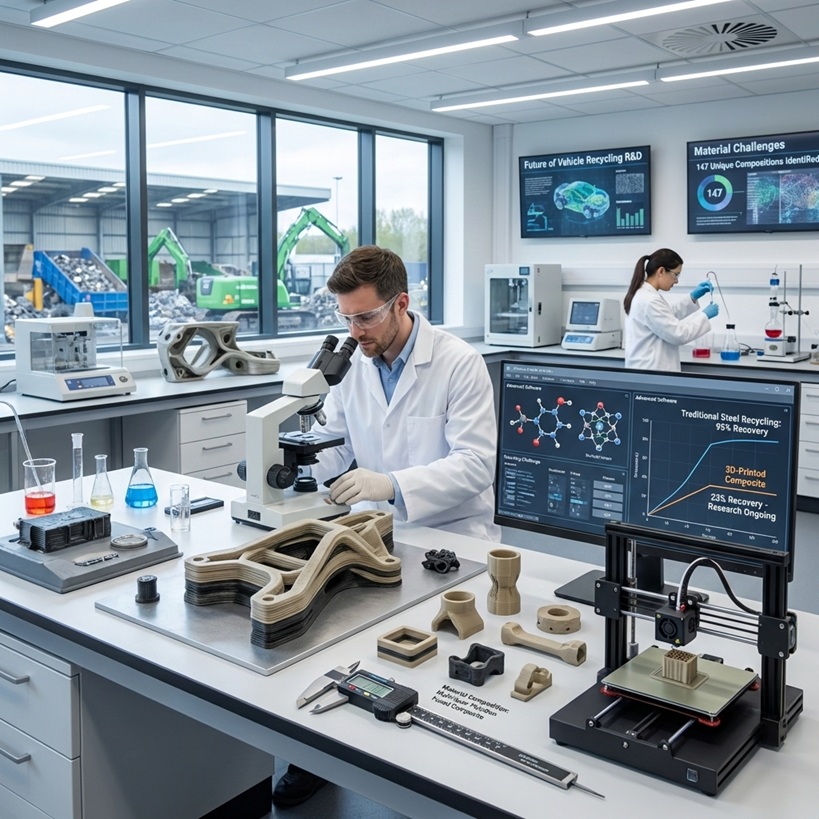
The rapid growth of 3D-printed cars is pushing the automotive industry into a new era of manufacturing. From design studios to production floors, additive manufacturing is transforming how vehicles are built, used, and eventually recycled. The 3D-printed car recycling impact is now a topic of growing importance within the scrap industry, raising questions about sustainability, waste reduction, and the readiness of existing recycling infrastructure.
These new production methods offer clear environmental benefits in manufacturing, but they also bring complex end-of-life challenges. Understanding how recycling 3D printed auto parts works, and how it differs from traditional car dismantling, is crucial for building a sustainable future.
The Basics of 3D-Printed Cars
3D printing, also known as additive manufacturing, constructs a vehicle layer by layer based on digital blueprints. Each layer of material, whether plastic, composite, or metal, is fused precisely to create complex geometries that would be impossible to achieve through standard pressing or moulding.
Unlike conventional car production, which depends on large stamping plants and long supply chains, 3D printing allows localised, flexible manufacturing. This decentralised approach reduces logistics costs and material waste, while enabling custom-made parts.
However, whilst manufacturing benefits are significant, the recycling process becomes far more complicated. The mixture of materials used to print vehicles requires new approaches to dismantling, sorting, and reusing components.
Think of it like building with Lego versus carving from wood. With traditional manufacturing, you’re working with solid blocks that can be melted down and reused easily. With 3D printing, you’re layering different materials together so tightly that separating them afterwards becomes incredibly difficult.
How 3D Printing Is Changing Vehicle Manufacturing
The shift towards 3D printing in car manufacturing is reshaping production efficiency and sustainability. Traditional vehicle assembly relies on metal stamping, welding, and tooling, which consume energy and generate offcuts. Additive manufacturing eliminates much of this waste by printing only the material required for each part.
The technology also supports on-demand production. Instead of producing thousands of identical components, manufacturers can print specific parts as needed. This change reduces overproduction, inventory waste, and storage requirements.
For the scrap industry, this shift may lead to fewer surplus materials entering recycling streams. However, it also introduces new types of waste that must be managed differently.
The Materials Behind 3D-Printed Cars
One of the main reasons the 3D-printed car recycling impact is so complex lies in the materials used. Instead of relying primarily on steel or aluminium, additive manufacturing incorporates a broader range of substances.
Common materials include thermoplastics and polymers that are lightweight and cost-effective but often difficult to recycle effectively without quality loss. Metals and alloys like aluminium, titanium, and stainless steel remain valuable but require precision separation. Composites and reinforced fibres such as carbon fibre enhance performance but resist conventional recycling methods.
Whilst these innovations improve durability and efficiency, they also challenge recyclers. Mixed-material components, layered composites, and embedded electronics require advanced dismantling techniques that many facilities haven’t yet adopted.
I remember the first time I saw a carbon fibre component up close in a repair shop. Beautiful piece of engineering, incredibly strong, impossibly light. But the mechanic said, “This is brilliant until something breaks. Then you’re basically throwing it away because nobody can fix it economically.” That’s the challenge facing recyclers with these new materials, except on a much larger scale.
Environmental and Design Benefits of 3D Printing
Despite recycling difficulties, the environmental potential of 3D-printed cars cannot be ignored. Additive manufacturing supports more sustainable production practices by using less material and energy per component.
Printed structures can reduce overall car weight, improving fuel efficiency or extending electric vehicle range. Vehicles can be printed to exact customer or fleet specifications, cutting waste and unnecessary features. Less raw material is discarded, helping reduce overall emissions. Local production means fewer transport miles and a smaller carbon footprint.
These benefits align with the growing demand for sustainable, low-impact mobility solutions. However, achieving a circular production cycle depends on equally advanced car recycling systems that can reclaim these materials responsibly.
Understanding how modern recycling processes work provides context for the adaptations needed for 3D-printed vehicles.
The Recycling Challenge: Untangling Complex Materials
Recycling 3D-printed vehicles presents a unique set of difficulties. The layered construction process fuses materials so tightly that separating them for recycling becomes technically demanding. Traditional shredding or smelting cannot handle these multi-material structures effectively.
Many printed car parts combine polymers, metals, and composites within a single unit, creating hybrid waste streams. For recyclers, this means investing in advanced sorting technologies such as optical sensors, robotic dismantlers, and chemical separation processes.
The scrap industry must also develop new standards for processing these components safely. Collaboration between car manufacturers and recyclers is essential to establish traceable material identification systems, allowing facilities to determine exactly how to recycle each printed part.
Working with certified treatment facilities ensures current vehicles are processed correctly whilst preparing for future technological advances.
How 3D Printing Will Affect the Scrap Industry
The arrival of 3D-printed vehicles will redefine how Authorised Treatment Facilities (ATFs) handle end-of-life vehicles. Traditional methods involving crushing, shredding, and smelting will need adaptation.
Facilities will require new technology to safely dismantle printed components, separate materials, and handle advanced composites. Investment in research, training, and specialised tools will be vital for long-term success.
The scrap industry will also play a major role in supporting manufacturers that prioritise recyclable design. Close cooperation will encourage the development of parts that can be easily dismantled at end-of-life. Scrap Car Network already promotes these environmentally responsible practices through partnerships with forward-thinking facilities.
The Future of Car Recycling
The 3D-printed car recycling impact is shaping the future of sustainable mobility. As 3D printing becomes mainstream, recycling technologies will evolve alongside it. Research is already focusing on chemical recycling, which breaks materials back into base elements for reuse, and automated dismantling, where robotics identify and separate complex parts.
Manufacturers are also being encouraged to design vehicles with end-of-life recyclability in mind. Cars could eventually include embedded identification chips that inform recyclers of the material composition and recycling method required.
For businesses managing vehicle fleets, our van disposal services already incorporate compliance measures that will adapt as technology advances.
Global and Regulatory Developments
Governments and environmental agencies are beginning to assess how additive manufacturing will affect vehicle regulations. As with electric and hybrid cars, future policies may require manufacturers to demonstrate recyclability before vehicles are approved for sale.
Extended producer responsibility could also become a legal requirement, holding manufacturers accountable for their vehicles’ entire lifecycle. ATFs may need certification updates to prove compliance with handling new materials and recycling technologies.
Consumers can contribute by using verified and licensed recycling services. Understanding the advantages of responsible recycling helps ensure your disposal choices support sustainable industry development.
Preparing the Industry for Change
The entire automotive sector must prepare for a future where 3D printing is standard. Manufacturers, recyclers, and regulatory bodies must work together to build the necessary recycling infrastructure.
Practical preparation steps include investing in research into recovery methods, developing industry standards for 3D-printed materials, upskilling recycling professionals to handle advanced vehicles, building strong links between car makers and environmental agencies, and promoting responsible car disposal through education and awareness.
For current best practices, vehicle owners can request a vehicle valuation or arrange compliant disposal using approved recycling facilities.
When convenience matters, our collection service operates nationwide, ensuring vehicles are processed to current standards whilst facilities prepare for future material challenges.
A Sustainable Path Forward
The integration of 3D printing in car manufacturing is transforming the scrap industry and the wider automotive landscape. Whilst recycling challenges remain, progress in technology and regulation promises long-term sustainability.
By embracing innovative recycling methods and environmentally responsible practices, the industry can ensure that 3D-printed vehicles contribute to, rather than compromise, the circular economy. The scrap sector is already evolving to meet modern environmental standards, preparing for a future where advanced materials are the norm rather than the exception.
When it’s time to recycle your vehicle, choosing services that understand both current and emerging technologies ensures responsible disposal that supports the circular economy.
If you have questions about responsible vehicle disposal or recycling processes, feel free to contact us for guidance.