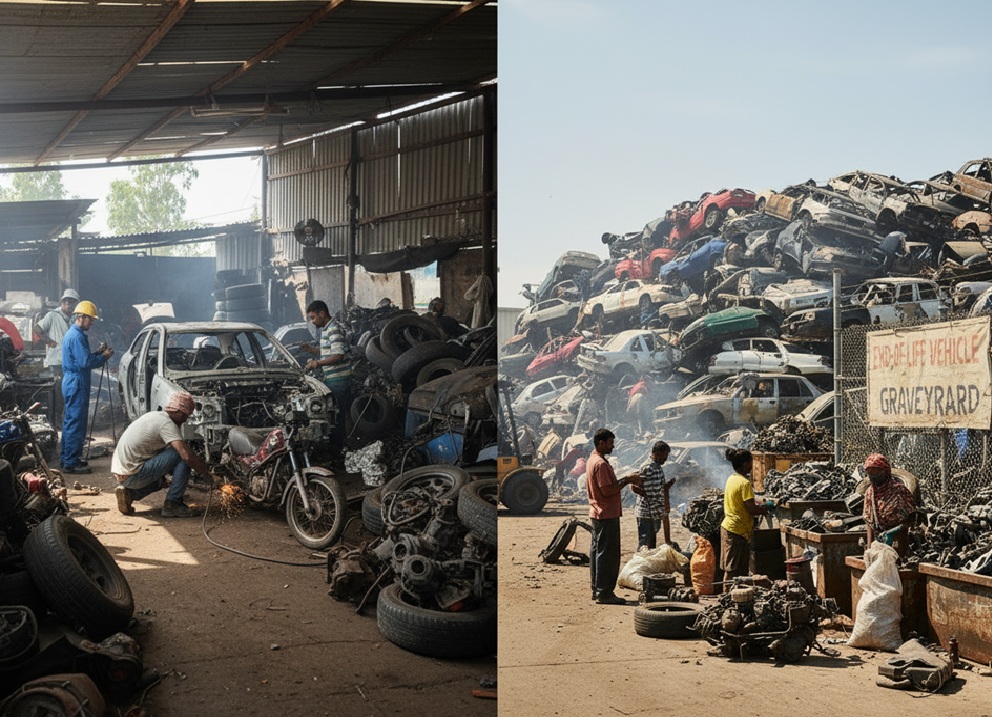
Developing Nations and the Challenge of End-of-Life Vehicles
19th Dec, 2025
Car ownership is rising faster than ever across the globe. While this growth reflects economic progress, it also brings a growing environmental and logistical challenge, what to do with vehicles once they reach the end of their lives. The issue of developing nations end-of-life vehicles has become one of the most pressing global environmental concerns, highlighting the urgent need for structured, sustainable solutions.
Unlike developed regions with strong recycling systems and environmental laws, ELV management in developing countries remains fragmented and often informal. Without adequate infrastructure, these vehicles can quickly become hazardous waste rather than recyclable resources.
This article explores the key challenges, opportunities, and emerging solutions shaping the way developing nations are dealing with end-of-life vehicles, and what role international cooperation can play in improving global sustainability.
The Scale of the Problem
A Rapid Rise in Global Vehicle Ownership
The global vehicle fleet now exceeds 1.4 billion vehicles, with rapid growth occurring across Asia, Africa, and Latin America. In countries such as India, Nigeria, and Brazil, car ownership has become more accessible due to rising incomes and expanding markets for used imports.
However, the problem arises when these vehicles reach the end of their operational lives. Unlike Europe’s highly regulated disposal network, most developing nations lack the infrastructure, facilities, and legislation necessary to manage these vehicles safely.
Key Points:
- Car ownership is increasing fastest in developing nations.
- Many lack formal vehicle recycling and waste management systems.
- Most end-of-life vehicles are handled through informal or unregulated channels.
The absence of well-structured recycling frameworks often leads to the accumulation of abandoned vehicles, which pose both environmental and public health risks.
Environmental Impact of Improper ELV Disposal
When vehicles are scrapped without proper control, they can cause serious harm to soil, water, and air quality. Fluids such as engine oil, brake fluid, and coolant often leak into the environment, contaminating local ecosystems.
In many regions, metal recovery is carried out using crude methods, such as open-air burning, which releases toxic fumes and heavy metals into the atmosphere. The lack of safety protocols also exposes workers to hazardous substances like lead-acid battery residue and asbestos dust.
Common Environmental Hazards:
- Soil contamination from leaked fuel and lubricants.
- Water pollution caused by improper fluid drainage.
- Airborne toxins from open burning of vehicle parts.
- Long-term health impacts for workers and nearby residents.
For comparison, regulated car recycling systems, such as the environmentally responsible car recycling process used by Scrap Car Network, demonstrate how structured depollution and dismantling can eliminate these risks entirely.
Summary:
The lack of environmental regulation in ELV management in developing countries leads to significant pollution, highlighting the urgent need for sustainable recycling systems.
Economic Opportunities in Vehicle Recycling
While the environmental impact of unregulated disposal is serious, the car recycling industry also offers major economic potential for developing nations.
Recycling and dismantling vehicles generate employment, create new markets for recycled materials, and reduce the need for imported raw resources. The recovered metals, including steel, aluminium, and copper, can be reintroduced into local manufacturing, reducing overall production costs and supporting industrial growth.
Key Economic Benefits:
- Job creation across collection, dismantling, and resale operations.
- Revenue generation from recovered materials.
- Reduced reliance on imported raw materials.
- Increased investment potential through formal recycling networks.
When properly managed, car recycling can become a pillar of the circular economy. Initiatives like Scrap My Car show how structured systems can turn waste into value by connecting vehicles with licensed facilities for legal and environmentally safe recycling.
Summary:
Recycling vehicles responsibly can provide both economic growth and environmental sustainability, making it a key opportunity for developing economies.
The Role of the Informal Sector
In most developing countries, the recycling of end-of-life vehicles is dominated by the informal sector, small, unregistered workshops and scrap dealers operating outside of government oversight.
These workers are often highly resourceful, salvaging usable parts and materials with minimal tools or investment. However, the informal sector’s lack of regulation, training, and equipment leads to unsafe and environmentally damaging practices.
Common Challenges in the Informal Sector:
- Unsafe dismantling methods, such as manual cutting or burning.
- No environmental safeguards, leading to pollution.
- Limited access to training and technology.
- Absence of legal accountability or data reporting.
Encouraging transition from informal to formal operations is a key component of ELV management in developing countries. This requires government support, accessible licensing systems, and incentives for recyclers to comply with environmental standards.
The network of Authorised Treatment Facilities operating through Scrap Car Network demonstrates how a licensed system ensures vehicles are depolluted, dismantled, and recycled safely, a model that could inform policy in emerging economies.
Summary:
The informal sector remains central to vehicle recycling in developing nations but must be formalised to ensure long-term safety and sustainability.
Regulation and Enforcement
One of the most significant obstacles facing developing nations is the lack of effective regulation and enforcement.
While many countries recognise the environmental threat of end-of-life vehicles, limited financial resources, weak institutions, and corruption can hinder implementation. Establishing clear legal frameworks is essential to ensure vehicles are collected, depolluted, and recycled through approved channels.
Essential Regulatory Measures:
- Mandatory vehicle registration and tracking.
- Licensing requirements for recycling and dismantling businesses.
- Environmental inspections of recycling facilities.
- Penalties for illegal dumping or unregulated dismantling.
Strong enforcement also requires public sector coordination. Partnerships between environmental agencies, transport authorities, and local councils are crucial. Countries implementing structured car recycling systems, like the Scrap Car Network’s UK model, demonstrate how effective oversight can ensure compliance and protect the environment.
Summary:
To address the challenge of developing nations end-of-life vehicles, governments must prioritise regulation, enforcement, and public accountability.
Technology Transfer and Knowledge Sharing
Modern recycling relies heavily on technology, from automated dismantling systems to advanced material recovery. However, many developing nations lack access to such equipment or the expertise to operate it.
Technology transfer can bridge this gap. By sharing knowledge, training, and equipment, developed nations can help emerging economies build sustainable recycling industries.
Examples of Effective Technology Transfer:
- Providing training on safe dismantling and depollution techniques.
- Sharing expertise in automated shredding and sorting technologies.
- Establishing joint ventures between local recyclers and global firms.
- Promoting environmental standards through international cooperation.
Partnerships between private companies and public institutions are essential. For instance, Scrap Car Network’s collaboration with Authorised Treatment Facilities showcases how shared best practices ensure compliance with strict environmental legislation.
Summary:
Technology transfer and training can transform ELV management in developing countries by improving safety, efficiency, and sustainability.
Public Awareness and Education
Public understanding of vehicle recycling is often limited in developing nations. Many vehicle owners are unaware of the environmental hazards associated with improper disposal or the economic value of recycling.
Raising awareness through education campaigns can change public attitudes and encourage responsible behaviour. This may include government outreach programmes, school-based initiatives, and media campaigns highlighting the dangers of informal scrapping.
Core Awareness Strategies:
- Public information campaigns on the dangers of pollution.
- Community workshops promoting safe recycling.
- Partnerships with local organisations to reach informal workers.
- Encouragement of legal recycling channels for vehicle owners.
For UK readers, similar public awareness efforts are reinforced through initiatives such as the guide on notifying the DVLA after scrapping a car, which ensures full legal compliance when disposing of an end-of-life vehicle.
Summary:
Public education is a cornerstone of effective ELV management in developing countries, fostering safer, more environmentally conscious recycling practices.
Regional Case Studies and Progress
India: Gradual Reform Through Policy
India faces one of the largest accumulations of end-of-life vehicles globally, with millions of ageing cars and commercial vehicles reaching the end of their operational lives each year. In recent years, the Indian government has introduced the Vehicle Scrappage Policy, which promotes the establishment of modern recycling facilities and incentives for responsible scrapping.
Early results show promise, with increased private sector investment and a move towards formalisation.
Africa: Informal Resilience, Limited Regulation
Across sub-Saharan Africa, car imports often consist of second-hand or decommissioned vehicles from developed regions. These vehicles are kept running far beyond their intended lifespan, often maintained with improvised repairs. While this showcases resourcefulness, it also contributes to pollution and road safety issues.
The UN Environment Programme has called for tighter controls on used vehicle imports and greater investment in regulated recycling systems.
Latin America: Emerging Industry Models
Countries such as Brazil and Mexico are developing national strategies to formalise ELV recycling, focusing on data collection, licensing, and industry training.
Summary:
Developing regions are at different stages of progress, but the trend towards structured recycling systems and policy reform is gaining traction globally.
The Role of International Organisations
Organisations such as the United Nations, World Bank, and OECD play a crucial role in addressing the global ELV challenge. Their efforts include funding technical assistance, facilitating training programmes, and promoting cooperation between governments and the private sector.
Primary Contributions of International Bodies:
- Funding for pilot recycling projects.
- Policy support for emerging legislation.
- Knowledge sharing between developed and developing economies.
- Environmental monitoring and impact assessments.
Collaborations of this kind accelerate the global transition to sustainable recycling systems and help ensure that developing nations receive the resources and expertise needed for effective ELV management.
Summary:
International cooperation remains essential to building global capacity for sustainable car recycling and reducing the environmental burden of end-of-life vehicles.
The Future of ELV Management
The future of ELV management in developing countries depends on stronger governance, improved technology, and global collaboration. As awareness grows, more nations are adopting formal recycling legislation, investing in treatment facilities, and promoting circular economy models.
Predicted Developments:
- Expansion of formal recycling facilities in emerging economies.
- Integration of environmental standards into trade and import laws.
- Growth of public-private partnerships in the recycling sector.
- Adoption of circular economy principles, where vehicle materials are continually reused and repurposed.
Services like Scrap Car Network already embody this model, combining environmental responsibility with efficiency. Drivers looking to participate in sustainable recycling can access free nationwide scrap car collection and eco-friendly vehicle processing through trusted partners.
Summary:
As global awareness grows, developing nations are expected to adopt stricter regulations and integrate sustainable recycling as part of a broader circular economy.
Conclusion
The challenge of developing nations end-of-life vehicles is not just about managing waste, it is about creating opportunities for sustainable growth. By combining policy reform, technological advancement, and public engagement, these countries can transform environmental risk into economic resilience.
Structured recycling systems protect the environment, create jobs, and conserve valuable resources. The lessons learned from established networks such as Scrap Car Network illustrate how comprehensive regulation and responsible recycling can deliver lasting benefits to both people and the planet.
Individuals seeking to act responsibly can scrap their car in Scotland or scrap their van through eco-friendly services, ensuring their vehicle is processed through certified facilities. Those ready to take the next step can get an instant quote to scrap any car or contact the team directly for expert assistance.
Key Takeaways:
- The lack of regulation and infrastructure presents major challenges.
- Economic potential exists through job creation and resource recovery.
- The informal sector dominates but requires formalisation.
- Technology transfer and education are vital for progress.
International cooperation can accelerate sustainable ELV management.