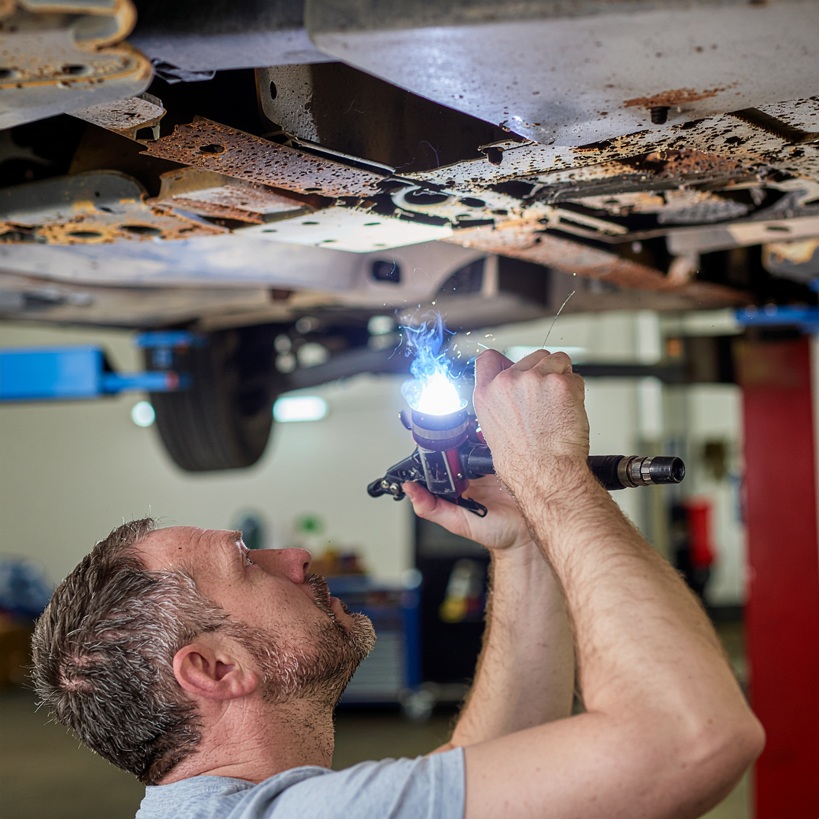
Corroded Chassis Frame: When Structural Damage Means Scrap Only
15th Jun, 2026
Rust does not just bubble the paint or leave orange stains on a driveway. When corrosion reaches the chassis frame, it transforms the vehicle’s skeletal system into something structurally unsound. In almost every modern scenario, this represents a terminal condition for the car.
The chassis is not a simple panel an owner can swap out like a door or a bonnet. It is the very foundation holding the heavy engine, complex suspension, and vital safety systems together. Scrapping a car with a rotted frame is often the only legal and safe option left for a motorist.
Unlike cosmetic rust, chassis corrosion compromises the fundamental integrity of the car in ways that standard welding cannot truly fix. This detailed report provides a technical and financial breakdown to help recognize when a car has crossed the line from repairable to scrap. Understanding the true state of a vehicle’s skeleton protects personal safety and prevents owners from pouring cash into a dangerous money pit.
What Makes Chassis Corrosion Different from Surface Rust
Surface rust forms on outer panels, exhaust systems, and exposed metal components. It is unsightly and will eventually cause aesthetic problems, but it does not immediately threaten passenger safety. In contrast, chassis frame corrosion burrows deep into the heavy-gauge metal that bears the entire weight of the car.
The chassis must absorb massive impact forces and maintain the precise alignment between every critical drivetrain component. In modern unibody vehicles, the chassis is fully integrated into the floor and sills. This architecture makes structural decay incredibly difficult and expensive to rectify.
Chassis frame perforation marks the critical threshold for any vehicle. Once the rust eats completely through the metal, creating visible holes or paper-thin spots, the frame can no longer distribute loads properly. If an owner decides to scrap a vehicle at this stage, they are making a highly logical choice based on mechanical realities. Stress concentrates heavily around these weakened areas, leading to sudden and unpredictable structural failure.
How Chassis Frames Corrode from the Inside Out
Chassis corrosion usually starts in dark places where owners cannot see it. Most modern chassis are designed with box sections, which are hollow rectangular steel tubes that provide immense strength without excessive weight. These enclosed sections easily trap moisture, heavy road salt, and debris inside.
This creates a perfect, hidden environment for rapid oxidation to spread completely unchecked. Water enters through tiny drain holes, structural seams, or microscopic cracks in the factory protective underseal coatings. Once inside these dark, enclosed sections, the water simply cannot evaporate.
The metal corrodes from the inside out while the exterior might still look relatively sound to an untrained eye. By the time rust becomes visible on the outside of the rail, the internal structural damage is usually extensive. In the UK, aggressive winter road salt accelerates this destructive process dramatically.
MOT Failures and Legal Implications of Chassis Corrosion
The mandatory MOT test in the UK includes extremely strict checks for chassis decay and structural corrosion. Inspectors use a specialized corrosion hammer to tap along the frame, listening closely for the dull thud of thin metal or the crunch of perforation.
According to the strict DVSA MOT Inspection Manual, a vehicle will fail immediately if corrosion is found within 30cm of any safety-critical mounting point. This specific rule covers the crucial areas around seat belt anchors, heavy suspension mounts, steering racks, and primary braking components. A structural rust MOT failure instantly removes the vehicle from the road network legally.
The 30 percent metal thickness reduction rule is another critical failure point for older cars. If the inspector determines that corrosion has reduced the original thickness of a load-bearing member by 30 percent or more, the car is deemed highly unroadworthy. Many drivers choose proper car scrapping routes because patching these areas with cosmetic welding or body filler is highly illegal.
Why Chassis Frame Repairs Rarely Make Economic Sense
Proper chassis repair requires stripping the vehicle down to the bare metal frame. Fabricators must completely cut out the corroded sections and seamlessly weld in new, high-grade steel. This highly specialized work demands heavy workshop equipment, certified structural welding skills, and often custom fabrication of replacement box sections.
According to recent Independent Garage Association labour rate surveys, UK independent garages average between £70 and £120 per hour. Specialist structural welders often charge significantly more because of the intense legal liability involved in modifying a vehicle frame. Labour costs alone for a major structural repair easily run into thousands of pounds.
When owners factor in the cost of materials, replacement suspension components, and the necessary protective wax-based underseals, the final bill quickly exceeds the market value of most used cars. A rare 1960s classic car might justify a massive £5,000 chassis restoration. However, an aging family hatchback makes absolutely zero financial sense to fix, making a corroded chassis scrap solution the only logical outcome.
The Safety Risk of Driving with a Corroded Chassis
A weakened chassis frame does much more than just risk an MOT failure. It puts the lives of the driver, passengers, and other road users at severe risk. The chassis is the most critical part of the entire passenger safety cell.
Crumple zone integrity relies completely on the chassis sections deforming in a highly controlled and predictable way during a severe collision. These carefully engineered weak points absorb the massive kinetic energy of an impact to protect the occupants. Corroded metal does not crumple safely.
Instead of absorbing force, rotten metal fractures, tears, and snaps violently under pressure. This means that in a major crash, the immense impact forces bypass the crumple zones and direct straight into the passenger compartment. It is imperative to remove these compromised vehicles from the road before a catastrophic failure occurs.
Environmental Impact and ATF Requirements
Disposing of a vehicle with severe frame decay is a highly responsible choice for the environment. Even though the primary frame is rotted away, the vehicle still contains highly valuable raw materials and functional components. Legitimate auto recycling ensures these heavy metals and toxic fluids never leach into the public water table.
When a broken vehicle arrives at an Authorised Treatment Facility, it enters a highly systematic and regulated process. First comes the rigorous depollution stage, where highly trained technicians drain all hazardous automotive fluids. Engine oil, toxic coolant, and highly corrosive brake fluid are carefully extracted for safe disposal.
In line with the strict UK End-of-Life Vehicle Directive, all authorised facilities must meet a minimum 95 percent recovery and recycling target. The remaining steel shell is crushed, shredded, and melted down to create fresh steel products. This brilliant circular economy significantly reduces the need for destructive raw iron ore mining.
Regional Considerations and Maximizing Value
Geographic location in the UK significantly affects how quickly a vehicle will succumb to terminal rust. Coastal areas and the heavy salt belt of Northern England see substantially higher rates of aggressive chassis corrosion. Owners facing a corroded chassis scrap scenario in these regions are far from alone.
The excellent news is that scrap metal value remains incredibly high and stable regardless of geographic location. To secure the absolute best price for a structurally compromised vehicle, owners must ensure the car remains as complete as possible. A professional scrap car collection service relies on processing intact vehicles to maximize their operational efficiency.
Removing the original alloy wheels, the heavy battery, or the valuable catalytic converter might seem like a clever way to make extra money. However, stripping these parts usually reduces the overall scrap offer by significantly more than the components themselves are actually worth. A complete vehicle is much easier for the facility to process rapidly, which is exactly why they pay a premium for it.
Efficient Disposal of Heavy Commercial Vehicles
Structural corrosion is particularly devastating for commercial vehicles that carry heavy payloads daily. Delivery trucks and large trade vehicles rely entirely on their ladder-frame chassis to support heavy cargo and towing weights. A structural rust MOT failure on a commercial vehicle instantly halts business operations.
The heavier curb weight of these commercial vehicles translates directly into a much higher raw material scrap valuation. Owners of failing commercial fleets can efficiently recycle these larger units to recover a significant lump sum based on the heavier tonnage of a large trade chassis. The advantages of choosing our service include handling the complex logistics of removing these oversized, unroadworthy vehicles directly from the business premises without any hidden transport fees.
Understanding the Certificate of Destruction
Legal compliance is just as important as the physical disposal of the rusty vehicle. Using fully licensed treatment facilities ensures the registered keeper receives an official Certificate of Destruction. This highly secure DVLA document proves the vehicle has been permanently and legally removed from the road network.
It completely severs all future legal liability for the decaying vehicle. Registered keepers must also complete their online DVLA notifications using the yellow Section 9 of the V5C logbook. Understanding the strict rules for notifying the DVLA when scrapping prevents automated penalty fines from being issued to the previous owner.
Making the Final Financial Decision
A structurally compromised vehicle represents a severe financial and safety liability that simply cannot be ignored. The economics almost never favour a repair, as proper chassis reconstruction is a highly specialized task that routinely costs thousands of pounds.
Accepting the reality of a rotted frame is a responsible and highly practical decision. It permanently removes an incredibly unsafe car from the public road network while ensuring its raw materials are recycled correctly. The resulting scrap valuation provides a guaranteed bank transfer that owners can immediately put toward a vastly safer replacement vehicle.
When ready to reclaim that driveway space, the Scrap Car Network provides instant, weight-based valuations for all vehicles across the UK. The fully transparent process ensures all heavy transportation logistics and complex DVLA paperwork are handled completely free of charge.
For clear, grounded advice regarding severe structural failures and legal disposal options, please contact us directly. Alternatively, owners can call the team at 01772 665 909 to discuss collection logistics. The team is fully equipped to handle the entire process and ensure the absolute best financial outcome for the vehicle.