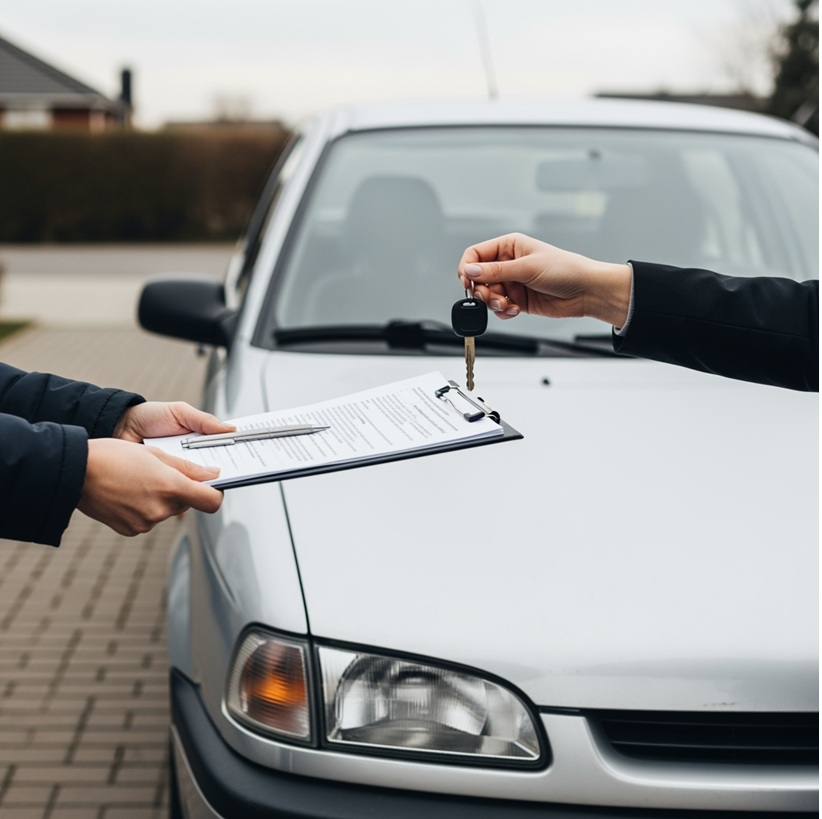
Can You Scrap a Car That’s Not in Your Name? UK Rules Explained
23rd Mar, 2026
Getting rid of an old motor is usually a simple task when the paperwork has your name printed on it. However, life is rarely that straightforward. If you are sitting there wondering, ‘can I scrap car not in my name?’, you are dealing with a very common problem.
Perhaps you are trying to help out an elderly relative who no longer drives. Maybe a friend has moved abroad and left their broken hatchback sitting on your driveway. You might even be dealing with the difficult task of sorting out a vehicle after a family bereavement.
Whatever your situation, you cannot simply hand the keys to a recovery driver and hope for the best. The rules surrounding vehicle disposal are strict to prevent fraud. Let us walk through the exact legal steps you need to take to dispose of someone else’s vehicle safely and correctly.
Understanding Vehicle Ownership Rules
Before we look at the specific solutions, you need to understand how the government views vehicles. There is a massive legal difference between the person who bought the car and the registered keeper. The government only cares about the registered keeper.
The registered keeper is the person named on the V5C logbook. They are the individual legally responsible for taxing the car, keeping it insured, and ensuring it has a valid MOT. When a car is sent to be crushed, the recycling facility must deal directly with the registered keeper, or someone who has explicit legal permission to act on their behalf.
Scrapping a car that belongs to someone else is exactly like trying to close another person’s bank account. You cannot simply walk into a branch with their debit card and ask for the cash. You need explicit written permission or formal legal authority to make that major change on their behalf. The recycling industry operates under the exact same logic.
Why the Logbook is Not Enough
Many people mistakenly believe that physically holding the V5C logbook gives them the right to scrap the car. This is completely false. A logbook is not a bearer bond. Finding it in the glovebox does not make you the owner.
I remember a young lad who came to my workshop years ago trying to scrap his grandad’s old Vauxhall Cavalier. He had the keys and the logbook, but his grandad was in a care home and couldn’t sign anything. We couldn’t touch it until he came back with a proper letter of authorisation signed by his grandad’s solicitor. It felt frustrating for him at the time, but those strict rules stop cars from being stolen and crushed illegally.
Legitimate facilities perform strict registered keeper verification checks. If the name on your driving licence does not match the name on the logbook, the driver will halt the collection immediately. You must provide a clear paper trail connecting you to the registered keeper.
Helping a Friend or Family Member
If you are simply trying to do a favour for a friend or a living relative, the process is actually very straightforward. You can arrange the collection and handle the handover on the driveway. You just need the right paperwork ready before the truck arrives.
You cannot rely on a quick phone call to the registered keeper on collection day. The recovery driver needs physical, written proof that they can take back to the yard for their legal records. This written proof protects you, the actual owner, and the recycling facility.
When you book the collection, you must inform the administrative team that the car is not in your name. They will usually add a note to the driver’s manifest so there is no confusion when the truck pulls up.
Writing a Proper Letter of Authorisation
The most important tool you need is a formal letter of authorisation. This does not need to be drafted by an expensive lawyer. A simple, clearly written letter is perfectly acceptable, provided it contains the right information.
The letter must clearly state the registered keeper’s full name, address, and contact number. It must explicitly state that they give you full permission to dispose of the specific vehicle. You must include the vehicle’s make, model, and registration number within the text.
Crucially, the registered keeper must sign and date the letter by hand. When you are arranging a scrap car same day collection, the recovery driver will need to see this letter alongside a photocopy of the registered keeper’s photo ID. The driver will then check your own photo ID to complete the security loop.
Handling a Vehicle After a Bereavement
Dealing with an old vehicle is often the last thing on your mind following the loss of a loved one. However, vehicles left parked on public roads still require tax and insurance. Sorting the disposal quickly saves the estate from accumulating automated government fines.
The standard letter of authorisation obviously does not apply in this sensitive situation. Instead, the dismantling facility must verify that you are the legal executor or administrator of the deceased person’s estate.
The collection process is entirely respectful and highly professional. You simply need to present the correct legal documents to the driver. They will record the details securely and help you manage the final government notification process smoothly.
Sorting the Probate Registry Documentation
When the recovery driver arrives, they will need to see a copy of the official death certificate. In addition to this, they need to see the formal paperwork proving you have the authority to manage the estate.
Usually, this means presenting the official probate registry documentation. If the estate is very small and formal probate is not required, a solicitor’s letter confirming you are the executor is usually acceptable.
Once the driver views the probate registry documentation, they will log the details securely on their digital tablet. The payment for the scrap metal must usually be transferred into the official executor bank account or the primary estate account, rather than your personal current account. This ensures the funds are handled appropriately.
Dealing with Abandoned Vehicles
One of the most frustrating situations is finding a stranger’s car dumped on your private property. You might assume that because it is on your land, you have the right to arrange a scrap collection. This is a massive legal mistake.
You cannot simply call up vehicle disposal services to drag an abandoned car away. If you authorise the destruction of a vehicle you do not own, you are technically committing criminal damage. The actual owner could return weeks later and sue you for the value of the car.
Legitimate dismantling yards will refuse to touch an abandoned vehicle. Their internal security systems will flag that you cannot provide any connection to the registered keeper. You must handle dumped vehicles through formal local government channels.
The Legal Process for Private Landowners
If a car is dumped on your land, your very first call should be to the local police on the non-emergency number. They will run the registration plate to check if the car was stolen or involved in a crime. If the police clear it, you must then contact your local council.
The council has a legal duty to deal with abandoned vehicles. They will usually attach a highly visible legal notice to the windscreen, giving the owner seven to fourteen days to move it. If the car remains, the council will arrange their own official removal and disposal.
It is a slow and annoying process. However, following the council procedure helps protect you from any legal blowback. Never take the law into your own hands when dealing with dumped property.
Buying a Car to Scrap for Profit
Some people enjoy buying cheap, broken-down cars online with the intention of scrapping them for a quick profit. If you are doing this, you might be tempted to skip updating the logbook to save time. This is a very dangerous financial game to play.
If you buy a car, you become the legal owner. If you try to scrap it while the logbook is still in the previous owner’s name, you will fail the registered keeper verification checks at the yard. The facility will treat you exactly like someone trying to scrap a stranger’s car.
Additionally, any scrap payment made via bank transfer must usually match the name on the official paperwork. If your name is not on the system, the payment could be severely delayed or completely refused.
Managing the Legal Transfer of Ownership
To do this correctly, you must manage a proper legal transfer of ownership before you ever call the recovery truck. When you buy the broken car, you must fill out the new keeper slip with the seller.
You must wait for the government to process the legal transfer of ownership and issue a fresh logbook in your name. Yes, this takes a few weeks, but it creates a clear paper trail for your own protection.
Once the new logbook arrives, the vehicle is officially yours. You can then rely on the Scrap Car Network to arrange a straightforward collection. You will pass the identity checks smoothly, and the money will flow into your bank account securely.
The Collection Day Verification Process
When you have the correct paperwork sorted, the actual collection day is very straightforward. The recovery driver will give you a call when they are navigating to your address. They operate on tight schedules, so having everything ready by the front door is incredibly helpful.
The driver will park up and immediately ask to see the vehicle. They will do a quick walkaround inspection to ensure the car matches the description provided in the initial quote. They will check if it has alloy wheels, an engine, and if it matches the correct registration plate.
After the physical inspection, they move straight to the paperwork. This is where your preparation pays off. The handover process usually takes less than fifteen minutes when everything is properly organised.
Passing the Registered Keeper Verification Checks
If you are scrapping the car for a friend, you simply hand the driver the signed permission letter and the photocopy of your friend’s ID. The driver will read through the document carefully. They will then ask for your personal driving licence.
They need your ID to prove exactly who handed the keys over on that specific day. This protects the facility if the registered keeper later claims they never gave permission. The driver inputs all these details into their secure digital tablet.
If you want to find out how to scrap your car easily and legally, this secure digital paper trail is exactly what you need. The payment is then triggered to the bank account agreed upon during the booking process.
Avoiding Unlicensed Waste Carriers
The strict rules surrounding names and logbooks exist for a very good reason. They protect honest drivers from having their cars stolen and crushed for quick cash. If you are asking yourself how to scrap my vehicle responsibly, you must be incredibly careful to avoid rogue operators who deliberately ignore these rules.
If you find a buyer online who explicitly tells you they “don’t care whose name is on the logbook,” you should cancel the arrangement immediately. Legitimate businesses simply cannot operate this way. If they are willing to ignore basic identity checks, they are definitely ignoring strict environmental laws too.
Unlicensed waste carriers often strip the valuable parts from a car and dump the toxic shell in a country lane. If that car is still registered to your friend or your late relative, the local council will trace the chassis number. Your family will be hit with massive fines for illegal fly-tipping.
Choosing a Certified Recycling Network
You must protect yourself by only using fully vetted, certified recycling facilities. When you decide to use a proper network, you help ensure the car will be handled safely and legally.
Legitimate yards perform strict identity checks because they do the job right. They safely extract the highly toxic engine oils and battery acids. They process the metal legally and update the national vehicle database officially.
The advantages of choosing our service include transparent guidance through complex legal handovers. We help ensure your collection is fully compliant with national laws.
Ready to Arrange Your Collection
Dealing with a car that is not in your name requires a tiny bit of extra administrative work. However, whether you need a solicitor’s letter or a simple permission note from a mate, the process is very manageable.
You simply gather the correct written evidence, present your own photo identification, and let the professionals handle the heavy lifting. It significantly reduces the risk of legal headaches and ensures the vehicle is recycled responsibly.
If you have the correct permission letters ready and need a collection sorted quickly, the network is ready to assist. We connect you with certified local buyers who understand these legal requirements thoroughly. If you are unsure about the specific paperwork your situation requires, please feel free to contact us today for friendly, expert guidance.